Side Dishes
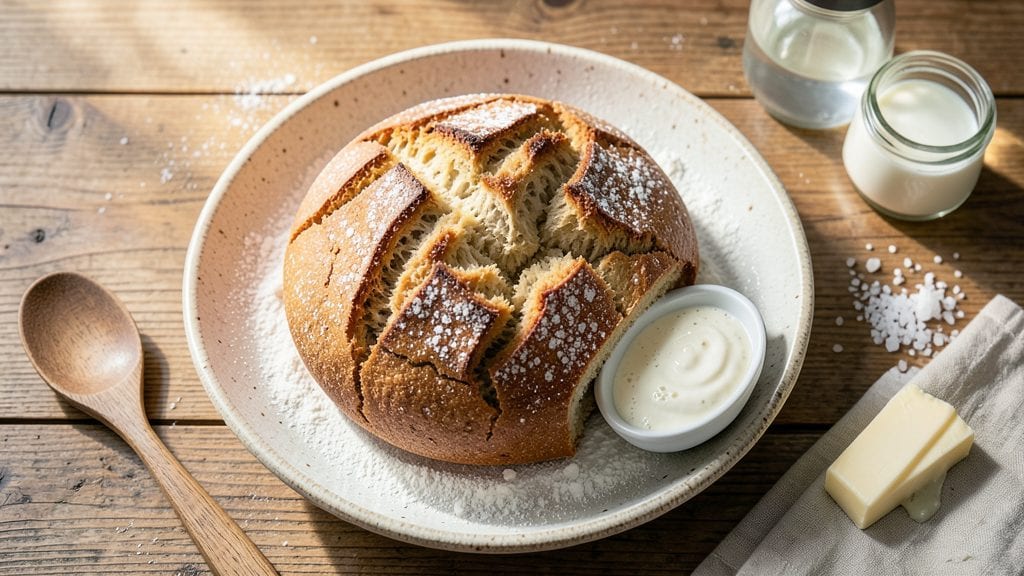
Grandma's Irish soda bread recipe brings a taste of Ireland's countryside to your kitchen with its signature tangy vinegar heart and buttery crust—no yeast or kneading required. This quick bread has been a staple in Irish homes for generations, offering rustic texture and comforting warmth in every bite.
The secret lies in the buttermilk and baking soda, which create that signature tender crumb and slightly dense center.
What makes this recipe special is its simplicity—just a handful of ingredients and 30 minutes of active time. The traditional method relies on baking soda for leavening instead of yeast, making it quick to prepare while still delivering that authentic Irish flavor.
I've perfected this version over years of baking, ensuring the crust stays crisp and the heart remains moist with just the right tang.
By the time you pull it from the oven, you'll have a loaf with a golden, crackly crust that gives way to a tender interior with pockets of airiness.
The vinegar adds a subtle tang that balances the richness of the butter, creating a flavor profile that's both comforting and complex. This bread pairs beautifully with soups, stews, or even as a simple side with butter.
Whether you're serving it warm from the oven or toasted the next day, this Irish soda bread is a foolproof way to bring tradition to your table. The recipe is also adaptable—use dairy-free buttermilk for a vegan version or add raisins for a sweet twist. Let's get baking!
Ingredients for grandma's irish soda bread
Buttermilk, vinegar, and baking soda—three key players for that classic Irish soda bread taste.
| Ingredient | Amount | Notes |
|---|---|---|
| All-Purpose Flour 🌾 | 4 cups | Sifted for light texture |
| Buttermilk 🥛 | 1 ½ cups | Room temperature preferred |
| White Vinegar 🍶 | 1 tbsp | For signature tang |
| Baking Soda 🧪 | 1 tsp | Not baking powder |
| Salt 🧂 | ½ tsp | Fine sea salt preferred |
| Unsalted Butter 🧈 | ½ cup | Cold, cubed for texture |
| Granulated Sugar 🍚 | ¼ cup | Adjust for sweetness |
| Freshly Ground Black Pepper 🌶️ | ¼ tsp | Freshly cracked preferred |
| Raisins (optional) 🍇 | ½ cup | Plump, soaked if dry |
| Milk (for optional glaze) 🥛 | 2 tbsp | Warm for brushing |
| Cornmeal (for dusting) 🌽 | ¼ cup | For crisp crust |
The flour is non-negotiable here—King Arthur or Bob's Red Mill are my go-tos for that perfect crumb. Buttermilk's the star, so don't grab the powdered kind (it's not the same). Trader Joe's usually has a good organic option, or just mix milk and vinegar yourself. The vinegar's what gives that signature tang—white or apple cider both work, but white's traditional. For the butter, Plugrá Irish butter if you can find it, or any good unsalted brand. I always cube it cold for maximum flakiness in the crust.
No buttermilk? Mix 1 cup milk + 1 tbsp vinegar, let sit 5 minutes. Dried raisins? Soak them in warm water first—they'll plump up and taste better. Short on sugar? Honey or maple syrup works 1:1, though it'll add moisture. The baking soda needs to be fresh—if it's more than 6 months old, toss it. And for that crisp crust, cornmeal dusting is a must. No cornmeal? Semolina or even flour in a pinch, but cornmeal's the gold standard.
This keeps 3 days wrapped at room temp, but it's best fresh. For longer storage, slice and freeze—3 months wrapped tightly. I like toasting slices the next day for breakfast. The glaze? Just brush warm milk on the crust right out of the oven. No glaze? No problem—it's still delicious. Leftovers reheat beautifully in a 350°F oven for 5 minutes.
Why You'll Love This Recipe
- No-Fuss Mixing: Mixing this dough is basically stirring and pouring—no kneading, no waiting for dough to rise. Just toss the flour, buttermilk, vinegar, and baking soda together, and you’re halfway there.
- Tangy Crust, Soft Core: That vinegar-buttermilk combo gives it a faint tang that’s addictive, while the baking soda keeps the inside tender. Honestly? The crust has a satisfying crunch, but the inside melts like butter.
- Weeknight Hero: Toss one in the oven while you prep dinner—it’s done in 40 minutes. Perfect for sandwiches, toast, or just slathering it with jam when you’re too tired to cook.
- Pantry Staple Magic: Four ingredients, minimal effort, and it keeps well for days. Between us, this is my go-to for when I’ve got nothing but flour and buttermilk in the house—and it still tastes like a treat.
Step-by-step instructions for grandma's Irish soda bread
Here's how to make this classic Irish soda bread with a crisp crust and tender crumb.
Prepare the Buttermilk Mixture
In a medium bowl, combine the 1.5 cups buttermilk with the 1 tablespoon white vinegar. Stir well and let it sit for 5 minutes - you'll see it thicken slightly. This reaction creates the signature tangy flavor and light texture. Meanwhile, in a separate bowl, whisk together the 4 cups all-purpose flour, 1 teaspoon baking soda, 0.5 teaspoon salt, 0.25 teaspoon freshly ground black pepper, and 0.25 cup granulated sugar.
If using the optional 0.5 cup raisins, add them to the dry ingredients now. I like to give them a quick rinse and pat dry first to remove any surface moisture that might make the dough sticky. The pepper might seem unusual, but it adds a subtle warmth that pairs beautifully with the buttermilk's tang.
Mix and Shape the Dough
Cut the 0.5 cup unsalted butter into small cubes and add them to the dry ingredients. Using your fingers, work the butter into the flour mixture until you have pea-sized crumbs with some larger butter pieces remaining. This creates pockets of butter that will melt during baking for that signature tender crumb.
Make a well in the center and pour in the buttermilk mixture. Using a wooden spoon or your hands, gently combine everything until just mixed - don't overwork the dough. The mixture will be shaggy and sticky, but that's perfect. If it seems too wet, add 1-2 tablespoons more flour, but don't add too much or the bread will be dense.
Shape and Prepare for Baking
Turn the dough out onto a lightly cornmeal-dusted surface. The 0.25 cup cornmeal helps prevent sticking and adds to that rustic texture. Gently shape the dough into a round loaf about 6 inches in diameter. Don't worry if it's not perfect - the beauty of Irish soda bread is in its homespun charm.
Place the shaped loaf on a parchment-lined baking sheet. Make a deep cross on top with a sharp knife - this traditional mark not only looks pretty but helps the bread bake evenly. The cross should be about 1/2 inch deep, cutting through about halfway into the loaf. Preheat your oven to 375°F while you prepare the bread.
Bake to Golden Perfection
Bake the bread for 40-45 minutes until it's golden brown and sounds hollow when tapped on the bottom. The internal temperature should reach 200°F. I like to check for doneness at the 35-minute mark - sometimes ovens run hot or cold, so this gives you a chance to adjust if needed.
For that extra crisp crust, brush the warm bread with a mixture of the 2 tablespoons milk and a little more sugar if you like. The milk glaze adds a subtle sheen and sweetness that complements the buttermilk's tang. Let the bread cool on a wire rack for at least 15 minutes before slicing - this allows the crumb to set properly and prevents a gummy texture.
Serve and Enjoy
Slice the bread while still warm for the best texture. The interior should be tender with a slightly crumbly texture, and you'll notice that characteristic tangy flavor from the vinegar-buttermilk combination. This bread tastes best served fresh, but you can reheat slices in a warm oven for 5-10 minutes if needed.
Store any leftovers wrapped in a clean kitchen towel to keep them fresh. The bread keeps well at room temperature for 2-3 days, though I rarely have any left that long. It's perfect for breakfast with butter, or try it toasted with jam for a sweet treat.
Pro Tips For Making Grandma'S Irish Soda Bread
- MEASURE BUTTERMILK PRECISELY: Irish soda bread is finicky about liquid—too much buttermilk and your loaf turns dense. Use a kitchen scale or a measuring cup that’s actually level (tap the counter to settle the flour, then scoop). I learned this the hard way after making a brick instead of a loaf.
- MIX DRY INGREDIENTS FIRST: Combine flour, baking soda, and salt before adding buttermilk—this keeps the baking soda from reacting too soon and fizzing out. Stir just until the dry bits disappear, then fold in vinegar. Overmixing = tough bread. (Yes, even if you’re impatient like me.)
- DON’T SKIP THE REST: After shaping, let the dough rest 10–15 minutes under a towel. This relaxes the gluten, so it doesn’t spring back when you cut the cross. I was skeptical until I tried it—now my slices stay open instead of collapsing.
- USE A DAMP CLOTH FOR STEAM: Place a damp towel in the pot before baking—this traps steam and gives that iconic crackly crust. No fancy equipment needed. (Pro tip: Spritz the dough lightly with water before baking for extra shine.)
Pro cooking tips for great grandma's irish soda bread
Buttermilk Activation
The vinegar-buttermilk reaction is where the magic happens—this isn't just about tang, it's about texture. Let the mixture sit for exactly 5 minutes before mixing with dry ingredients. I've seen home bakers skip this step, and the bread ends up dense.
The acid in vinegar curdles the buttermilk, creating tiny air pockets that give soda bread its signature lightness. For extra insurance, use room-temperature buttermilk—cold buttermilk takes longer to activate. 💫
Dough Consistency
Your dough should be shaggy and sticky, almost like wet sand—this is perfect! Resist the urge to add extra flour unless absolutely necessary. Too much flour makes the bread dense. If the dough feels too wet, add just 1 tablespoon at a time.
I've learned this the hard way—once I added ½ cup extra flour and ended up with a brick instead of bread. The stickiness helps create that tender crumb.
Cornmeal Dusting
Don't skip the cornmeal—it's not just for texture, it's for flavor. Lightly dust your surface and baking sheet with ¼ cup cornmeal before shaping. This creates that signature crisp crust while preventing sticking.
No cornmeal? Use semolina flour as a substitute, but cornmeal gives the best results. I like to sprinkle a little extra on top before baking for added crunch. 🌽
Cross Cutting
The traditional cross isn't just decorative—it helps the bread bake evenly. Use a sharp serrated knife to cut about ½ inch deep into the dough, rotating the loaf 90 degrees between cuts.
This creates steam vents that prevent cracking. I've seen bakers use a pizza cutter, but a sharp knife gives cleaner lines. The cross also makes it easier to slice later.
Baking Time
Every oven is different, so check your bread at 35 minutes. It's done when golden brown and sounds hollow when tapped on the bottom. The internal temperature should reach 200°F. If the top browns too quickly, tent with foil.
I've had breads ready in 40 minutes and others needing 45 minutes—don't rush it. The center should still feel slightly soft, not hard.
Cooling Crucial
This is where most home bakers mess up. Let your bread cool on a wire rack for at least 15 minutes before slicing. Cutting too soon makes the crumb gummy. I've seen people slice immediately and end up with a sad, dense loaf.
The cooling time allows steam to escape, setting the crumb properly. If you're impatient, slice after 10 minutes, but you'll sacrifice some texture. 💡
Nutrition facts
Frequently asked questions
Why does Irish soda bread have a cross on top?
The traditional cross serves two purposes: it creates steam vents that prevent cracking during baking, and it's a nod to Irish heritage. The cross also makes the bread easier to slice later. Some say it wards off evil spirits, but practically, it just helps with even baking!
Can I make this bread without buttermilk?
Mix 1 cup milk + 1 tablespoon vinegar, let sit for 5 minutes until thickened. For a vegan version, use unsweetened almond milk + apple cider vinegar. The acid is key for that signature tang and light texture.
What if my bread turns out dense?
Density usually means overmixing or too much flour. The dough should be shaggy and sticky—don't overwork it! Also, ensure your baking soda is fresh (6 months old or newer) and don't skip the 5-minute vinegar activation. A dense loaf can still be delicious toasted or warmed in the oven.
How can I make this bread sweeter?
Add 2-3 tablespoons honey or maple syrup to the dry ingredients, or brush warm bread with a simple glaze of 2 tbsp milk + 1 tbsp sugar. For extra sweetness, fold in ½ cup raisins or chopped dates before baking. The buttermilk's tang balances sweetness beautifully.
Can I freeze Irish soda bread?
Yes! Slice the cooled bread and wrap tightly in plastic wrap, then place in a freezer bag. It keeps for 3 months. To reheat, warm slices in a 350°F oven for 5-10 minutes until crispy. Freezing works best with fully cooled bread to prevent condensation.