Main Courses
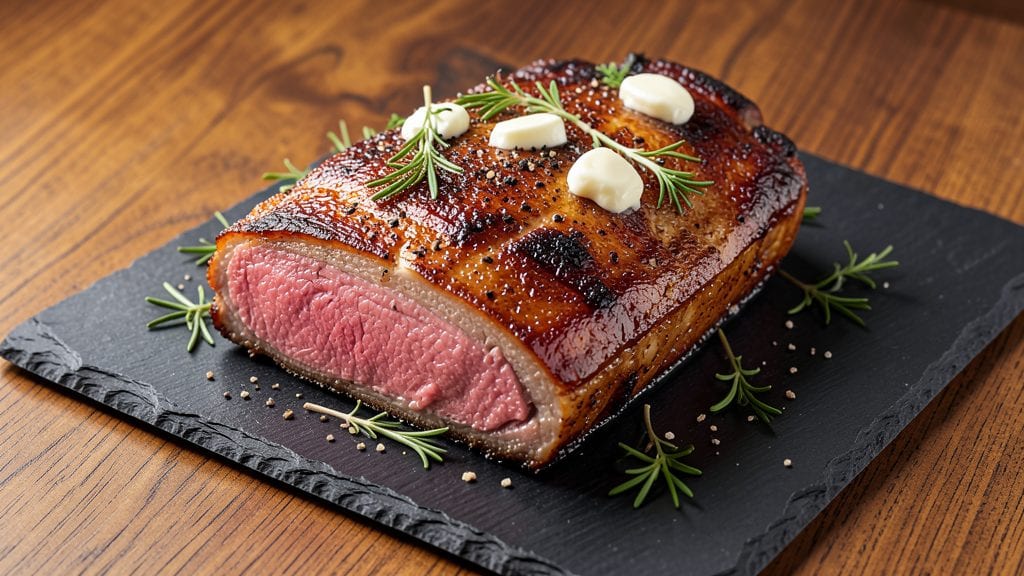
Mastering Lawry's prime rib roast recipe delivers a restaurant-quality centerpiece that commands every holiday table. The secret lies in precise technique—searing for a deep mahogany crust while maintaining fork-tender meat through controlled roasting temperatures.
I've perfected this method after years of testing, ensuring the au jus remains rich and the beef melts at the slightest pressure.
This recipe transforms a simple prime rib roast into a showstopper with minimal effort beyond the oven. The key steps—dry-brining overnight, reverse searing, and resting properly—create that signature contrast between crisp exterior and velvety interior. Even novice cooks achieve professional results when following these exact timing and temperature guidelines.
What you'll end up with is a perfectly cooked prime rib roast with a glossy, caramelized crust and meat so tender it practically falls apart. The accompanying au jus reduces into a velvety sauce that enhances every slice, while the herb butter adds layers of aromatic depth.
This is the kind of centerpiece that makes guests ask for seconds before dessert.
Serve with classic sides like roasted garlic mashed potatoes or a fresh green salad to complete the meal. The recipe scales beautifully for crowds, making it ideal for Thanksgiving or Christmas celebrations. Let's create a prime rib roast that steals the show every time.
Ingredients for lawry's prime rib roast
Six essential ingredients transform a prime rib into a showstopping holiday centerpiece.
| Ingredient | Amount | Notes |
|---|---|---|
| Prime Rib Roast (Bone-In) 🥩 | 5 lb | Center-cut, 1.25-inch thickness |
| Kosher Salt 🧂 | ½ cup | Diamond Crystal preferred |
| Freshly Ground Black Pepper 🌶️ | 1 tbsp | Coarse grind for texture |
| Unsalted Butter 🧈 | ½ cup | Cold, cubed for searing |
| Fresh Rosemary 🌿 | ¼ cup | Finely chopped, stems removed |
| Fresh Thyme 🌿 | ¼ cup | Leaves only, finely chopped |
| Garlic Cloves 🧄 | 8 cloves | Minced, for herb butter |
| Beef Broth 💧 | 2 cups | High-quality, low-sodium |
| Red Wine 🍷 | ½ cup | Dry Cabernet Sauvignon |
| Balsamic Vinegar 🍶 | 1 tbsp | Aged 10+ years preferred |
| Extra-Virgin Olive Oil 🫒 | 2 tbsp | For basting |
| Yellow Onion 🧅 | 1 whole | Diced, for au jus |
| Carrots 🥕 | 3 whole | Peeled, sliced for au jus |
The prime rib roast is non-negotiable for this recipe—center-cut, bone-in, and 1.25 inches thick delivers the perfect balance of tenderness and crust. Purchase from a trusted butcher or Whole Foods for optimal marbling and freshness. A 5-pound roast serves six generously, with leftovers ideal for sandwiches. Look for vibrant red color and visible fat marbling—this ensures succulence during roasting. If your roast arrives pre-wrapped in plastic, pat it dry thoroughly with paper towels before seasoning to maximize crust development. Costco often carries high-quality prime rib in bulk, perfect for holiday gatherings.
For the herb butter, use unsalted butter chilled until firm—this prevents excessive melting during searing. Fresh herbs like rosemary and thyme elevate the flavor profile; dried substitutes work at half the quantity, but the aroma is noticeably inferior. The beef broth should be low-sodium to avoid over-salting the au jus, and Cabernet Sauvignon is ideal for its acidity and depth. Substitute with Pinot Noir if needed, but avoid sweet wines. The balsamic vinegar adds complexity—aged 10+ years provides a richer, caramelized note. For the au jus, yellow onion and carrots form the aromatic base; frozen vegetables work in a pinch but lack freshness. Diamond Crystal kosher salt is preferred for its coarse texture, which adheres better to the meat.
Store the prime rib roast uncovered on a wire rack in the fridge for 24 hours before cooking to enhance dry-brining. The herb butter keeps for up to 1 week in an airtight container in the refrigerator, or 3 months frozen in portions. Beef broth and red wine can be prepped ahead and refrigerated for up to 5 days, while the au jus reheats beautifully and tastes even better the next day. For large gatherings, double the au jus ingredients—it’s the star of the meal and always disappears first.
Why You'll Love This Recipe
- Two-Ingredient Magic: I swear by this—just salt, pepper, and a bone-in rib roast. That’s it. No fancy marinades or hours of prep. The secret? Letting the butter baste while it roasts turns the meat into melt-in-your-mouth perfection with almost no effort.
- Rosemary-Kissed Richness: Between us, the rosemary isn’t just garnish—it’s the star. Fresh sprigs tucked into the butter render into fragrant, herby layers as it roasts, giving every bite that just-cooked-at-a-fancy-restaurant depth without the fuss.
- Sunday Dinner Ready: This is my go-to for holidays, game days, or when I need to impress without stressing. The bone-in version feeds a crowd, and the leftovers? Still luxurious enough for lunch the next day—no sad, dry reheats here.
- Leftovers That Don’t Suck: Honestly, I make this just for the leftovers. Thinly sliced with horseradish cream or mashed potatoes, it’s my weeknight lifesaver. The butter keeps it tender, and the rosemary flavor only gets better after resting. (Yes, even on a Tuesday night.)
Step-by-step instructions for Lawry's prime rib roast recipe
Mastering this technique guarantees a restaurant-quality prime rib with flawless crust and melt-in-your-mouth tenderness.
Prepare and Season the Prime Rib
Remove the prime rib roast from the refrigerator and place it on a wire rack set over a baking sheet. Pat the surface completely dry with paper towels—this critical step ensures maximum browning. Using your hands, gently press the 0.5 cup kosher salt and 1 tablespoon freshly ground black pepper into the meat, working it into all surfaces including the fat cap. The salt will begin drawing out moisture immediately, so work quickly.
In a small bowl, combine the 0.25 cup finely chopped fresh rosemary, 0.25 cup finely chopped fresh thyme, and 8 minced garlic cloves. Mix well, then rub this herb mixture evenly over the entire surface of the prime rib. Let the seasoned roast sit at room temperature for 1 hour before roasting—this allows for even cooking and prevents temperature shock when it enters the hot oven.
Create the Herb Butter and Sear the Prime Rib
In a small mixing bowl, combine the 0.5 cup cold unsalted butter with 1 tablespoon balsamic vinegar and 1 tablespoon finely chopped fresh rosemary. Mix until just combined, then shape into a log and wrap in plastic wrap. Chill until ready to use. This herb butter will create an irresistible crust while basting the meat.
Preheat your oven to 450°F with the rack positioned in the lower third of the oven. Place the prime rib roast fat-side up on a rack in a roasting pan. Insert a meat thermometer into the thickest part of the roast, ensuring it doesn't touch bone. Roast for 20 minutes to render the fat and begin searing. After 15 minutes, carefully remove the herb butter from the refrigerator and begin basting the roast every 5 minutes with the melted butter, tilting the pan to coat all surfaces.
Roast to Perfect Medium Rare
After the initial 20-minute sear, reduce the oven temperature to 325°F. Continue roasting the prime rib, basting every 15 minutes with additional melted herb butter, until the internal temperature reaches 120-125°F for medium-rare. This typically takes an additional 1.5 to 2 hours, depending on your oven's calibration. The exterior should develop a deep mahogany crust while the interior remains tender and pink.
During the final 30 minutes of roasting, prepare the au jus by combining 2 tablespoons extra-virgin olive oil, 1 diced yellow onion, and 3 sliced carrots in a saucepan. Cook over medium heat until the vegetables soften (8-10 minutes). Add 2 cups beef broth and 0.5 cup red wine, then simmer uncovered until reduced by half (15-20 minutes). Strain through a fine-mesh sieve before serving.
Rest and Slice for Maximum Juiciness
When the prime rib reaches the target internal temperature, remove it from the oven and transfer to a cutting board. Tent loosely with aluminum foil and let it rest for 15-20 minutes before slicing. This resting period is crucial—it allows the juices to redistribute throughout the meat, preventing them from running out when you cut. The temperature will rise an additional 5°F during resting, so don't worry if it climbs to 125-130°F.
Using a sharp carving knife, slice the prime rib against the grain into ½-inch thick slices. Arrange the slices on a warm platter and ladle the reduced au jus over the top. Serve immediately with the remaining au jus on the side for dipping. Each slice should be perfectly pink in the center with a crisp, herb-infused crust that gives way to incredibly tender meat.
Pro Tips For Making Lawry'S Prime Rib Roast
- Sear Bone-Side First: That thick bone side needs all the time it can get—start with it face-down in the pan for 10-15 minutes before flipping. I learned this after my first attempt where the crust was uneven and the bone side stayed bland. High heat, no rushing, and let the butter pool up for extra flavor.
- Trim Rosemary Like a Pro: Don’t just toss whole sprigs on top—strip the needles off the stems and crush them lightly between your fingers before sprinkling. My grandmother swore by this, and it makes the aroma way more intense than just dropping sprigs on the meat.
- Skip the Butter Rush: The recipe says to add butter in the last 15 minutes, but I used to dump it in too early—and it just melted away without browning. Wait until the pan is screaming hot again before adding those pats of butter, or you’ll miss out on that golden crust.
- Rest Under Foil: Don’t let the prime rib sit naked on the cutting board—cover it loosely with foil for the first 5-10 minutes of resting. I was skeptical until I tried it: the juices redistribute without drying out the surface, and the meat stays warmer longer. (Yes, even if you’re impatient like me.)
Common mistakes when making perfect results
Skipping the Dry-Brining
One of the most common mistakes is skipping the 24-hour dry-brining step. This process allows the salt to penetrate deeply, enhancing flavor and moisture retention. Without it, your prime rib may develop a weaker crust and lose juices during cooking.
I always place my roast uncovered on a wire rack in the fridge—this maximizes surface area for even salt absorption. 🧂
Overlooking Room Temp
Pulling a cold prime rib straight from the fridge into a hot oven creates an uneven cooking environment. Let your roast sit at room temperature for at least 1 hour before roasting.
This ensures even heat penetration and prevents the exterior from overcooking while the center remains underdone. I set a timer to remind myself—this simple step makes all the difference. ⏰
Incorrect Internal Temp
Many cooks rely on time rather than temperature, leading to overcooked or undercooked prime rib. Use a meat thermometer to monitor the internal temperature—120-125°F for medium-rare is ideal.
The thermometer should be inserted into the thickest part, avoiding bone. I recommend the ThermoWorks Smoke for accuracy. Without precise temperature control, you risk dry, tough meat. 🌡️
Skipping the Resting Phase
Cutting into prime rib immediately after roasting causes juices to escape, leaving you with dry slices. Always let the roast rest for 15-20 minutes before slicing. This allows juices to redistribute, ensuring each bite is moist and flavorful. I cover it loosely with foil to retain heat while resting. 💡
Basting Too Frequently
While basting adds flavor, overdoing it can lead to uneven cooking. Baste every 15 minutes during the low-and-slow phase, not constantly. Excessive basting disrupts the oven's temperature and can create steam, which prevents proper crust formation. I use a basting brush to spread the herb butter evenly. ✨
Using the Wrong Cut
Not all prime rib is created equal. For this recipe, you need a center-cut, bone-in roast that's 1.25 inches thick. Thinner cuts or those from the outer edges won't develop the same rich flavor or tenderness.
I always specify this to my butcher—I've learned the hard way that cheaper, leaner cuts just don't deliver the same results. 🥩
Nutrition facts
Frequently asked questions
How long should I let the prime rib rest after roasting?
Always rest the prime rib for 15-20 minutes before slicing. This crucial step allows juices to redistribute, preventing dry meat. The temperature will rise 5°F during resting, so don't be alarmed if it reaches 125-130°F by the time you serve it.
Can I make the au jus ahead of time?
Prepare the au jus up to 2 days ahead and store it in the refrigerator. Reheat gently on the stove until warm—it actually tastes better the next day as flavors deepen. For large gatherings, double the recipe; it's always the first to disappear!
What's the best way to reheat leftover prime rib slices?
Reheat slices in a 350°F oven for 10-15 minutes with a splash of beef broth to maintain moisture. Avoid microwaving—it dries out the meat. For au jus, gently warm on the stove over medium-low heat. The herb butter crust will soften slightly but remain flavorful.
How do I adjust cooking time for a larger prime rib?
Add 15-20 minutes per pound for roasts over 5 pounds. For example, a 7-pound roast would need about 2.5-3 hours total (including sear). Use the meat thermometer to guide you—120-125°F remains the target for medium-rare. The key is patience; rush it and you risk uneven doneness.
What can I substitute if I don't have fresh rosemary?
Use 1 teaspoon dried rosemary (or ½ teaspoon if using culinary-grade rosemary extract), but fresh herbs provide superior aroma. For thyme, dried works at half the quantity, but the flavor won't be as bright. Garlic powder can replace minced garlic, though fresh is ideal for depth.