
Snacks
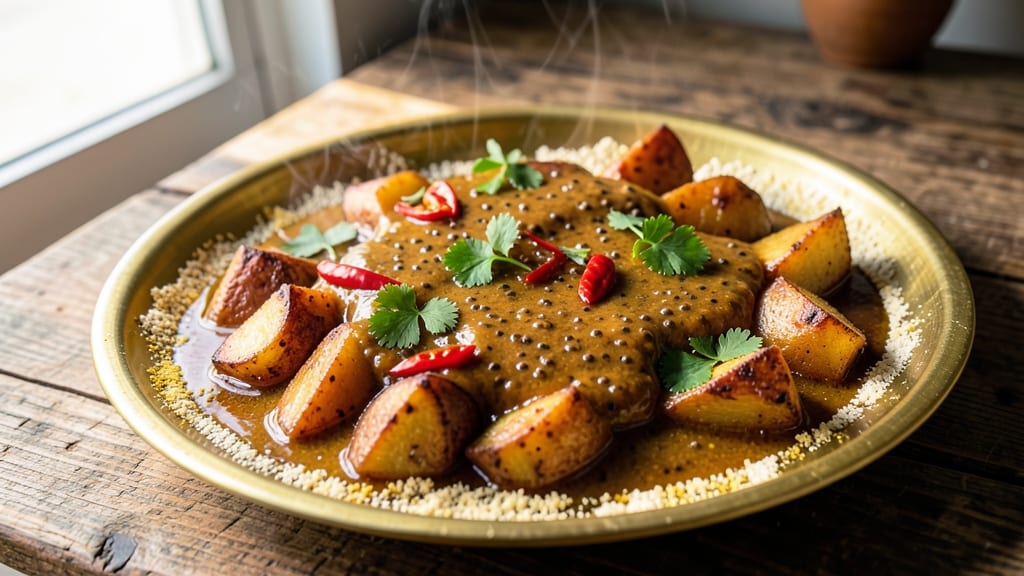
This Bengali veg recipe brings the bold flavors of West Bengal to your kitchen with mustard oil's signature zing and perfectly spiced potatoes. The aromatic blend of cumin, turmeric, and red chili creates a symphony of warmth that transforms simple potatoes into a dish worthy of any festive spread.
I've refined this recipe over years of family gatherings, where it became the star of our vegetarian thali.
The magic lies in the mustard oil, which carries the earthy, slightly bitter notes that define Bengali cuisine. Lightly tempering the spices in hot oil before adding the potatoes ensures each bite bursts with flavor, while the final touch of fresh coriander adds brightness.
This dish pairs beautifully with steamed rice or dal, creating a complete meal that feels both comforting and celebratory.
What makes this recipe special is its balance—spicy yet not overpowering, rich yet light enough to enjoy as a snack or main course. The potatoes emerge tender yet firm, coated in a fragrant crust that clings to every bite.
Whether you're serving guests or treating yourself, this dish delivers restaurant-quality results with minimal effort.
For those new to Bengali flavors, start with a small batch to appreciate the depth of mustard oil's character. The recipe scales effortlessly for larger gatherings, and the leftovers reheat beautifully. Let's bring the essence of Kolkata to your kitchen with this timeless vegetarian classic.
Ingredients for bengali veg
Simple ingredients, bold Bengali flavors—this dish brings Kolkata's spice magic to your kitchen.
| Ingredient | Amount | Notes |
|---|---|---|
| Russet Potatoes 🥔 | 2 lbs | Medium-sized, peeled and cubed |
| Mustard Oil 🫒 | ½ cup | Lightly toasted for flavor |
| Ground Cumin Seeds 🌿 | 1 tbsp | Toasted for deeper aroma |
| Turmeric Powder 🌶️ | 1 tsp | Freshly ground preferred |
| Red Chili Powder 🌶️ | 1 tsp | Adjust for heat preference |
| Asafoetida (Hing) 🌿 | ¼ tsp | Essential for authentic taste |
| Fresh Coriander Leaves 🌿 | ¼ cup | Chopped for garnish |
| Garlic Cloves 🧄 | 4 cloves | Minced for tempering |
| Onion 🧅 | 1 whole | Finely chopped |
| Ghee 🧈 | 2 tbsp | For richness and flavor |
| Salt 🧂 | 1 ½ tsp | Adjust to taste |
| Lemon Juice 🍋 | 1 tbsp | Freshly squeezed |
| Cumin Seeds 🌿 | ½ tsp | For tempering |
Mustard oil is the soul of this dish. Indian grocery stores or specialty shops carry the best—look for brands like FMCG or Adani Wilmar. If you can't find it, toasted sesame oil works in a pinch, but nothing beats the authentic zing. Toast the oil low and slow to mellow its bite, then add the spices. The potatoes should be cubed evenly—1.5-inch pieces cook just right without falling apart. Fresh cumin seeds? Toast them in a dry pan until fragrant for that extra depth. Spicewalla or Penzeys have great bulk options if you want to stock up.
No mustard oil? Sesame oil plus a pinch of turmeric mimics some of the earthiness, but you'll miss the signature flavor. Short on asafoetida? Garlic powder at double the amount gives a milder kick. The red chili powder can be swapped for cayenne or Kashmiri chili—just start with half and adjust. Fresh coriander is ideal, but dried works at one-third the amount. Want extra richness? Add 1 tbsp yogurt when tossing the potatoes. The lemon juice at the end brightens everything—don't skip it, even if you're not a huge lemon fan.
This dish tastes even better the next day—3-4 days in the fridge, reheated with a splash of water. For larger gatherings, double the batch—potatoes hold up well when reheated. Store in airtight containers with a paper towel to absorb any moisture. Freezes beautifully for up to 3 months, though the texture gets slightly softer after thawing. Garnish with extra coriander right before serving—freshness matters here.
Why You'll Love This Recipe
- One-Pot Wonder: I swear by this recipe when I’m too tired to wash a million bowls—just toss the potatoes in a pan, let the mustard oil work its magic, and you’re done. The cumin and chili powder do all the heavy lifting while you sip tea.
- Crispy-Creamy Magic: That golden crust on the potatoes? Pure satisfaction. The mustard oil adds a smoky punch, while the turmeric keeps it bright and warm—like a hug in every bite. (Yes, even on a Tuesday night.)
- Meal Prep MVP: Between us, this keeps perfectly for days. Reheat with a splash of water, and it’s just as good cold for lunches. My lunchbox secret weapon? These potatoes.
- Budget-Friendly Luxury: Russet potatoes and spices cost pennies, but the flavor? Ridiculously good. No fancy ingredients—just honest, bold taste that makes you feel like you splurged. (Spoiler: You didn’t.)
Step-by-step instructions for mustard oil zing and spiced potato delight
Here's how to bring out the bold flavors of this Bengali classic with perfectly balanced spices.
Prepare and Cook the Potatoes
Start by peeling the 2 lbs russet potatoes and cutting them into 1-inch cubes. Place them in a large pot and cover with cold water by about 1 inch. Add 1.5 tsp salt and bring to a boil over medium-high heat. Once boiling, reduce heat to medium and cook for 12-15 minutes until the potatoes are fork-tender but not falling apart.
Drain the potatoes immediately and set aside. You want them slightly firm so they hold their shape when tossed with the spices. If they're still too hard, cook them another 2-3 minutes—this step is crucial for the perfect texture in your final dish.
Toast the Spices for Maximum Flavor
In a small dry skillet over medium heat, toast the 0.5 tsp cumin seeds for 30 seconds until they begin to sizzle and release their aroma. Immediately transfer them to a small bowl and set aside. In the same skillet, add the 1 tbsp ground cumin seeds and toast for 1 minute until fragrant—this deepens their flavor significantly.
Next, add the 1 whole onion, finely chopped, and cook for 5-6 minutes until golden brown. Stir in the 4 cloves garlic cloves, minced, and cook for another 30 seconds until fragrant. Remove from heat and set aside with the toasted spices. This aromatic base will form the flavor foundation of your dish.
Temper the Mustard Oil with Ghee and Spices
Heat the 0.5 cup mustard oil in a heavy-bottomed pan over low heat. Once warm, add the 2 tbsp ghee and let it melt completely. Add the 0.25 tsp asafoetida (hing) and stir for 10 seconds—this releases its unique, umami-rich aroma.
Immediately add the 1 tsp turmeric powder and 1 tsp red chili powder, stirring constantly for 30 seconds to prevent burning. The oil will begin to bubble slightly, and the spices will infuse their vibrant colors and flavors. This tempering process is what gives this dish its signature depth of flavor.
Combine Potatoes with the Spiced Oil
Add the cooked potatoes to the tempered oil and gently toss to coat them evenly. Cook on medium heat for 5-6 minutes, stirring occasionally, until the potatoes are lightly golden and the oil has permeated their surface. This step ensures each bite is packed with flavor.
Finally, stir in the 1 tbsp lemon juice and 0.25 cup fresh coriander leaves, chopped. The acidity of the lemon juice brightens the dish, while the coriander adds a fresh finish. Taste and adjust the seasoning if needed—this is your chance to balance the flavors to your preference.
Serve Warm with Traditional Accompaniments
Transfer the spiced potatoes to a serving dish and let them sit for 2-3 minutes to allow the flavors to meld. Serve warm with steamed rice or roti for a complete Bengali meal experience. The mustard oil's zingy flavor pairs beautifully with the mild sweetness of the potatoes, creating a dish that's both comforting and exciting.
Here's the thing—this dish tastes even better the next day as the flavors develop further. Store any leftovers in an airtight container and reheat gently before serving. The key to success is patience in the tempering process, so don't rush those spices—they're what make this dish truly special.
Pro Tips For Making Bengali Veg
- CUT POTATOES EVENLY: Use a mandoline or sharp knife to slice them ¼-inch thick—consistency matters more than you think. I learned this the hard way when one batch turned mushy while another stayed crunchy; uniform pieces cook at the same rate.
- HEAT THE OIL RIGHT: Mustard oil burns fast—get it smoking hot before adding cumin, then immediately turn the heat down to medium. After burning three batches, I finally figured out that patience here means the cumin toasts golden, not bitter.
- SALT THE POTATOES FIRST: Toss the sliced potatoes with salt and turmeric 10 minutes before cooking—it draws out moisture and keeps them from turning soggy. Sounds weird, but it works: the oil clings better, and the final texture stays crisp.
- SKIP THE OVERCROWDING: Fry in batches, even if it means two rounds in the pan—packing them too tight steams the potatoes instead of crisping. I was skeptical until I tried it: the first batch gets that perfect golden-brown, not a sad, limp mess.
Creative variations of these flavors
Bengali Snack Style
Transform this dish into a crispy, crunchy snack by frying the potatoes instead of boiling them. Cut 2 lbs russet potatoes into ½-inch matchsticks and shallow-fry in mustard oil until golden brown.
Toss with the same spice blend—1 tsp turmeric, 1 tsp red chili powder, and ½ tsp asafoetida—then finish with lemon juice. Serve warm with a side of mint chutney for a perfect Bengali street-food vibe. 🌶️
Coconut Curry Twist
For a creamy, coconut-infused version, replace the mustard oil with ½ cup coconut oil and add ½ cup coconut milk while tempering the spices. Simmer the potatoes in this mixture for 5 minutes until they absorb the flavors.
Garnish with toasted coconut flakes and fresh cilantro. This fusion version works wonderfully with steamed jasmine rice or naan bread.
Sweet Potato Adaptation
Swap russet potatoes for 2 lbs sweet potatoes to add natural sweetness and vibrant color. Peel and cube them, then boil until tender. Use the same spice blend but reduce the red chili powder to ½ tsp to balance the sweetness.
Finish with a drizzle of honey and extra coriander for a delightful dessert-like side dish that pairs beautifully with yogurt or raita.
Spicy Green Chili Version
For a fiery kick, add 3-4 green chilies, finely chopped, to the tempering oil along with the garlic and onions. Use 1.5 tsp red chili powder instead of 1 tsp to amplify the heat.
Garnish with extra green chilies and lemon wedges. This version is perfect for those who love bold, spicy flavors and pairs wonderfully with cooling cucumber raita to balance the heat. 🔥
Lentil and Potato Mix
Combine this dish with ½ cup cooked masoor dal (red lentils) for a protein-packed Bengali-style dal-potato mix. Add the lentils to the tempered oil along with the potatoes and cook until everything is heated through.
Garnish with extra coriander and a sprinkle of roasted cumin seeds. This hearty dish is ideal for a complete vegetarian meal, especially during festive occasions.
Smoky Grilled Variation
For a smoky twist, grill the potatoes on a charcoal or gas grill after boiling. Brush them lightly with mustard oil and grill until charred in spots. Toss with the spice blend and finish with lemon juice.
The smoky char adds a unique depth that complements the earthy mustard oil beautifully. Serve with a side of onion chutney for dipping. ✨
Nutrition facts
Frequently asked questions
Can I substitute mustard oil if I can't find it?
Yes! While nothing beats authentic mustard oil, you can use toasted sesame oil as a close alternative. For extra depth, add ½ tsp turmeric to the oil before tempering. If you prefer a milder flavor, ghee or coconut oil also work well, though they'll change the dish's signature zing.
How do I adjust the spice level for kids or sensitive eaters?
Reduce the red chili powder to ½ tsp and skip the green chilies entirely. For extra mildness, add 1 tsp yogurt when tossing the potatoes—it cools the heat. Always taste as you go! The mustard oil's flavor remains even with less spice.
Why does my dish taste bland after cooking?
Blandness usually means the spices weren't toasted enough or the oil wasn't hot enough during tempering. Always toast spices on medium heat until fragrant, and ensure the mustard oil reaches low smoke point before adding spices. Finish with lemon juice and fresh coriander to brighten flavors.
Can I make this dish ahead of time?
This dish tastes even better the next day. Store in an airtight container for up to 4 days in the fridge. Reheat gently with a splash of water to restore moisture. For longer storage, freeze for up to 3 months, though texture may soften slightly.
What's the best way to serve this Bengali potato dish?
Pair it with steamed basmati rice or phulka roti for a complete meal. For extra authenticity, add a side of boondi raita or cucumber-onion salad. The mustard oil's richness balances perfectly with cooling yogurt-based sides.