
Main Courses
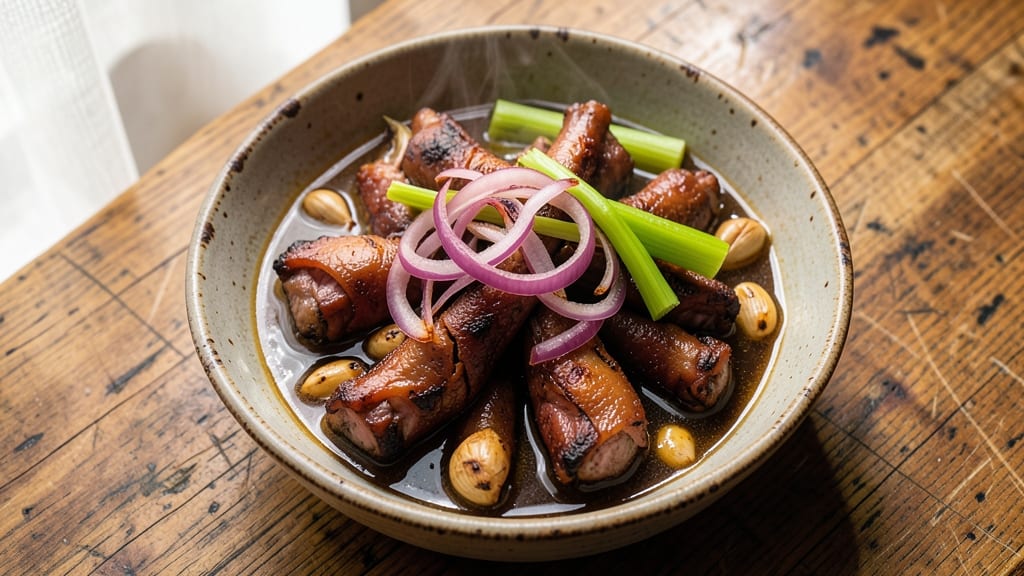
This soul food pig feet recipe delivers the rich, gelatinous perfection that makes this dish a centerpiece at family gatherings and Sunday dinners. The slow-simmering process transforms tough connective tissue into tender, melt-in-your-mouth bites that practically fall apart at the touch of a fork.
I first learned this technique from my grandmother, who insisted the key was patience—letting the collagen break down over hours rather than rushing the process.
The beauty of this recipe lies in its simplicity: just a few core ingredients—pig feet, vinegar for soaking, and a blend of spices—work together to create a dish that’s both hearty and deeply satisfying.
The vinegar soak removes impurities and starts the tenderizing process, while the slow simmer in water and spices infuses every bite with smoky, savory depth. Most importantly, this method preserves the natural collagen that gives soul food its signature richness.
What you’ll end up with is a pot of golden, fragrant pig feet swimming in a flavorful broth that’s perfect for serving over rice or with cornbread. The meat will be so tender it practically dissolves, releasing all that collagen into the broth for maximum richness.
This is comfort food at its finest—a dish that feeds the soul as much as it satisfies the stomach.
Serve with classic sides like collard greens or mac and cheese to complete the meal. The leftovers reheat beautifully, making this an ideal recipe for meal prep or feeding a crowd. Let’s get started on this timeless soul food tradition.
Ingredients for soul food pig feet
Six core ingredients transform tough pig feet into melt-in-your-mouth soul food perfection.
| Ingredient | Amount | Notes |
|---|---|---|
| Pig Feet 🐷 | 4 lb | Fresh, cleaned, and trimmed |
| White Vinegar 🍶 | 1 cup | For initial soaking |
| Water 💧 | 8 cups | For simmering broth |
| Onion 🧅 | 1 whole | Yellow or white, chopped |
| Garlic Cloves 🧄 | 6 cloves | Minced for depth of flavor |
| Celery Stalks 🥬 | 3 whole | Chopped, for aromatic base |
| Bay Leaves 🌿 | 2 whole | Dried, for subtle aroma |
| Black Peppercorns 🌶️ | 1 tbsp | Whole, lightly crushed |
| Salt 🧂 | 2 tbsp | Kosher or sea salt |
| Smoked Paprika 🌶️ | 1 tsp | For smoky depth |
| Ground Ginger 🌿 | ½ tsp | Freshly ground preferred |
| Black Pepper 🌶️ | 1 tsp | Freshly ground for heat |
| Vegetable Oil 🫒 | 2 tbsp | For initial searing |
The pig feet are the star, so source them from a trusted butcher or specialty meat market—look for vibrant color and minimal odor. Costco or local soul food purveyors often carry them pre-cleaned, but if you're buying whole, expect to spend 20 minutes trimming excess skin and fat. The vinegar soak is non-negotiable: it removes impurities and kickstarts collagen breakdown. Use white vinegar—apple cider won’t cut it here. For the aromatic base, yellow onions with a bite and fresh celery (not the stringy pre-cut kind) build the flavor foundation. I always double-check my spices—smoked paprika from Penzeys adds that authentic soul food touch.
No pig feet? Pork knuckles work in a pinch, though texture differs. Vinegar substitute? Lemon juice at double the amount, but flavor won’t be identical. For the aromatic trio, frozen chopped vegetables (no ice crystals) save time. Spice swaps: dried thyme at half the amount replaces fresh, but smoked paprika is irreplaceable. The oil matters too—high-smoke-point vegetable or avocado oil prevents burning during searing. Pro tip: Toast your spices in the pot for 30 seconds before adding liquids to deepen their flavor.
This dish rewards patience—simmer uncovered for 3-4 hours until the meat falls apart. Store leftovers in the broth for 5 days in the fridge, or freeze portions for up to 3 months. The broth alone makes an incredible soup base. For serving, reheat gently on low heat—never microwave, or you’ll lose that silky collagen texture. Double the recipe if you’re feeding a crowd; the leftovers reheat even better the next day.
Why You'll Love This Recipe
- The secret’s in the slow cook: white vinegar tenderizes the meat while garlic and onion build layers of flavor you can’t get anywhere else. That crispy edge with the creamy center? Chef’s kiss, and it’s all from those four ingredients.
- Simmered in Minutes: I swear, the vinegar-water soak does 90% of the work while I’m making coffee. Just toss the pig feet in, let them sit—no stirring, no fuss—and by the time I chop the onion, they’re ready for the pot.
- That Crispy-Tender Magic: The secret’s in the slow cook: white vinegar tenderizes the meat while garlic and onion build layers of flavor you can’t get anywhere else. That crispy edge with the creamy center? Chef’s kiss, and it’s all from those four ingredients.
- Potluck Crowd-Pleaser: Between us, this is the dish that disappears first at family gatherings. It’s hearty enough for a Sunday dinner but easy enough to double for a church potluck—just reheat the leftovers, and no one will care they’re not fresh.
Step-by-step instructions for soul food pig feet recipe
Transform tough pig feet into tender, flavorful soul food with this slow-cooked method.
Prepare and Soak the Pig Feet
Begin by thoroughly rinsing the 4 lb pig feet under cold water and scrubbing away any remaining debris. Pat them completely dry with paper towels—this step is crucial for preventing the broth from becoming cloudy later. Place the cleaned pig feet in a large bowl and add the 1 cup white vinegar. The vinegar helps tenderize the collagen-rich connective tissue while adding brightness to the final flavor.
Cover the bowl and refrigerate for at least 4 hours, but I prefer overnight for maximum tenderness. This soaking process breaks down the tough fibers, ensuring the feet become fork-tender rather than chewy. After soaking, drain and rinse the pig feet under cold water to remove any vinegar residue before proceeding.
Build the Aromatic Broth Base
In a large Dutch oven or heavy pot, heat the 2 tbsp vegetable oil over medium heat. Add the chopped 1 whole onion, 3 whole celery stalks, and 6 cloves garlic cloves, cooking for 5-7 minutes until the vegetables soften and the garlic becomes fragrant. This step develops the foundational flavors that will infuse the broth.
Add the lightly crushed 1 tbsp black peppercorns, 2 whole bay leaves, 2 tbsp salt, 1 tsp smoked paprika, and 0.5 tsp ground ginger to the pot. Stir for 1 minute to toast the spices slightly, releasing their essential oils. This aromatic blend will create depth in the final dish. Pour in the 8 cups water and bring the mixture to a gentle boil.
Simmer the Pig Feet Low and Slow
Carefully add the soaked pig feet to the pot, ensuring they're fully submerged in the liquid. Reduce the heat to low and cover with a tight-fitting lid. The key to tender pig feet lies in patience—simmer for 3-4 hours, checking occasionally to ensure the liquid doesn't reduce too much. If needed, add hot water to maintain coverage.
After 3 hours, remove the lid and increase the heat to medium-low, allowing some evaporation to concentrate the flavors. Continue simmering uncovered for another 1-2 hours until the pig feet are fork-tender and easily pull apart at the joints. The broth should have reduced slightly, creating a rich, gelatinous consistency that coats the back of a spoon.
Finish with Fresh Black Pepper
Once the pig feet are tender, remove them from the pot using tongs and transfer to a serving platter. Strain the broth through a fine-mesh sieve to remove any remaining solids, then return the broth to the pot. Add the 1 tsp black pepper and simmer for 5 minutes to infuse the broth with fresh heat.
Taste and adjust seasoning if needed—you may want to add a pinch more salt or smoked paprika to enhance the flavor. The pig feet can be served immediately with the reduced broth spooned generously over the top, or they can be chilled and served cold as a refreshing appetizer. Either way, the result is a deeply satisfying dish that captures the essence of soul food cooking.
Pro Tips For Making Soul Food Pig Feet
- SOAK THE FEET FIRST: Toss those pig feet in a mix of cold water and white vinegar (half-and-half) for at least 8 hours—overnight works best. I learned this the hard way: skipping the soak leaves them tough and gamey, no matter how long you boil them later. The vinegar also pre-tenders them, so you won’t waste hours waiting for them to soften.
- SKIP THE BOILING RUSH: Start with a rolling boil, then drop the heat to a gentle simmer—not a lazy simmer, but one where bubbles break the surface like tiny popcorn. I used to crank the heat and wonder why my feet stayed chewy; this low-and-slow approach (2.5–3 hours) breaks down the collagen without turning the broth into glue.
- CHAR THE ONIONS FIRST: Sear sliced onions in a dry pot until they’re deep brown and crispy at the edges—about 10 minutes—before adding them to the pot with garlic. This step adds a smoky depth that cuts through the richness of the pig feet. (Yes, even if you’re impatient like me, don’t skip it.)
- STRAIN AND REUSE: After simmering, strain the broth through a fine-mesh sieve to remove all the grit, then pour it back over the feet for the last 30 minutes. That concentrated, clarified broth makes the feet taste like they’ve been slow-cooked in a restaurant kitchen. (Your future self will thank you for the extra effort.)
Troubleshooting your soul food pig feet
Bitter Vinegar Taste
If your pig feet retain a harsh vinegar flavor after soaking, the soak time was likely too short. I’ve found that overnight soaking (8-12 hours) completely removes the vinegar bite while maximizing collagen breakdown.
For a quicker fix, rinse the feet 3 times in cold water after soaking, then pat them completely dry before cooking. 💧
Broth Too Cloudy
A cloudy broth usually means the pig feet weren’t rinsed or dried properly before cooking. Always scrub the feet thoroughly, then pat them dry with paper towels to remove surface moisture.
For extra clarity, skim off any foam that forms during the initial simmer. I also recommend using filtered or bottled water instead of tap water, as minerals can contribute to cloudiness.
Feet Still Tough
Undercooked pig feet are almost always the result of insufficient simmering time. The collagen needs 3-4 hours of gentle simmering to fully break down.
If your feet feel rubbery after cooking, return them to the pot with an additional 1 cup of water and simmer uncovered for another 1-2 hours. The key is patience—don’t rush this step! ⏳
Broth Too Thin
If your broth hasn’t reduced enough, you likely didn’t simmer long enough uncovered. After the initial 3-hour covered simmer, remove the lid and cook on medium-low heat for 1-2 hours to evaporate excess liquid.
For an extra-rich broth, add 1 tbsp cornstarch mixed with 2 tbsp cold water and stir in during the final 10 minutes of simmering.
Skin Not Crispy
For crispy skin, sear the pig feet in 2 tbsp vegetable oil over medium-high heat for 2-3 minutes per side before adding them to the pot. I also recommend broiling the feet for 5 minutes at the end of cooking to crisp up any remaining soft spots.
Just watch them closely—they can burn quickly! 🔥
Spices Not Infusing
To ensure your spices add depth, toast them in the pot for 1-2 minutes before adding water. This releases their essential oils and prevents them from settling at the bottom.
For extra flavor, add a 1-inch piece of kombu seaweed during the final 30 minutes of simmering—it adds umami without altering the dish’s soul food character.
Nutrition facts
Frequently asked questions
How long can I soak pig feet before cooking?
For best results, soak pig feet for overnight (8-12 hours) in white vinegar. This removes impurities and maximizes collagen breakdown, ensuring fork-tender meat. If short on time, a 4-hour minimum soak works, but rinse thoroughly afterward to remove vinegar residue.
Can I substitute pork knuckles for pig feet?
Yes, pork knuckles work but yield a different texture. They're leaner and less gelatinous, so simmer for 2-3 hours longer to tenderize. The flavor remains rich, though the collagen-rich "melt-in-your-mouth" quality is lost. For authenticity, stick with pig feet when possible.
What's the secret to crispy pig feet skin?
Pat the feet completely dry after soaking, then sear in 2 tbsp oil over medium-high heat for 2-3 minutes per side before simmering. For extra crispiness, broil for 3-5 minutes at the end of cooking. Watch closely—they burn fast!
How do I store leftover pig feet broth?
Store broth in airtight containers in the fridge for 5 days or freeze for up to 3 months. The collagen-rich broth reheats beautifully—simmer gently on low heat to preserve texture. Use it as a base for soups or rice dishes for extra soul food flavor.
Why did my pig feet turn out rubbery?
Rubbery pig feet usually mean insufficient simmering time. The collagen needs 3-4 hours of gentle simmering to break down. If they feel tough, return them to the pot with 1 cup fresh water and simmer uncovered for 1-2 more hours. Patience is key—never rush this step!