Main Courses
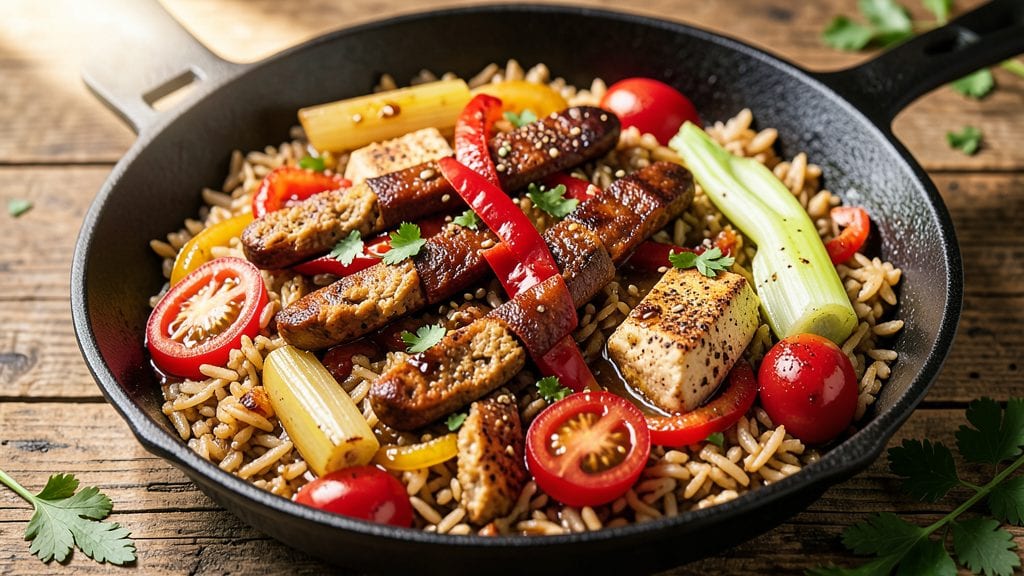
This veg jambalaya recipe delivers all the bold flavors and hearty texture of the classic dish—without a single bite of meat. The secret lies in a perfect balance of smoky spices, the holy trinity of onions, bell peppers, and celery, and protein-rich tofu that soaks up every flavorful bite.
After years of perfecting this one-pot wonder, I can confidently say this version rivals traditional jambalaya in both taste and satisfaction.
The foundation starts with brown rice simmered in a rich, spiced broth that carries layers of heat from cayenne and smoked paprika. Hearty vegetables like mushrooms, okra, and sweet potatoes take center stage, while plant-based sausage adds that signature meaty depth.
What makes this recipe truly special is how the flavors meld together during the slow simmer, creating a dish that's both comforting and complex.
By the time you serve this jambalaya, you'll have a steaming pot of golden rice studded with tender vegetables, all blanketed in a fragrant, slightly spicy sauce. The texture is perfect—creamy rice, crisp-tender veggies, and protein that holds its shape while absorbing all the smoky goodness.
It's the kind of dish that disappears quickly, leaving everyone asking for seconds.
This recipe works beautifully as a weeknight dinner or a centerpiece for gatherings—just scale the ingredients to fit your crowd. The best part? It's a complete meal in one pot, with minimal cleanup and maximum flavor. Let's get cooking!
Ingredients for veg jambalaya
Brown rice, smoky spices, and hearty veggies—this one-pot vegan jambalaya packs all the bold flavors you crave.
| Ingredient | Amount | Notes |
|---|---|---|
| Long-Grain Brown Rice 🌾 | 1 ½ cups | Uncooked, rinsed well |
| Extra-Firm Tofu 🥬 | 14 oz | Pressed, cubed for texture |
| Vegan Andouille Sausage 🌭 | 12 oz | Plant-based, sliced into rounds |
| Yellow Onion 🧅 | 1 whole | Diced small, holy trinity |
| Green Bell Pepper 🌶️ | 1 whole | Diced small, holy trinity |
| Celery Stalks 🥬 | 3 whole | Diced small, holy trinity |
| Sweet Potatoes 🍠 | 1 lb | Peeled, cubed small |
| Okra Pods 🌱 | 8 whole | Trimmed, sliced lengthwise |
| White Mushrooms 🍄 | 8 oz | Sliced thin, cremini works too |
| Garlic Cloves 🧄 | 4 cloves | Minced fine, aromatic base |
| Cayenne Pepper 🔥 | 1 tsp | Adjust for heat preference |
| Smoked Paprika 🌶️ | 1 tbsp | Key for that smoky depth |
| Dried Thyme 🌿 | 1 tsp | Or 1 tbsp fresh thyme leaves |
| Ground Black Pepper 🌶️ | ½ tsp | Freshly cracked for best flavor |
| Sea Salt 🧂 | 1 ½ tsp | Kosher preferred, adjust to taste |
| Vegetable Broth 💧 | 2 cups | Low-sodium, homemade preferred |
| Tomato Paste 🍅 | 2 tbsp | Smooth, no sugar added |
| Lemon Juice 🍋 | 1 tbsp | Freshly squeezed, brightens flavors |
| Extra-Virgin Olive Oil 🫒 | ¼ cup | High quality, fruity notes |
| Fresh Parsley 🌿 | ¼ cup | Chopped, for garnish |
The tofu and vegan sausage are absolute game-changers here. Trader Joe's has the best plant-based sausage—it holds up perfectly during the long simmer. For tofu, extra-firm is a must; press it for 20 minutes first to get rid of excess water. The holy trinity—onion, bell pepper, and celery—should be finely diced so they disappear into the dish rather than sitting as chunks. Penzeys is my go-to for smoked paprika—it's got that authentic smoky kick that separates this from regular paprika. Look for it in the spice aisle or bulk section.
No vegan sausage? Mushrooms marinated in soy sauce add umami depth, or crumbled tempeh for a meatier texture. Skip the okra? Green beans or zucchini work too—just slice them smaller so they cook faster. The tomato paste can be swapped for fire-roasted diced tomatoes if you're in a pinch, but trust me on the paste for that concentrated flavor. Fresh thyme is ideal, but if you're using dried, measure it out carefully—it's way more potent than fresh. For extra heat, add a pinch of red pepper flakes at the end.
This jambalaya tastes even better the next day—flavors meld beautifully overnight. Store leftovers in an airtight container in the fridge for up to 5 days, or freeze portions for 3 months. I like to double the batch because it disappears so fast. Garnish with fresh parsley right before serving—it adds that pop of color and freshness. The rice keeps well, so reheat with a splash of water or broth to restore moisture.
Why You'll Love This Recipe
- One-Pot Magic: I swear by this recipe when I’m too tired to scrub pots—just brown the tofu and vegan sausage, dump in the rest, and let it simmer. The brown rice soaks up all the smoky, spiced liquid without extra effort, and honestly? I’ve never had a jambalaya this easy.
- Smoky Depth: That vegan andouille sausage and crispy tofu? They’re the stars. The onion and bell pepper soften just enough to melt into the rice, but the smoky heat lingers—like a hug from a Louisiana kitchen. Between us, my picky roommate actually asked for seconds.
- Meal Prep Hero: Between us, this is my lunchbox lifesaver. The flavors only get better the next day, and it reheats like a dream. Pack it in jars for work or freeze half for those nights when you’d rather binge Netflix than cook.
- Budget-Friendly Feast: Brown rice and tofu stretch this dish into a full meal without breaking the bank. A single batch feeds four, and the leftovers? Just as good cold in wraps the next day. My wallet and taste buds win every time.
Step-by-step instructions for smoky spiced rice with hearty veggie bites
This jambalaya delivers bold Louisiana flavors with plant-based protein and vibrant vegetables—simple steps for a dish that tastes like a restaurant favorite.
🍳 Step 1: Sauté the Holy Trinity and Sausage
Heat the 0.25 cup extra-virgin olive oil in a large, heavy-bottomed pot over medium-high heat. Add the 1 whole yellow onion, 1 whole green bell pepper, and 3 whole celery stalks—all diced small—and cook for 5-6 minutes until they soften and begin to caramelize slightly. You'll see the onions turn translucent and the peppers release their sweet aroma.
Push the vegetables to the sides of the pot and add the 12 oz vegan andouille sausage in a single layer. Cook for 3-4 minutes until the sausage pieces are golden brown and crispy around the edges. This step builds the foundation of your jambalaya—don't rush it, or the sausage will turn rubbery instead of flavorful. Break up any large pieces with a wooden spoon to distribute the spices evenly.
🍳 Step 2: Cook the Protein and Vegetables
Add the 14 oz cubed extra-firm tofu to the pot and cook for 4-5 minutes until lightly browned. Stir occasionally to ensure all sides get crispy. Next, add the 1 lb cubed sweet potatoes, 8 sliced okra pods, and 8 oz sliced white mushrooms. Cook for another 5-6 minutes, stirring occasionally, until the sweet potatoes begin to soften slightly and the mushrooms release their moisture.
Here's the thing—this is where the flavors start to meld. The tofu will absorb the smoky notes from the sausage, and the okra will release its unique texture. If the pot gets too dry, add ¼ cup vegetable broth to prevent sticking. You want everything to cook through but still hold its shape—overcrowding will steam instead of sear.
🍳 Step 3: Build the Spiced Base
Stir in the 4 minced garlic cloves, 1 tbsp smoked paprika, 1 tsp dried thyme, 1 tsp cayenne pepper, 0.5 tsp ground black pepper, and 1.5 tsp sea salt. Cook for 1-2 minutes until the garlic becomes fragrant and the spices bloom—this releases their essential oils and deepens the flavor profile. The cayenne will add a subtle kick, so taste and adjust if you prefer more heat.
Add the 2 tbsp tomato paste and cook for 1 minute, stirring constantly. This creates a rich, umami-packed base that ties all the ingredients together. The tomato paste will darken slightly, giving your jambalaya that classic Louisiana depth. If you're worried about the heat, don't be—this step mellows the spices into the sauce rather than letting them dominate.
🥘 Step 4: Simmer with Rice and Broth
Add the 1.5 cups long-grain brown rice and stir to coat it evenly in the spiced mixture. Pour in the 2 cups vegetable broth and bring the mixture to a boil. Once boiling, reduce the heat to low, cover the pot with a tight-fitting lid, and simmer for 40-45 minutes. This is where patience pays off—don't peek! Every time you lift the lid, you release steam and extend the cooking time.
After 25 minutes, check the rice for doneness. It should be tender but still have a slight bite. If it's not quite there, add another ¼ cup vegetable broth and continue cooking. The rice should absorb all the liquid by the end, leaving you with a thick, flavorful jambalaya. If it's still too wet, uncover and simmer for 5 more minutes to evaporate the excess moisture.
🍽️ Step 5: Finish and Serve
Remove the pot from heat and stir in the 1 tbsp lemon juice. This brightens the dish and cuts through the richness of the spices. Let the jambalaya sit, covered, for 5 minutes to allow the flavors to meld even more. The lemon juice will also help balance the smokiness from the paprika and sausage.
Garnish with the 0.25 cup chopped fresh parsley just before serving. The parsley adds a fresh contrast to the smoky, spiced rice and hearty vegetables. Serve immediately with crusty bread or over a bed of greens to soak up every last bit of that incredible jambalaya sauce. Each bite should deliver a perfect balance of smoky, spicy, and sweet flavors—just like a classic Louisiana jambalaya, but entirely plant-based.
Pro Tips For Making Veg Jambalaya
- CRISP THE TOFU FIRST: I learned this the hard way—skipping the tofu crisping step means it stays rubbery. Press the tofu, cube it, then pan-fry in a dry skillet until golden (about 5 minutes per side). That extra texture makes all the difference when it soaks up the jambalaya’s flavors.
- DON’T SKIP THE SAUSAGE SEAR: Resist the urge to toss vegan andouille straight into the pot. Sear it first in batches—high heat, 3-4 minutes per side—until the edges darken. This locks in flavor and prevents it from turning mushy later.
- CHOP ONIONS EXTRA FINE: I was skeptical until I tried it: finely diced onions (1/8-inch pieces) cook faster and blend into the dish instead of sitting as chunks. Use a sharp knife and don’t rush—smaller pieces mean deeper flavor distribution.
- STIR THE RICE IN: After adding the rice to the pot, give it a solid stir with a wooden spoon. This ensures even coating with the spices and prevents dry pockets. (Yes, even if you’re impatient like me—just do it once.)
Flavor customization for these flavors
Spice Level Control
Adjust the heat to your preference by tweaking the cayenne pepper and smoked paprika. For a mild version, reduce the cayenne to ½ tsp and use ½ tbsp smoked paprika.
If you love heat, add ½ tsp red pepper flakes at the end or swap the cayenne for 1 tsp gochujang for a fermented kick. I often start with ½ tsp cayenne and adjust after tasting the sauce before adding the rice. 🌶️
Smoky Depth Boost
For extra smokiness, add ½ tsp liquid smoke (like La Choy) when building the spiced base. Alternatively, swap ½ tbsp smoked paprika for ½ tbsp chipotle powder for a deeper, earthier smoke.
If you have access to smoked salt, sprinkle ½ tsp over the finished dish for an authentic Louisiana touch. These tweaks elevate the dish without overpowering the veggies. 🔥
Umami Enhancers
Boost the savory depth with 1 tbsp soy sauce or 1 tsp miso paste when simmering the rice. For a richer flavor, add 2 tbsp nutritional yeast while garnishing—it adds a cheesy, umami note that balances the spices.
If you love mushrooms, increase the portion to 12 oz and sauté them longer for a meatier texture. These adjustments make the dish even more satisfying. 💫
Sweetness Balance
Add natural sweetness with ½ cup diced pineapple or ½ cup corn kernels during the final 5 minutes of simmering. For a caramelized touch, sprinkle 1 tbsp brown sugar when building the spiced base.
Sweet potatoes already add natural sweetness, so adjust based on your taste—start with ½ cup extra sweet potatoes if you prefer a sweeter jambalaya. 🍠
Herb Variations
Swap or add herbs for unique twists. Replace thyme with 1 tsp dried oregano for a Mediterranean vibe, or add 1 tsp fresh rosemary for an earthy aroma.
For a brighter finish, stir in 1 tbsp chopped cilantro instead of parsley. These herbs complement the smoky spices while keeping the dish fresh and vibrant. 🌿
Texture Adjustments
For extra crunch, stir in ¼ cup toasted pumpkin seeds or ¼ cup chopped pecans while serving. If you prefer a creamier texture, mix in ¼ cup coconut milk during the final 5 minutes of simmering. These additions add dimension without altering the core flavors of the dish. 💡
Nutrition facts
Frequently asked questions
Can I make this veggie jambalaya without tofu?
Swap the tofu for 12 oz marinated mushrooms or 12 oz plant-based crumbles (like Beyond Meat or soy curls). For a heartier texture, try 1 cup cooked lentils or 1 cup chickpeas—they hold up well during simmering and add protein. The key is choosing ingredients that can absorb the smoky flavors while maintaining structure.
How do I adjust the spice level for kids or sensitive eaters?
Start by reducing the cayenne pepper to ½ tsp and using ½ tbsp smoked paprika instead of 1 tbsp. For extra mildness, omit the cayenne entirely and add ½ tsp garlic powder instead—it gives depth without heat. Always taste the sauce before adding the rice so you can adjust further.
Can I use white rice instead of brown?
Yes, but cooking times will differ. White rice cooks faster—use 1 cup white rice instead of 1.5 cups brown and reduce the broth to 1.5 cups. Simmer uncovered for 20-25 minutes instead of 40-45, stirring occasionally to prevent sticking. The texture will be lighter, but the flavors stay rich and satisfying.
What if my jambalaya is too dry or too wet?
Too dry? Stir in ¼ cup vegetable broth and simmer uncovered for 5 minutes to restore moisture. Too wet? Uncover and simmer for 5-10 minutes longer to evaporate excess liquid. For extra insurance, use a heavy-bottomed pot—it helps control moisture better during simmering.
How should I store and reheat leftovers?
Store in an airtight container in the fridge for up to 5 days or freeze for 3 months. To reheat, add 2-3 tbsp broth or water per cup of jambalaya and simmer covered on low heat for 10-15 minutes. Stir occasionally to prevent sticking—this keeps the rice tender and flavors vibrant.