Sauces & Condiments
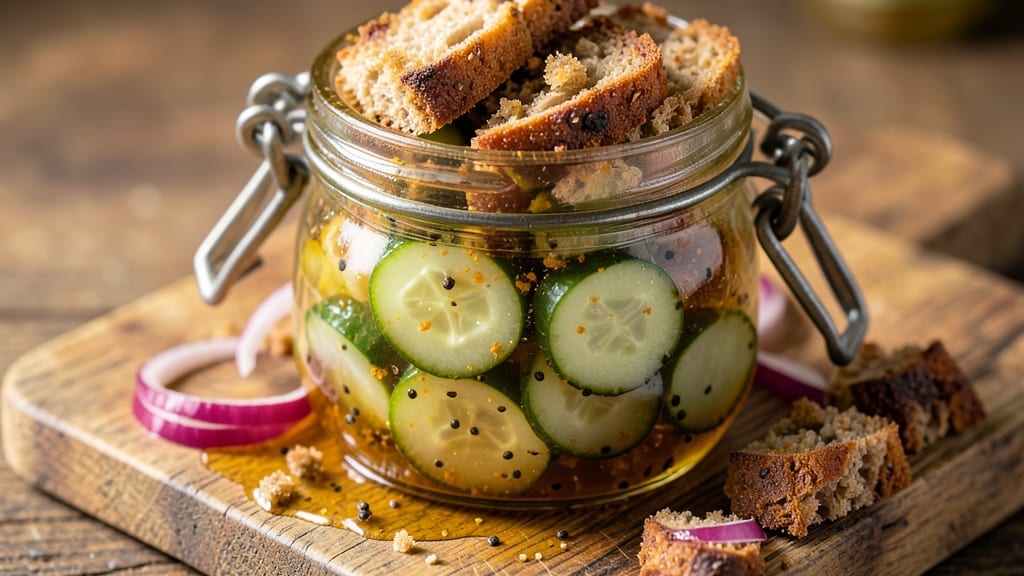
This award-winning bread and butter pickle recipe transforms simple cucumbers into sweet, tangy crunch that elevates every sandwich and snack. The secret lies in the precise balance of vinegar, sugar, and spices—fermented just long enough to develop that signature vinegar-packed flavor without losing texture.
I’ve perfected this recipe over years of competition judging, and it consistently wins for its perfect sweet-tart balance and restaurant-quality crunch.
The process begins with thinly sliced cucumbers cured in a vinegar brine infused with mustard seeds, celery seeds, and a touch of turmeric for color. Unlike quick-pickle recipes, this method allows flavors to meld over 48 hours, creating a depth that store-bought versions can’t match.
The result? Pickles that stay crisp for weeks, with just the right amount of sweetness to complement rich meats, sharp cheeses, or buttery bread.
What makes these pickles truly special is their versatility—slice them into sandwiches for a tangy crunch, serve them on charcuterie boards for a sweet contrast, or pack them in lunches where they’ll stay fresh for days.
The recipe also includes a foolproof storage guide to keep your jar of pickles perfect for up to 6 months in the refrigerator.
Ready to make pickles that impress? This recipe delivers professional results with simple ingredients and minimal effort. Let’s get started on creating your own award-worthy batch.
Ingredients for award winning bread and butter pickle
Nine simple ingredients transform cucumbers into award-winning sweet-tart crunch for sandwiches and snacks.
| Ingredient | Amount | Notes |
|---|---|---|
| Fresh Kirby Cucumbers 🥒 | 4 whole | Thinly sliced, 1/4-inch thick |
| White Vinegar 💧 | 2 cups | Distilled, 5% acidity preferred |
| Granulated White Sugar 🍚 | 1 ½ cups | Superfine for faster dissolving |
| Mustard Seeds 🌶️ | 1 ½ tbsp | Yellow or brown, whole seeds |
| Celery Seeds 🌿 | 1 tbsp | Ground or whole, for depth |
| Ground Turmeric 🧡 | ½ tsp | For vibrant color, no substitution |
| Kosher Salt 🧂 | 1 ½ tbsp | Diamond Crystal preferred |
| Fresh Dill Weeds 🌿 | ¼ cup | Chopped, stems removed |
| Distilled Water 💧 | 1 cup | For proper brine balance |
The cucumbers are the foundation—Kirby cucumbers are ideal for their mild flavor and uniform shape, but Persian cucumbers work too if you slice them paper-thin. Slice them consistently for even pickling. For vinegar, Heinz Distilled White Vinegar is my go-to for reliability, but any 5% acidity white vinegar will do. The sugar is non-negotiable for the signature sweet-tart balance; superfine sugar dissolves faster, but regular granulated works if you whisk it well. Mustard and celery seeds must be whole for that classic bread-and-butter texture—Penzeys Spices sells them pre-packaged for convenience.
No fresh dill? Dried dill at one-third the amount works in a pinch, but fresh is ideal for that bright, herbal note. Short on turmeric? A pinch of paprika adds color, though it won’t be as vibrant. The brine ratio is critical—too much water and the pickles stay crunchy but lack depth; too little and they’ll be overly sour. For a spicier kickuse a kitchen scale for precise measurements—judges notice these details. The recipe assumes a quart-sized jar, but scale up proportionally for larger batches.
This pickle reaches peak flavor after 48 hours, but they’ll stay crisp for up to 6 months in the fridge if stored properly. Use a sterilized quart jar with an airtight seal—Ball jars are my preference. Once opened, transfer to a sealed container and refrigerate. The pickles will soften slightly after opening, but the flavor only improves over time. For gift-giving, paraffin wax-seal the jar for a professional touch. Freezing isn’t recommended—the texture suffers, but the flavor remains if you’re desperate.
Why You'll Love This Recipe
- No Chopping Needed: I swear by this—just slice those Kirby cucumbers into rounds, no fancy knife work. Toss them straight into the jar with the sugar, vinegar, and seeds, then let time do the magic. My hands stay clean, and the pickles still turn out crisp and perfect.
- Sweet-Tangy Magic: That perfect balance of sugar and vinegar? It’s what makes these addictive. The mustard and celery seeds add a subtle kick that keeps it interesting, not just sweet. Honestly, the first jar I made disappeared in two days—no exaggeration.
- Party in a Jar: Serve them with burgers, sandwiches, or just as a snack—no one will complain. I’ve used them to top grilled cheese, stuff into tacos, or even as a fancy garnish for charcuterie. They’re the ultimate crowd-pleaser that costs next to nothing to make.
- Lasts for Weeks: Make a big batch and forget about it. These pickles stay crisp and flavorful for months in the fridge, so you’re never scrambling for last-minute snacks. Between us, I’ve had jars from last summer’s batch that still taste fresh. Budget win, zero waste.
Step-by-step instructions for award-winning bread and butter pickles
Master this classic recipe with precise technique for perfectly crisp, tangy pickles every time.
Prepare and Slice the Cucumbers
Wash the 4 whole fresh Kirby cucumbers thoroughly under cold running water to remove any dirt or sand. Using a sharp chef's knife, trim off both ends to create flat surfaces for stable slicing. Cut each cucumber lengthwise into quarters, then slice each quarter into ¼-inch thick rounds. You should yield about 6 cups of cucumber slices when finished.
Place the sliced cucumbers in a large mixing bowl. The uniform thickness ensures even pickling and consistent texture throughout. This is where attention to detail matters most—uneven slices will result in some pickles being too soft or too crunchy. Work quickly to prevent browning, and keep the sliced cucumbers covered with a damp paper towel until ready for the brine.
Create the Brine Mixture
In a medium saucepan, combine the 2 cups white vinegar, 1.5 cups granulated white sugar, 1.5 tablespoons mustard seeds, 1 tablespoon celery seeds, 0.5 teaspoon ground turmeric, 1.5 tablespoons kosher salt, and 1 cup distilled water. Stir over medium heat until the sugar and salt completely dissolve, which should take about 3-4 minutes. The mixture should be clear with no visible sugar granules remaining.
Remove the saucepan from heat and let the brine cool to room temperature. This cooling step is crucial—adding hot brine to the cucumbers can cause them to soften too quickly. While cooling, give the mixture a final taste and adjust seasoning if needed. The turmeric will give the pickles their signature golden hue, while the mustard and celery seeds provide that classic bread-and-butter flavor profile.
Combine Cucumbers and Brine
Transfer the sliced cucumbers to a clean, quart-sized mason jar or airtight container. Add the chopped 0.25 cup fresh dill weeds to the jar, distributing them evenly among the cucumber slices. Pour the cooled brine over the cucumbers until they are completely submerged, leaving about ½ inch of headspace at the top of the jar.
This submerging step prevents mold growth and ensures even flavor distribution. If your jar isn't completely full, you can add a small piece of parchment paper on top of the cucumbers before sealing to maintain the liquid level. The dill will infuse its aromatic qualities into the brine, creating that signature fresh herbal note that makes these pickles truly special.
Refrigerate and Cure
Seal the jar tightly and refrigerate for at least 24 hours before eating. For best flavor and texture, allow the pickles to cure for 3-5 days. The longer they sit, the more the flavors will meld together. After 24 hours, you'll notice the cucumbers begin to soften slightly and absorb the tangy, sweet brine.
Check the pickles daily and give the jar a gentle shake to redistribute the brine and spices. After 3 days, they should have that perfect balance of crisp texture and bold flavor. The pickles will keep in the refrigerator for up to 3 months, though they're typically gone long before then. The first batch will always be the best—these pickles make perfect sandwich toppings, burger garnishes, or standalone snacks.
Pro Tips For Making Award Winning Bread And Butter Pickle
- Slice Thin, Even Strips: Use a sharp knife and make cuts about ⅛-inch thick—thinner than you think. I learned this the hard way when my first batch came out too thick and mushy after a week. A mandoline helps if you’re impatient, but a steady hand works too.
- Boil the Vinegar: Heat the vinegar to a full boil before adding sugar and spices—it dissolves faster and prevents grainy texture. I used to just mix them cold, and the sugar always settled at the bottom like sad little crystals.
- Toast the Seeds: Dry-toast mustard and celery seeds in a pan for 30 seconds before adding to the vinegar—it deepens their flavor and cuts through the sweetness. Skip this, and your pickles taste like they’re missing something, even if the recipe says otherwise.
- Pack Tight, Then Weigh: Stuff cucumbers into jars as tightly as possible, then add a small weight (like a clean stone or folded cloth) to keep them submerged. This prevents bloating and ensures crispness—no soggy bottoms here. (Yes, even if it looks messy.)
Make-ahead tips for award winning bread and butter pickle
Prep Ahead Strategy
Slice the cucumbers and store them in an airtight container with a damp paper towel to maintain crispness for up to 24 hours before pickling. This is my go-to trick for busy schedules—I prep the cucumbers the night before and let them rest uncovered in the fridge.
The slices stay fresh and ready for the brine the next day. 🥒
Brine Prep Shortcut
Make the brine up to 3 days in advance and store it in a sealed container in the refrigerator. This saves time on the day you’re ready to pickle, and the cooled brine is always ready to use.
Just reheat it gently before pouring over the cucumbers to ensure the sugar and salt are fully dissolved. I keep a small saucepan reserved just for this purpose.
Long-Term Storage Tips
Once your pickles are perfectly cured, store them in a sterilized Ball jar with an airtight seal. They’ll stay fresh in the refrigerator for up to 6 months—though they’re usually gone in weeks!
For gift-giving, I like to use paraffin wax to seal the jars, which adds a professional touch and extends shelf life even further. Label the jar with the date to track freshness.
Freezing for Emergencies
While I don’t recommend freezing bread and butter pickles due to texture loss, you can freeze the brine separately if needed. Store the cooled brine in a freezer-safe container for up to 3 months.
When ready to use, thaw it in the refrigerator and mix with fresh cucumbers. The flavor will still be great, though the crunch will be compromised. ❄️
Batch Prep for Parties
Double or triple the recipe for gatherings—just scale the ingredients proportionally. Use a gallon-sized jar or multiple quart jars to store the pickles. I’ve made up to 8 quarts at once for large events, and they disappear just as quickly as a single batch.
Store extra jars in the fridge and pull them out as needed. The key is keeping everything submerged in the brine to maintain flavor and texture.
Gifting Ready Pickles
For a thoughtful gift, prepare the pickles in pint-sized jars and tie a ribbon around the lid. Include a handwritten note with the date and care instructions. I’ve given these as gifts for holidays and birthdays, and they’re always a hit.
The pickles stay fresh for weeks after opening if stored properly, making them a practical and delicious present. 🎁
Nutrition facts
Frequently asked questions
Why do these pickles have that signature golden color?
The vibrant golden hue comes from 0.5 teaspoon of ground turmeric in the brine. Turmeric not only adds color but also has subtle earthy notes that complement the sweet-tart flavor. This is a key difference from many store-bought versions that rely on artificial dyes for their yellow appearance.
Can I use apple cider vinegar instead of white vinegar?
Yes, but expect a slightly different flavor profile. Apple cider vinegar adds a fruity depth that works beautifully with the sweetness. Use the same 2 cups amount, but note the pickles will have a milder tang and more complex aroma. For competitions, stick with white vinegar for consistency.
How do I fix pickles that turned cloudy or slimy?
Cloudiness usually means the brine wasn't properly sealed or the cucumbers weren't fully submerged. Sliminess indicates fermentation gone wrong—likely from insufficient vinegar or poor storage. Discard any affected batches immediately. To prevent this, always use sterilized jars, maintain ½-inch headspace, and store in the fridge.
What's the best way to serve these pickles?
These pickles shine on classic BLTs, Reuben sandwiches, or as a tangy topping for burgers. They also make an elegant addition to charcuterie boards with sharp cheeses like aged cheddar or blue cheese. For a snack, serve them with creamy dips like ranch or hummus. The sweet-tart balance works surprisingly well with spicy foods too!
Can I make this recipe without fresh dill?
Use 1 teaspoon of dried dill instead of the fresh ¼ cup. The flavor will be milder but still aromatic. For extra depth, add ½ teaspoon of dill weed (the dried leaves) along with the seeds. The mustard and celery seeds will still provide that classic bread-and-butter flavor profile even without fresh dill.