
Side Dishes
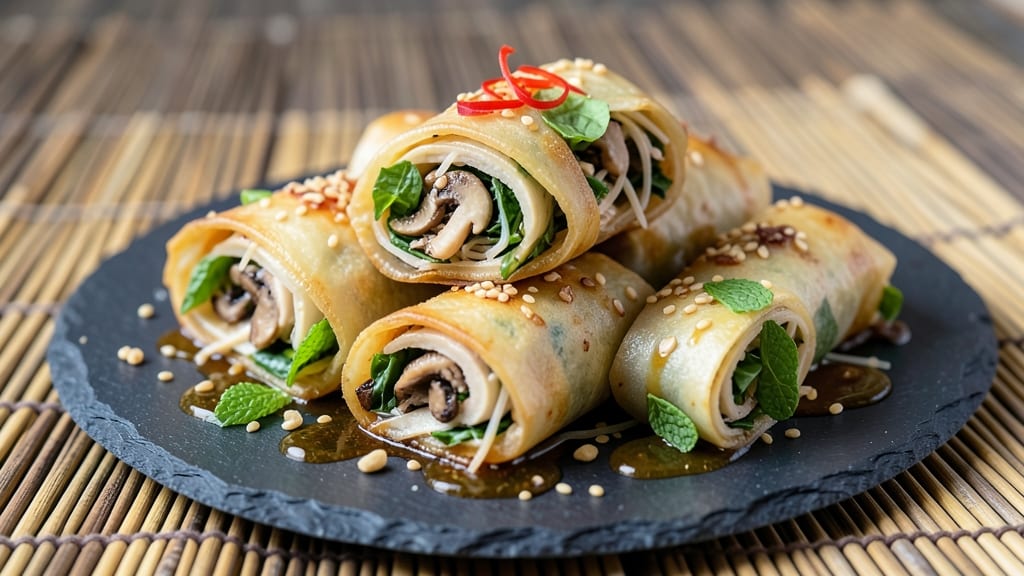
This crispy water rolls recipe transforms delicate rice paper into delicate, golden wraps filled with silky tofu, mushrooms, and fresh herbs—perfect for a light yet satisfying dish. The secret lies in properly softening the rice paper and layering ingredients precisely for that signature balance of textures.
I developed this vegetarian-friendly version after years of perfecting the technique, ensuring every roll achieves that ideal crispy edge while maintaining a tender center. ✨
The filling is where the magic happens, combining silky baked tofu, earthy mushrooms, and vibrant herbs bound together with a touch of rice vermicelli for structure. The key is working quickly once the rice paper is softened—too much handling makes it tear, while too little time results in soggy wrappers.
This method delivers restaurant-quality rolls without requiring specialized equipment, just patience and gentle hands. The result? A dish that’s both elegant and approachable, perfect for appetizers or a complete meal.
What sets this recipe apart is its adaptability—swap the tofu for shrimp or crab for a non-vegetarian version, or use a peanut sauce for a nutty twist instead of the traditional fish-free hoisin. The dipping sauce adds the final touch, enhancing each bite with a rich, savory-sweet balance.
Once you master the rolling technique, you’ll never buy water rolls again—they’re too easy (and delicious) to make at home.
Serve immediately for the crispiest texture, or plate with fresh herbs and lime wedges for a vibrant presentation. Whether you’re hosting a dinner party or simply craving a light, flavorful dish, these water rolls deliver freshness, texture, and a touch of Vietnamese flair. Let’s get rolling!
Ingredients for water rolls
Twelve delicate rice paper sheets and a handful of vibrant fillings transform into restaurant-quality water rolls.
| Ingredient | Amount | Notes |
|---|---|---|
| Rice Paper Sheets 🍚 | 12 whole | Thin, round, 7-inch diameter |
| Extra-Firm Tofu 🥜 | 1 lb | Pressed, cubed, baked until crispy |
| Shiitake Mushrooms 🍄 | 8 whole | Stems removed, sliced thin |
| Fresh Basil Leaves 🌿 | ½ cup | Thinly sliced, stems removed |
| Fresh Mint Leaves 🌿 | ¼ cup | Thinly sliced, stems removed |
| Rice Vermicelli Noodles 🍜 | 2 oz | Uncooked, broken into 1-inch pieces |
| Lime Juice 🍋 | 2 tbsp | Freshly squeezed |
| Fish-Free Hoisin Sauce 🍶 | 2 tbsp | Store-bought or homemade |
| Sesame Oil 🫒 | 1 tbsp | Toasted, for finishing |
| Vegetable Oil 🫒 | ½ cup | For frying rice paper |
| Diamond Crystal Kosher Salt 🧂 | ½ tsp | For seasoning |
| White Pepper 🌶️ | ¼ tsp | Freshly ground |
| Fresh Cilantro 🌿 | ¼ cup | Chopped, for garnish |
| Lime Wedges 🍋 | 4 whole | For serving |
The rice paper sheets are the foundation—Thai Kitchen brand is widely available and ideal for this recipe. Look for sheets that are thin and pliable but not brittle; they should soften quickly when submerged in warm water. For the tofu, extra-firm is non-negotiable—it holds its shape during baking and frying. Press the tofu for at least 30 minutes before baking to remove excess moisture, ensuring a crispy exterior. Shiitake mushrooms add earthy depth; fresh over dried for a more robust flavor. If using dried, soak them in warm water for 20 minutes before slicing.
No fresh herbs? Dried basil or mint at one-third the amount works in a pinch, though texture will differ. For the hoisin, Kikkoman or Lee Kum Kee fish-free versions are excellent; if unavailable, a mix of soy sauce, rice vinegar, and a touch of maple syrup creates a suitable substitute. The rice vermicelli should be uncooked and broken into small pieces—this prevents soggy wrappers and mimics the texture of traditional fillings. For extra crispiness, ensure your vegetable oil is lightly heated (350°F) but not smoking when frying the rice paper.
Store the rice paper sheets in a cool, dry place—they dry out quickly if exposed to air. The filling ingredients keep well: tofu holds for 3 days in the fridge, mushrooms for 5 days, and fresh herbs for 4 days when wrapped in damp paper towels. Assemble the rolls just before serving to maintain that signature crispy texture. For a make-ahead option, prepare the filling in advance and refrigerate; soften the rice paper fresh each time.
Why You'll Love This Recipe
- No-Fuss Assembly: I swear by these rolls for lazy nights—the rice paper softens in seconds, no boiling or frying required. Just dip, layer (tofu, mushrooms, herbs), roll, and slice. My hands stay dry, my kitchen stays clean.
- Herb-Packed Punch: That combo of fresh basil and mint? It’s like a bright, cool breeze in every bite. The shiitake mushrooms add an earthy depth, while the tofu soaks up just enough flavor to feel substantial—not flimsy.
- Lunchbox Hero: Between us, these are my go-to for packed lunches. They hold up for days (yes, really) and travel better than most takeout. Swap the filling for whatever’s in the fridge—leftover chicken, pickled veggies—it’s always a win.
- Budget-Friendly Flex: Rice paper and tofu are cheaper than takeout, and shiitake mushrooms last forever if you store them right. I make a double batch on Sundays, and by Wednesday, I’m still eating them like they’re fresh. No waste, all flavor.
Step-by-step instructions for crispy rice paper wraps with silky filling
Mastering these delicate wraps comes down to precise technique and timing—here's how to get them perfectly crispy.
🍳 Step 1: Prepare the Silky Filling Components
Start by pressing the 1 lb extra-firm tofu between paper towels for 15 minutes to remove excess moisture. Cut it into ½-inch cubes and bake at 375°F for 25 minutes until golden and firm. Meanwhile, slice the 8 whole shiitake mushrooms thinly and set aside.
In a small bowl, combine the 2 oz rice vermicelli noodles with 2 tbsp lime juice and let soak for 10 minutes until pliable. Drain any excess liquid. In a separate bowl, whisk together 2 tbsp fish-free hoisin sauce, 0.5 tsp diamond crystal kosher salt, and 0.25 tsp white pepper. This will be your flavor base.
👨🍳 Step 2: Assemble the Filling Mixture
Heat 0.5 cup vegetable oil in a nonstick skillet over medium heat. Add the baked tofu cubes and cook for 3-4 minutes until lightly browned. Remove and set aside. In the same pan, add the sliced shiitake mushrooms and cook for 4-5 minutes until tender.
Return the tofu to the pan and add the drained vermicelli noodles. Pour the hoisin mixture over everything and toss gently for 1-2 minutes until everything is evenly coated. Remove from heat and let cool slightly. Stir in 0.5 cup fresh basil leaves and 0.25 cup fresh mint leaves, reserving a few leaves for garnish.
🔥 Step 3: Fry the Rice Paper Wraps
Fill a shallow dish with 0.5 cup vegetable oil and heat to 350°F. Working quickly, dip one rice paper sheet at a time into the oil for 10-15 seconds until it turns golden and crispy. Remove with tongs and place on a paper towel-lined plate. Repeat until all 12 whole rice paper sheets are fried.
Here's the thing—timing matters. The oil should shimmer but not smoke. If it smokes, lower the heat slightly. The rice paper should crisp in 10-15 seconds—any longer and it burns. Keep them warm in a 200°F oven while you assemble the rolls.
🥘 Step 4: Roll the Water Rolls
Lay a crispy rice paper sheet flat and place 1 tbsp of the filling mixture near the bottom edge. Fold the bottom edge over the filling, then fold in the sides, and roll tightly like a burrito. Place seam-side down on a plate. Repeat with remaining sheets and filling.
Don't overstuff—too much filling makes rolling difficult. The rolls should be neat but not perfect. Keep them covered with a damp towel to prevent drying while you finish assembling.
🍽️ Step 5: Finish and Serve
Drizzle each roll with 1 tsp sesame oil and garnish with the reserved fresh basil and mint leaves and chopped fresh cilantro. Serve immediately with 4 whole lime wedges on the side for squeezing.
The rolls should be crispy on the outside with a silky, flavorful filling inside. Each bite should deliver a perfect contrast—crunchy wrap, tender tofu, and aromatic herbs. Serve with a side of sweet chili sauce or extra hoisin if desired.
Pro Tips For Making Water Rolls
- SOAK RICE PAPER 10 SECONDS: Fill a shallow bowl with warm (not boiling) water—just enough to cover the bottom. Dip each sheet for exactly 10 seconds, then lay it flat on a damp towel. Any longer, and it turns mushy; any shorter, and it cracks when rolling. I learned this the hard way after watching my first batch fall apart like wet cardboard.
- SALT TOFU BEFORE CUTTING: Toss the extra-firm tofu in a bowl with 1 teaspoon of salt and 1 tablespoon of oil, then let it sit for 15 minutes. This draws out moisture so it crisps better when pan-fried later. I used to skip this, and my tofu always ended up soggy—now it’s the star of the roll.
- STACK MUSHROOMS DRY: Pat shiitake mushrooms thoroughly with a paper towel before slicing—even if they look dry. The extra moisture makes them release water into the filling, turning your rolls into soggy boats. Do this while you prep the herbs, and you’ll save time and frustration.
- WRAP TIGHT, SEAL FAST: Start rolling from the side closest to you, keeping the filling snug against the rice paper. Once you hit the 2-inch mark, press the edge firmly with your thumb to seal it before adding more filling. Loose rolls unravel when boiling—tight rolls stay intact. (Yes, even if you’re impatient like me.)
Essential equipment for perfect results
Rice Paper Fryer
You don’t need fancy equipment for this—just a shallow 10-inch cast-iron skillet or nonstick fry pan works perfectly. I use a Lodge cast-iron skillet because it maintains even heat distribution, which is critical for crisping the rice paper uniformly.
For smaller batches, a mini deep fryer like the Cuisinart Mini Fryer (holds about 6 sheets at once) is a game-changer if you’re making these often. The key is keeping the oil 350°F—a thermometer (like the Thermoworks Thermapen) ensures accuracy. 🔥
Oil Temperature Control
A deep-fry thermometer is non-negotiable—rice paper burns in seconds if the oil is too hot. I’ve ruined more than a few batches by eyeballing it. For a budget-friendly option, the Ozeri Touchless Deep Fry Thermometer gives precise readings without touching the oil.
If you don’t have one, test the oil by dropping in a tiny piece of rice paper—it should crisp in 10-15 seconds. Too fast? Lower the heat. Too slow? Increase slightly.
Rolling Mat or Plate
A bamboo rolling mat (like the Norpro 12-inch) is ideal for shaping the rolls neatly, but a flat, clean plate works just as well. The mat prevents sticking and gives you better control when folding the edges.
If using a plate, lightly oil it first to avoid tearing. For extra stability, I place a damp paper towel underneath the rice paper before adding filling—this keeps it from sticking while you roll. 💡
Tongs for Handling
Use heat-resistant silicone tongs (like OXO Good Grips) to handle the fried rice paper—regular metal tongs can tear the delicate sheets. The silicone grips gently without crushing, and the long handles keep your fingers safe from the hot oil.
For the filling assembly, a small offset spatula helps scoop precise 1-tbsp portions without overloading the rolls. Keep a paper towel nearby to blot excess oil from the tongs between uses.
Make-Ahead Prep Tools
Prep the filling ingredients ahead of time and store them in airtight containers in the fridge for up to 3 days. I use glass Pyrex containers because they’re microwave-safe if you need to reheat components.
For the rice paper, keep the uncooked sheets in a ziplock bag with a damp paper towel inside to prevent drying. If you’re pre-frying the sheets, store them in a 200°F oven on a wire rack (not stacked) to maintain crispness until assembly. ✨
Garnish Essentials
Fresh herbs like basil, mint, and cilantro should be prepped in a small mixing bowl with a microplane for quick zesting if you want to add lime zest. A fine-mesh strainer helps drain excess moisture from the herbs before using.
For the finishing touch, a small squeeze bottle (like the OXO Good Grips) makes it easy to drizzle sesame oil evenly over each roll. Keep lime wedges in a small bowl with a paper towel underneath to catch drips.
Nutrition facts
Frequently asked questions
Why do my rice paper wrappers tear when rolling?
Rice paper tears most often from three issues: overhandling, too much filling (1 tbsp max), or working too slowly. Dip sheets in warm water for 5-8 seconds (not longer), then work quickly. Keep a damp towel nearby to prevent drying between rolls. If they still tear, try using slightly larger sheets or reducing filling by ¼ tsp.
Can I make these water rolls ahead of time?
Prep the filling 1 day ahead and store in airtight containers, but fry the rice paper fresh—it loses crispness within 10 minutes. For make-ahead convenience, pre-fry the sheets and store at 200°F on a wire rack (not stacked) for up to 30 minutes. Assemble rolls just before serving to maintain texture.
What’s the best substitute for fish-free hoisin?
Mix 2 tbsp soy sauce, 1 tbsp rice vinegar, 1 tsp maple syrup, and ½ tsp garlic powder for a quick substitute. For depth, add ½ tsp grated ginger or 1 tsp sesame paste. This works well but lacks hoisin’s natural umami—if possible, use a store-bought fish-free version for authentic flavor.
How do I keep the tofu from getting soggy?
Bake the tofu at 375°F for 25 minutes until golden and firm—this removes excess moisture. After frying, pat any excess oil with a paper towel. Keep the filling ingredients chilled until assembly, and work quickly once the rice paper is fried. Overstuffing also causes sogginess, so stick to 1 tbsp filling per roll.
Can I use dried rice noodles instead of fresh?
Yes! Soak dried rice noodles in warm water for 10-15 minutes until pliable, then drain well. They work perfectly but may be slightly firmer than fresh—break them into 1-inch pieces for easier rolling. For extra tenderness, soak them in 2 tbsp lime juice (as in the recipe) to mimic fresh texture.