
Appetizers
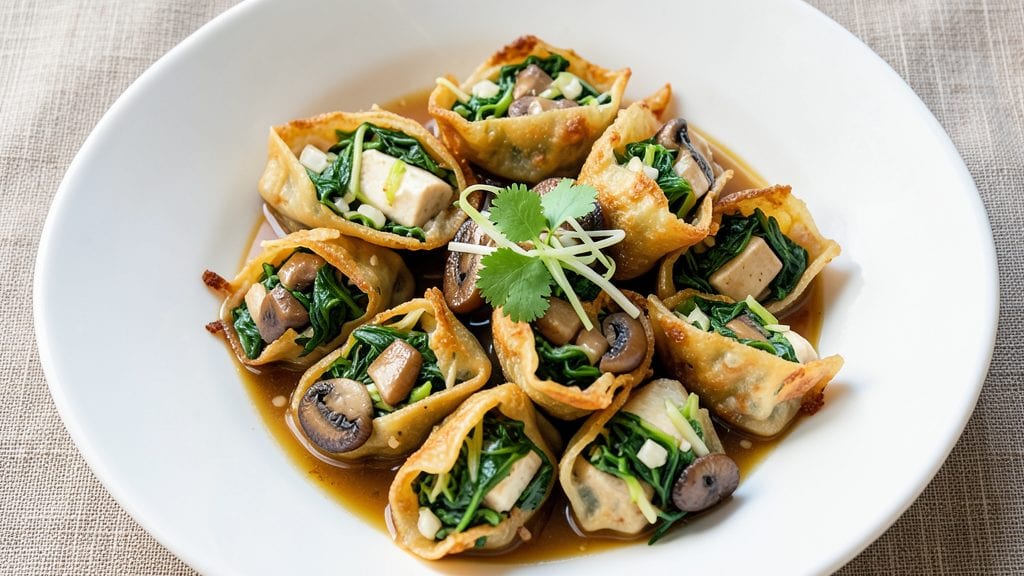
A crispy veg gyoza recipe delivers the same golden perfection you love from traditional dumplings—just without the meat. The secret lies in a silky cabbage-tofu filling that holds its shape while pan-frying, and a pleating technique that ensures those signature wrinkled tops.
After years of perfecting the balance between crispy wrappers and tender fillings, I’ve developed a method that works every time—whether you’re air-frying for a lighter bite or pan-searing for maximum crunch.
The filling starts with finely shredded cabbage that releases moisture as it cooks, creating a luscious, almost custard-like texture when combined with mushrooms, tofu, and aromatic seasonings. For the wrappers, I use store-bought gyoza skins (or make your own with a simple dough) to save time without sacrificing authenticity.
The key to that signature crispy bottom? A quick sear in hot oil before steaming, followed by a final crisp in the pan—this two-step process guarantees a dumpling that’s crispy outside and pillowy inside.
What sets these apart is the versatility: serve them as a starter with a dipping sauce of soy-vinegar-chili, or pan-fry a batch for a hearty vegetarian main.
The recipe includes a vegan-friendly egg wash alternative (cornstarch slurry) for those avoiding animal products, ensuring everyone at the table gets to enjoy the same restaurant-quality results. Once you master the pleat, you’ll never go back to store-bought dumplings.
Ready in under an hour, this recipe is perfect for game day, dinner parties, or a cozy weeknight snack. The filling can be prepped ahead, and the wrappers frozen for quick assembly later—ideal for meal prep. Let’s get to the pleating.
Ingredients for veg gyoza
Pantry staples plus a few specialty items for crispy, golden veg gyoza with restaurant-quality filling.
| Ingredient | Amount | Notes |
|---|---|---|
| Store-Bought Gyoza Wrappers 🥟 | 24 pieces | Round, 3.5-inch diameter preferred |
| Green Cabbage 🥬 | 4 cups | Finely shredded, core removed |
| Extra-Firm Tofu 🍱 | 12 oz | Pressed, crumbled finely |
| Shiitake Mushrooms 🍄 | 4 whole | Stems removed, finely chopped |
| Garlic Cloves 🧄 | 3 cloves | Minced finely, aromatic |
| Fresh Ginger 🌿 | 1 tbsp | Grated, finely, fresh preferred |
| Soy Sauce 🍶 | 2 tbsp | Light or regular, not low-sodium |
| Rice Vinegar 🍶 | 1 tbsp | Seasoned preferred, adds tang |
| Sesame Oil 🫒 | 1 tsp | Toasted, for aroma |
| Cornstarch 🌾 | 1 tbsp | Vegan egg wash substitute |
| Vegetable Oil 🫒 | ½ cup | High smoke point, for frying |
| Neutral Oil 🫒 | 2 tbsp | For pleating, like canola |
| Salt 🧂 | ½ tsp | Kosher or sea salt |
| White Pepper 🌶️ | ¼ tsp | Freshly ground, subtle heat |
| Chili Garlic Sauce 🔥 | 1 tbsp | For dipping sauce, optional |
The gyoza wrappers make all the difference—King Noodle or T&T are my go-tos, but any round 3.5-inch skins work. Keep them sealed in the fridge until ready to use, and don’t thaw them first. For the filling, shred the cabbage super fine—it releases moisture as it cooks, creating that signature silky texture. Shiitake mushrooms add umami depth, so don’t skip them. Press the tofu well first—wrap in a towel, place a heavy pan on top for 15 minutes. The extra-firm kind holds up best to the pan-frying. Fresh ginger and garlic are non-negotiable here—they’re the aromatic backbone of the filling.
No sesame oil? Toasted peanut oil works too, but it’ll have a different flavor profile. Short on shiitake? Cremini or white mushrooms at double the amount get you close. The soy sauce can be swapped for tamari if gluten-free, but regular soy adds that classic umami punch. For the vegan egg wash, cornstarch slurry is a game-changer—mix 1 tbsp cornstarch with 1 tbsp water, brush lightly on the pleated edges. It gives that golden color without eggs. The chili garlic sauce for dipping? Sriracha mixed with a little soy sauce is a quick sub if you’re in a pinch.
Filling keeps for 2 days in the fridge—perfect for meal prep. Wrap the wrappers in a damp towel to prevent drying out. Assemble the gyoza just before cooking, or freeze uncooked ones on a tray before bagging for 3 months. Once pan-fried, they’re best eaten fresh, but reheat gently in a steamer or air fryer for 2-3 minutes if you need leftovers. Store cooked ones in an airtight container with a paper towel to keep them crispy.
Why You'll Love This Recipe
- No-Fuss Assembly: I swear by store-bought wrappers here—no dough rolling, no stress. Just fold, pleat, and pan-fry while I chop the cabbage and tofu in the same bowl. Ten minutes of actual work, and the rest is just waiting (which I’m great at).
- Umami Bomb: That combo of shiitake mushrooms and garlic? It’s the secret weapon. The mushrooms soak up the oil and get caramelized, while the garlic hits you right in the "I need more" spot. Honestly, I’ve made this with just mushrooms and water—still delicious, but this version? Chef’s kiss.
- Budget Meal Magic: Cabbage and tofu stretch for days, and shiitake mushrooms last forever in the fridge. I’ve fed four people for under $10 with this—plus, the leftovers reheat like a dream. My wallet and my taste buds thank me every time.
Step-by-step instructions for crispy pan-fried dumplings
Here's how to make restaurant-style veg gyoza with golden-brown wrappers and tender fillings.
Prepare the Filling Ingredients
Start by pressing the 12 oz extra-firm tofu between paper towels for 10 minutes to remove excess moisture. Crumble it into small, pea-sized pieces and transfer to a mixing bowl. Add the 4 cups finely shredded green cabbage, 4 whole finely chopped shiitake mushrooms, 3 cloves minced garlic, and 1 tbsp freshly grated ginger. Mix gently to combine all ingredients.
In a small bowl, whisk together the 2 tbsp soy sauce, 1 tbsp rice vinegar, 1 tbsp cornstarch, 0.5 tsp salt, and 0.25 tsp white pepper. Pour this mixture over the tofu and cabbage combination. Use a fork to gently fold everything together until fully coated. The filling should be moist but not soupy—if it looks too wet, add an extra ½ tbsp cornstarch. Let the mixture sit for 10 minutes to allow the flavors to meld.
Assemble the Gyoza
Place the 24 store-bought gyoza wrappers on a clean, flat surface. Using a spoon, place about 1 tablespoon of filling in the center of each wrapper. I like to position the filling slightly off-center so it doesn't leak when folding. Dip your finger in water and moisten the edges of the wrapper around the filling.
To fold, bring the sides of the wrapper toward the center, pinching gently to seal. Then fold the top and bottom edges inward, creating a half-moon shape. Press firmly along the edges to create a tight seal. If the wrapper sticks, lightly wet your finger again and smooth the edges. Arrange the completed gyoza on a plate, leaving space between each one—they'll expand slightly as they cook.
Create the Crispy Bottom Layer
Heat 0.5 cup vegetable oil in a large skillet over medium heat until it shimmers but doesn't smoke. Arrange the gyoza in a single layer, leaving about ½ inch between each dumpling. Cook undisturbed for 3-4 minutes until the bottoms turn a deep golden brown and crispy. This is the key to that perfect crunch—don't rush this step!
Once the bottoms are golden, carefully flip each gyoza using a spatula. Add 2 tbsp neutral oil to the pan and continue cooking for another 2-3 minutes until the tops are also golden brown. The filling should be hot and steaming, indicating it's fully cooked through. Remove the gyoza from the pan and set them aside on a wire rack to keep them crispy.
Serve with Dipping Sauce
For the dipping sauce, combine 1 tbsp chili garlic sauce with 1 tsp toasted sesame oil in a small bowl. If you prefer a thinner sauce, add 1 teaspoon rice vinegar to loosen it. Taste and adjust the seasoning with a pinch of salt if needed. The sauce should be slightly spicy with a nutty depth from the sesame oil.
Serve the gyoza immediately with the dipping sauce on the side. The wrappers should be crispy and golden, while the filling remains tender and flavorful. For extra crunch, you can pan-fry them again briefly before serving—just heat the skillet for 1 minute and crisp up the bottoms for 30 seconds on each side. Enjoy your homemade veg gyoza while they're still hot and crispy!
Pro Tips For Making Veg Gyoza
- STEAM THE TOFU FIRST: I learned this the hard way—raw tofu in the filling gets mushy and watery. Press it for 15 minutes, then steam for 8-10 minutes before chopping. The texture holds up better, and your filling won’t turn into soup when you fold the wrappers. (Yes, even if you're impatient like me.)
- SALT THE CABBAGE LONG BEFORE FOLDING: Toss shredded cabbage with 1/2 teaspoon salt and let it sit for 10 minutes. This draws out moisture, so your filling stays compact and doesn’t leak when pan-frying. Skip this, and you’ll end up with soggy wrappers—trust me.
- PAN-FRY IN BATCHES—DON’T CROWD: A crowded pan steams the gyoza instead of searing them. Use a nonstick skillet and fry in two batches over medium-high heat. You want golden bottoms, not sad, limp wrappers. (Your future self will thank you.)
- UPGRADE WITH SHIITAKE SOUP: Save the soaking liquid from dried shiitake mushrooms—it’s flavor gold. Use 1/4 cup in the filling instead of plain water. It adds umami depth without extra effort. (I was skeptical until I tried it.)
Essential equipment for this dish
Skillet Essentials
Your 12-inch cast iron skillet is non-negotiable for crispy veg gyoza—the heavy base distributes heat evenly and retains it perfectly for that golden sear. I use my Lodge 12-inch because it develops a natural non-stick patina over time.
For a lighter option, a well-seasoned stainless steel pan with a glass lid works too, but monitor the oil temperature closely—it runs hotter. 🔥
Pleating Tools
A gyoza pleating tool (like the KitchenAid Gyoza Pleater) saves time and ensures consistent folds, but it’s not mandatory. If you’re folding by hand, keep a small bowl of neutral oil (like canola) nearby to lightly brush the pleated edges—this prevents sticking and adds extra crispiness.
A small pastry brush makes this easier than dipping fingers.
Oil Control
Invest in a high-smoke-point oil like avocado oil or refined peanut oil for frying—these handle the 375°F heat without burning. I avoid olive oil (it smokes at lower temps and imparts bitterness).
Use a thermometer to monitor oil temp; if it smokes, reduce heat immediately. A fine-mesh strainer nearby helps filter any debris from the oil before cooking.
Steaming Setup
For the optional steam-fry hybrid method, a bamboo steamer basket with a tight-fitting lid is ideal. Place it over a pot of simmering water (keep heat at medium-low) and steam the gyoza for 5-6 minutes after the initial pan-sear.
A wire cooling rack is crucial post-fry to prevent soggy bottoms—set it over a baking sheet to catch any drips.
Vegan Egg Wash
Skip the egg wash entirely if needed, but for that golden sheen, mix 1 tbsp cornstarch with 1 tbsp water in a small bowl. Use a silicon pastry brush to lightly coat the pleated edges—this mimics the effect of egg wash without animal products.
For extra shine, add ½ tsp sesame oil to the slurry. 💫
Dipping Sauce Station
A small ceramic dipping bowl keeps the sauce at the perfect temperature (warm but not hot). I like to add crushed dried chili flakes to the sauce for an extra kick—just sprinkle ½ tsp on top before serving.
A pair of chopsticks and a small plate for garnishes (like sesame seeds) complete the presentation. Serve with a small pitcher of water to cleanse the palate between bites.
Nutrition facts
Frequently asked questions
Can I make these veg dumplings without a pleating tool?
Hand-folding is completely doable with practice. Moisten the wrapper edges with water, place 1 tbsp filling off-center, then fold sides inward first, then top and bottom edges. Press firmly to seal. Watch a YouTube tutorial for visual guidance—it’s easier than it looks!
What’s the best way to reheat leftover veg gyoza?
For maximum crispiness, reheat in an air fryer at 375°F for 2-3 minutes or pan-fry in 1 tbsp oil for 1 minute per side. If using a steamer, cover with a damp towel to prevent drying. Never microwave—it’ll turn soggy!
How do I adjust the recipe for a gluten-free diet?
Use gluten-free gyoza wrappers (like King Arthur’s) and ensure your soy sauce is tamari-based. For extra binding in the filling, add 1 tbsp gluten-free cornstarch to the tofu mixture. Double-check all ingredients—mushrooms and tofu are naturally GF, but always verify labels.
Why did my dumplings leak filling while cooking?
Overstuffing or insufficient sealing are the usual culprits. Use 1 tbsp filling max and press edges tightly. If wrappers crack, try chilling them for 10 minutes before folding to firm them up. A lighter touch when pleating also helps!
Can I substitute cabbage with another vegetable?
For a sweeter flavor, try Napa cabbage or bok choy (use 3 cups instead). For heartier texture, swap 1 cup cabbage with 1 cup finely chopped zucchini or carrots. Just reduce liquid slightly—these veggies release less moisture than cabbage.