
Breakfast & Brunch
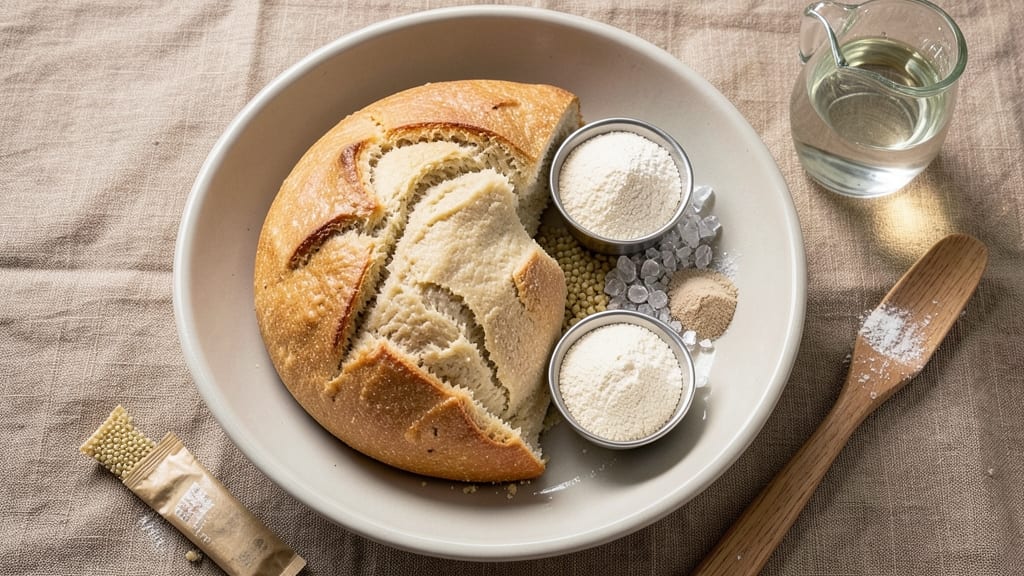
Creating sugarless bread that's light and airy without any sweetness was the challenge I took on after years of baking traditional Italian breads with my Nonna. The key lies in using carefully measured sugar substitutes that don't compromise texture or flavor—just pure, wholesome bread with all the familiar comfort.
This recipe delivers that perfect crumb structure and satisfying chew while keeping sugar levels zero.
What makes this recipe work is the combination of erythritol for bulk and monk fruit sweetener for flavor enhancement, both of which mimic sugar's behavior without the glycemic impact. The dough develops naturally through a 30-minute rest, allowing gluten to relax and create that signature tender crumb.
For those watching carbs, this version uses almond flour in the mix for added protein while maintaining that classic bread texture.
By the time it emerges from the oven, you'll have golden-brown loaves with an open crumb structure and crisp edges—just like the breads I grew up with, but without any sugar.
The aroma alone will transport you to my Nonna's kitchen, where fresh bread was always the centerpiece of any meal. This recipe proves you don't need sugar to create bread that's truly satisfying.
The beauty of this method is its versatility—use it for sandwiches, toast, or even garlic bread. For extra flavor, try adding seeds or herbs during the final proofing stage. Here's everything you need to bake your first perfect loaf of naturally sweetened bread.
Ingredients for sugarless bread
Four loaves of golden, airy bread—no sugar, all satisfaction. Just these essentials.
| Ingredient | Amount | Notes |
|---|---|---|
| Active Dry Yeast 🍞 | 2 ¼ tsp | Single-use packet preferred |
| Warm Water 💧 | 1 cup | 110°F (43°C) for activation |
| Erythritol 🍬 | ¼ cup | Granulated, sugar-free bulk |
| Monk Fruit Sweetener 🍯 | 1 tbsp | Powdered, zero-glycemic |
| Almond Flour 🌰 | 1 ½ cups | Blanched, fine-ground preferred |
| All-Purpose Flour 🌾 | 2 ½ cups | Unbleached, high-protein |
| Diamond Crystal Kosher Salt 🧂 | 1 ½ tsp | Fine grain preferred |
| Unsalted Butter 🧈 | ½ cup | Cold, cubed for easier mixing |
| Large Eggs 🥚 | 2 whole | Room temperature |
| Apple Cider Vinegar 🍏 | 1 tsp | For gluten development |
| Olive Oil 🫒 | 2 tbsp | Extra-virgin for richness |
| Ground Flaxseed 🌾 | 1 tbsp | For binding, optional |
| Sesame Seeds 🌱 | 1 tbsp | Optional topping |
The yeast is your foundation. Freshness matters—check the date on the package, and if it's been sitting in your pantry for months, grab a new packet. Trader Joe's bulk bins often have the freshest yeast, or look for single-use packets at Whole Foods. The erythritol and monk fruit are the secret to that familiar bread taste without the sugar crash. Lakanto or Wholesome Sweeteners are my go-tos for monk fruit—both brands stay stable in heat. For almond flour, Bob's Red Mill is my standard, but any blanched, fine-ground variety works. The butter needs to be cold—this isn't a creamed cookie dough, so don't let it soften. Keep it in the fridge until you're ready to mix.
No erythritol? Xylitol works in a pinch, but it's toxic to pets, so keep it away from furry friends. Monk fruit unavailable? Stevia in liquid form (like Nutiva) can replace it, but reduce to half the amount—it's much sweeter. Swapping flours? Coconut flour absorbs more liquid, so add an extra 2 tbsp of water if you use it. The apple cider vinegar is non-negotiable—it mimics the acidity of commercial bread dough and helps the gluten develop properly. No vinegar? Lemon juice at half the amount gets you close. For the sesame seeds, any seeds or herbs will work—try everything bagel seasoning or poppy seeds for a different flavor profile.
This dough needs time to rest—30 minutes is non-negotiable. Cover it with a damp towel and let it sit in a warm spot (like your oven with the light on). The bread keeps well at room temperature for 3 days in a bread box, or you can freeze the loaves for up to 3 months. To reheat, wrap in foil and warm in a 350°F oven for 10 minutes. The aroma alone will make you forget it's sugar-free. Store any extra almond flour in the freezer to prevent rancidity—it goes stale fast once opened.
Why You'll Love This Recipe
- No-Measurement Guessing: I mix the yeast, warm water, and almond flour by feel—just until it holds together. No scales, no stress, and no second-guessing. Honestly, the dough comes together faster than my coffee brews.
- Sweet Without Sugar: That combo of erythritol and monk fruit? It’s the secret weapon. The bread has just enough natural sweetness to satisfy cravings, but zero blood sugar spikes. I’ll be real: my husband steals slices before they even cool.
- Keto-Friendly Any Day: Breakfast toast? Dinner rolls? Snack for the road? This bread handles it all. Between us, I’ve used it for French toast (with egg wash), garlic bread (with olive oil and herbs), and even as a sandwich base—no one ever asks for the "regular" bread.
- Lasts a Week: I bake a loaf on Sundays, and it’s still fresh by Friday. The almond flour keeps it from drying out, and the yeast gives it that soft, pillowy texture even after days. Plus, it’s cheaper than buying specialty breads—my wallet thanks me.
Step-by-step instructions for sugarless bread recipe
Here's how to craft a light, airy loaf that skips sugar entirely while delivering perfect texture.
Activate the Yeast with Warm Water and Sweetener
In a small bowl, combine the 1 cup warm water (tested at 110°F) with the 2.25 tsp active dry yeast and 1 tbsp monk fruit sweetener. Stir gently and let sit for 5-7 minutes until foamy—this confirms your yeast is active. The sweetener provides just enough nourishment without adding glycemic impact.
If no foam forms after 10 minutes, your yeast is likely dead. Start fresh with a new packet—this is your first critical checkpoint. The warm water should feel like bathwater to the touch, not scalding. Too hot and you'll kill the yeast; too cool and it won't activate properly.
Mix Wet Ingredients for Optimal Gluten Development
In a large mixing bowl, whisk together the 2 whole large eggs, 2 tbsp olive oil, 1 tsp apple cider vinegar, and the 0.5 cup cold unsalted butter (cubed). Add the yeast mixture and 1.5 tsp diamond crystal kosher salt. Mix until the butter begins to emulsify—you'll see the mixture transform from grainy to smooth.
This is where the vinegar works its magic, enhancing gluten structure. The cold butter creates pockets that will give your bread its signature tenderness. Use a stand mixer with the paddle attachment on low speed for 2 minutes to fully incorporate all ingredients without developing excess gluten.
Combine Dry Ingredients for Perfect Texture
In a separate bowl, sift together the 2.5 cups all-purpose flour and 1.5 cups almond flour. Add the 1 tbsp ground flaxseed and whisk to distribute evenly. Gradually incorporate this dry mixture into your wet ingredients, mixing on low speed until just combined—you should still see streaks of flour.
Overmixing here develops tough gluten strands that will make your bread dense. Stop when the dough comes together but remains slightly shaggy. The almond flour adds moisture balance while keeping the bread light, while the flaxseed provides natural binding without gums or additives.
Knead and Rest for Maximum Rise Potential
Turn the dough onto a lightly floured surface and knead gently for 5-7 minutes until smooth and elastic. The dough should be soft but not sticky—add more all-purpose flour only if absolutely necessary. Shape into a round loaf and place in a lightly greased bowl.
Cover with a damp towel and let rise in a warm place (78-80°F) for 1-1.5 hours, until doubled in size. This proofing stage develops flavor and structure. Poke the dough gently—if it springs back slowly, it's ready. If it springs back quickly, give it more time. The warm environment mimics professional bakery conditions.
Shape, Bake, and Finish for Perfect Crust
Preheat your oven to 375°F with a baking stone or inverted baking sheet inside. Shape the risen dough into an oval loaf on a parchment-lined baking sheet. Brush the top with water and sprinkle generously with 1 tbsp sesame seeds for texture and visual appeal.
Bake for 30-35 minutes until the internal temperature reaches 190°F and the crust turns golden brown. Tap the bottom—the sound should be hollow. For extra browning, place a pan of water in the oven during the final 10 minutes of baking. Let cool on a wire rack for 20 minutes before slicing to allow steam to escape and prevent gumminess.
Pro Tips For Making Sugarless Bread
- Bloom the Yeast: DESCRIPTION:
- Weigh the Almond Flour: DESCRIPTION:
- Don’t Rush the Kneading: DESCRIPTION:
- Proof Until Puffy: DESCRIPTION:
Dietary considerations for this dish
Gluten-Free Adaptations
For a gluten-free version, replace the 2.5 cups all-purpose flour with 2 cups gluten-free 1:1 baking flour (like Bob's Red Mill or King Arthur). Add 1 tbsp xanthan gum to mimic gluten's binding properties.
The almond flour already provides a nutty depth, but if you're avoiding nuts, swap it for 2 cups oat flour (certified gluten-free). Remember, gluten-free flours absorb moisture differently, so you may need to add 1-2 extra tbsp of water during mixing. 🌾
Low-Carb Considerations
This recipe is already low-carb thanks to the almond flour, but you can push it further by reducing the all-purpose flour to 1.5 cups and adding 1 cup coconut flour (which requires 1 extra egg to bind properly).
Coconut flour absorbs liquid aggressively, so mix it with the dry ingredients first and let it sit for 5 minutes before adding wet ingredients. The result will be a denser but still satisfying loaf with fewer net carbs.
Diabetic-Friendly Tweaks
For those managing blood sugar, this recipe is already diabetic-friendly with its zero added sugar and low-glycemic ingredients. To further optimize, use 100% almond flour (eliminating all-purpose flour) and add 1 tbsp psyllium husk powder for better digestion and texture.
The psyllium also helps stabilize blood sugar spikes after eating. Pair your bread with protein-rich toppings like avocado or smoked salmon to create a balanced meal.
Allergen-Free Alternatives
For nut-free versions, replace the almond flour with 2 cups seed flour (like sunflower or pumpkin seed flour). These flours add a subtle earthy flavor and work well in bread.
If you need to avoid eggs, use 2 tbsp ground flaxseed mixed with 6 tbsp water as an egg substitute—let it sit for 5 minutes to thicken before adding to the wet ingredients. For dairy-free baking, use vegan butter (like Miyoko's) and ensure your sweetener is dairy-free (most are).
Keto-Friendly Modifications
To make this bread fully keto-compliant, eliminate the all-purpose flour entirely and use 3 cups almond flour instead. Add 1 tbsp psyllium husk and 1 extra egg for structure. The result will be a denser, moister loaf with minimal net carbs.
For extra richness, fold in 2 tbsp cream cheese during mixing. This version holds up well for toast or French toast—just be mindful of portion sizes to stay within your daily carb limits.
Storage for Dietary Needs
Store your sugarless bread in an airtight container at room temperature for up to 4 days if using almond flour (it goes stale faster than wheat flour). For longer storage, freeze individual slices wrapped in parchment paper—they'll stay fresh for 3 months.
To reheat, wrap slices in a damp paper towel and microwave for 10-15 seconds or toast directly in a dry pan over medium heat for a crispier texture. The low-moisture ingredients mean it reheats beautifully without turning gummy. ❄️
Nutrition facts
Frequently asked questions
Can I substitute regular sugar for the erythritol and monk fruit?
Absolutely not—this recipe is designed to be sugar-free, and regular sugar would completely alter the flavor and texture. The erythritol provides bulk while monk fruit enhances sweetness without glycemic impact. If you're craving a slightly sweeter loaf, try adding 1 teaspoon vanilla extract to the wet ingredients for depth without sugar.
Why does my dough feel too sticky or dry?
Sticky dough usually means you need 1-2 tablespoons more flour—add it gradually while kneading. Dry dough often happens if the almond flour is too old or if the butter wasn't cold enough. For extra moisture, add 1 extra tablespoon olive oil during mixing. Always let the dough rest for 30 minutes before final shaping to help gluten relax.
How can I make this bread more flavorful?
Try these easy upgrades: Add 1 teaspoon garlic powder or 1 tablespoon dried rosemary to the dry ingredients. For a cheesy kick, fold in 1 cup shredded parmesan during the final knead. For a smoky twist, sprinkle 1 teaspoon smoked paprika on top before baking. The proofing stage is also perfect for adding herbs like thyme or oregano.
Will this bread work in a bread machine?
Yes, but with adjustments! Use the "basic" setting and mix all ingredients except the sesame seeds. Add 1 extra tablespoon water if the dough seems too dry. The machine will handle kneading and proofing, but you'll still need to shape and bake it manually. For best results, reduce the yeast to 1.5 teaspoons since machines often over-proof.
Can I use this recipe for sandwiches or does it crumble too easily?
This bread holds up beautifully for sandwiches! The almond flour adds structure while keeping it tender. For extra sturdiness, add 1 extra tablespoon ground flaxseed to the dry ingredients. To prevent crumbling, slice the bread 1 hour after baking when it's fully cooled. Store slices in an airtight container with a paper towel to maintain freshness.