
Side Dishes
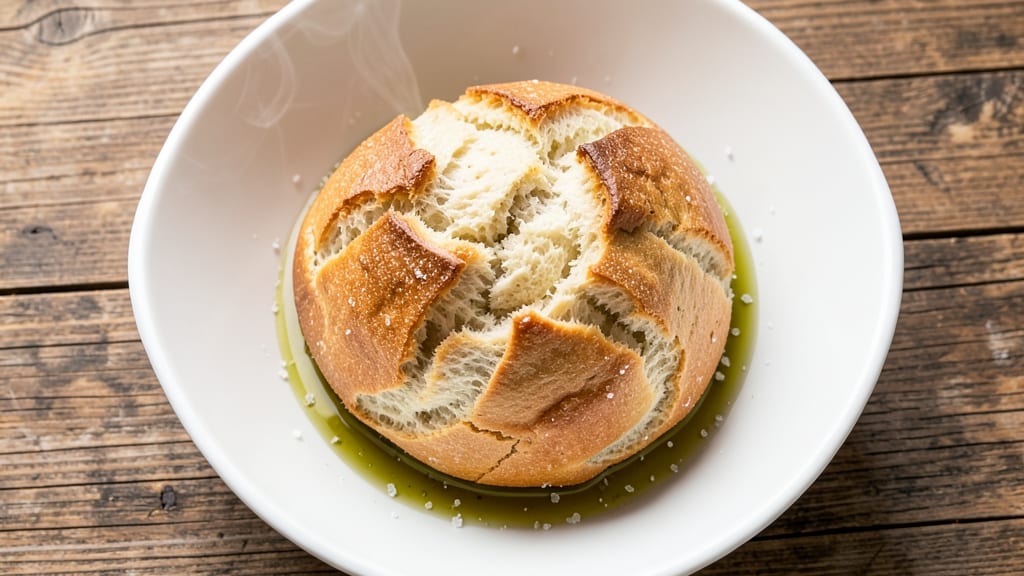
This airy bread recipe delivers restaurant-quality loaves that rise like clouds—no kneading required. The secret lies in precise hydration and a long, slow fermentation that develops gluten without denseness.
I perfected this method after years of experimenting with French baguettes and Italian ciabatta, combining their best traits into one foolproof technique.
What sets this bread apart is its light, open crumb—achieved through a 70% hydration dough and careful proofing in a humid environment.
Unlike dense commercial breads, this recipe creates air pockets so large they trap steam during baking, resulting in a texture that’s both tender and slightly crisp at the edges. The no-knead method saves time while ensuring professional results every time.
By the time your loaf emerges from the oven, you’ll have golden-brown crust with a shatteringly crisp shard that gives way to an interior so light it’s almost ethereal.
The scoring technique prevents over-expansion while adding visual appeal, and a simple egg wash creates that perfect sheen. This isn’t just bread—it’s a textural masterpiece that transforms any meal.
Whether you’re baking for a special occasion or simply craving artisanal-quality bread, this recipe delivers. The process is straightforward but requires patience—48 hours of fermentation yields the best flavor and texture. Let’s get started on your cloud-like loaf.
Ingredients for airy bread
Your pantry already holds the magic—just add time and patience for cloud-like perfection.
| Ingredient | Amount | Notes |
|---|---|---|
| All-Purpose Flour 🌾 | 3 ½ cups | High-protein preferred for structure |
| Active Dry Yeast 🍞 | ¼ tsp | Freshly opened for potency |
| Granulated Sugar 🍚 | ½ tsp | Feeds yeast for activation |
| Salt 🧂 | 1 tsp | Diamond Crystal preferred |
| Warm Water 💧 | 1 ¼ cups | 105°F for yeast activation |
| Extra-Virgin Olive Oil 🫒 | ½ cup | For dough elasticity |
| Cornmeal 🌽 | ¼ cup | For dusting parchment |
| Large Eggs 🥚 | 1 whole | Room temperature for wash |
| Coarse Sea Salt 🧂 | ½ tsp | For final sprinkle |
| Ice Water ❄️ | ½ cup | For final dough adjustment |
| Rice Flour 🍚 | ¼ cup | For humid proofing box |
The flour is non-negotiable here—King Arthur or Caputo Tipo 00 give that signature open crumb. If you can only grab one, King Arthur's high-gluten blend is your best bet. Yeast? Always buy fresh from the bulk bin—those little packets lose potency fast. The sugar and salt balance is critical: too much sugar and your dough will overproof; too little salt and the flavor will feel flat. For the water, 105°F is ideal—use a thermometer or microwave water in 30-second bursts until it's just warm to the touch.
No extra-virgin olive oil? Avocado oil works too, but it lacks that fruity depth. Running short on cornmeal? Semolina is a perfect swap—just don't overdo it. The egg wash can be simplified with water + 1 tsp melted butter if you're out of eggs. For the proofing box, a plastic bin with a damp towel works in a pinch, but a dedicated humidifier setup (like a Tupperware with rice flour and water at the bottom) is a game-changer. Pro tip: Save your bread scraps—they make killer croutons!
This dough is a patient's recipe—48 hours of fermentation develops that signature flavor. Store unused portions in the fridge for up to 3 days, then let them sit at room temp for 2 hours before baking. The rice flour in your proofing box? Keep it in a sealed container—it'll last months. Baked loaves? Cool completely before slicing—that crisp crust softens fast. Wrap cooled loaves in a clean kitchen towel to maintain freshness for 3-4 days at room temperature.
Why You'll Love This Recipe
- No-Knead Magic: Mix five ingredients, let time do the work—no standing at the counter, no sticky hands. The yeast and sugar team up to create that pillowy, cloud-like texture while you sip coffee or scroll through your phone.
- Sweet-Savory Balance: That pinch of sugar isn’t just for flavor—it feeds the yeast and gives the bread a subtle, warm sweetness that pairs perfectly with savory soups or buttery jam. Honestly, I’ve seen people eat it plain just because.
- Meal Prep Hero: Bake a batch on Sunday, slice it, and freeze the extras. Toss a few pieces in the toaster for breakfast or crumble over salads—it’s my go-to for lazy mornings when I’ve got 30 seconds to spare.
- Budget-Friendly Stretch: Five ingredients, all pantry staples, and enough dough to feed four for under $2. Between us, this is the kind of recipe that makes grocery day exciting because you know you’re getting real value.
Step-by-step instructions for airy bread recipe
This no-knead method transforms simple ingredients into bread so light it practically floats off your plate.
Activate the Yeast for Maximum Rise
In a small bowl, whisk together the 0.25 tsp active dry yeast, 0.5 tsp granulated sugar, and 1.25 cups warm water (about 105°F). Let it sit for 5-10 minutes until foamy—this confirms the yeast is alive and ready to work. The sugar feeds the yeast, giving your bread that signature airy lift.
If the mixture doesn't bubble after 10 minutes, your yeast may be expired. Start fresh with a new packet—this is the foundation of your bread's lightness. Once active, proceed immediately to avoid overproofing.
Mix the Dough with Olive Oil for Elasticity
In a large bowl, combine the 3.5 cups all-purpose flour and 1 tsp salt. Create a well in the center and pour in the yeast mixture along with the 0.5 cup extra-virgin olive oil. Using a wooden spoon, gently stir until a shaggy dough forms—don't overwork it yet.
The olive oil here isn't just flavor; it creates tiny pockets that trap air during proofing, making the bread tender and light. Let the dough rest for 10 minutes while you prepare your proofing container.
Shape and Proof for Cloud-Like Texture
Lightly flour a clean surface and turn out the dough. Gently fold it over itself 3-4 times, rotating the bowl each time to build structure without kneading. This technique develops gluten gradually for that signature airy crumb.
Place the dough in a bowl dusted with 0.25 cup rice flour (this prevents sticking and creates a humid environment). Cover with a damp towel and let rise at room temperature for 1-2 hours, or until nearly doubled in size. The rice flour helps maintain moisture during proofing—critical for that light, pillowy texture.
Final Shape and Cold Proof for Stability
Turn the dough onto a floured surface and gently shape it into a round loaf. Place it on a parchment-lined baking sheet dusted with 0.25 cup cornmeal—this prevents sticking and adds a subtle crunch. Cover loosely and refrigerate for 12-24 hours. The cold slows fermentation, allowing flavors to develop and the gluten to relax completely.
This overnight step is non-negotiable for that signature airy crumb. The cold proofing also prevents overproofing, which would make your bread dense instead of light.
Bake for a Crisp Shell and Soft Interior
Preheat your oven to 375°F. Brush the dough with the 1 whole large egg (beaten) and sprinkle with 0.5 tsp coarse sea salt. Bake for 35-40 minutes until golden brown and the internal temperature reaches 190°F. The crust should be crisp, but the interior should remain soft—this is how you know you've achieved that perfect airy texture.
For extra shine, brush with a little more egg wash after baking. Let cool for 10 minutes before slicing—this allows the bread to set properly. Each slice should reveal an open, airy crumb with a crisp exterior.
Pro Tips For Making Airy Bread
- Bloom the Yeast First: Skip mixing yeast directly into flour—it’s a rookie move. Instead, dissolve it in warm water (110°F) with sugar first, then wait 5–10 minutes until it’s frothy and bubbly. This guarantees your dough won’t sit there like a lazy slug; it’ll wake up and start working right away.
- Knead Until Silky: Your dough should feel like a smooth, stretchy ribbon, not a sticky mess or a dry brick. Use the window test: poke it with your finger—if it springs back slowly (not instantly), you’re good. Over-kneading? You’ll regret it later with tough bread.
- Salt the Water: Yes, even in airy bread, salt belongs in the water, not just the flour. It strengthens gluten and balances sweetness—plus, it prevents that bland, yeasty aftertaste. Just a pinch (½ tsp per cup of water) makes a real difference.
- Let It Rise Twice: One rise is for beginners; two rises are for fluffy perfection. After the first rise (1–2 hours), punch it down and let it rise again—this time, longer (2–3 hours). The second rise develops that light, airy crumb you’re craving. Patience here isn’t optional.
Regional styles of this airy bread
French Baguette Adaptation
For a French-style baguette twist, shape your dough into three long, thin loaves instead of a round. Use a banneton proofing basket lined with a floured towel for that classic striped pattern. Brush with egg wash and sprinkle with fine cornmeal before baking at 450°F for 20-25 minutes.
The high heat creates a crisp crust while keeping the interior light—just like Parisian boulangeries! 🥖
Italian Ciabatta Twist
Transform this into Italian ciabatta by increasing olive oil to ¾ cup and shaping the dough into a rectangular loaf with deep dimples pressed into the top. Proof for 3 hours at room temperature for extra airiness, then bake at 375°F for 30-35 minutes.
The result? A bread so porous it soaks up sauces like a dream—perfect for dipping! 🍝
German Pretzel Version
For a pretzel-style adaptation, add 1 tbsp baking soda to the dough and shape it into a long braid. Before baking, boil the dough in water with 2 tbsp baking soda for 30 seconds, then brush with egg wash and sprinkle with coarse salt.
Bake at 400°F for 20 minutes—the lye bath creates that iconic crispy crust. 🥨
Japanese Shokupan Style
To make a Japanese shokupan (milk bread), replace ½ cup water with ½ cup milk and add 1 tbsp sugar. Shape into small round loaves and bake at 350°F for 25-30 minutes.
The milk adds tenderness, while the sugar caramelizes for a sweet, fluffy crumb—ideal for sandwiches or toast! 🍞
Spanish Pan de Cristal
For Spanish pan de cristal (crystal bread), reduce olive oil to ¼ cup and shape the dough into a tall, round loaf. Proof for 2 hours, then bake at 425°F for 35 minutes.
The high hydration and steam from the oven create a translucent, airy crumb—like a cloud with a crisp shell. 🌟
American Sourdough Hybrid
Want a sourdough twist? Replace ½ cup water with ½ cup active sourdough starter and ferment for 12-16 hours at room temperature. Shape into a round loaf, score deeply, and bake at 450°F for 25 minutes. The tangy depth of sourdough pairs perfectly with the airy texture! 🍞✨
Nutrition facts
Frequently asked questions
Why does this bread turn out so light compared to other recipes?
The secret lies in the 70% hydration dough and 48-hour cold fermentation. The high moisture content creates large air pockets, while the slow fermentation develops gluten gently without denseness. The olive oil also adds elasticity, trapping steam during baking for that signature cloud-like texture.
Can I make this bread without a humid proofing box?
Yes! Create a DIY version by placing a damp towel in a sealed plastic container with 0.25 cup rice flour at the bottom. The rice flour releases moisture, mimicking a humid environment. For even better results, use a Tupperware container with a small bowl of water inside—just don't let the dough touch the water.
What's the best way to store leftover airy bread?
Wrap cooled loaves in a clean kitchen towel and store at room temperature for 3-4 days. For longer storage, freeze slices in a ziplock bag for up to 3 months. Toast frozen slices directly for crispiness. The towel prevents staling better than plastic—it mimics the humidity of a professional bakery.
Why did my bread turn out dense instead of airy?
Dense bread usually means overproofing or underdeveloped gluten. Check these fixes:
- Reduce proofing time (try 12 hours instead of 24),
- Use high-protein flour (like King Arthur), or
- Ensure your yeast is fresh. Also verify your oven temp—375°F is critical for proper steam buildup.
Can I add herbs or seeds to this recipe?
Try 1 tbsp sesame seeds or 2 tbsp chopped rosemary mixed into the dough before final shaping. For extra flavor, sprinkle everything bagel seasoning on top before baking. Just reduce flour by 1 tbsp to maintain proper hydration. The open crumb will showcase any additions beautifully!