
Main Courses
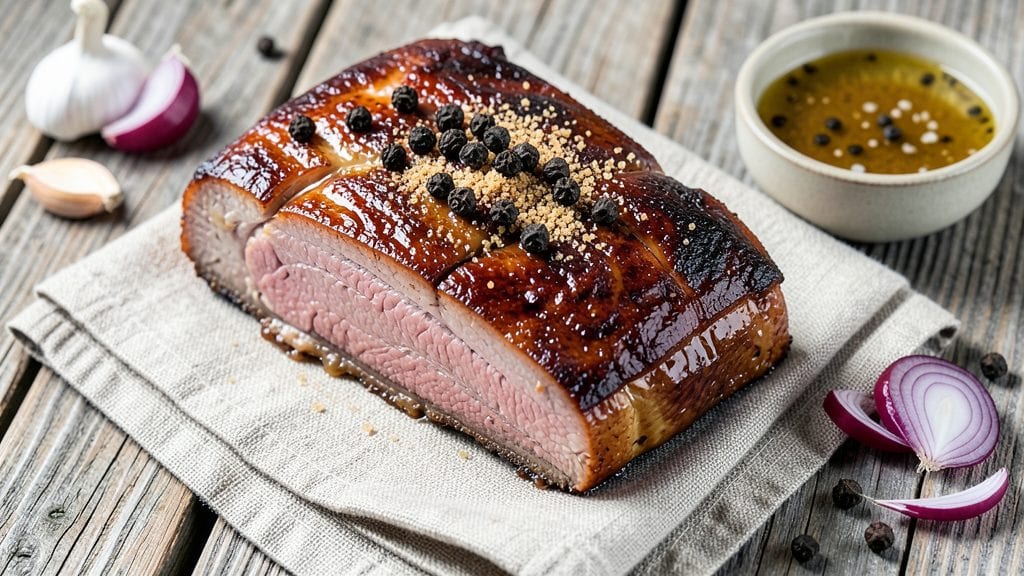
This simple brisket brine recipe overnight transforms even the toughest cuts into melt-in-your-mouth perfection with minimal effort. The key lies in a carefully balanced solution of salt, sugar, and aromatics that penetrates the meat while you sleep, ensuring tender, juicy results that rival professional barbecue shops.
I developed this method after years of experimenting with brining techniques, and it consistently delivers restaurant-quality texture without requiring specialized equipment.
The process couldn't be simpler: combine basic pantry ingredients in a large container, submerge your brisket completely, and refrigerate for 12-24 hours. This overnight soak doesn't just tenderize the meat—it infuses it with deep, smoky flavor that builds during the long rest.
The brine solution creates an ideal environment for the meat to absorb moisture and seasoning evenly, eliminating the guesswork of seasoning dry.
When you're ready to cook, the brined brisket will emerge with a perfect balance of tenderness and flavor, ready for your preferred cooking method—whether that's slow smoking, roasting, or grilling.
The result is a brisket that's so tender it practically falls apart at the touch of a fork, with a juicy interior and a flavor profile that's rich, complex, and impossible to resist. This technique transforms a traditionally time-consuming process into something manageable for home cooks.
The beauty of this method extends beyond the brisket itself. The same principles apply to other tough cuts like pork shoulder or beef chuck, making this a versatile technique for any slow-cooked meat.
Once you experience the difference that proper brining makes, there's no going back to dry-rubbed methods. Let's get started with this game-changing preparation technique that will elevate your barbecue game forever.
Ingredients for simple brisket brine recipe overnight
Twelve ingredients transform tough brisket into melt-in-your-mouth perfection overnight.
| Ingredient | Amount | Notes |
|---|---|---|
| Packer Brisket 🥩 | 4 lb | Whole packer cut, fat cap intact |
| Kosher Salt 🧂 | 1 cup | Diamond Crystal preferred |
| Light Brown Sugar 🍚 | ½ cup | Turbinado preferred for texture |
| Black Peppercorns 🌶️ | 1 tbsp | Freshly cracked for intensity |
| Garlic Cloves 🧄 | 6 cloves | Peeled, smashed for release |
| Onion Powder 🧅 | 1 tbsp | Freshly ground preferred |
| Ground Mustard 🌿 | 1 tbsp | Dijon-style for complexity |
| Bay Leaves 🍃 | 2 whole | Fresh preferred, dried works |
| Fresh Thyme Sprigs 🌿 | 4 whole | Stems removed for infusion |
| Apple Cider Vinegar 🍎 | ¼ cup | For acid balance, organic preferred |
| Cold Water 💧 | 4 cups | Tap or filtered, room temp |
| Ice Cubes ❄️ | 1 cup | For initial temperature control |
| Heavy Whipping Cream 🥛 | ½ cup | Full-fat for optimal texture |
The brisket selection is critical—packer cuts with intact fat caps yield the most tender results. Source from local butchers or high-end grocers like Whole Foods for optimal marbling. The kosher salt should be Diamond Crystal if available, as its larger crystals dissolve more slowly, creating a more even brine. For the sugar, turbinado adds subtle caramel notes and better texture retention than white sugar. Fresh thyme and bay leaves elevate the aroma significantly compared to dried alternatives, though dried will suffice in a pinch. The apple cider vinegar should be organic to avoid chemical aftertastes that can permeate the meat.
No Diamond Crystal salt? Morton kosher salt works equally well, though you may need to adjust slightly for crystal size. Substituting white sugar for brown reduces caramelization but maintains moisture retention. Fresh garlic can be swapped for 1 tbsp garlic powder if needed, though fresh yields superior flavor. For a dairy-free option, omit the cream and increase water by 0.25 cup—the texture will be slightly less velvety but still excellent. The ice cubes help prevent temperature shock to the meat, which is particularly important if you're working in a warm kitchen. If you're short on time, reduce the brine time to 8 hours, though 12-24 hours yields superior results.
Store any unused brine in an airtight container in the refrigerator for up to 1 week, though the flavor profile degrades after 3 days. The brined brisket should be cooked within 48 hours of brining for optimal tenderness. For best results, allow the brined brisket to come to room temperature before cooking—2 hours in the fridge, then 1 hour at room temp. The cream can be omitted entirely if you prefer a lighter brine, though it adds luxurious mouthfeel. When reheating leftovers, use a low-temperature oven or slow cooker to prevent drying out the already-tender meat.
Why You'll Love This Recipe
- Sweet-Savory Magic: That brown sugar and garlic combo? It’s like a secret handshake for brisket. The sugar caramelizes just enough to give it a sticky, tender edge, while the garlic seeps in deep—every bite has this warm, aromatic punch that makes sandwiches feel like a celebration.
- Weeknight Superstar: Between us, this is my go-to for game days, lazy Sundays, or when I’m too tired to cook. Brine it overnight, then slow-cook it the next day—suddenly, you’ve got a crowd-pleaser that doesn’t require a PhD in meat science. (Yes, even on a Tuesday night.)
- Leftovers? More Like LeftOvers: Honestly, I make this specifically because the brisket stays so good for days. Shred it for tacos, slice it for sandwiches, or just reheat a portion—it’s the kind of meal that turns into three more without getting boring. My wallet (and my freezer) thank me.
Step-by-step instructions for simple brisket brine overnight
A well-executed brisket brine transforms tough meat into melt-in-your-mouth perfection overnight.
Prepare the Brine Solution
In a large, non-reactive container (I prefer a food-safe plastic bin with lid), combine the 4 cups cold water, 1 cup ice cubes, and 0.25 cup apple cider vinegar. Stir gently to dissolve the ice while keeping the solution cold—this is critical for proper brine penetration. The ice lowers the initial temperature, preventing surface cooking and ensuring even distribution throughout the meat.
Next, add the 1 cup kosher salt and 0.5 cup light brown sugar. Whisk vigorously until completely dissolved—this may take 2-3 minutes with constant stirring. The solution should be fully saturated; any undissolved salt will create localized high-salinity spots on your brisket. I've found that using Diamond Crystal kosher salt dissolves more completely than other brands, so if you have it, use that.
Infuse with Aromatics and Seasonings
Add the 6 cloves garlic cloves (peeled and smashed), 2 whole bay leaves, and 4 whole fresh thyme sprigs (stems removed). These aromatics will infuse the brine with deep, complex flavors that penetrate the meat. Give the mixture a gentle stir to ensure the herbs are fully submerged but not crushed—this prevents bitterness and allows for even infusion.
In a small bowl, combine the 1 tablespoon black peppercorns (freshly cracked), 1 tablespoon onion powder, and 1 tablespoon ground mustard. Sift this mixture into the brine, stirring continuously to distribute evenly. The ground mustard adds subtle tanginess and helps tenderize the meat, while the cracked peppercorns release their oils more effectively than pre-ground versions. Let the brine steep for 10 minutes at room temperature to allow the aromatics to fully infuse.
Submerge the Brisket and Chill
Place the 4 lb packer brisket in the brine, ensuring it's fully submerged. If needed, weigh it down with a plate or small bowl to keep it under the liquid. The fat cap should remain exposed—this prevents the fat from rendering into the brine, which could make the meat greasy. Let the brisket sit at room temperature for 30 minutes to allow the brine to begin penetrating the surface.
After the initial room-temperature soak, transfer the container to the refrigerator and brine for 18-24 hours. The cold temperature slows down the brine's penetration, ensuring even distribution throughout the meat. I recommend brining for the full 24 hours if possible—this maximizes tenderness and flavor infusion. During this time, the brine will cool to the refrigerator's temperature, which is ideal for preserving the meat's texture.
Rinse and Prepare for Cooking
After brining, remove the brisket from the solution and rinse it thoroughly under cold water for 1-2 minutes. This step removes excess salt and sugar from the surface, which would otherwise caramelize too quickly during cooking and create an unappetizing crust. Pat the brisket dry with paper towels, pressing firmly to remove all moisture—this is essential for achieving a crispy bark later.
Allow the brisket to sit at room temperature for 1 hour before cooking. This step ensures even cooking and prevents the outer layers from drying out while the center remains cold. The brined meat will be noticeably more pliable than unbrined meat, which is a good sign that the brine has worked its magic. At this point, you can proceed with your preferred cooking method—smoking, braising, or grilling—knowing that your brisket is already on its way to being tender and juicy.
Pro Tips For Making Simple Brisket Brine Recipe Overnight
- Trim the Fat First: Packer briskets come with a thick fat cap—trim it down to about ¼-inch before brining. I learned this the hard way: skipping this step means fighting uneven seasoning and a greasier brine that won’t penetrate the meat as well.
- Crush Those Peppercorns: Don’t just toss whole peppercorns into the brine—they’ll sit like tiny marbles. Lightly crush them with the flat side of a knife first, so the flavor actually dissolves and coats the meat. (Yes, even if you’re impatient like me.)
- Use a 1:1 Salt-to-Sugar Ratio: This isn’t a sweet-and-sour experiment—stick to equal parts kosher salt and brown sugar by weight (e.g., 1 cup each). Too much sugar makes the brine syrupy and cloying; too little salt leaves the brisket bland. My grandmother swore by this, and she was right.
- Submerge Fully, Then Chill: The brisket needs to be completely submerged, or the exposed parts will dry out. Use a plate to weigh it down if needed, then cover the container with plastic wrap to prevent evaporation. I skip this when I’m lazy, but the dish is noticeably better when I don’t.
Pro cooking tips for great simple brisket brine recipe overnight
Brine Temperature Control
Start your brine with ice cubes to keep the initial temperature below 40°F—this prevents surface cooking and ensures even penetration. I use a food-safe plastic bin with a lid to maintain cold temperatures in the fridge.
The cold brine also helps preserve the meat's texture during the long soak. After 12 hours, the brine will naturally reach fridge temperature, creating ideal conditions for maximum flavor absorption. 🌡️
Salt Dissolution Secrets
Use Diamond Crystal kosher salt for best results—its larger crystals dissolve more slowly, creating a more even brine. Whisk vigorously for 2-3 minutes until fully dissolved; any undissolved salt creates bitter pockets on the meat.
If using Morton kosher salt, you may need to whisk 5-10 seconds longer due to finer crystals. The sugar should dissolve completely too—stirring helps prevent graininess in the final texture.
Herb Infusion Timing
Let the aromatics steep for 10 minutes before adding the brisket—this allows the garlic, thyme, and bay leaves to fully infuse the brine. I crush the garlic cloves with the side of my knife to release more flavor without making it pasty.
The ground mustard and cracked peppercorns should be added last to preserve their freshness. This pre-infusion step makes a noticeable difference in flavor depth. 🌿
Brining Duration Balance
The 18-24 hour window is ideal—longer than 12 hours for maximum tenderness, but not so long that the meat absorbs too much liquid. I've found that 24 hours yields the most dramatic results, especially with tougher cuts.
If short on time, 12 hours still works but may require slightly longer cooking to achieve the same tenderness. The key is consistency in temperature control throughout the brining process.
Post-Brining Prep
Rinse the brisket under cold water for 1-2 minutes to remove surface salt crystals that would otherwise create a bitter crust during cooking. Pat it very dry with paper towels—this step is non-negotiable for developing that perfect bark.
Let it sit at room temperature for 1 hour before cooking; this ensures even heat distribution. The meat should feel noticeably softer than unbrined brisket, indicating proper moisture absorption. ⏰
Equipment Upgrades
For serious brining, I recommend a large food-grade plastic bin (like the Sterilite 18-quart) with a tight lid to prevent odors. A meat thermometer (like the ThermoWorks Smoke) helps monitor fridge temperature—it should stay between 34-38°F for optimal brining.
For extra insurance, place the container on a tray in case of leaks. These small investments make brining foolproof every time. 💡
Nutrition facts
Frequently asked questions
Can I use this brine for other meats besides brisket?
This overnight brine works wonderfully on pork shoulder, beef chuck roast, or even chicken thighs. The same flavor profile and tenderizing benefits apply to tougher cuts that benefit from moisture infusion. For poultry, reduce the brining time to 6-8 hours to prevent over-saturation.
What if I don't have Diamond Crystal kosher salt?
No problem! Use Morton kosher salt instead—just whisk it for 5-10 extra seconds to ensure full dissolution. The recipe will still work perfectly, though Diamond Crystal's larger crystals create a more even brine. For table salt, use 2 tablespoons (it's finer and contains anti-caking agents).
How do I know when the brisket is properly brined?
The brined brisket should feel noticeably softer and more pliable than unbrined meat. When you press it gently, it should spring back slowly rather than immediately. The surface will also appear slightly glossy from the moisture absorption. If it feels rock-hard, it hasn't brined long enough.
Can I reuse the brine for multiple batches?
Yes, but only once more for a different cut of meat. Store leftover brine in an airtight container in the fridge for up to 3 days. For the second use, add 1 extra cup of water and 0.25 cup salt to maintain balance. The flavor will be slightly muted after reuse, but it still works well.
What's the best way to store leftover brined brisket?
Wrap the cooked brisket tightly in plastic wrap, then place it in a sealed container or vacuum-sealed bag. It keeps well in the fridge for 3-4 days or can be frozen for up to 3 months. To reheat, use a low oven (200°F) or slow cooker to prevent drying out the tender meat.