Breakfast & Brunch
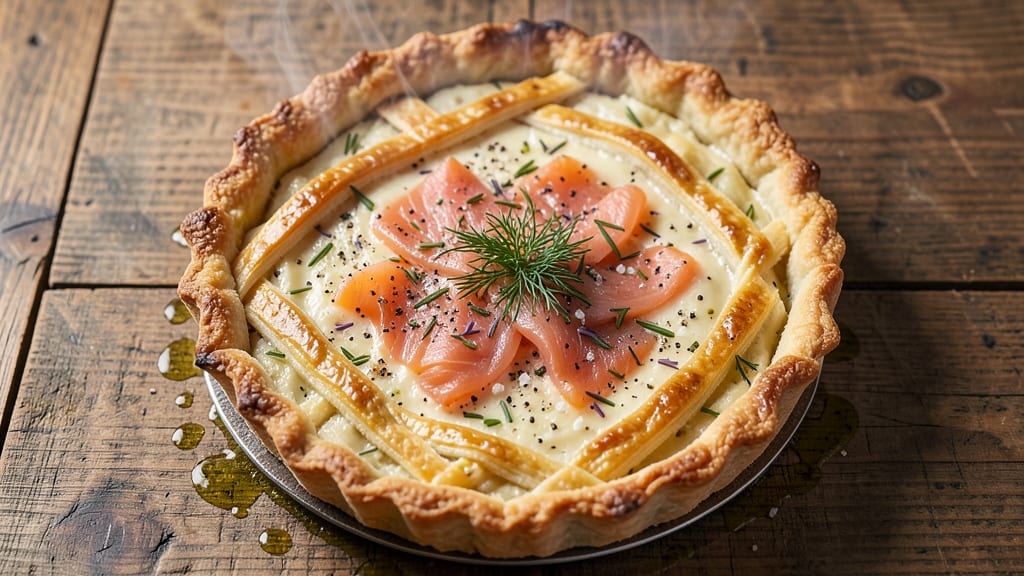
Jamie Oliver’s salmon quiche delivers that perfect balance of flaky crust, creamy custard, and tender salmon in every bite—just like his restaurant-quality dishes. The secret lies in a crisp, golden crust layered with a rich egg mixture and perfectly cooked salmon, all baked to perfection.
I’ve adapted this recipe to ensure simplicity without sacrificing flavor, making it ideal for weekend brunches or a special breakfast treat.
What sets this quiche apart is the technique: a pre-baked crust prevents sogginess, while the salmon is arranged in a single layer for even cooking. The egg custard—enriched with cream and sharp cheddar—creates that signature velvety texture, while fresh herbs add brightness.
Baking at 350°F for 35–40 minutes ensures a golden top and flaky layers that melt in your mouth.
By the time it emerges from the oven, you’ll have a quiche with a golden, shatteringly crisp crust, tender salmon that flakes easily, and a custard so rich it feels indulgent.
The aroma alone will have everyone gathering around the table, and the presentation—elegant yet effortless—makes it perfect for brunch guests or a satisfying solo meal.
Serve with a simple arugula salad or crusty bread to soak up every last bit of that creamy, herby goodness. This recipe is foolproof, restaurant-worthy, and designed to impress—just like Jamie Oliver would make it. Let’s get baking!
Ingredients for salmon quiche recipe jamie oliver
Sixteen ingredients for Jamie Oliver's signature golden quiche with flaky layers and restaurant-quality texture.
| Ingredient | Amount | Notes |
|---|---|---|
| All-Purpose Flour 🌾 | 2 cups | For crisp crust foundation |
| Cold Unsalted Butter 🧈 | 1 cup | Cut into small cubes |
| Ice Water 💧 | ½ cup | For pie crust consistency |
| Large Eggs 🥚 | 4 whole | Room temperature preferred |
| Heavy Cream 🥛 | 1 cup | Full-fat for richness |
| Whole Milk 🥛 | ½ cup | Warmed slightly |
| Sharp White Cheddar Cheese 🧀 | 1 ½ cups | Shredded, not pre-shredded |
| Fresh Dill 🌿 | ¼ cup | Chopped finely |
| Fresh Chives 🌿 | ¼ cup | Chopped finely |
| Salt 🧂 | 1 ½ tsp | Kosher or sea salt |
| Freshly Ground Black Pepper 🌶️ | ½ tsp | Coarsely ground |
| Fresh Salmon Fillet 🐟 | 1 ½ lb | Skinless, sushi-grade preferred |
| Extra-Virgin Olive Oil 🫒 | 1 tbsp | For salmon searing |
| Lemon Zest 🍋 | 1 tsp | From organic lemon |
The crust is everything here—butter must be ice-cold for maximum flakiness. European-style unsalted butter like Plugrá or Land O'Lakes works best, but any good-quality butter will do. For the crust, pulse the flour and butter in a food processor until pea-sized crumbs form, then add ice water one tablespoon at a time. Whole Foods or specialty bakeries often carry the best butter, but your local grocery's refrigerated section is fine too. The salmon should be sushi-grade or equivalent—freshness is critical for that delicate texture. Look for bright pink color and no fishy odor at Whole Foods seafood counters or your local fishmonger.
No heavy cream? Whole milk plus 2 tbsp melted butter works in a pinch, though the texture won't be quite as rich. Pre-shredded cheese is a no-go—block cheddar grated yourself melts better. Fresh herbs are ideal, but dried dill at one-third the amount gets you close. For the salmon, if you can't find sushi-grade, frozen previously cooked salmon thawed overnight works too. The lemon zest can be substituted with 1 tsp bottled lemon juice if needed. For the crust, if you don't have a food processor, two forks and your hands will work—just cut the butter into the flour until it resembles coarse crumbs.
The crust dough should be kept cold until ready to roll—wrap in plastic and refrigerate for at least 1 hour. Once assembled, quiche keeps 3-4 days in the fridge, though it's best eaten within 2 days for optimal texture. For make-ahead convenience, pre-bake the crust and freeze it on a tray, then transfer to a bag. The salmon filling can be prepped ahead and refrigerated for up to 24 hours before baking. Leftovers reheat beautifully—350°F for 15 minutes restores that golden crust and creamy custard perfectly.
Why You'll Love This Recipe
- No-Fuss Crust: I swear by that cold butter and ice water trick—it’s the secret to a flaky crust with zero fuss. You’ll have it rolled out and in the pan faster than you can say "breakfast ready," and honestly? It’s foolproof even when I’m distracted.
- Salmon Magic: That rich, buttery salmon filling? It’s where this dish shines. The cream and eggs bind it into a velvety texture, while the salmon adds depth—like a hug in every bite. (Yes, even on a Tuesday night.)
- Leftovers That Win: This quiche actually tastes better the next day—crispy edges soften just right, and the flavors meld into something even more delicious. I make a big one on Sundays and eat it for lunch all week. Zero waste, all satisfaction.
- One-Bowl Brilliance: Four ingredients, one bowl, and you’re golden. No mixing, no stress—just crack eggs, whisk, pour, and bake. My lazy mornings thank me every time, and the cleanup? One bowl, one spatula. Done.
Step-by-step instructions for salmon quiche with flaky layers
Here's how to create a golden crust with perfect flakiness while keeping the salmon filling rich and tender.
Prepare the Perfect Pie Crust
In a large bowl, combine the 2 cups all-purpose flour and 1.5 teaspoons salt. Cut in the 1 cup cold unsalted butter using a pastry cutter or your fingers until the mixture resembles coarse crumbs with pea-sized butter pieces. This cold butter is essential—it creates those signature flaky layers.
Gradually add the 0.5 cup ice water, 1 tablespoon at a time, mixing gently with a fork until the dough just comes together. Avoid overmixing; the dough should be shaggy but hold when pressed. Divide the dough into two equal portions, flatten into discs, wrap in plastic, and chill for at least 1 hour. This resting period relaxes the gluten for maximum flakiness.
Roll and Blind-Bake the Crust
Preheat your oven to 375°F. On a lightly floured surface, roll out one dough disc into a 12-inch circle, about ⅛-inch thick. Transfer to a 9-inch pie dish, trimming any excess dough. Press gently to create a smooth base.
Line the crust with parchment paper, fill with pie weights or dried beans, and bake for 15 minutes. Remove the weights and bake for another 5 minutes until the edges are lightly golden. The crust should be set but not browned—this prevents a soggy bottom when adding the filling. Keep the oven at 375°F for the next step.
Cook the Salmon Filling
In a nonstick skillet, heat 1 tablespoon extra-virgin olive oil over medium heat. Add the 1.5 lb fresh salmon fillet, skin-side down, and cook for 3-4 minutes per side until just opaque in the center. Remove from heat and let cool slightly, then flake into ½-inch pieces. Discard any skin.
In a medium bowl, whisk together the 4 whole large eggs, 1 cup heavy cream, 0.5 cup whole milk, 1.5 cups sharp white cheddar cheese, 0.25 cup fresh dill, 0.25 cup fresh chives, 0.5 teaspoon freshly ground black pepper, and 1 teaspoon lemon zest. Fold in the cooked salmon pieces until evenly distributed. This mixture should be thick but pourable.
Assemble and Bake the Quiche
Pour the salmon filling into the pre-baked crust, spreading evenly to the edges. The filling should come about ½-inch below the crust's top—this prevents overflow. Bake for 30-35 minutes until the filling is set and the top is golden brown. If the edges brown too quickly, cover them loosely with aluminum foil.
Remove from the oven and let rest for 10 minutes before slicing. The center should be just set with a slight wobble, and the crust should be crisp and flaky. Serve warm or at room temperature for the best texture contrast between the tender filling and golden crust.
Pro Tips For Making Salmon Quiche Recipe Jamie Oliver
- CHILL THE CREAM: Jamie’s recipe calls for heavy cream, but I’ve learned the hard way—warm it up even a little, and your custard turns out grainy. Pop that cream in the fridge for 10 minutes before mixing it with eggs, or better yet, use it straight from the fridge. Your quiche filling will thank you with a silky texture instead of that sad, lumpy look.
- CUT BUTTER IN SMALL: You’re not making pie dough here—this is a quiche crust, and overworking it turns it tough. Use a pastry cutter or two knives to cut cold butter into the flour until it resembles coarse crumbs, not pea-sized bits. Press the dough into the pan once, then chill it 20 minutes before baking. That rest keeps it flaky, not greasy.
- BAKE LOW AND SLOW: The crust might look golden at 20 minutes, but resist the urge to crank the heat. Jamie’s recipe relies on a gentle bake (350°F/175°C) to cook the custard evenly without curdling. If the top browns too fast, tent it with foil—your quiche should be just set in the center, not rubbery or undercooked.
- SALT THE CREAM: Unsalted butter is your base, but the heavy cream? That’s where subtle flavor hides. Add a pinch of salt (about ¼ tsp) to the cream before whisking it with eggs—it balances the richness and makes the custard taste more cohesive. Trust me, you’ll notice the difference when you cut into it.
Common mistakes when making your salmon quiche recipe jamie oliver
Overmixing the Dough
I’ve ruined more quiches than I’ll admit by overworking the crust dough. The moment you start kneading like you’re making bread, you’re creating gluten that will make your crust tough instead of flaky. Stop mixing as soon as the dough clumps together when pressed—it should look shaggy, not smooth.
If it sticks to your fingers, add just a splash more ice water, but don’t overdo it. The key is gentle handling—think "just until combined," not "until perfectly smooth." 🌾
Skipping the Blind Bake
This is a classic mistake that leads to a soggy bottom, and trust me, no one wants a quiche that feels like a wet paper towel. The blind bake step removes moisture from the crust so it can handle the wet filling without turning to mush.
If you skip it, your crust will absorb the custard and lose its crispness. I recommend baking it 20 minutes total (15 with weights, 5 without) at 375°F—just enough to set the edges but keep the color pale.
Overcooking the Salmon
The salmon in this quiche should be tender, not rubbery. Cooking it beyond medium doneness (about 3-4 minutes per side) will make it dry and flake poorly. I’ve seen people walk away from the pan, only to return to find the salmon turning to fish sticks.
Keep a close eye on it—it should just turn opaque in the center. Let it cool slightly before flaking, or you’ll end up with a mushy filling. 🐟
Filling Too High
If your quiche filling rises above the crust’s edge, it’s going to spill over and make a mess during baking. The custard expands, so leave at least ½-inch of space at the top. I’ve had quiches overflow so badly they looked like they’d been attacked by a grease monster.
If you’re worried, bake it on the middle rack for even heat distribution and check at 25 minutes—cover with foil if needed to prevent browning before the center sets.
Using Pre-Shredded Cheese
Pre-shredded cheese contains anti-caking agents that prevent it from melting smoothly, leading to a grainy texture in your quiche. Always buy a block of sharp white cheddar, grate it yourself, and pack it tightly into the custard mixture.
I’ve tried the shortcut, and it’s noticeable—your quiche will taste like it’s hiding tiny plastic beads. For 1.5 cups, use about 6 ounces of block cheese, freshly grated. 🧀
Not Resting Before Slicing
Cutting into a quiche immediately after baking is a surefire way to end up with a runny center and a collapsed crust. The filling needs 10-15 minutes to set properly while the quiche rests at room temperature. This also lets the juices redistribute, ensuring every bite is creamy and cohesive.
I’ve seen people slice too soon and watch their quiche turn into a sad, deflated puddle. Patience here makes all the difference—trust the process! ⏳
Nutrition facts
Frequently asked questions about Jamie Oliver's salmon quiche
Can I make this quiche ahead of time?
Assemble the quiche up to 24 hours ahead and refrigerate uncovered. Bake it straight from the fridge at 350°F for 40-45 minutes, adding 5-10 minutes to account for the cold start. For best results, bake it the day you plan to serve—freshness keeps the crust crisp and custard creamy.
What's the best way to reheat leftovers?
Slice the quiche and reheat individual portions at 350°F for 10-15 minutes until warmed through. For microwave reheating, cover with a damp paper towel and heat at 50% power for 45-60 seconds to prevent drying. The crust stays crispy when reheated this way—just avoid high heat that turns it rubbery.
Can I substitute salmon with another protein?
Yes! Swap the salmon for 1.5 lb cooked shrimp (peeled and deveined) or 1 lb smoked trout, both flaked into similar pieces. For a vegetarian version, use 1.5 cups roasted mushrooms or 1 cup spinach (sautéed and drained). The custard ratio stays the same—just adjust seasoning to complement your protein choice.
Why did my quiche turn out rubbery?
Rubbery quiche usually means overcooked custard or underbaked crust. Check your baking time—30-35 minutes at 350°F should yield a set but slightly jiggly center. If using a glass dish, reduce time by 2-3 minutes as glass conducts heat faster. For extra creaminess, whisk the eggs until frothy before adding to the custard mixture.
How do I make this gluten-free?
Replace the all-purpose flour with a 1:1 gluten-free baking flour blend (like Bob's Red Mill) and use ½ cup gluten-free oat flour for better texture. Chill the dough longer (2 hours) and handle gently to prevent crumbling. For the crust, add 1 tbsp xanthan gum to bind the dough. The custard remains unchanged—just ensure your cheese is gluten-free certified.