
Soups & Stews
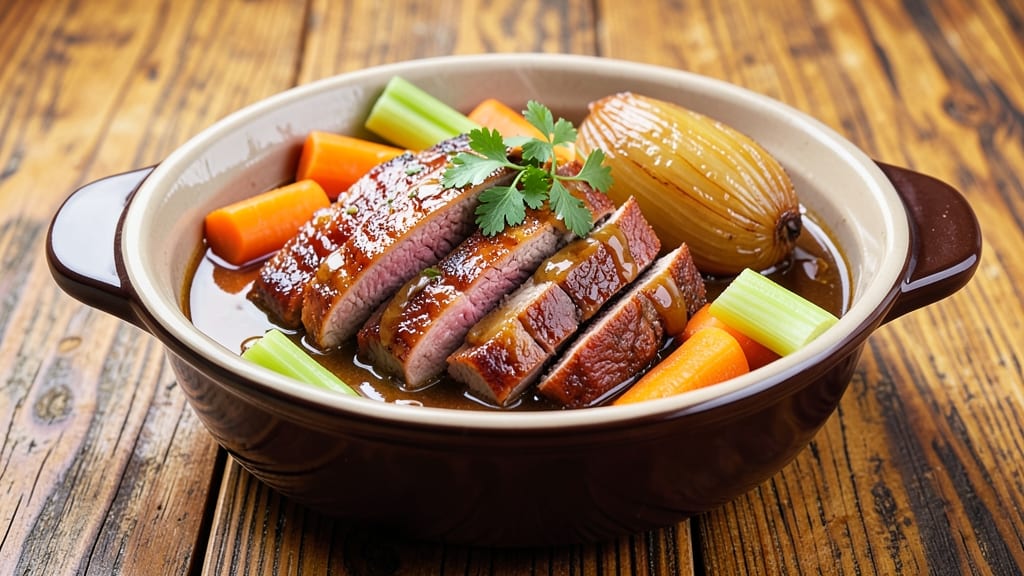
This potted beef recipe transforms tough corned beef into melt-in-your-mouth perfection through slow braising—where rich gravy and tender meat create a dish that’s equal parts comforting and impressive. The secret lies in low-and-slow cooking, where collagen dissolves into a velvety sauce that clings to every bite.
I’ve refined this method over years, balancing traditional techniques with modern shortcuts for foolproof results every time.
What sets this recipe apart is the two-stage process: first, browning the beef for deep flavor, then braising it in a flavorful liquid until fork-tender. The result? A dish so rich and satisfying it feels like a restaurant centerpiece, yet requires minimal active effort.
Whether you’re serving it at a holiday gathering or a cozy weeknight dinner, the aroma alone will have everyone anticipating the first bite.
The magic happens in the sauce—where beef drippings, aromatics, and a touch of gelatin create a glossy, clingy coating that transforms simple ingredients into something extraordinary. This isn’t just a stew; it’s a celebration of slow-cooked meatiness with a sauce so luxurious it deserves a place at your best table.
The best part? Leftovers reheat beautifully, making it a meal worth doubling.
Pair it with crusty bread to soak up every last drop of sauce, or serve alongside roasted root vegetables for a hearty Sunday supper. The techniques here work for both stovetop braising and pressure cooker adaptations, so you can choose the method that fits your schedule without sacrificing quality.
Let’s get started on creating a dish that’s as much about technique as it is about tradition.
Ingredients for potted beef
Sixteen ingredients transform corned beef into luxurious potted beef through slow braising techniques.
| Ingredient | Amount | Notes |
|---|---|---|
| Corned Beef Brisket 🥩 | 3 lb | Pre-cut brisket with spices removed |
| Onion, Yellow 🧅 | 1 whole | Chopped into 1-inch pieces |
| Carrot, Orange 🥕 | 4 whole | Peeled and cut into chunks |
| Celery Stalk 🌿 | 4 whole | Cut into 2-inch pieces |
| Garlic Cloves 🧄 | 6 cloves | Smashed for deep flavor |
| Beef Bone Broth 💧 | 4 cups | Homemade or high-quality store-bought |
| Red Wine, Dry 🍷 | 1 cup | Cabernet Sauvignon preferred |
| Tomato Paste 🍅 | 2 tbsp | Smooth, not chunky |
| Unsalted Butter 🧈 | 4 tbsp | Cold for browning |
| Diamond Crystal Kosher Salt 🧂 | 1 ½ tbsp | Adjust to taste |
| Fresh Thyme Sprigs 🌿 | 4 whole | Stems removed for infusion |
| Bay Leaves 🍃 | 2 whole | Standard size |
| Unflavored Gelatin 🍬 | 1 tsp | For sauce thickening |
| Fresh Parsley 🌿 | ¼ cup | Chopped for garnish |
The corned beef brisket is the foundation. Look for pre-cut brisket at specialty butchers or the meat department of Whole Foods—it should have visible marbling and a rich, beefy aroma. If using whole brisket, trim excess fat and cut into 1.5-inch chunks for even cooking. The yellow onion, carrots, and celery form the aromatic base—Trader Joe's often carries pre-chopped mirepoix, which saves time. Fresh thyme and bay leaves elevate the sauce, so avoid dried substitutes here. For the gelatin, Great Value brand is reliable and budget-friendly, though Knox is the gold standard for texture.
No red wine? Substitute additional beef broth with 1 tbsp balsamic vinegar for depth. The tomato paste can be omitted entirely if you prefer a more traditional approach, but it adds a subtle sweetness that balances the acidity. For the butter, Plugrá or Land O'Lakes work well, but avoid salted varieties to control seasoning. If fresh thyme is unavailable, dried thyme at one-third the amount will suffice, though the flavor will be less vibrant. The gelatin is crucial for that signature glossy sauce—ensure it's unflavored to avoid altering the dish's profile.
This dish reheats beautifully, with the sauce becoming even more luxurious after the first day. Store in an airtight container in the refrigerator for up to 5 days, or freeze for 3 months for later use. For serving, garnish with fresh parsley and a drizzle of sauce. The leftovers make excellent sandwiches or can be repurposed into beef hash. Always keep the sauce separate when refrigerating to prevent it from becoming too thick—simply reheat and stir before serving.
Why You'll Love This Recipe
- One-Pot Magic: I swear by this—just toss the brisket, chopped veggies, and spices into a pot, then let it simmer. No flipping, no fussing, no extra pans. The celery and carrots soften perfectly while the beef stays tender, and honestly? That orange peel in the broth is the secret no one tells you about.
- Deep, Savory Crunch: Between us, the garlic and orange zest make this taste like a hug from a French bistro. The brisket gets so tender it melts, but the edges stay just firm enough—crispy enough to make you want to lick the spoon. (Yes, even on a Tuesday night.)
- Leftovers That Beg for More: This recipe practically insists you make double. The flavors only get better the next day, and I’ve turned cold potted beef into sandwiches, tacos, and even a pot pie. My kid still asks for it when he’s “not hungry”—that’s the real test.
- Budget-Friendly Feast: A whole brisket feeds my family for days, and the veggies stretch it even further. I buy the biggest cut I can find, and suddenly, a $15 ingredient becomes a week’s worth of meals. Plus, the orange and celery add freshness without breaking the bank.
Step-by-step instructions for slow-braised corned beef
A rich, velvety potted beef emerges from careful layering and precise timing. Here's how to transform corned beef brisket into a luxurious centerpiece.
Sear the Corned Beef Brisket for Depth
Pat the 3 lb corned beef brisket dry with paper towels, then place it in a cold Dutch oven. Add the 4 tbsp unsalted butter and set the pot over medium-high heat. Let the butter melt completely before carefully turning the brisket to render fat on all sides.
Sear for 8-10 minutes total, turning occasionally, until the exterior develops a deep mahogany crust. The butter should foam vigorously at first, then settle into a golden foam. This step creates the foundational Maillard reaction that carries through the entire braise. Remove the brisket and set it aside temporarily.
Build the Aromatic Base
In the same Dutch oven, add the chopped 1 whole onion, 4 whole carrot chunks, 4 whole celery stalks, and 6 smashed garlic cloves. Cook over medium heat for 8-10 minutes until the vegetables soften and begin to caramelize at the edges.
Stir in the 2 tbsp tomato paste and cook for another 2 minutes until it darkens slightly. This creates a flavorful paste that will thicken the final sauce. Immediately deglaze with the 1 cup red wine, scraping up any browned bits from the bottom of the pot. Let the wine reduce by half before adding the 4 cups beef bone broth and the 1.5 tbsp diamond crystal kosher salt.
Braise with Precision Timing
Return the seared brisket to the Dutch oven, along with the 4 whole fresh thyme sprigs and 2 whole bay leaves. Bring the liquid to a simmer, then cover tightly with a lid. Transfer to a preheated 300°F oven and braise for 3 hours, turning the brisket occasionally to ensure even cooking.
After 3 hours, check for doneness by inserting a meat thermometer into the thickest portion. The internal temperature should reach 200-203°F for perfect tenderness. If it hasn't reached this temperature, continue braising for another 30-45 minutes. The sauce should reduce to a rich, glossy consistency that coats the back of a spoon.
Thicken and Finish the Sauce
Remove the brisket from the Dutch oven and place it on a cutting board to rest. Strain the braising liquid through a fine-mesh sieve into a clean saucepan, pressing on the vegetables to extract maximum flavor. Return the strained liquid to medium heat and sprinkle in the 1 tsp unflavored gelatin while stirring constantly.
Simmer for 3-5 minutes until the sauce thickens noticeably. Taste and adjust seasoning with additional salt if needed. The sauce should be velvety and cling to the back of a spoon without being overly thick. Return the brisket to the sauce and let it soak for 10 minutes to reabsorb some of the flavorful liquid.
Serve with Elegance
Slice the brisket against the grain into ½-inch thick slices and arrange on a platter. Ladle the thickened sauce over the top and garnish with the chopped 0.25 cup fresh parsley. Serve immediately with crusty bread or buttered potatoes to soak up every last drop of that luxurious sauce.
The result should be melt-in-your-mouth beef with a sauce so rich it coats each bite. This method transforms simple corned beef into a restaurant-quality centerpiece that will impress even the most discerning guests. The key lies in patience—the slow braising and careful sauce reduction create a depth of flavor that's impossible to achieve through quicker methods.
Pro Tips For Making Potted Beef
- Trim the Brisket First: Slice off that thick fat cap before cooking—it’s the only way to avoid a greasy mess in your pot. Thin, even slices cook faster and soak up flavors better, so take the extra 5 minutes now to save yourself from a soggy disaster later.
- Char the Aromatics: Sear your onions, carrots, and celery in batches until they’re deep brown, not just softened. That caramelized crust is where the real depth comes from—skip it, and you’re missing half the flavor. (Yes, it takes longer, but it’s worth it.)
- Don’t Crowd the Pot: Pack those vegetables in too tight, and they’ll steam instead of brown. Layer them loosely, and if the pot gets crowded, cook in two batches. Tight spaces mean bland, watery veggies—no one wants that.
- Add Orange Peel Last: Toss in the orange peel and juice only in the final 10 minutes of cooking. Any earlier, and the acid will turn your beef rubbery. (I learned this after ruining a batch—trust me, it’s a game-changer.)
Make-ahead tips for this recipe
Prep Ahead for Efficiency
Chop all your vegetables—the 1 onion, 4 carrots, and 4 celery stalks—and store them in a quart-sized airtight container in the fridge for up to 3 days. I like to prep these 24 hours ahead so they’re ready to go when I’m ready to sear.
The garlic cloves can be smashed and stored in a small container with a splash of olive oil to prevent browning. 🌿
Slow Cooker Adaptation
For a hands-off approach, sear the beef as directed, then transfer everything to a 6-quart slow cooker with the 4 cups beef broth and 1 cup red wine. Cook on LOW for 8-10 hours or HIGH for 5-6 hours.
The sauce may not thicken as much, so I recommend finishing it on the stovetop with the 1 tsp gelatin for that signature gloss. 🔥
Freezer-Friendly Components
Freeze the seared beef (after browning but before braising) in a single layer on a tray for 1 hour, then transfer to a freezer bag for up to 3 months. When ready to cook, thaw overnight in the fridge and proceed with the braising step.
The braising liquid (without the beef) can also be frozen separately for up to 2 months—just thaw and reduce it on the stovetop before adding the cooked beef. ❄️
Sauce Prep Shortcut
Make the aromatic base (onions, carrots, celery, garlic, tomato paste, and wine) ahead of time and store it in a glass jar in the fridge for 2 days. When ready to cook, simply add the beef broth, salt, and seared beef, then proceed with braising.
This cuts your active prep time by 20 minutes—perfect for busy weeknights. 💡
Leftovers Reinvention
Transform leftover potted beef into beef hash by dicing the meat and sautéing it with diced potatoes, onions, and a fried egg on top. For potted beef sandwiches, pile the beef and sauce on crusty rolls with a sprinkle of mustard and pickles.
The sauce thickens beautifully when reheated, so add a splash of beef broth if needed. 🥪
Make-Ahead Serving Platter
Slice the beef and arrange it on a large platter with the sauce, then cover tightly with plastic wrap and refrigerate for up to 2 days. When ready to serve, reheat the sauce separately in a saucepan, then drizzle it over the beef just before serving.
Garnish with fresh parsley for a restaurant-worthy presentation that’s ready in 10 minutes. ✨
Nutrition facts
Frequently asked questions
Why does this recipe use corned beef instead of regular beef?
Corned beef already has a flavorful curing process that adds depth to the dish. The spices and brine create a perfect base for slow braising, while the fat content helps create that signature rich sauce. For a more traditional approach, you could use pre-cut brisket with the spices removed, but the corned beef's existing seasoning speeds up flavor development during cooking.
Can I make this in a pressure cooker for faster results?
Sear the beef as directed, then add all ingredients to your pressure cooker. Cook on high pressure for 45 minutes after coming to pressure. Quick-release the pressure, then finish by thickening the sauce with gelatin on the stovetop. The meat will be tender, though the sauce may need extra reduction time to achieve that glossy texture.
What's the best way to store and reheat leftovers?
Store in an airtight container with the sauce separated. Reheat the sauce first on medium heat until warm, then add the beef and warm through. For best texture, avoid microwaving—opt for stovetop reheating. The sauce will thicken further when reheated, so you may need to add a splash of beef broth if it becomes too stiff. Leftovers keep for 5 days in the fridge or 3 months frozen.
How do I know when the beef is perfectly tender?
Use a meat thermometer to check the internal temperature—it should reach 200-203°F. The beef will easily pull apart with a fork at this point. If you don't have a thermometer, cut into a small piece: it should be fork-tender with no resistance. The sauce should also coat the back of a spoon, indicating proper reduction during braising.
What can I serve with potted beef besides bread?
Try creamy mashed potatoes, roasted root vegetables, or buttered egg noodles to complement the rich flavors. For a lighter option, a simple green salad with vinaigrette balances the dish beautifully. The sauce pairs especially well with crusty sourdough or cornbread for maximum sauce absorption.