
Sauces & Condiments
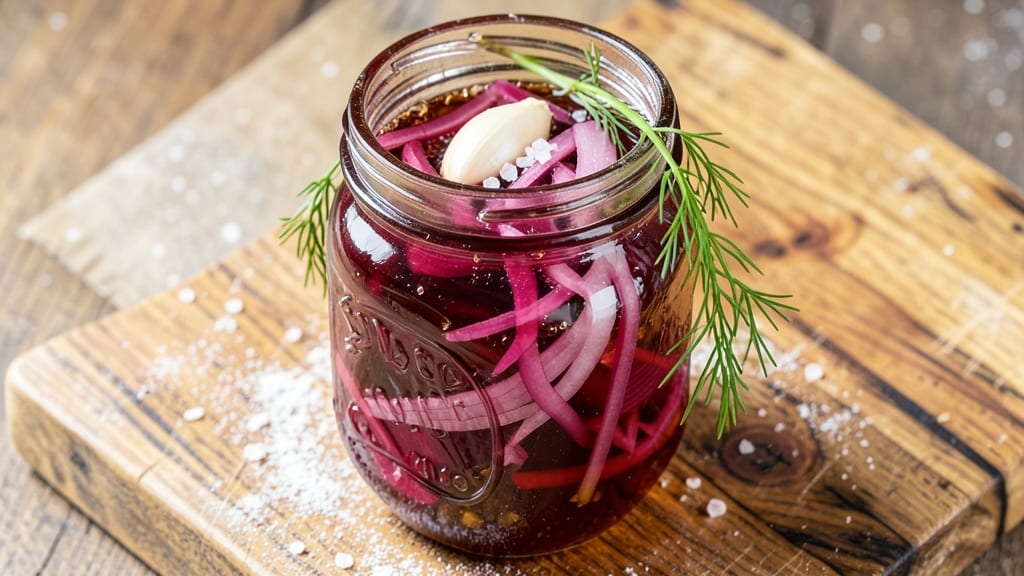
This pickled red onion recipe with red wine vinegar transforms simple onions into bright, tangy bites that elevate everything from tacos to cocktails. The secret lies in balancing vinegar, sugar, and salt to create a crunchy, flavorful condiment that stays fresh for weeks.
I developed this version after testing countless ratios, and it never fails to add that perfect acidic crunch.
The process is straightforward but precise—thinly sliced red onions soak in a 1:1 ratio of red wine vinegar to water, with just enough sugar and salt to preserve without overpowering.
The fermentation time of at least 24 hours (but up to 2 weeks for deeper flavor) ensures the onions develop that signature tangy bite. This isn’t just a garnish; it’s a flavor booster that transforms dishes instantly.
What you’ll end up with is a jar of vibrant red onions that stay crisp for days, their sharp tang cutting through rich meats, creamy cheeses, or even spicy salsas.
The bright acidity of red wine vinegar adds complexity, making these perfect for tacos, salads, or even as a cocktail garnish. Store them in the fridge, and they’ll keep their crunch for weeks.
Use them to top burgers, stir into grain bowls, or sprinkle over avocado toast—this condiment does the work of multiple ingredients. The key is patience; the longer they pickle, the more intense the flavor becomes. Let’s get started on this game-changing recipe.
Ingredients for pickled red onion recipe red wine vinegar
Eight simple ingredients transform red onions into a tangy, crunchy condiment perfect for tacos and cocktails.
| Ingredient | Amount | Notes |
|---|---|---|
| Red Onions 🧅 | 2 medium | Thinly sliced lengthwise |
| Red Wine Vinegar 🍷 | 2 cups | Dry, bold variety preferred |
| Water 💧 | 2 cups | Filtered or bottled |
| Granulated Sugar 🍚 | ½ cup | White or raw cane |
| Sea Salt 🧂 | 1 tbsp | Fine grain preferred |
| Garlic Cloves 🧄 | 3 cloves | Thinly sliced for depth |
| Black Peppercorns 🌶️ | 10 whole | Crushed lightly |
| Fresh Dill Sprigs 🌿 | 2 whole | Optional for herbal note |
The red wine vinegar is non-negotiable here—dry, bold varieties like Cabernet or Merlot add depth. Trader Joe's and Whole Foods carry excellent options, but any quality vinegar works. For the onions, vibrant red ones with tight layers ensure crispness after pickling. If you can’t find fresh dill, dried dill at half the amount works too. The garlic and peppercorns are optional but add layers of flavor that elevate this beyond basic pickled onions.
No red wine vinegar? Apple cider vinegar works in a pinch, though it’ll taste slightly sweeter. The sugar-to-salt ratio is critical—too much sugar makes them syrupy, too little and they won’t preserve well. For a spicier kick, add red pepper flakes or a pinch of cayenne. If you’re pickling for a crowd, double the batch—these disappear fast. The onions should be sliced paper-thin for even pickling; a mandoline makes this step effortless.
Store in an airtight jar in the fridge, where they’ll keep their crunch for up to 2 weeks. The longer they sit, the more intense the flavor becomes. Portion into smaller jars for easy access—perfect for topping burgers, salads, or grain bowls. Freezing isn’t recommended, as it softens the texture. If the liquid evaporates, simply add a splash of vinegar to preserve the onions.
Why You'll Love This Recipe
- No-Stress Prep: I’ll admit, I used to dread pickling—too many steps, too much waiting. But this? Just slice the onions thin, toss them in a jar with vinegar, sugar, and salt, then let them sit. Twenty minutes later, you’re done. No fancy tools, no mess.
- Tangy Crunch Magic: That first bite—crisp, bright, with a sharp red wine vinegar kick—is chef’s kiss. The sugar balances the acid perfectly, and the onions keep their texture for days. Honestly, I’ll eat them straight from the jar if no one’s looking.
- Party in a Jar: Slap these on tacos, burgers, or even a simple charcuterie board. They’re my go-to for game day, potlucks, or when I’m too lazy to cook. (Yes, even on a Tuesday night.) The best part? They last weeks, so you’re always covered.
- Budget Brightener: A single onion and a few pantry staples stretch for months—way cheaper than store-bought pickled onions. Plus, it’s a great way to use up onions before they go bad. Between us, this is how I avoid food waste and keep my grocery bill low.
Step-by-step instructions for quick red wine vinegar pickled red onions
Here's how to make vibrant, crunchy pickled red onions that stay crisp for weeks.
Sterilize the Jars and Prepare Ingredients
Wash two 16-ounce mason jars and their lids in hot, soapy water, then rinse thoroughly and dry completely. This step prevents contamination and ensures your pickled onions stay fresh longer. While the jars dry, thinly slice the 2 medium red onions lengthwise into ¼-inch strips—aim for even thickness so they pickle uniformly.
In a small bowl, combine the 0.5 cup granulated sugar, 1 tablespoon sea salt, and 10 whole black peppercorns. Crush the peppercorns lightly with the flat side of a knife—just enough to release their aroma without turning them into powder. This blend will create the perfect balance of sweet, salty, and peppery flavors in your pickled onions.
Create the Pickling Liquid
In a medium saucepan, combine the 2 cups red wine vinegar, 2 cups water, and the sugar-salt-peppercorn mixture. Bring to a gentle boil over medium heat, stirring until the sugar and salt dissolve completely. You'll notice the liquid becomes slightly cloudy as it heats—this is normal and indicates the sugar is dissolving properly.
Once boiling, remove the pan from heat and let the liquid cool for 5 minutes. This cooling period prevents the onions from cooking in the hot liquid, which would make them soft instead of crisp. While it cools, thinly slice the 3 garlic cloves and add them to the bottom of each sterilized jar. Tuck in the 2 whole fresh dill sprigs as well—they'll infuse subtle herbal notes into the brine.
Pack the Onions and Pour the Brine
Carefully pack the sliced red onions into the jars, pressing down gently to create space for the liquid. You should be able to fit about 3 cups of onions per jar—this ensures they're fully submerged when the brine is added. Leave about ½ inch of headspace at the top of each jar to allow for expansion during the pickling process.
Using a funnel, carefully pour the cooled pickling liquid over the onions until they're completely submerged. The liquid should cover the onions by at least 1 inch. If needed, use a clean chopstick to press down the onions to make room for any remaining liquid. The onions should look vibrant and slightly translucent through the liquid.
Seal and Store for Maximum Flavor
Wipe the rims of the jars with a clean, damp cloth to remove any residue, then seal them tightly with the lids. Place the jars on a cooling rack and let them cool to room temperature—this helps create an airtight seal. Once cooled, store the jars in the refrigerator for at least 24 hours before using to allow the flavors to meld.
Your pickled red onions will continue to develop flavor over time and can be stored in the refrigerator for up to 3 months. The onions should remain crisp with a bright, tangy flavor that's perfect for sandwiches, tacos, or as a garnish for salads. For best results, wait at least 48 hours before using them—the longer they pickle, the more complex their flavor becomes.
Pro Tips For Making Pickled Red Onion Recipe Red Wine Vinegar
- Slice Thin, Slice Even: I learned this the hard way—uneven slices mean some onions stay crunchy while others turn mushy. Aim for paper-thin, consistent slices (about 1/16-inch thick) so every bite has that perfect tangy crunch.
- Use Cold Vinegar: Pouring warm vinegar into the jar first dilutes the flavor and makes the onions soggy. Chill the vinegar in the fridge for 10 minutes before mixing—it preserves the sharpness and keeps the texture crisp.
- Salt Before Soaking: Adding salt after the onions are submerged in the vinegar mix means uneven distribution. Dissolve it in the vinegar-water first, then pour over the onions. This guarantees every slice gets that bright, balanced flavor.
- Skip the Boil, Use Room-Temp Liquid: Boiling the brine ruins the delicate balance of acidity and sweetness. Mix the vinegar, water, and sugar at room temperature, then stir until the sugar fully dissolves—no heat needed. Your onions will taste brighter and more complex.
Serving suggestions for leftovers
Taco Topper
These pickled red onions are a game-changer for tacos, adding a bright, tangy crunch that cuts through rich meats like carne asada or pulled pork. I like to sprinkle them on just before serving to keep the texture crisp.
For extra flavor, mix in ½ cup chopped cilantro and 1 tbsp lime juice right before eating. These work especially well with fish tacos or vegetarian black bean options. 🌮
Salad Garnish
Add a spoonful of these pickled onions to any salad for instant depth—try them with kale and farro, spinach and strawberry, or even a simple mixed greens bowl.
The acidity balances creamy dressings like ranch or blue cheese, while the crunch contrasts soft ingredients like avocado or goat cheese. I often toss them in just before serving to preserve their texture.
Burger Boost
Pile them high on burgers alongside caramelized onions and cheddar cheese for a tangy-sweet contrast. The red wine vinegar pairs perfectly with smoky meats like brisket or bacon cheeseburgers.
For a gourmet touch, add a drizzle of sriracha mayo alongside the pickled onions. These also elevate veggie burgers by adding a bright, acidic element. 🍔
Cocktail Garnish
Use them as a sophisticated garnish for cocktails like margaritas, palomas, or even whiskey sours. The vibrant color makes drinks look stunning, while the tangy crunch adds texture.
I like to skewer a few slices on a cocktail pick with a lime wedge for an elegant touch. They also work well in spicy margaritas to balance the heat.
Sandwich Secret
Add them to sandwiches like Reuben, Philly cheesesteak, or banh mi for a bright, acidic contrast. The red wine vinegar complements rich meats and creamy cheeses beautifully. For a quick lunch, layer them in a grilled cheese with tomato soup—the tang cuts through the buttery bread.
These pickled onions elevate any sandwich from ordinary to extraordinary. ✨
Grain Bowl Upgrade
Sprinkle them over quinoa bowls, farro salads, or couscous dishes to add a pop of color and acidity. They pair especially well with roasted vegetables, grilled chicken, or crispy tofu.
I often toss them in with warm grains just before serving to keep them crisp. The red wine vinegar also helps tenderize tougher grains like barley when used in the cooking liquid.
Nutrition facts
Frequently asked questions
Can I use white wine vinegar instead of red wine vinegar?
White wine vinegar will work, but the flavor will be milder and slightly sweeter. The deeper, fruitier notes of red wine vinegar create that signature tangy complexity. If you must substitute, use apple cider vinegar for a similar sharpness, though it won't replicate the wine's depth. For best results, stick with red wine vinegar for that authentic crunch and flavor.
How long do I need to wait before using them?
For immediate use, wait at least 24 hours to let the onions absorb the flavors. However, they develop deeper flavor the longer they sit—aim for 48 hours for perfect balance. After 1 week, they'll be intensely tangy, ideal for bold dishes. The onions stay crisp for up to 3 months in the fridge, so patience pays off!
Why did my pickled onions turn soft?
Overcrowding the jar or not fully submerging the onions in liquid causes them to soften. Always leave ½ inch of headspace and ensure onions are completely covered by the brine. If they're already soft, try adding a splash of fresh vinegar to the jar and letting them sit another 24 hours. For next time, slice onions thinner and pack them loosely.
Can I add other vegetables to this recipe?
Try adding thinly sliced radishes or julienned carrots for extra crunch. For a Mediterranean twist, include kalamata olives or capers. Just ensure all veggies are fully submerged in the brine. The pickling time remains the same, but softer veggies (like carrots) may take 3-4 days to develop flavor.
What’s the best way to store leftovers?
Keep them in an airtight jar in the fridge, where they’ll stay crisp for up to 3 months. If the liquid evaporates, add a splash of fresh red wine vinegar to preserve them. Avoid freezing, as it dulls the crunch. For easy access, portion into smaller jars—perfect for quick garnishes!