Soups & Stews
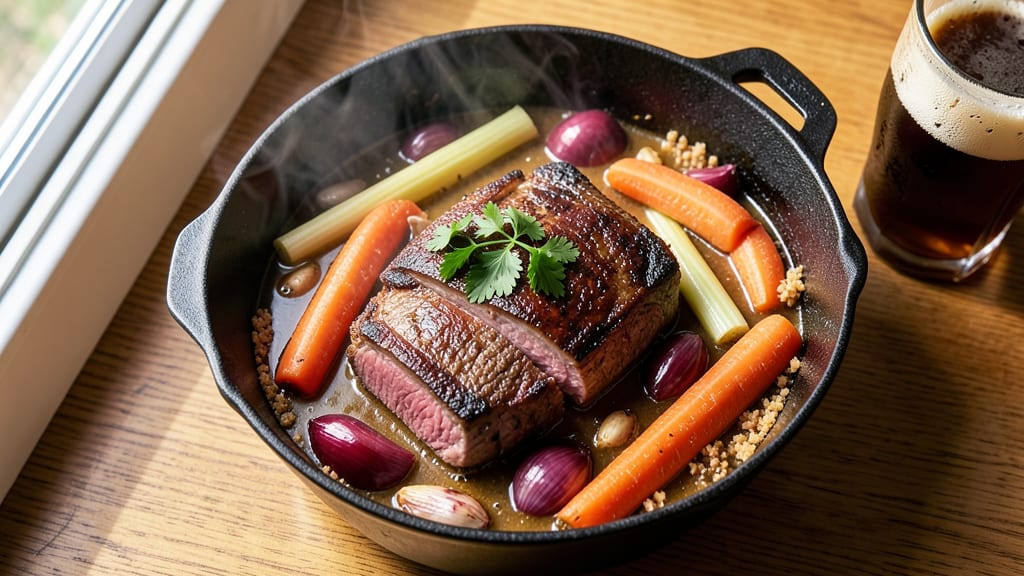
This Irish beef stew with Guinness stout transforms tough cuts of beef into melt-in-your-mouth tenderness through slow simmering and deep, malty flavors. The secret lies in browning the meat properly and letting the stew develop its rich, caramelized depth over hours—just like in traditional Irish pubs.
I’ve refined this recipe to balance authenticity with modern convenience, so you get restaurant-quality results without spending all day in the kitchen.
The beauty of this stew is its versatility—it’s hearty enough for a cold evening but simple enough for a weeknight dinner. We’ll use Guinness stout not just for flavor but as a natural tenderizer, while aromatic vegetables and herbs build layers of complexity.
The slow cooking process ensures the beef becomes fork-tender, and the sauce thickens into a velvety, Guinness-infused gravy that clings to every bite.
By the time you’re done, you’ll have a pot of deeply flavorful stew with tender beef chunks swimming in a rich, aromatic broth. The aroma alone will have everyone gathering around the table, and the first bite delivers that perfect balance of savory, smoky, and slightly sweet notes.
This is comfort food at its finest—warm, satisfying, and impossible to resist.
Serve it with crusty sourdough bread to soak up every last drop of that Guinness-infused sauce, or pair it with roasted potatoes for a complete Irish meal.
The best part? Leftovers taste even better the next day, making this the ultimate make-ahead dish for busy families. Let’s get started on creating something truly special.
Ingredients for irish beef stew with guinness stout
Sixteen ingredients. One pot. A symphony of deep, malty Irish flavors waiting to unfold.
| Ingredient | Amount | Notes |
|---|---|---|
| Chuck Roast Beef 🥩 | 3 lb | Tough cut, well-marbled preferred |
| Guinness Stout 🍺 | 1 ½ cups | Cold, not warmed for browning |
| Yellow Onions 🧅 | 2 whole | Medium, sliced into half-moons |
| Carrots 🥕 | 4 whole | Medium, peeled and cut into chunks |
| Celery Stalks 🥬 | 4 whole | Trimmed, cut into 1-inch pieces |
| Garlic Cloves 🧄 | 6 cloves | Peeled, smashed for deep flavor |
| Tomato Paste 🍅 | 2 tbsp | Squeeze tube preferred for ease |
| Beef Broth 💧 | 4 cups | Homemade or high-quality store-bought |
| Fresh Thyme Sprigs 🌿 | 2 whole | Or 2 tsp dried thyme if needed |
| Fresh Bay Leaves 🍃 | 2 whole | Dried works in a pinch |
| All-Purpose Flour 🌾 | 1 tbsp | For thickening the sauce |
| Kosher Salt 🧂 | 1 ½ tsp | Adjust to taste during cooking |
| Ground Black Pepper 🌶️ | 1 tsp | Freshly cracked for best flavor |
| Extra-Virgin Olive Oil 🫒 | 2 tbsp | For searing the beef |
The beef is non-negotiable here—chuck roast with visible marbling is your golden ticket. Costco or Whole Foods usually carry it pre-cut, but if you're buying a whole roast, ask the butcher to trim off excess fat. That marbling? It's what turns tough meat into melt-in-your-mouth magic. The Guinness should be cold when you add it—warming it first kills the carbonation that helps tenderize the meat. Pro tip: Trader Joe's often has it at a great price, and it's worth grabbing a six-pack if you don't already have it. For the vegetables, don't stress about perfect cuts—just chop them evenly so they cook at the same rate.
No Guinness? Stout beer or even dark ale works in a pinch, but it won't have the same depth. Fresh thyme and bay leaves are ideal, but dried thyme at one-third the amount gets you close. The tomato paste can be skipped if you're strict about authenticity, but it adds a nice sweetness that balances the richness. Pre-made beef broth is fine here—just avoid the low-sodium kind unless you're adding extra salt. For the flour, if you don't have all-purpose, cornstarch works too. And that olive oil? Use something fruity and peppery—none of that bland vegetable oil nonsense.
This stew tastes even better the next day—plan ahead. The beef will keep for 4-5 days in the fridge, and the broth freezes beautifully for up to 3 months. I always make a double batch because it disappears so fast. Store it in airtight containers with a layer of broth on top to keep the beef moist. Reheat gently on the stove, adding a splash of water or broth if it's too thick. And if you're serving it at a gathering, keep the pot warm on low heat—nothing says 'welcome' like a bubbling pot of stew.
Why You'll Love This Recipe
- Foolproof Prep: I swear by this—just chop the onions, carrots, and celery (no fancy knife skills needed), brown the beef in one pot, then let the Guinness do its magic. Ten minutes of active work, and the rest simmers while you do anything else.
- Rich, Deep Umami Bomb: That first sip of stew? The Guinness turns the beef so tender it melts, while the onions caramelize into sweet, earthy layers. Honestly, the aroma alone makes me pause mid-day—like walking into a pub on a rainy afternoon.
- Leftovers That Beg for More: This stew tastes better the next day, and it’s my go-to for lunches or quick dinners. I freeze half in portions—just reheat, and suddenly, a busy weeknight turns into "oh, that’s nice" comfort food.
- Budget-Friendly Crowd-Pleaser: A chuck roast stretches to feed four (or five if we’re honest), and the Guinness adds depth without breaking the bank. Between us, this is the recipe I make when I want to impress guests without stressing over grocery bills.
Step-by-step instructions for Irish beef stew with Guinness stout
This rich, slow-cooked stew delivers deep malty flavor and tender beef—every bite packed with comfort.
Sear the Chuck Roast for Maximum Flavor
Pat the 3 lb chuck roast beef completely dry with paper towels—this ensures a perfect sear. Heat the 2 tbsp extra-virgin olive oil in a large Dutch oven over medium-high heat until shimmering. Place the beef in the pot and sear on all sides for 5-6 minutes total, turning occasionally, until deeply browned. A well-seared crust locks in juices and builds deep flavor.
While the beef browns, prepare the vegetables: Peel and cut the 4 whole carrots into 1-inch chunks, trim the 4 whole celery stalks into similar pieces, and slice the 2 whole yellow onions into half-moons. Set them aside—they'll join the pot shortly. The caramelized beef bits that form in the pot will dissolve into the Guinness, creating an irresistible base for your stew.
Build the Rich Guinness Base
Remove the seared beef from the pot and set it aside. Reduce the heat to medium and add the sliced onions, carrots, and celery stalks. Cook for 5-6 minutes, stirring occasionally, until the vegetables begin to soften and release their juices. Add the 6 peeled and smashed garlic cloves and stir for 30 seconds until fragrant.
Squeeze the 2 tbsp tomato paste directly into the pot and stir vigorously to coat the vegetables. Pour in the 1.5 cups cold Guinness stout (never warm it first—this prevents bitterness) and scrape up any browned bits from the bottom. Let the mixture simmer for 3-4 minutes until slightly reduced. This step develops the stew's signature malty depth and forms the flavor foundation.
Simmer the Stew Low and Slow
Return the beef to the pot and add the 4 cups beef broth, 2 whole fresh thyme sprigs, 2 whole fresh bay leaves, 1.5 tsp kosher salt, and 1 tsp ground black pepper. Bring the mixture to a gentle boil, then reduce the heat to low, cover the pot, and let it simmer for 2 hours. The stew should bubble gently—if it boils vigorously, reduce the heat further to maintain even cooking.
Check the beef after 1 hour and skim off any foam that rises to the surface. This ensures a clear, flavorful broth. The beef is done when it easily pulls apart with a fork and the vegetables are tender but not mushy. The slow cooking transforms tough chuck roast into fork-tender perfection while allowing all the flavors to meld beautifully.
Thicken and Finish the Stew
Once the beef is tender, remove the thyme sprigs and bay leaves. Sprinkle the 1 tbsp all-purpose flour over the stew and stir gently to combine. Let it simmer uncovered for 5-7 minutes, stirring occasionally, until the sauce thickens slightly. Taste and adjust the seasoning with additional salt or pepper if needed. The flour helps create a velvety texture without making the stew gluey.
For the final touch, let the stew rest off the heat for 10 minutes. This allows the flavors to settle and the juices to redistribute throughout the beef. Serve the stew hot, ladled over crusty bread or buttered potatoes. The rich Guinness-infused broth pairs perfectly with the tender beef and vegetables, creating a hearty Irish classic that warms you from the inside out.
Pro Tips For Making Irish Beef Stew With Guinness Stout
- SEAR THE ROAST FIRST: High heat for 3-4 minutes per side—this isn’t just for looks. The crust locks in flavor and keeps the meat from turning mushy later, especially when it’s buried in Guinness. (Yes, even if you’re impatient like me, don’t skip this.)
- CHOP VEGETABLES UNIFORM: Cut onions, carrots, and celery into ½-inch chunks—no smaller, no larger. Big pieces stay tough, small ones turn to mush. I learned this the hard way when my stew had a sad, watery texture after hours of simmering.
- DEGLAZE WITH GUINNESS IMMEDIATELY: After searing the beef, pour in that pint of Guinness right away—don’t let the browned bits sit. Scrape the bottom with a wooden spoon while it bubbles; that’s where half the flavor hides. (Your future self will thank you.)
- SIMMER LOW AND LONG: Cover the pot and cook at a gentle simmer—no boiling—around 300°F (150°C). Too much heat = tough meat and cloudy broth. I used to rush it, but now I let it go for 3 hours, and the beef falls apart like it’s been cooking all day. (It’s worth the wait.)
Regional styles of these flavors
Traditional Dublin Pub Style
The Dublin pub version of this stew is all about simplicity and letting the ingredients shine.
I’ve seen it made in countless pubs across the city with just a few key adjustments: use dark brown ale instead of Guinness for a slightly lighter body, and add 1 tbsp of Worcestershire sauce when building the Guinness base.
The secret here is to let the stew simmer for 3-4 hours uncovered after the initial 2-hour cook—this deepens the flavors and creates a glossy, reduced sauce. Serve it with thick-cut Irish soda bread to soak up every last drop of that rich broth.
West Coast Irish-American Twist
This version takes inspiration from Irish immigrants who settled along the US West Coast, particularly in places like San Francisco and Portland. Swap the beef broth for 4 cups of beef broth mixed with ½ cup of clam juice—this adds a briny depth that pairs beautifully with the Guinness.
I also like to add 1 tsp of smoked paprika when searing the beef for a subtle smokiness. Top with crumbled blue cheese and fresh parsley before serving. Pair it with a crusty baguette or garlic mashed potatoes for a hearty meal.
Cork County Farmhouse Version
In Cork, stews are often made with whatever vegetables are fresh from the garden, and this version reflects that rustic charm. Use potatoes (peeled and chunked) and leeks (sliced) instead of carrots and celery. Add 1 tbsp of apple cider vinegar when building the Guinness base to brighten the flavors.
The Cork version also includes a handful of fresh parsley stirred in at the end for freshness. This stew is traditionally served with colcannon (mashed potatoes with kale or cabbage) on the side, creating a complete, comforting meal.
Modern Fast-Cook Instant Pot Adaptation
For a quicker version that still delivers deep flavor, use an Instant Pot and adjust the cooking time to 60 minutes on high pressure. Sear the beef in the pot first, then add all ingredients except the flour.
After pressure cooking, let the pot release naturally for 10 minutes, then stir in the flour and cook on sauté mode for 3-5 minutes to thicken.
I’ve found that adding ½ cup of Guinness at the end and letting it reduce slightly on high heat gives it that classic pub-house finish. This version is perfect for busy weeknights but still feels like a traditional Irish stew.
Connemara Coastal Variation
Inland from Galway, the Connemara region incorporates seafood into their stews, creating a unique twist on this classic dish. Add ½ lb of mussels or clams to the pot during the final 10 minutes of cooking. The briny seafood pairs perfectly with the malty Guinness and tender beef.
I also like to add 1 tsp of seaweed flakes (available at specialty stores) for an extra umami boost. Serve with crusty oatcakes or wild Irish mushrooms sautéed in butter for a coastal-inspired meal.
Slow-Cooker Shortcut
If you’re using a slow cooker, follow the same steps for searing the beef and building the Guinness base, but transfer everything to a 6-quart slow cooker after the initial simmer. Cook on low for 8 hours or high for 5 hours**.
The slow cooker version is perfect for meal prep—just store it in airtight containers and reheat on the stove with a splash of water or broth. I often double the recipe and freeze half for later, making it a go-to for lazy Sundays.
The slow cooker method ensures the beef stays fork-tender without much attention from you.
Nutrition facts
Frequently asked questions
Can I substitute Guinness stout with another beer?
A stout beer like dark ale or porter works in a pinch, but Guinness adds unique roasted malt flavors. For best results, use 1.5 cups of cold stout beer. Avoid light beers—they lack the body and depth needed for this rich stew. The carbonation in cold beer also helps tenderize the beef naturally.
How do I make this stew in a Dutch oven vs. slow cooker?
For a Dutch oven, follow the 2-hour simmer on the stovetop. In a slow cooker, transfer everything after searing and cook on low for 8 hours or high for 5 hours**. The slow cooker version requires no attention, but the Dutch oven gives you more control over the sauce's thickness. Both methods yield tender beef—just adjust the simmer time accordingly.
Why does my stew taste bitter? How can I fix it?
Bitter flavors often come from overcooking or using warm Guinness (which turns bitter). Always add cold beer and simmer gently. If it's too bitter, balance it with 1 tbsp of tomato paste or a splash of apple cider vinegar. Skim excess foam during cooking, and avoid boiling vigorously—this concentrates bitterness. A pinch of sugar can also help round out harsh flavors.
Can I prep this stew ahead of time?
This stew tastes even better the next day. After simmering, let it cool completely, then store in an airtight container in the fridge for 4-5 days. For freezing, portion into containers with broth on top to prevent drying. Reheat gently on the stove, adding a splash of water or broth if needed. The flavors deepen overnight, making it perfect for meal prep.
What’s the best way to serve leftover Irish beef stew?
Leftover stew is ideal for sandwiches, tacos, or baked potatoes. For sandwiches, layer stew on crusty bread with a dollop of mustard. For tacos, serve in warm tortillas with shredded cheese and pickled onions. The rich broth also makes a fantastic soup base—just thin with extra broth and add noodles. Always reheat gently to preserve texture.