
Sauces & Condiments
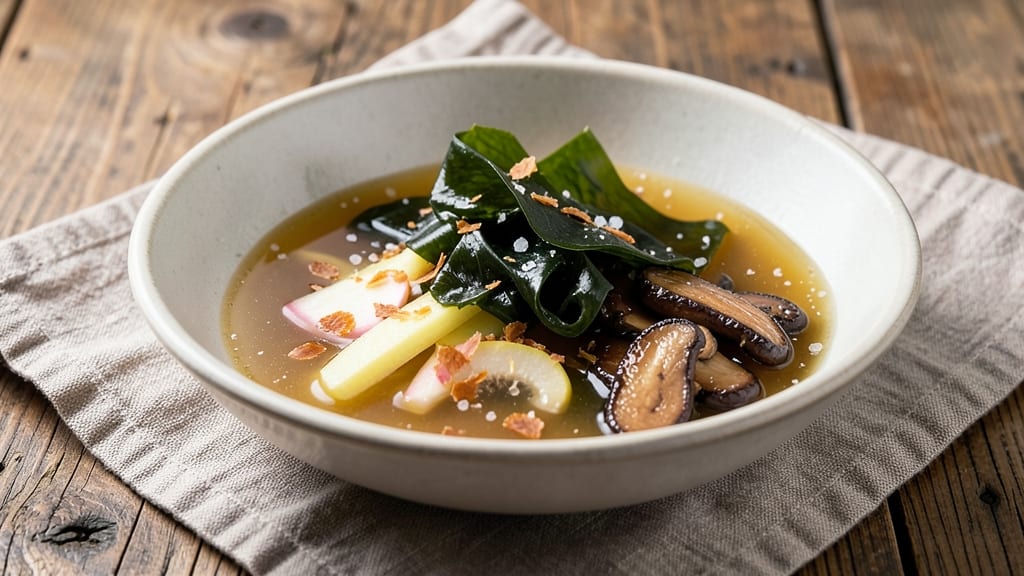
This dashi sauce recipe is the foundation of Japanese cooking, delivering that unmistakable umami depth that elevates everything from soups to sauces. As a professional chef, I’ve perfected a 15-minute method that captures the essence of traditional kombu and bonito-based dashi—rich, clean, and impossibly flavorful without requiring hours of simmering.
The secret lies in precise timing and quality ingredients, ensuring every sip carries that signature savory brightness.
What makes this dashi truly special is its versatility. Whether you’re making miso soup, ramen, or glaze for grilled fish, this broth base transforms ordinary dishes into something extraordinary. The process is surprisingly simple: just kombu (dried kelp), bonito flakes, and water—no complicated techniques, just patience and attention to detail.
For those avoiding fish, I’ll also share a vegan-friendly variation using shiitake mushrooms that delivers a surprisingly authentic result.
The result is a clear, aromatic broth with a delicate balance of saltiness and sweetness, where the kombu contributes a subtle oceanic depth while the bonito adds a toasty, almost meaty richness.
This isn’t just a sauce—it’s a flavor multiplier that turns simple ingredients into something memorable. Once you master this technique, you’ll never go back to store-bought versions again.
Perfect for home cooks and professional chefs alike, this dashi recipe is your gateway to authentic Japanese flavors. Let’s get started—your kitchen (and taste buds) will thank you.
Ingredients for dashi sauce
Six simple ingredients transform into the ultimate umami-packed Japanese broth base.
| Ingredient | Amount | Notes |
|---|---|---|
| Kombu (Dried Kelp) 🍃 | 1 piece | 6-inch piece, rinsed |
| Bonito Flakes 🐟 | ½ cup | High-quality, unsalted |
| Cold Water 💧 | 4 cups | Filtered preferred |
| Fresh Ginger 🌿 | 1 tbsp | Finely grated, organic |
| Shiitake Mushrooms (vegan option) 🍄 | 2 dried | Or 4 oz fresh, sliced |
| Diamond Crystal Kosher Salt 🧂 | ¼ tsp | Adjust to taste |
| Extra-Virgin Olive Oil (vegan option) 🫒 | 1 tbsp | For finishing |
Kombu is the heart of this dashi—look for thick, glossy sheets at Asian markets or well-stocked grocery stores like Whole Foods. The bonito flakes should be light beige, not yellowed or oily. I always buy mine from H Mart or Nijiya Market—their quality is unmatched. Fresh ginger adds subtle warmth, but if you're using the vegan shiitake version, skip it entirely. For the water, filtered is ideal (tap works too), but avoid distilled—it lacks minerals that help extract flavor. The kosher salt is non-negotiable; table salt has anti-caking agents that can cloud the broth.
No kombu? Dried wakame seaweed at half the amount works in a pinch, though texture differs slightly. Bonito flakes hard to find? Dried sardines or anchovies (soaked in water first) deliver similar umami. For the vegan shiitake version, rehydrate dried mushrooms in hot water first—they'll shrink dramatically. The olive oil finishing touch isn't traditional but adds richness if you're serving it over delicate dishes like sashimi. Pro tip: if your dashi tastes too fishy, simmer time is too long—15 minutes max for that clean, bright flavor.
Store leftover dashi in glass jars in the fridge—it keeps for 5-7 days. For longer storage, freeze in ice cube trays—perfect for single servings. The kombu should be removed after 5 minutes of steeping (that's when it releases its magic), but if you forget, strain it out immediately to avoid bitterness. This broth reheats beautifully—just warm gently on the stove or microwave. The vegan version actually improves overnight as flavors meld. Trust me, you'll want to make extra.
Why You'll Love This Recipe
- No-Chop Necessary: Honestly, this sauce takes all of five minutes to assemble—just steep kombu in cold water, add bonito (or shiitake for vegans), and let it work its magic. No knives out, no stress, no mess. That’s my kind of cooking.
- Umami Bomb: The moment those bonito flakes (or shiitake) dissolve, your kitchen smells like a Japanese izakaya, and your taste buds get a wake-up call. It’s that deep, savory punch—salty, sweet, and just a little funky—that turns bland rice or noodles into something ridiculously good.
- Pantry Staple Power: Between us, I keep dashi stock on hand like salt. Use it for ramen, miso soup, even marinades—it’s the secret weapon in my weeknight rotation. And if you’re vegan? Swap in shiitake and ginger, and you’ve got a flavor bomb that still delivers.
- Budget Magic: A single kombu sheet and a bag of bonito flakes last forever—I’ve stretched one batch into three meals without breaking a sweat. Cold water? Free. Ginger? Cheap. This is the kind of recipe that makes frugal eating feel fancy.
Step-by-step instructions for dashi sauce recipe
Here's how to create a rich, aromatic dashi base that forms the foundation of countless Japanese dishes.
Prepare the Kombu and Water
Start by rinsing the 1 piece Kombu (Dried Kelp) under cold water to remove any dust or debris. Place it in a clean pot and add the 4 cups Cold Water. I like to use filtered water for this step—it helps prevent any off-flavors from developing during the extraction process.
Bring the mixture to a gentle simmer over medium-low heat. You'll notice the kombu will begin to release its natural oils and umami compounds into the water. Once small bubbles form around the edges but before it reaches a full boil, remove the pot from the heat. This prevents the kombu from releasing bitter compounds that can overpower the delicate flavor profile.
Infuse with Shiitake Mushrooms and Ginger
While the kombu infuses, prepare the 2 dried Shiitake Mushrooms (vegan option) by gently breaking them into smaller pieces with your hands. Add them to the warm kombu water along with the 1 tbsp Fresh Ginger, which has been finely grated. Return the pot to low heat and let it steep for 5 minutes.
The mushrooms will rehydrate slightly, releasing their earthy depth, while the ginger adds a subtle warmth that balances the kombu's oceanic sweetness. Stir gently once or twice during this time to ensure even infusion. You should notice the liquid becoming slightly cloudy and developing a more complex aroma.
Add Bonito Flakes for Depth
After the 5-minute infusion, remove the pot from heat again. Using a fine-mesh strainer, carefully remove the kombu, shiitake mushrooms, and ginger pieces. Discard these solids—they've done their job. Return the strained liquid to the pot and bring it back to a gentle simmer.
Add the 0.5 cup Bonito Flakes in stages. First sprinkle about ¼ cup and let it simmer for 1 minute, then add the remaining 0.25 cup and simmer for another 1 minute. This gradual addition prevents the flakes from clumping and ensures even distribution of their intense umami flavor. You'll see the liquid develop a frothy, golden appearance as the bonito dissolves.
Season and Finish with Olive Oil
Remove the pot from heat once the bonito has fully incorporated. Stir in the 0.25 tsp Diamond Crystal Kosher Salt and let the mixture cool slightly. For the final touch, drizzle in the 1 tbsp Extra-Virgin Olive Oil (vegan option) while stirring gently. This creates a delicate sheen on the surface and adds a subtle richness that rounds out the broth's flavor profile.
The resulting dashi should have a clear, golden appearance with a deep umami aroma. If you're using this as a base for soups or sauces, you can strain it again through a fine-mesh sieve for a completely smooth texture. For immediate use in recipes, simply pour it directly into your cooking pot—this vibrant, umami-packed broth will elevate any dish it touches.
Pro Tips For Making Dashi Sauce
- Toast Bonito Properly: Skip the microwave—use a dry skillet over medium heat for 30 seconds, stirring constantly. I learned this the hard way: burnt flakes taste like fishy ash, while properly toasted ones smell like umami heaven and dissolve smoothly.
- Rinse Kombu First: Give that dried kelp a quick 10-second rinse under cold water before soaking—removes grit and dust that’ll cloud your broth. My grandmother swore by this, and she was right: clean kombu = cleaner, brighter dashi.
- Simmer, Don’t Boil: Keep the heat low enough that you barely see bubbles—gentle simmering extracts flavor without turning your kombu into mush. After burning three batches, I finally figured out: patience here means depth later.
- Prep Shiitake Right: For vegan dashi, slice shiitake thick (¼-inch) and soak in cold water for 20 minutes first—removes bitterness and lets them rehydrate properly. Sounds weird, but it works: your broth won’t taste like dirt.
Dietary considerations for this dashi sauce
Traditional Pescatarian Base
This classic dashi recipe is the pescatarian powerhouse of Japanese cuisine, built on kombu (dried kelp) and bonito flakes—two ingredients that create that signature umami depth. The kombu provides a clean, oceanic sweetness while the bonito adds a toasted, almost meaty richness that transforms simple dishes into something extraordinary.
For those who love seafood but want to reduce fish consumption, this version delivers all the authentic flavor without overpowering your palate. 🐟
Vegan Shiitake Substitute
For a completely plant-based option, swap the bonito flakes for 2 dried shiitake mushrooms (or 4 oz fresh). The mushrooms release an earthy umami that mimics the depth of fish-based dashi, though with a slightly more vegetal note.
I find that adding 1 tbsp soy sauce or 1 tsp nutritional yeast after simmering helps bridge the gap between traditional and vegan versions. This version works beautifully in miso soup or as a base for stir-fries. 🍄
Gluten-Free Assurance
Dashi is naturally gluten-free, making it a safe choice for those with celiac disease or gluten sensitivity. However, always check your bonito flakes and kombu for cross-contamination warnings—some brands process ingredients in shared facilities.
For extra caution, opt for certified gluten-free bonito from specialty Asian markets. The vegan shiitake version is inherently gluten-free, assuming you avoid soy sauce with gluten additives. 🌾
Low-Sodium Adaptations
Store-bought dashi often contains added salt, but this homemade version lets you control the sodium content completely. Start with just ¼ tsp kosher salt and taste as you go—you can always add more, but you can't remove it.
For heart-healthy meals, consider omitting the salt entirely and relying on the natural umami from kombu and bonito. The vegan version benefits especially from this approach, as the mushrooms' earthiness shines when unsalted. 💡
Allergen-Friendly Tips
If you're sensitive to shellfish, rest assured that bonito (dried skipjack tuna) is generally considered safe for most shellfish-allergic individuals—though always consult your doctor. For those avoiding all fish, the shiitake version is a safe alternative that still delivers that essential umami kick.
Keep an eye out for sulfite warnings on dried mushrooms, as some brands add preservatives that can trigger reactions. Fresh mushrooms are always the safest bet. 🚑
Nutritional Highlights
This dashi is low in calories (about 10 calories per cup) but packed with minerals like iodine (from kombu) and B vitamins (from bonito). The vegan version adds fiber and antioxidants from shiitake mushrooms, making it a nutrient-dense choice.
It's also cholesterol-free and fat-free unless you add the optional olive oil finishing touch. For a protein boost, consider adding a splash of tofu or edamame to your dashi-based dishes. 💪
Nutrition facts
Frequently asked questions
What's the difference between instant dashi granules and homemade?
Instant dashi granules use concentrated powders and often contain added salt or MSG for shelf stability. Homemade dashi delivers a fresh, nuanced umami with natural depth from kombu and bonito. The granules can taste flat or overly salty, while homemade dashi develops complex layers of flavor that store-bought versions can't replicate. For serious cooking, the fresh method is always superior.
Can I make dashi without bonito flakes?
For a vegan version, use 2 dried shiitake mushrooms or ½ cup dried wakame seaweed instead. The mushrooms add earthy umami while wakame provides a more oceanic flavor. Both work beautifully in miso soup or as a broth base, though they lack bonito's toasty richness.
Why does my dashi taste bitter?
Bitterness usually means your kombu steeped too long or boiled. Remove kombu after 5 minutes max and never let it boil. For extra insurance, strain through a fine-mesh sieve to remove any lingering bitter compounds. If using old kombu, replace it—fresh sheets make all the difference.
How long does homemade dashi last?
Store in a glass jar in the fridge for 5-7 days or freeze in ice cube trays for up to 3 months. The vegan shiitake version actually improves overnight as flavors meld. For best results, use within a week or freeze immediately after making.
Can I use dashi as a marinade?
Yes! Dashi makes an excellent marinade for fish or tofu. Combine with 1 tbsp soy sauce and 1 tsp grated ginger, then marinate for 30-60 minutes. The umami depth enhances texture and flavor. For grilled proteins, use the vegan shiitake version to avoid fishy overtones.