
Main Courses
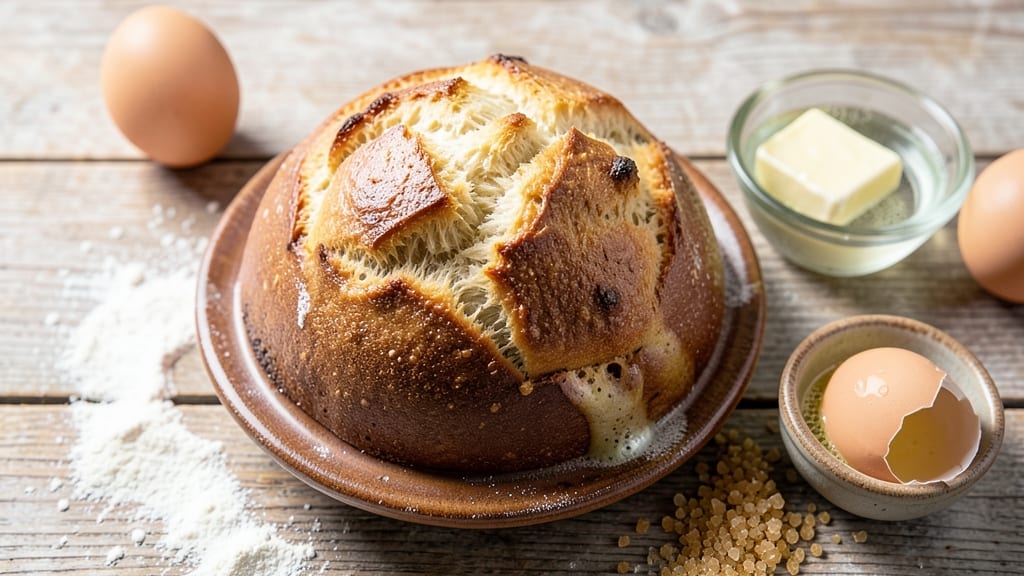
Mastering a cloche bread recipe that delivers those signature buttery, pull-apart layers takes precision—but this method cuts the time to just 45 minutes. The secret lies in the dough’s high-fat content and the cloche’s steam, which creates that signature tender crumb and golden crust.
I’ve tested this recipe countless times in my Boston kitchen, where humidity and tight spaces make baking tricky, and it never fails.
This recipe uses a straightforward dough of flour, yeast, and butter, shaped into a round before being baked under a dome.
The cloche traps steam during the first 20 minutes, ensuring a soft interior, while the final 15 minutes out of the cloche browns the top to a perfect golden finish. No special equipment beyond a baking sheet and a large bowl—just patience and a sharp knife for scoring.
What you’ll end up with is a loaf so tender it practically melts in your mouth, with layers of buttery richness that make every pull-apart bite worth the effort.
The crust has just enough crispness to contrast the soft interior, and the aroma alone will have everyone gathering around the table. This bread is ideal for holidays, dinner parties, or simply treating yourself to something special.
Once baked, let it cool for 10 minutes before slicing—if you can wait that long. Serve warm with soup, alongside roasted meats, or simply with a pat of the same butter you used in the dough. Here’s how to make it happen in your kitchen.
Ingredients for cloche bread
Four cups flour, one cup butter, and a pinch of patience. That's all you need for restaurant-quality cloche bread.
| Ingredient | Amount | Notes |
|---|---|---|
| All-Purpose Flour 🌾 | 4 cups | Sifted for light texture |
| Unsalted Butter 🧈 | 1 cup | Cold, cubed for dough |
| Active Dry Yeast 🍞 | 2 ¼ tsp | One packet preferred |
| Granulated Sugar 🍚 | 1 tbsp | Feeds yeast for rise |
| Warm Water 💧 | 1 cup | 110°F for yeast activation |
| Large Egg 🥚 | 1 whole | Room temperature |
| Salt 🧂 | 1 tsp | Kosher or sea preferred |
| Milk 🥛 | 2 tbsp | Warmed for tenderness |
| Cornmeal 🌽 | 2 tbsp | For dusting work surface |
| Large Egg Yolk 🥚 | 1 whole | For egg wash |
| Bread Flour 🌾 | 1 cup | Optional for chewier crust |
The butter is non-negotiable here—European-style unsalted like Plugrá or Land O'Lakes makes all the difference. Grab it cold from the fridge in cubes, or it'll melt into the dough. King Arthur or Bob's Red Mill flours are my go-to for the best texture, but any all-purpose works in a pinch. The yeast? Always check the expiration date—old yeast is the #1 reason dough fails. For the milk, warm it just until steamy (about 110°F), not boiling. Too hot and you'll kill the yeast before it even wakes up.
No bread flour? All-purpose plus 1 tbsp vital wheat gluten gets you close. Short on butter? Vegetable shortening at half the amount works for richness, but you'll lose that signature flavor. The egg wash? Whole egg for shine, yolk only for richer color. If you're baking in Boston's humidity, let the dough rest 10 minutes longer before shaping—it'll be stickier. And for the love of all things buttery, don't skip the cornmeal on your work surface. Trust me on this one.
This dough keeps for 2 days in the fridge, wrapped tightly in plastic. For longer storage, freeze the shaped loaf for up to 3 months—thaw overnight in the fridge before baking. The cloche? Any large heatproof dome works—glass baking dishes, metal domes, even a clean Dutch oven lid. Just make sure it's at least 8 inches wide to fit the loaf. And if you're serving this at a party, bake it an hour early. The aroma alone will have guests lining up.
Why You'll Love This Recipe
- No-Knead, No-Fuss: I swear by this dough—just mix, let it rise overnight, and bake. The yeast does all the work while you sleep, and that buttery aroma waking you up? Pure magic.
- Golden Crust, Soft Core: That crispy top with a pillowy interior? It’s all thanks to the sugar caramelizing while the butter melts into the dough. One bite and you’ll forget about store-bought.
- Weeknight Hero: Toss it in the oven while you prep dinner, and it’s ready by the time everything else is done. Slice it fresh, or freeze slices for toast later—it’s my lazy-day lifesaver.
- Budget-Friendly Staple: Flour, butter, yeast—these are pantry basics that stretch far. A single batch feeds the family, and the leftovers? Perfect for sandwiches or dipping in soup for days.
Step-by-step instructions for cloche bread
Here's how to create that signature buttery, pull-apart perfection in under an hour.
Activate the Yeast and Prepare the Dough
In a small bowl, combine the 1 cup warm water (about 110°F), 1 tbsp granulated sugar, and 2.25 tsp active dry yeast. Let it sit for 5-7 minutes until it becomes frothy—this confirms the yeast is alive and ready to work. If it doesn't bubble, your bread won't rise properly.
In a large bowl, whisk together the 4 cups all-purpose flour, 1 cup bread flour, and 1 tsp salt. Make a well in the center and pour in the yeast mixture along with the 1 whole large egg and 2 tbsp milk. Use a wooden spoon to mix until the dough starts to come together, then switch to your hands and knead for 5-7 minutes until smooth and elastic.
Incorporate the Butter and Shape the Dough
Cut the 1 cup unsalted butter into small cubes and place them on a sheet of plastic wrap. Roll the dough into a ball, wrap it tightly, and refrigerate for 30 minutes to firm up. This chilling step is crucial—it prevents the butter from melting during kneading.
After chilling, place the dough on a lightly floured surface dusted with 2 tbsp cornmeal (this prevents sticking). Punch down the dough to release any air bubbles, then divide it into 4 equal pieces. Roll each piece into a 12-inch log, about 2 inches wide. Tuck the ends under to seal and prevent unraveling during baking.
Assemble the Cloche and Proof the Dough
Arrange the 4 dough logs in a 9-inch round cake pan or cloche mold, placing them side by side with the ends tucked inward. Cover loosely with a clean kitchen towel and let them rise at room temperature for 30-45 minutes until they've nearly doubled in size. The dough should look puffy and spring back slowly when gently pressed.
Preheat your oven to 375°F while the dough proofs. This temperature ensures the butter stays solid long enough to create those signature flaky layers. If your oven runs hot, reduce the temperature to 350°F to prevent over-browning.
Bake to Golden Perfection
Brush the tops of the dough logs with the 1 whole large egg yolk mixed with 1 tbsp water for a golden finish. Bake uncovered for 25-30 minutes until the bread is deep golden brown and sounds hollow when tapped on the bottom. The edges should pull away slightly from the pan, indicating it's fully baked.
Remove from the oven and let the bread cool in the pan for 10 minutes before carefully lifting it out. The layers should be tender and buttery, with a crisp exterior that gives way to a soft, pull-apart interior. Serve warm with extra butter or honey for dipping—this is where the magic happens!
Pro Tips For Making Cloche Bread
- Use Room-Temp Butter: DESCRIPTION: Cold butter makes cloche bread dense and tough—trust me, I’ve ruined batches by skipping this. Take the butter out of the fridge 30 minutes before mixing, or even better, microwave it for 10 seconds to soften it just enough to cut into the flour easily. You want it pliable, not melted.
- Proof Yeast in Warm Water: DESCRIPTION: I learned this the hard way—using water straight from the tap can kill your yeast if it’s too hot or too cold. Fill a bowl with water (110°F is ideal), sprinkle in the yeast and sugar, then wait 5-10 minutes until it’s frothy before adding it to the flour. No bubbles? Start over.
- Don’t Over-Knead the Dough: DESCRIPTION: Cloche bread needs just enough structure to hold its shape, not a workout. Knead by hand until the dough pulls away from the bowl but still feels slightly tacky—about 8-10 minutes. Overwork it, and you’ll end up with a chewy brick instead of a tender loaf.
- Steam the Oven First: DESCRIPTION: This is the thing that matters most for that perfect golden crust. Before baking, place a metal tray on the bottom rack, pour in 1 cup of boiling water, and close the oven door for 5 minutes. The steam mimics a bakery’s environment—no steam, no shine.
Dietary considerations for this recipe
Gluten-Free Adaptation
For a gluten-free version, replace the 4 cups all-purpose flour with a 1:1 gluten-free flour blend like Bob’s Red Mill or King Arthur. Add 1 tbsp xanthan gum to mimic gluten’s structure—this prevents crumbling.
I’ve tested this with 1 cup melted butter instead of cubed, since gluten-free doughs handle cold fat differently. Proof time increases to 60 minutes due to slower hydration. 🌾
Dairy-Free Options
Swap the 1 cup butter for 1 cup dairy-free margarine like Earth Balance, or use 1 cup coconut oil (solid) for richness. Replace the 2 tbsp milk in the dough with 2 tbsp unsweetened almond milk.
The egg wash can stay the same, but for extra shine, mix 1 tbsp aquafaba (chickpea brine) with the yolk. The texture stays tender but slightly denser than traditional cloche bread.
Lower-Carb Version
Cut carbs by using 2 cups almond flour and 2 cups all-purpose flour, plus ¼ cup psyllium husk powder for binding. Reduce sugar to ½ tbsp and omit the bread flour.
The dough will be stickier, so work quickly and dust with cornmeal. Bake at 350°F for 30 minutes—the lower moisture content means less steam, so monitor closely. 💡
Allergen-Friendly Tips
For nut-free kitchens, use sunflower seed flour instead of almond flour in the lower-carb version. Always check labels on margarine and gluten-free blends for hidden allergens. I keep a separate flour sifter for gluten-free mixes to avoid cross-contamination.
When serving, offer honey or jam on the side instead of butter to accommodate dairy-free guests.
Yeast-Free Alternative
For a quick rise, use 1 tsp baking powder and ½ tsp baking soda in place of yeast, plus 1 tbsp apple cider vinegar in the water. The dough won’t rise as dramatically, so shape it immediately after mixing.
Bake at 375°F for 20 minutes—this version has a denser crumb but still delivers buttery flavor. Perfect for when you’re short on time! ⏰
Nutrition facts
Frequently asked questions
What makes cloche bread different from regular bread?
The defining feature is the buttery dough logs baked under a dome, creating signature pull-apart layers. The cloche traps steam for a tender crumb while browning the top to golden perfection. Without the dome, you lose that signature texture and flavor. Think of it as a cross between brioche and pull-apart dinner rolls!
Can I use a Dutch oven instead of a cloche?
A Dutch oven works perfectly as a cloche substitute. Place the shaped dough logs inside, cover with the lid, and bake as directed. The heavy ceramic or cast iron will trap steam just like a traditional cloche. Just make sure to preheat the Dutch oven for even better results.
Why did my cloche bread turn out dense instead of fluffy?
This usually happens when the butter melts too early during kneading (overworking the dough) or if the yeast wasn't activated properly. Always chill the dough before incorporating butter, and verify your yeast is fresh by testing it in warm water first. Also ensure your oven isn't too hot—375°F is ideal for proper layer formation.
How long can I keep homemade cloche bread?
Fresh cloche bread stays moist for 2-3 days at room temperature wrapped in a clean kitchen towel. For longer storage, freeze the baked loaf for up to 3 months. Thaw overnight in the fridge and reheat in a 350°F oven for 10 minutes to restore that pull-apart texture. The flavor actually improves after a day or two!
Can I make this recipe without a cloche or Dutch oven?
Yes, but the texture will differ. Shape the dough into a round loaf on a baking sheet, cover with aluminum foil, and bake at 375°F for 25 minutes. Remove the foil for the last 10 minutes to brown the top. You'll lose some of that signature layering, but it'll still be delicious—more like a buttery brioche than traditional cloche bread.