Soups & Stews
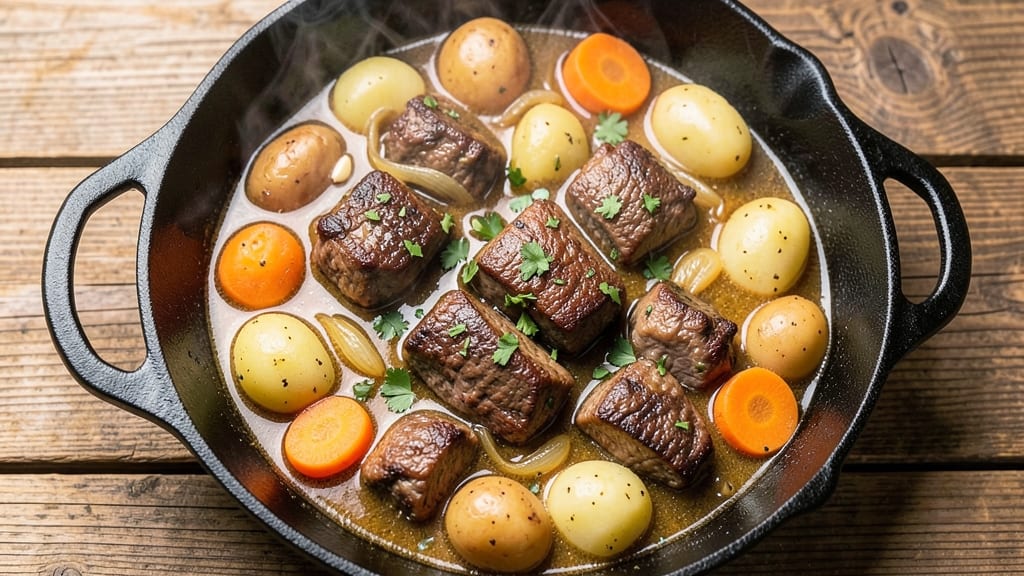
This classic grandma’s beef stew recipe is the kind of dish that transforms a simple weeknight into a celebration of home cooking. Standing on a stool in my Nonna's kitchen, I learned how slow-simmered meat and tender vegetables create a rich, comforting meal that tastes like love in a bowl.
The secret lies in proper browning and deglazing—steps that build deep, complex flavors from the very beginning.
What makes this classic beef stew special is its balance of tender beef, perfectly softened vegetables, and a broth so flavorful it deserves its own bowl. My version uses chuck roast, which becomes fork-tender after hours of slow cooking, while carrots, potatoes, and onions develop sweet, caramelized edges.
The herbs and spices—thyme, bay leaves, and peppercorns—infuse the broth with aromatic depth that makes every spoonful irresistible.
By the time you're ready to serve, you'll have a pot of hearty stew with meat that falls apart at the touch of a fork and vegetables that are tender but still hold their shape.
The sauce should coat the back of a spoon, thickened just enough to cling to every bite. This is the kind of meal that warms the soul and fills the house with an aroma that makes everyone rush to the table.
The best part? This recipe scales beautifully—whether you're feeding a family of four or a crowd of hungry guests. Let's get started on creating a stew that tastes like home, just like my Nonna used to make.
Ingredients for classic beef stew grandma's
Six simple ingredients transform into rich, hearty beef stew that tastes like home.
| Ingredient | Amount | Notes |
|---|---|---|
| Chuck Roast 🥩 | 3 lb | Cut into 1.5-inch cubes |
| Yellow Onions 🧅 | 2 whole | Cut into large chunks |
| Carrots 🥕 | 4 whole | Cut into 2-inch pieces |
| Russet Potatoes 🥔 | 3 lb | Cut into 2-inch chunks |
| Garlic Cloves 🧄 | 6 cloves | Smashed with side of knife |
| Beef Broth 💧 | 4 cups | Low-sodium preferred |
| Red Wine 🍷 | 1 cup | Dry variety like Cabernet |
| Tomato Paste 🍅 | 2 tbsp | Smooth, not chunky |
| Fresh Thyme 🌿 | 2 tbsp | Leaves only, chopped |
| Bay Leaves 🍃 | 2 whole | Dried, standard size |
| Black Peppercorns 🌶️ | 1 tsp | Crushed lightly |
| Salt 🧂 | 2 tsp | Kosher or sea salt |
| Olive Oil 🫒 | 2 tbsp | For browning meat |
| Flour 🌾 | 2 tbsp | All-purpose, for thickening |
The chuck roast is non-negotiable here—look for good marbling at your butcher or grocery store's meat counter. Costco or Trader Joe's often have great prices for pre-cut chunks, which saves time. If buying whole, ask for it cut into 1.5-inch pieces. The potatoes should be firm, not waxy—Russet or Yukon Gold work best. Carrots with bright orange color and no soft spots will stay crisp longer. Fresh thyme is ideal, but dried works at half the amount if you're in a pinch. For the red wine, any dry variety like Cabernet or Merlot works—just avoid anything too fruity.
No red wine? Beef broth with 1 tbsp balsamic vinegar gets you close. Fresh thyme too expensive? Dried thyme at half the amount works fine. The tomato paste can be the squeeze tube kind from Trader Joe's—it lasts forever and measures perfectly. For the flour, King Arthur or Bob's Red Mill are reliable. If you're making this ahead, prep the veggies and store them in the fridge for up to 3 days before cooking. The meat can sit in the fridge for 2 days before browning—just pat it dry first.
This stew tastes even better the next day as flavors meld. Keeps in the fridge for 5 days and freezes beautifully for 3 months. I double the recipe and freeze half—perfect for lazy nights. When reheating, add a splash of water or broth to loosen the sauce. The bay leaves should be removed before serving, so use a slotted spoon or tongs. Leftovers make amazing sandwiches with crusty bread the next day.
Why You'll Love This Recipe
- One-Pot Wonder: I swear by this recipe because it’s literally dump-and-go after the initial prep. Chuck roast stays tender, onions caramelize right in the pot, and the potatoes soak up all that rich broth—no extra pans, no fuss. (Yes, even on a Tuesday night.)
- Deep, Savory Magic: That slow-cooked chuck roast? It practically melts in your mouth, while the garlic and onions build layers of flavor that just keep getting better. The carrots stay crisp-tender, and the potatoes? Perfectly creamy—like a hug in a bowl.
- Leftovers That Shine: Between us, this stew only gets better the next day. The flavors meld overnight, and reheating it is the easiest way to feed a crowd without stress. My freezer’s always stocked with portions—because nothing beats coming home to a warm, hearty meal after a long day.
- Budget-Friendly Powerhouse: Chuck roast is affordable, and this recipe stretches it across multiple meals without sacrificing taste. Onions, carrots, and potatoes are cheap staples, but they transform into something ridiculously satisfying. Honestly, it’s my go-to for stretching groceries without skimping on flavor.
Step-by-step instructions for classic beef stew grandma's recipe
Here's how to build that rich, comforting beef stew your grandma made—layer by layer, just like she taught me.
Brown the Chuck Roast for Deep Flavor
Heat a large Dutch oven over medium-high heat and add the 2 tablespoons olive oil. Once the oil shimmers, add the 3 lb chuck roast cut into 1.5-inch cubes, working in batches if needed to avoid crowding. Let each piece sear for 2-3 minutes per side until deep golden brown—this creates the rich, caramelized foundation for your stew.
I press down gently on the meat during the first minute—this prevents it from curling and ensures even contact with the pan. As the meat browns, it releases its natural juices, which will form a flavorful crust. Don't rush this step; patience here makes all the difference in the final depth of flavor. Transfer the browned meat to a plate and set aside.
Sauté Vegetables and Build the Base
In the same Dutch oven, add the 2 whole yellow onions cut into large chunks and 4 whole carrots cut into 2-inch pieces. Cook for 5-6 minutes until the onions soften and the carrots begin to caramelize slightly. Stir occasionally to prevent burning.
Add the 6 smashed garlic cloves and cook for 30 seconds until fragrant—this releases their sweet, aromatic oils. Stir in the 2 tablespoons tomato paste and cook for another 1 minute to deepen its flavor. You're building the flavor base that will infuse every bite of your stew.
Deglaze and Simmer the Stew
Pour in the 1 cup red wine and scrape up all the browned bits from the bottom of the pot with a wooden spoon. This deglazing step captures all the concentrated flavor you worked so hard to create. Let the wine simmer for 3-4 minutes until it reduces by half and the alcohol cooks off.
Add the 4 cups beef broth, 2 tablespoons fresh thyme, 2 whole bay leaves, 1 teaspoon crushed black peppercorns, and 2 teaspoons salt. Return the browned chuck roast to the pot and bring everything to a gentle boil. Once boiling, reduce heat to low and cover partially, leaving a small gap for steam to escape.
Cook Until Tender and Flavorful
Let the stew simmer uncovered for 1 hour 30 minutes to 2 hours. You'll know it's ready when the meat is fork-tender and pulls apart easily. The liquid should have thickened slightly, but not so much that it resembles glue—this is where your patience pays off.
Here's the thing—don't peek or stir too often. Each time you lift the lid, you let heat escape and lengthen the cooking time. The meat should be so tender that a fork slides through it like butter, and the flavors should be rich and melded together. If the stew is too thin, sprinkle in the 2 tablespoons flour and stir gently to thicken it slightly.
Add Potatoes and Finish Cooking
About 30 minutes before the stew is fully cooked, add the 3 lb russet potatoes cut into 2-inch chunks. The potatoes will absorb some of the stew's liquid and become tender without falling apart. Simmer for another 20-30 minutes until the potatoes are fork-tender and the stew reaches its perfect consistency.
Taste and adjust seasoning if needed—sometimes the potatoes need a little extra salt to balance the flavors. Remove the bay leaves before serving, as they can be tough to chew. Ladle the stew into bowls and serve immediately with crusty bread to soak up every last drop of that rich, comforting sauce. This is the kind of stew that tastes even better the next day, so leftovers are a must.
Pro Tips For Making Classic Beef Stew Grandma'S
- SEAR THE CHUCK ROAST: High heat. Seriously, crank it up until the meat releases a deep brown crust—this isn’t just for looks, it’s where the flavor hides. I used to skip this step because it takes time, but that crust turns into rich, caramelized depth in the stew. (Yes, even if you’re impatient like me.)
- CUT POTATOES SMALLER THAN YOU THINK: Russets break down fast, so aim for 1-inch chunks, not 1.5. My grandmother swore by this, and she was right: evenly sized pieces cook at the same rate, so you won’t end up with mushy potatoes floating in a sea of tender meat. (And no, you can’t just eyeball it—measure with a knife.)
- DON’T LIFT THE LID AFTER 2 HOURS: Steady wins the race. Once the stew hits the 2-hour mark, resist the urge to peek or stir—steam escaping slows down the cooking process. I learned this the hard way after burning three batches where I “just wanted to check.” Let it sit undisturbed until the meat is fork-tender.
- ADD POTATOES LATE: They’ll turn to mush if they simmer too long. Toss them in with the carrots only in the last 30 minutes—this keeps them firm and absorbs all that beefy flavor without falling apart. (Your future self will thank you.)
Flavor customization for this recipe
Herb Variations
Swap the thyme for rosemary if you love piney notes—use 1 sprig crushed between your fingers. For a French bistro touch, add 1 teaspoon dried tarragon with the bay leaves.
I once accidentally used oregano instead of thyme and was surprised by how well it worked—just reduce to 1 tablespoon since it's stronger. 🌿
Spice Level
For heat lovers, add ½ teaspoon smoked paprika with the peppercorns and ¼ teaspoon cayenne when simmering. My Nonna used to toss in 2-3 dried chili peppers when the stew was nearly done—remove them before serving. If you prefer mild heat, add 1 teaspoon sweet paprika instead.
Vegetable Swaps
Replace carrots with celery root for a nuttier flavor—use 2-inch chunks like the carrots. Swap potatoes for parsnips (add them 10 minutes earlier) or turnips for extra earthiness. I once used sweet potatoes and loved the caramelized sweetness, but they need 15 minutes less cooking time.
Protein Alternatives
For a lighter version, replace half the beef with chicken thighs—they stay juicy and pair well with the rich broth. My Italian neighbor swears by pork shoulder instead of beef, adding 1 teaspoon fennel seeds to the broth.
For a vegetarian twist, use mushrooms and lentils (simmer the mushrooms first to remove bitterness).
Wine Substitutes
No red wine? Use 1 cup beef broth + 1 tablespoon balsamic vinegar for depth. Apple cider works surprisingly well—add ½ cup and 1 teaspoon cinnamon for a ciderhouse-inspired twist.
White wine lovers can use ½ cup dry white wine + ½ cup broth, but add an extra pinch of salt since white wine is less salty.
Thickness Adjustments
For a glossier sauce, stir in 1 tablespoon cornstarch mixed with 2 tablespoons cold water at the end. Need it thicker? Simmer uncovered for 10-15 extra minutes to reduce.
My Boston neighbor swears by adding 1 tablespoon tomato paste at the very end for extra richness—just heat it gently to avoid clumping. 💫
Nutrition facts
Frequently asked questions
Why does my stew taste bland after cooking?
This usually happens when you skip the browning step or don't deglaze properly. The Maillard reaction from searing the meat creates deep flavor—never rush this! Also, taste as you go and adjust salt gradually. A splash of red wine or extra beef broth with 1 tablespoon balsamic vinegar can rescue flavor in a pinch.
Can I make this stew in a slow cooker?
Brown the meat first in a skillet, then transfer everything to your slow cooker. Cook on low for 7-8 hours or high for 4-5 hours. The potatoes will absorb more liquid, so add them during the last 1-2 hours of cooking to prevent mushiness. The slow cooker version tastes even better the next day!
What's the best way to reheat leftovers?
Gently reheat on the stovetop over low heat and add a splash of water or beef broth to loosen the sauce. Never microwave directly from the fridge—it makes the potatoes gummy. For best results, reheat just until warmed through, then let it sit covered for 5 minutes to thicken naturally. Leftovers keep well for 5 days in the fridge.
How do I know when the meat is tender enough?
Use the fork test: The meat should slide through easily with just slight resistance. If it's still tough, cook uncovered for another 30-45 minutes to let the liquid reduce and concentrate flavors. Overcooking can make the meat stringy, so aim for 2 hours total simmering time for perfect tenderness.
Can I make this ahead for a dinner party?
This stew actually improves overnight! Cook it completely, then refrigerate for up to 3 days or freeze for 3 months. Reheat gently before serving. The flavors meld beautifully, and you'll save time on the big day. Just remember to remove the bay leaves before serving—no one wants to chew on them during your party!