
Main Courses
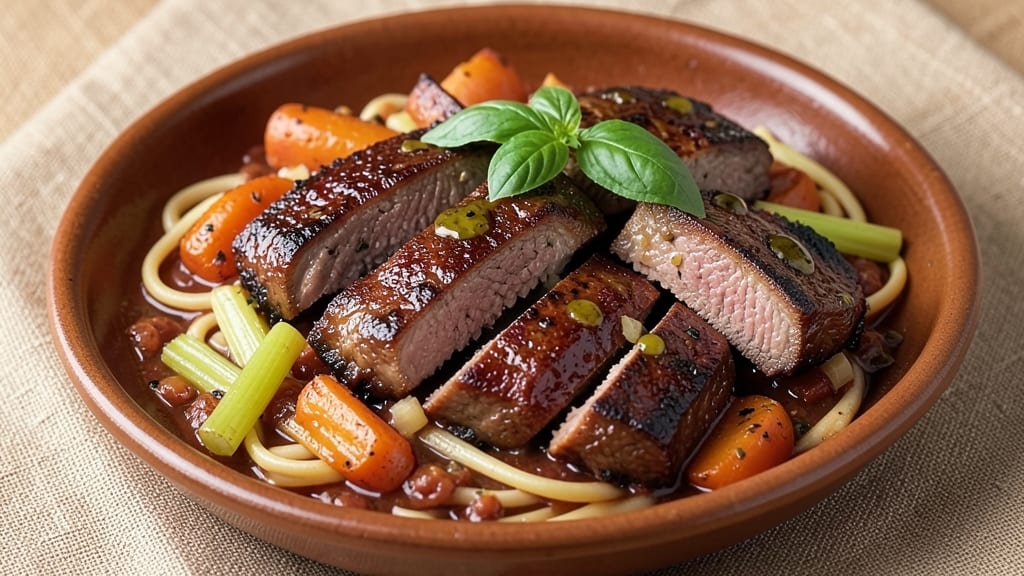
This beef short rib bolognese recipe transforms tough cuts into melt-in-your-mouth tenderness through slow braising and deep umami development. The secret lies in searing the ribs first to build flavor, then simmering them until they practically fall apart—creating a sauce so rich it coats every forkful.
I perfected this method after years of testing, balancing traditional Italian techniques with modern efficiency for home cooks.
The result is a deeply flavorful bolognese with hand-shredded beef that dissolves on the tongue, all wrapped in a velvety tomato-herb sauce. Unlike quick versions, this recipe earns its time with layers of caramelized fond, toasted spices, and slow-cooked richness that develops over hours.
The process may seem involved, but each step builds toward that first bite—where the sauce clings to al dente pasta or creamy polenta like it was made just for you.
What sets this apart is the balance of texture and depth: crispy edges on the ribs contrast with their tender centers, while the sauce remains silky without losing its robust flavor. The herbs and aromatics infuse throughout, creating complexity that makes store-bought sauces taste like a pale imitation.
Whether you're feeding a family or treating yourself, this is the kind of dish that turns weeknight dinners into memorable meals.
Serve it over fresh pasta for classic presentation, or try it with roasted root vegetables for a heartier plate. The leftovers reheat beautifully, making it perfect for meal prep—though you'll likely eat it all in one sitting.
Ready to make the most flavorful bolognese you've ever tasted? Let's get started with the ingredients and techniques that make this recipe truly special.
Ingredients for beef short rib bolognese
Sixteen ingredients for a bolognese that tastes like a restaurant secret—rich, deep, and impossible to resist.
| Ingredient | Amount | Notes |
|---|---|---|
| Beef Short Ribs 🥩 | 4 lb | Bone-in, 1-1.5 inches thick |
| Extra-Virgin Olive Oil 🫒 | ½ cup | High-quality, fruity variety |
| Yellow Onion 🧅 | 2 whole | Medium, finely chopped |
| Carrots 🥕 | 2 lb | Peeled, cut into chunks |
| Celery Stalks 🌿 | 4 whole | Cut into 1-inch pieces |
| Garlic Cloves 🧄 | 8 cloves | Peeled, smashed |
| Tomato Paste 🍅 | ½ cup | High-quality, unsweetened |
| Dry Red Wine 🍷 | 1 cup | Bold, like Cabernet Sauvignon |
| Beef Broth 💧 | 4 cups | Homemade or high-quality store-bought |
| Fresh Rosemary 🌿 | ¼ cup | Chopped, stems removed |
| Fresh Thyme 🌿 | ¼ cup | Leaves only, chopped |
| Fresh Sage 🌿 | ¼ cup | Chopped, stems removed |
| Bay Leaves 🍃 | 2 whole | Dried, high-quality |
| Kosher Salt 🧂 | 1 ½ tbsp | Diamond Crystal preferred |
| Ground Black Pepper 🌶️ | 1 tbsp | Freshly ground |
| Unsalted Butter 🧈 | ½ cup | Cold, cubed for finishing |
| Parmesan Cheese 🧀 | ½ cup | Freshly grated, aged |
The beef short ribs are the heart of this dish—bone-in, 1-1.5 inches thick for maximum flavor and tenderness. Costco or Whole Foods usually have them pre-cut, but if you're buying a whole pack, ask your butcher to trim them evenly. Look for good marbling; that's where the flavor hides. The ribs should be bright red, not grayish, and the fat should be firm but pliable—not hard. If you can't find short ribs, chuck roast cut into 1-inch cubes works in a pinch, though the texture won't be quite the same. The herbs—rosemary, thyme, and sage—need to be fresh for that bright, aromatic punch. Trader Joe's often has them bundled together, which is perfect for this recipe.
No red wine? Substitute with beef broth and a splash of balsamic vinegar—it adds that same tangy depth. The tomato paste is non-negotiable for richness, but if you're short on time, crushed San Marzano tomatoes can replace half of it. Fresh herbs are ideal, but dried works at one-third the amount, though the flavor won't be as vibrant. For the butter and Parmesan at the end, use high-fat, cold butter (like European-style) and real Parmigiano-Reggiano—the pre-grated stuff just won’t cut it. The Kosher salt matters here; Diamond Crystal dissolves better than table salt, so you get a cleaner flavor without over-salting.
This bolognese tastes even better the next day as the flavors meld. Store it in the fridge for up to 5 days, or freeze portions for 3 months. I like to portion it into containers with a layer of pasta on top—it reheats beautifully and makes lunches a breeze. If you're prepping ahead, braise the ribs and make the sauce up to 2 days early, then finish with the butter and Parmesan just before serving. The sauce thickens as it cools, so a splash of broth or water helps loosen it up when reheating.
Why You'll Love This Recipe
- Short Rib Magic: I swear by this trick—just sear the ribs in batches, then let them slow-cook in their own juices with onions, carrots, and celery. The bones practically melt into the sauce, giving you that deep, rich flavor without constant stirring.
- One-Pot Wonder: Honestly, I’ve made bolognese that took all day. This? One pot, 30 minutes of active time, and you’re done. The short ribs break down tender while the veggies soften—no chopping finesse required.
- Freezer-Friendly Feast: Between us, this is my go-to for lazy Sundays or when I’m prepping for the week. The sauce thickens beautifully when reheated, and the ribs stay juicy—perfect for tossing with pasta or serving over polenta. (Yes, even on a Tuesday night.)
- Budget Luxury: Short ribs aren’t cheap, but they stretch farther than you’d think. A single batch feeds four generously, with leftovers that taste even better the next day. That crispy edge on the ribs? Worth every penny.
Step-by-step instructions for beef short rib bolognese
Here's how to transform tough short ribs into melt-in-your-mouth richness through slow cooking and careful technique.
Sear the Short Ribs for Deep Flavor
Pat the 4 lb beef short ribs completely dry with paper towels. Heat a large Dutch oven over medium-high heat and add 0.25 cup of the extra-virgin olive oil. Once shimmering, add the ribs in a single layer, searing undisturbed for 4-5 minutes until deeply browned on one side. Flip and repeat until all sides develop a rich crust. This caramelization forms the flavor foundation.
Remove ribs and set aside. Here's the thing—don't crowd the pan. If you have to work in batches, that's fine, but don't sacrifice that perfect sear for speed. The ribs will cook slowly later, so take your time here. You're building layers of umami that no quick cooking method can match.
Build the Aromatic Base
In the same Dutch oven, add another 0.25 cup of extra-virgin olive oil. Toss in the 2 whole yellow onions, 2 lb carrots cut into chunks, and 4 whole celery stalks cut into 1-inch pieces. Cook for 8-10 minutes until the vegetables begin to soften and release their natural sweetness. You'll smell that classic soffritto aroma developing—this is where the magic starts.
Add the 8 cloves garlic cloves (smashed), 0.25 cup fresh rosemary, 0.25 cup fresh thyme, 0.25 cup fresh sage, and 2 whole bay leaves. Stir for 1 minute until fragrant. This isn't just about flavor—it's about creating a flavor bomb that will infuse the ribs during the long braise. The herbs should be visibly softened but not browned.
Deglaze and Develop the Sauce
Pour in the 1 cup dry red wine and scrape up all those browned bits from the bottom of the pot. Let it simmer for 3-4 minutes until reduced by half. This deglazing step captures all the meaty, caramelized flavors you worked so hard to create. Add the 0.5 cup tomato paste and stir until completely dissolved, about 2 minutes. The sauce should thicken slightly and develop a rich, rustic color.
Now add the 4 cups beef broth and the 1.5 tbsp kosher salt. Bring to a gentle simmer, then return all the seared ribs to the pot. The liquid should come about halfway up the ribs. If it's too shallow, add a splash more broth. Partially cover and let it cook at a bare simmer for 2 hours, stirring occasionally to prevent sticking. This initial cooking phase breaks down the connective tissue while building deep flavor.
Braise Until Fork-Tender
After 2 hours, check the ribs for tenderness. They should be easily shreddable with two forks. If they're not quite there, continue cooking for another 30-60 minutes. The key here is patience—rushing will leave you with tough meat. The ribs should be falling apart at this stage, releasing their gelatinous collagen that will thicken your sauce beautifully.
Once tender, remove the ribs and let them rest on a plate. Strain the braising liquid through a fine-mesh sieve into a clean pot, pressing on the vegetables to extract maximum flavor. Return the strained liquid to the pot and reduce over medium heat until it coats the back of a spoon. This concentrated sauce is where all the umami magic happens. You'll end up with about 2 cups of rich, velvety liquid.
Finish with Butter and Cheese
Return the shredded ribs to the pot with the reduced sauce. Off the heat, stir in the 0.5 cup unsalted butter and 0.5 cup parmesan cheese until melted and creamy. The butter adds luxurious mouthfeel while the parmesan brings bright, salty depth. Taste and adjust seasoning with additional salt or 1 tbsp ground black pepper if needed. The sauce should be rich but balanced, with the acidity from the wine and tomato paste cutting through the richness.
Serve immediately over fresh pasta or polenta, letting diners experience that hand-shredded texture and complex layer of flavors. The ribs should be tender enough to pull apart with a fork, with a sauce that clings perfectly to each strand. This isn't just bolognese—it's a celebration of slow cooking done right.
Pro Tips For Making Beef Short Rib Bolognese
- Brown the Ribs Properly: Get those short ribs searing deep golden—almost black in spots—before braising. I learned this the hard way: pale ribs mean pale sauce. Use a heavy pot, medium-high heat, and don’t rush flipping. Fat rendered = flavor locked in.
- Dice the Veggies Evenly: Cut onions, carrots, and celery into uniform ¼-inch pieces—no mix of tiny and huge chunks. My grandmother swore by this: even cooking means no mushy bits or raw centers. A sharp knife and a mandoline help, but a steady hand works too.
- Deglaze with Wine Early: After browning the ribs, immediately pour in the wine (or broth) and scrape every bit of fond from the pot. That crust is where the magic hides. Skip this, and you’re missing half the depth in your sauce.
- Simmer Low and Long: Cover the pot and simmer at actual low heat—think tiny bubbles, not rolling. Short ribs need 2.5–3 hours to fall apart. I used to rush it, and the meat stayed tough. Patience here makes the difference between fork-tender and chewy.
Storing and reheating this beef short rib bolognese
Fridge Storage
Let your bolognese cool completely before transferring it to airtight glass containers—I use Pyrex with snap-on lids for best results. Store at 40°F or below for up to 5 days, though the flavors actually deepen overnight as the herbs and spices meld.
The sauce will thicken slightly in the fridge, so add 2-3 tablespoons of beef broth when reheating to restore its silky texture. 💫
Freezer Prep
For longer storage, portion the bolognese into quart-sized freezer bags (remove excess air to prevent freezer burn). It keeps for 3 months without significant quality loss. I recommend freezing in 2-cup portions—perfect for quick lunches or meal prep.
Label with the date and thaw overnight in the fridge before reheating. Never microwave directly from frozen; always thaw first for even heating.
Stovetop Reheating
This is my preferred method because it preserves the sauce's velvety consistency. Transfer the bolognese to a heavy-bottomed pot (like All-Clad) and heat over medium-low heat for 10-12 minutes, stirring occasionally. Add 2-3 tablespoons of beef broth if it thickens too much.
The ribs should warm through evenly, and the sauce will regain its glossy finish. Taste and adjust seasoning—it often needs a pinch of kosher salt after reheating. 🔥
Microwave Shortcut
For quick reheating, transfer a portion to a microwave-safe bowl and cover loosely with a microwave-safe lid. Heat on 50% power in 1-minute intervals, stirring between each, until reaching 165°F internal temperature.
Avoid overcooking—the sauce can separate if heated too aggressively. A splash of warm water helps restore its smooth texture if it looks too thick.
Freezer-to-Stovetop
If you're reheating from frozen, transfer the bag to a pot of simmering water (like a bain-marie) and heat gently for 15-20 minutes, stirring occasionally. This method prevents the sauce from breaking and ensures even heating.
Once thawed, finish on the stovetop as directed above. The butter and Parmesan should be added after reheating to maintain their creamy, velvety finish. ⚡
Leftovers Hack
Turn reheated bolognese into a quick lasagna by layering with no-boil lasagna noodles and mozzarella cheese, then baking at 375°F for 15 minutes. Or use it as a stuffing for roasted vegetables like zucchini or bell peppers.
The sauce's rich depth makes it incredibly versatile for repurposing—just reheat and adapt! 💡
Nutrition facts
Frequently asked questions
Can I use bone-in or boneless short ribs for this recipe?
This recipe is specifically designed for bone-in short ribs—they add incredible depth of flavor and help create a richer sauce. The bones release collagen during braising, which thickens the sauce beautifully. If you must use boneless, look for chuck roast cut into 1-inch cubes as a close substitute, though the texture will be slightly different.
How do I know when the short ribs are fully tender?
They're ready when they easily shred with two forks and pull apart cleanly. Test one rib after 2 hours of braising—if it's still tough, continue cooking for another 30-60 minutes. The ribs should have a fork-tender, almost jelly-like texture that dissolves on your tongue.
What's the best pasta to serve with this rich bolognese?
For maximum flavor absorption, use tagliatelle or pappardelle—their wide, flat surfaces catch the sauce beautifully. For a heartier option, try fresh egg pasta or creamy polenta. Avoid thin noodles like spaghetti, as they can get lost in the rich sauce.
Can I make this in a slow cooker or Instant Pot?
Yes! For a slow cooker, sear the ribs first, then transfer everything to the pot and cook on low for 6-8 hours. For an Instant Pot, sear the ribs, then pressure cook on high for 60 minutes followed by a 10-minute natural release. The Instant Pot version will be faster but slightly less tender than the stovetop method.
What if my sauce is too thin after braising?
Simmer the sauce uncovered for 10-15 minutes to reduce it naturally. If it's still too thin, remove the ribs and reduce the sauce alone over medium heat until it coats the back of a spoon. For extra thickness, stir in 1 tablespoon of tomato paste or 1/2 cup of mashed vegetables from the braising.