
Main Courses
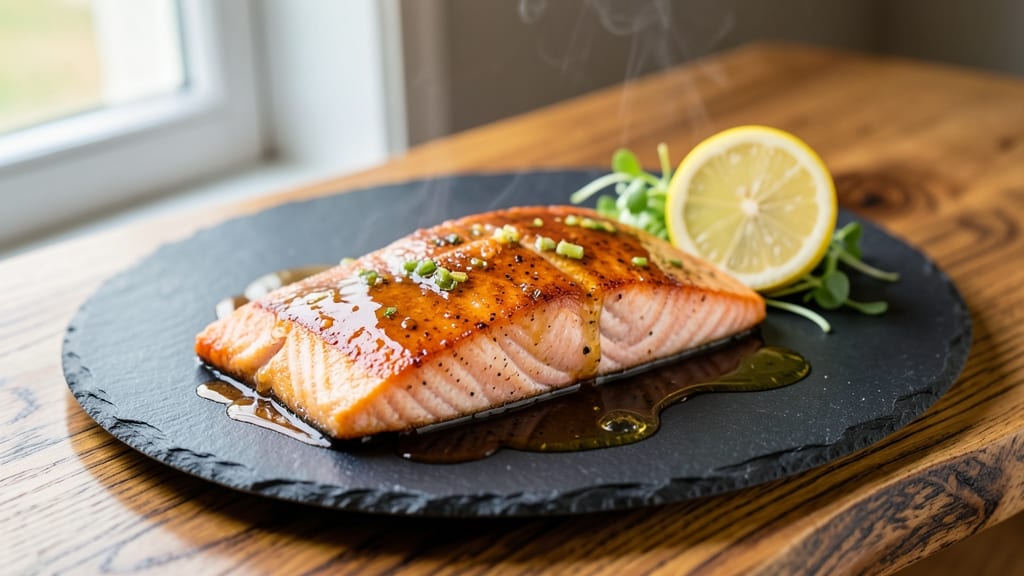
Baking salmon with maple glaze transforms a simple protein into a restaurant-worthy centerpiece with its sweet-tangy caramelized crust. The glaze's rich depth and subtle spice balance perfectly with the salmon's natural richness, creating a dish that's both elegant and approachable.
This method delivers foolproof results—no overcooking, no dryness—just tender, flaky salmon with a glossy glaze that caramelizes to golden perfection at 375°F.
The secret lies in the glaze itself: a blend of pure maple syrup, Dijon mustard, and aromatic spices that infuses the salmon during baking. Unlike store-bought glazes, this homemade version develops complex caramelized notes while keeping the salmon moist.
The recipe requires just 15 minutes of prep and 20 minutes in the oven, making it ideal for weeknight dinners that feel special. Every bite delivers a harmonious balance of sweetness, tang, and savory depth.
What makes this recipe truly stand out is how it elevates simple ingredients into something extraordinary. The maple glaze isn't just a topping—it becomes part of the salmon's texture, creating a crust that's crisp enough to hold a fork yet tender enough to melt.
Pair it with roasted asparagus or a fresh salad to complete the meal, and you'll have a dish that's both impressive and effortless. Let's get started on this perfect baked salmon.
This method works equally well for individual servings or family-style meals, and the glaze can be adjusted to suit your taste—add a pinch of cayenne for heat or orange zest for brightness.
The result is always the same: salmon so perfectly cooked and glazed that it becomes the star of any table. No advanced techniques are required, just precise timing and attention to detail.
Ingredients for baked salmon with maple glaze
Twelve ingredients transform simple salmon into a restaurant-worthy masterpiece with caramelized perfection.
| Ingredient | Amount | Notes |
|---|---|---|
| Center-Cut Salmon Fillets 🐟 | 4 whole | Skin-on, approximately 6 oz each |
| Pure Maple Syrup 🍯 | ½ cup | Grade A, dark amber preferred |
| Dijon Mustard 🌿 | 1 tbsp | High-quality, no additives |
| Extra-Virgin Olive Oil 🫒 | 2 tbsp | Light fruity variety for balance |
| Fresh Lemon Juice 🍋 | 1 tbsp | From organic lemons |
| Fresh Ginger 🌿 | 1 tsp | Finely grated, aromatic |
| Garlic Cloves 🧄 | 2 cloves | Minced, fresh preferred |
| Diamond Crystal Kosher Salt 🧂 | 1 tsp | Fine grain for even seasoning |
| Freshly Ground Black Pepper 🌶️ | ½ tsp | Coarse grind for texture |
| Cayenne Pepper 🔥 | ¼ tsp | Optional, for subtle heat |
| Orange Zest 🍊 | 1 tsp | Brightens glaze naturally |
| Unsalted Butter 🧈 | 1 tbsp | Cold, for crisp crust |
The salmon selection is critical. Center-cut fillets with skin ensure even cooking and a crisp crust. Opt for wild-caught if possible—Trader Joe's or Whole Foods carry excellent options. Grade A maple syrup delivers the richest flavor; Log Cabin or Wright's are reliable brands. Fresh ginger and garlic should be vibrant—no shriveled roots here. The Dijon mustard matters too: Maille or Amoy brands provide that perfect tang without bitterness. For the olive oil, choose a light, fruity variety—California avocado oil works beautifully if you prefer neutral flavor.
No pure maple syrup? Agave nectar works in a pinch, though it lacks depth. Substitute Dijon with whole-grain mustard for texture, but expect slightly less tang. Fresh ginger unavailable? Ground ginger at half the amount suffices. The cayenne and orange zest are optional but elevate the dish—skip both if you prefer pure sweetness. For the butter, European-style melts cleaner than American. Prefer a sweeter glaze? Add 1/4 tsp cinnamon to the mix. The glaze should coat the salmon generously but not pool—adjust consistency with a splash of water if needed.
Salmon stays fresh 2 days in the fridge when wrapped tightly in parchment. The glaze components keep separately: maple syrup indefinitely, mustard 6 months, and citrus 1 week. For meal prep, bake the salmon 24 hours ahead, reheating at 300°F for 10 minutes to restore crispness. Store glazed salmon in an airtight container with a paper towel to absorb moisture. The glaze freezes beautifully—portion into ice cube trays for single servings.
Why You'll Love This Recipe
- Here’s what sold me: the maple syrup’s rich depth cuts through the salmon’s natural richness, while the Dijon mustard adds a sharp, tangy kick. The lemon juice ties it all together—bright, clean, and impossible to resist. It’s the kind of dish that makes you close your eyes and say, “Yes, this is exactly what I needed.”
- Five-Ingredient Magic: I swear by this combo—salmon, maple syrup, mustard, olive oil, and lemon. That’s it. No crowded pantry raids, no last-minute grocery runs. The glaze caramelizes in 15 minutes while you’re still debating what to watch on TV.
- Sweet-Savory Balance: Here’s what sold me: the maple syrup’s rich depth cuts through the salmon’s natural richness, while the Dijon mustard adds a sharp, tangy kick. The lemon juice ties it all together—bright, clean, and impossible to resist. It’s the kind of dish that makes you close your eyes and say, “Yes, this is exactly what I needed.”
- Weeknight or Date Night: Between us, this recipe works for both. Toss it on a sheet pan for a lazy Tuesday dinner, or plate it elegantly with roasted asparagus for when you’re trying to impress. The glaze? Sticky, golden perfection that drizzles effortlessly. Honestly, I’ve served it to my book club and my sleepover kids—no judgment.
Step-by-step instructions for baked salmon with maple glaze
This method delivers perfectly caramelized edges and tender salmon every time.
Prepare the Maple Glaze Mixture
In a small saucepan, combine the 0.5 cup pure maple syrup, 1 tbsp Dijon mustard, 1 tbsp fresh lemon juice, 1 tsp finely grated fresh ginger, 2 minced garlic cloves, 1 tsp orange zest, 0.25 tsp cayenne pepper, and 0.5 tsp freshly ground black pepper. Place over medium heat and bring to a gentle simmer for 5 minutes, stirring occasionally until slightly thickened. You'll notice the aroma intensify as the spices meld with the maple syrup.
Remove from heat and let cool for 10 minutes. This resting period allows the flavors to fully integrate. The glaze should be smooth with no visible graininess from the spices. Taste and adjust seasoning if needed—this is your flavor foundation.
Season and Prepare the Salmon
Pat the 4 whole center-cut salmon fillets dry with paper towels, ensuring all moisture is removed. This critical step prevents steam from forming during baking, which would otherwise inhibit proper caramelization. Place each fillet skin-side down on a parchment-lined baking sheet.
Generously season both sides of each fillet with 1 tsp diamond crystal kosher salt and 0.25 tsp freshly ground black pepper. Gently press the seasoning into the flesh so it adheres evenly. Let the salmon sit at room temperature for 15 minutes before baking—this ensures even cooking throughout.
Create the Butter Baste
In a small bowl, combine 1 tbsp cold unsalted butter with 1 tbsp extra-virgin olive oil. Using your fingers, rub this mixture evenly over the top of each salmon fillet, focusing on the center where the glaze will pool. The butter will melt slightly but remain cold enough to create a crisp crust during baking.
Spread the prepared maple glaze evenly over the buttered salmon, using about 2 tablespoons per fillet. The glaze should form a thin, even layer that will caramelize beautifully in the oven. Place the baking sheet in the refrigerator for 10 minutes to help the glaze adhere better to the salmon.
Bake to Perfect Doneness
Preheat your oven to 375°F. Bake the salmon for 12-15 minutes, depending on thickness. You'll know it's done when the internal temperature reaches 145°F and the edges are deep golden brown with caramelized glaze. The skin should be crisp and easily lift from the baking sheet.
For the final 2 minutes of baking, increase the oven temperature to 425°F to intensify the caramelization. Watch closely during this time—you want the glaze to bubble and darken to an amber color. If it browns too quickly, move the pan to a lower oven rack.
Rest and Serve
Remove the salmon from the oven and let it rest for 5 minutes on the baking sheet. This resting period allows the juices to redistribute, ensuring each bite remains moist and flavorful. The glaze will continue to set slightly during this time, creating that perfect balance between sweet and tangy.
Serve immediately with the caramelized glaze spooned over the top. The contrast between the crisp skin, tender flesh, and sweet-tangy glaze creates a harmonious bite that delivers on the promise of perfect baked salmon every time.
Pro Tips For Making Baked Salmon With Maple Glaze
- Preheat Like It’s 1985: Your oven needs 15 minutes to hit 400°F—no exceptions. I learned this the hard way when my salmon came out lukewarm and the glaze turned into syrup sludge. A hot oven seals the skin fast and keeps the fillets from drying out while the maple caramelizes properly.
- Pat Dry, Then Salt: Wipe the salmon fillets thoroughly with paper towels—moisture is the enemy of crisp skin. Sprinkle salt right after drying (about 1 tsp per fillet) and let it sit for 10 minutes. This isn’t just seasoning; it’s the foundation for that golden crust that makes the maple glaze stick like it’s supposed to.
- Whisk the Glaze: Don’t just dump maple syrup and mustard on the salmon—whisk them together with olive oil and lemon juice first. The mustard needs to emulsify with the fat, or you’ll end up with a sticky mess that slides off instead of caramelizing. A quick 10-second whisk makes all the difference.
- Bake Skin-Side Down First: Place the salmon skin-side down on the baking sheet for the first 8–10 minutes. This guarantees crispiness before flipping—no more sad, rubbery skin. Flip carefully, then return to the oven until the glaze thickens (about 5–7 more minutes). Trust me, your plate will look (and taste) like a pro’s.
Perfect pairings for these flavors
Glaze Variations
The maple glaze is versatile—swap ingredients to match your mood. For a spicy kick, add ½ tsp red pepper flakes to the glaze and top with chopped scallions before serving.
For a citrus twist, replace orange zest with 1 tsp lemon zest and add 1 tbsp honey to the glaze. I love a herbaceous version with 1 tsp chopped dill and ½ tsp thyme mixed into the glaze for a fresh, bright finish. 🌶️
Side Dish Pairings
Roasted asparagus with lemon zest and olive oil complements the sweetness perfectly. Toss 1 bunch asparagus in 2 tbsp olive oil, 1 tsp lemon zest, and ½ tsp salt, then roast at 400°F for 12 minutes.
A quinoa salad with cherry tomatoes, cucumber, and mint adds a light, refreshing contrast. For a heartier option, serve with garlic mashed potatoes—their creaminess balances the glaze’s tang. 🥗
Wine Pairings
A crisp Sauvignon Blanc from New Zealand cuts through the maple’s sweetness beautifully. Look for Cloudy Bay or Oyster Bay—their citrus notes mirror the lemon in the glaze. For red lovers, a Pinot Noir from Oregon, like Domaine Serene, pairs surprisingly well with the salmon’s richness.
Avoid heavy oaked whites or bold reds—they’ll overpower the delicate flavors. 🍷
Beverage Pairings
A sparkling rosé with ½ oz elderflower liqueur adds effervescence to match the glaze’s caramelized bubbles. For non-alcoholic options, sparkling water with lime and a splash of maple syrup mimics the dish’s sweet-tart profile. A light lager like Heineken or Peroni keeps the meal refreshing without competing flavors. 🍺
Garnish Ideas
Finish with microgreens or baby arugula for a pop of color and peppery bite. A drizzle of yuzu kosher salt (or flaky sea salt) adds texture. For extra flair, sprinkle toasted sesame seeds or crushed pistachios—their nuttiness contrasts the glaze’s sweetness.
I often garnish with edible flowers like nasturtiums for a restaurant-worthy touch. ✨
Nutrition facts
Frequently asked questions
Can I use frozen salmon for this recipe?
Yes, but thaw it properly first. Place frozen salmon in the refrigerator for 24 hours or use the cold water method (sealed in a leak-proof bag for 30 minutes). Never thaw at room temperature—it promotes bacterial growth. Pat completely dry before seasoning to ensure a crisp crust.
How do I adjust the glaze for thicker or thinner consistency?
Simmer the glaze longer for thicker consistency (up to 8 minutes) or add 1-2 tsp water if it's too stiff. For extra shine, reduce the glaze by 25% after simmering. The ideal texture should coat the back of a spoon but not drip excessively.
What if my salmon overcooks before the glaze caramelizes?
Lower the oven temperature to 350°F and bake for 18-20 minutes instead. For extra insurance, tent the salmon with foil during the first 12 minutes, then remove to let the glaze caramelize. Use an instant-read thermometer—salmon is perfect at 145°F internal temperature.
Can I make the glaze ahead of time?
Store prepared glaze in an airtight container in the fridge for up to 1 week or freeze for 3 months. Reheat gently in a saucepan over low heat, stirring until smooth. For extra flavor, add 1 tsp fresh lemon juice before reheating.
What's the best way to reheat leftover glazed salmon?
Reheat in a 300°F oven for 10-12 minutes with a splash of water or broth to restore moisture. For microwave reheating, cover with a damp paper towel and heat for 30-45 seconds on medium power. The glaze may lose some crispness but will still taste delicious.