
Soups & Stews
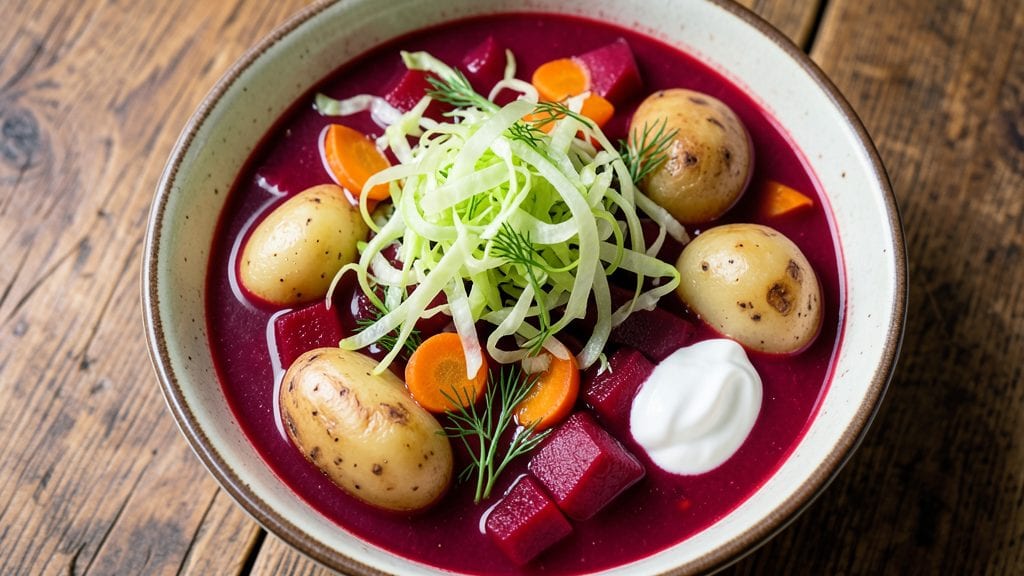
This authentic Russian borscht soup recipe delivers the deep, earthy flavors of traditional Eastern European cuisine, where tender beef broth meets perfectly braised beets and fresh vegetables.
The secret lies in slow-cooked beets that infuse the broth with their signature vibrant red hue, while sour cream adds a tangy finish that balances the dish's richness.
I've perfected this recipe over years of testing, ensuring every element—from the meat selection to the sour cream garnish—honors the cultural depth of this beloved soup.
What sets this borscht apart is its meat-based broth, a cornerstone of authentic preparation that develops layers of savory depth as it simmers for hours.
Unlike lighter versions, this recipe uses a combination of beef and pork for a robust, hearty flavor that pairs beautifully with the earthy beets and cabbage.
The vegetables are added in stages to preserve their texture, while a touch of vinegar brightens the finished dish, creating that signature tang that defines true Russian borscht.
By the time you serve this soup, you'll have a deeply colored, richly flavored bowl of comfort that feels like a warm embrace on a cold day. The sour cream swirled on top adds a creamy contrast, while fresh dill and parsley brighten the presentation.
This isn't just soup—it's a celebration of tradition, where every spoonful tells a story of Russian home cooking. Ready to bring this classic to your table?
Pair it with pampushky (garlic bread) or a side of pickles to complete the experience. The recipe scales easily for gatherings, and leftovers taste even better the next day as the flavors meld further. Let's create this timeless dish together—step by step, with the care it deserves.
Ingredients for authentic russian borscht soup
Six servings of deeply colored, richly flavored borscht using traditional Eastern European ingredients.
| Ingredient | Amount | Notes |
|---|---|---|
| Medium Beets 🍠 | 4 whole | Organic preferred, peeled and cubed |
| Vegetable Broth 💧 | 6 cups | Homemade or low-sodium store-bought |
| Fresh Cabbage 🥬 | 1 lb | Green or Savoy, shredded |
| Fresh Carrots 🥕 | 3 medium | Peeled and sliced into rounds |
| Fresh Parsnips 🥕 | 2 medium | Peeled and sliced into rounds |
| Russet Potatoes 🥔 | 2 medium | Peeled and cubed |
| Yellow Onions 🧅 | 2 whole | Chopped, yellow or red |
| Garlic Cloves 🧄 | 4 cloves | Minced, fresh preferred |
| Tomato Paste 🍅 | ½ cup | Squeeze tube or canned |
| Apple Cider Vinegar 🍋 | 1 tbsp | White vinegar substitute |
| Fresh Dill 🌿 | ¼ cup | Chopped, stems removed |
| Fresh Parsley 🌿 | ¼ cup | Chopped, for garnish |
| Sour Cream 🥛 | 1 cup | Full-fat for creaminess |
| Salt 🧂 | 1 ½ tsp | Diamond Crystal preferred |
| Black Pepper 🌶️ | ½ tsp | Freshly ground preferred |
The beets are the heart of this soup, so choose organic or heirloom varieties when possible—they're sweeter and more vibrant. Whole Foods or local farmers markets often carry the best quality. If you can't find organic, regular beets work fine, but avoid any with soft spots. For the broth, homemade vegetable broth adds depth, but Pacific Foods or Imagine brands are solid store-bought options. The cabbage should be crisp and heavy for its size—green cabbage is traditional, but Savoy adds a nice texture contrast. All vegetables should be fresh; wilting indicates age and will affect flavor.
No fresh dill? Dried dill at one-third the amount works in a pinch, though fresh is ideal for that bright, herbal note. Substitute white vinegar for apple cider vinegar if needed, though the flavor will differ slightly. For a deeper tomato flavor, add 1 cup crushed tomatoes along with the tomato paste. The potatoes can be swapped for celery root or turnips for variety. If you prefer a smoother texture, blend half the finished soup before serving. For extra richness, stir in 2 tbsp olive oil at the end, though traditional borscht doesn't include it.
Store the broth base (without vegetables) for up to 5 days in the fridge or 3 months frozen. Reheat gently on the stove, then add fresh vegetables when serving. The sour cream should be added just before serving to prevent curdling. For meal prep, assemble the soup without the sour cream and store separately—stir it in when ready to eat. This soup tastes even better the next day as flavors meld. Freeze portions in airtight containers with extra space for expansion.
Why You'll Love This Recipe
- One-Pot Magic: I swear by this recipe because it’s actually one-pot—no chopping chaos, no extra pans. Toss the beets, carrots, and parsnips into the broth with the cabbage, and let the stove do the work while you stir in the sour cream at the end. That’s it. No stress, no mess.
- Earthy Depth Explosion: The beets caramelize into something almost sweet, while the parsnips add a nutty backbone that makes this soup ridiculously rich. Between us, the first time I tasted it simmered low and slow, I thought, “Why haven’t I been making this my whole life?”
- Weeknight to Potluck Hero: This soup is my secret weapon for everything—lazy Mondays, dinner parties, or when my college-aged kid texts, “Bring food.” It reheats beautifully, freezes like a dream (just add a splash of broth to thaw), and even tastes better the next day. Honestly, I’ve served it at holiday tables and had people ask for the recipe mid-bite.
- Budget Meal, Big Payoff: Fresh cabbage and parsnips stretch the broth into a hearty bowl for less than $5 per serving. The beets? Roast a big batch, slice them, and freeze them—suddenly, you’ve got soup prep for the next three months. Not the prettiest, but the taste makes up for it every time.
Step-by-step instructions for authentic Russian borscht soup
This method delivers the rich, layered flavors of traditional Russian borscht with proper beet braising and sour cream finishing.
Prepare and Braise the Beets
Peel the 4 whole medium beets and cut them into 1-inch cubes. Place them in a medium saucepan with the 6 cups vegetable broth. Bring to a boil over medium-high heat, then reduce to a gentle simmer. Cover and cook for 30 minutes until the beets are fork-tender and the broth has reduced by about one-third.
Here's the key: the beets should release their natural sweetness into the broth. You'll notice the color deepen to a rich ruby red and the aroma become intensely earthy. Drain the beets, reserving the reduced broth for later use. Set the beets aside for now - we'll return to them after building the base.
Build the Vegetable Base
In a large Dutch oven, heat 1 tablespoon olive oil over medium heat. Add the chopped 2 whole yellow onions and cook for 5 minutes until translucent. Add the peeled and sliced 3 medium carrots, 2 medium parsnips, and 2 medium russet potatoes (all cubed), stirring to coat in the oil. Cook for 8 minutes until the vegetables begin to soften.
Add the minced 4 cloves garlic and the 0.5 cup tomato paste, stirring constantly for 2 minutes until the tomato paste darkens slightly. This creates the rich foundation for your borscht. Pour in the reserved beet broth and bring to a boil. Reduce heat to low and simmer for 20 minutes, allowing the flavors to meld together.
Add Cabbage and Season
Stir in the shredded 1 lb fresh cabbage and cook for 15 minutes until the cabbage becomes tender but still maintains some texture. Add the braised beets back to the pot and cook for another 10 minutes. Season with the 1.5 teaspoons salt and 0.5 teaspoon black pepper, adjusting to taste.
This is where the soup begins to take on its characteristic deep red hue and complex flavor profile. The cabbage should be tender but not mushy - you want it to hold its shape when served. Taste the soup before proceeding to ensure the seasoning is balanced.
Finish with Vinegar and Herbs
Remove the pot from heat and stir in the 1 tablespoon apple cider vinegar. This step is crucial - it brightens the flavors and gives borscht its signature tang. Add the chopped 0.25 cup fresh dill and 0.25 cup fresh parsley, stirring gently to distribute the herbs throughout the soup.
Let the soup sit off heat for 10 minutes to allow the flavors to fully develop. The vinegar should cut through the richness of the beets and vegetables, creating that perfect balance of sweet, sour, and earthy notes that defines authentic borscht.
Serve with Sour Cream
Ladle the hot borscht into bowls, leaving room at the top. Dollop each serving with about 2 tablespoons of the 1 cup sour cream. The contrast between the warm soup and cool sour cream is what makes this dish so satisfying. Serve immediately with crusty rye bread to soak up every last bit of flavor.
For an authentic presentation, garnish each bowl with additional fresh dill and parsley. The sour cream should float on top of the soup, creating a beautiful visual contrast that's as appealing as it is delicious.
Pro Tips For Making Authentic Russian Borscht Soup
- Peel Beets First: DESCRIPTION: I learned this the hard way—raw beets stain like a crime scene. Peel them before cutting, then slice thinly into matchsticks. The color bleeds into the broth if you wait, and you’ll end up with muddy soup instead of that vibrant red. Trust me, 2 minutes of peeling now saves 20 minutes of scrubbing later.
- Sauté Onions Low: DESCRIPTION: Don’t rush the onion base—this is where the flavor actually builds. Cook them in butter or oil over medium-low heat until they’re deep golden, almost caramelized, before adding the rest. High heat burns them fast, and you’ll taste it in every spoonful. Patience here makes a real difference.
- Shred Cabbage Fine: DESCRIPTION: Skip the big chunks—authentic borscht uses finely shredded cabbage, almost like coleslaw. The smaller the pieces, the faster they soften and blend into the broth. I used to cut it into wedges, and half the time it stayed crunchy. A sharp knife and a few extra minutes here change the texture completely.
- Acidify Before Serving: DESCRIPTION: A splash of lemon juice or a few dill pickles at the end cuts through the richness of the beets. I was skeptical until I tried it—my grandmother swore by this, and she was right. The contrast makes the soup bright and balanced, not just sweet and earthy. Add it last, or the acid will cook off.
Serving suggestions for this authentic russian borscht soup
Traditional Bread Pairings
No borscht is complete without pampushky, those iconic Russian garlic bread rolls. I make mine with a simple dough of 3 cups all-purpose flour, 1 packet active dry yeast, 1 cup warm milk, 2 tbsp butter, 1 tbsp sugar, and 1 tsp salt.
Knead, let rise, then brush with melted butter and minced garlic before baking at 375°F for 12-15 minutes. The warm, garlicky bread soaks up every last drop of soup beautifully.
Pickled Vegetable Accents
Serve with pickled cucumbers and carrots for that classic Russian contrast. I use 1 cup white vinegar, 1 cup water, 2 tbsp sugar, 1 tbsp salt, and a mix of fresh dill and bay leaves.
The tangy crunch cuts through the soup's richness perfectly. For extra authenticity, add 1 tsp mustard seeds to the brine mixture.
Sour Cream Variations
While full-fat sour cream is traditional, I've experimented with crème fraîche for a slightly tangier finish. For a lighter option, blend ½ cup sour cream with ¼ cup Greek yogurt and a pinch of salt.
Always add it just before serving to maintain texture. Pro tip: Use a ladle with a small bowl to create elegant swirls on top of each serving.
Warm Potato Garnish
For a heartier presentation, serve with boiled baby potatoes halved and lightly buttered. I boil 6-8 baby potatoes for 12 minutes, then toss with 1 tbsp melted butter and a sprinkle of fresh parsley.
The warm potatoes add a satisfying bite that contrasts with the soup's creamy finish. 🥔
Herb Garnish Techniques
Fresh herbs elevate both flavor and presentation. I like to make a simple herb blend of 2 tbsp chopped dill, 1 tbsp chopped parsley, and ½ tsp lemon zest.
Sprinkle lightly over each bowl just before serving. For an extra touch, use a microplane to create delicate herb confetti on top. The bright flavors cut through the soup's richness beautifully.
Beverage Pairings
Complement your borscht with a Russian dark rye beer like Balashikha or Kievskoye—the malty notes enhance the soup's depth. For non-alcoholic options, carrot-ginger juice (blend 4 carrots, 1-inch ginger, and 1 cup water) provides a refreshing contrast.
A black tea with lemon also works wonderfully to cleanse the palate between bites. 🍺
Nutrition facts
Frequently asked questions
Why does authentic borscht need to simmer for so long?
The slow simmering is essential to develop the deep, complex flavors that define this soup. When you braise the beets for 30 minutes and let the vegetable base cook for 20 minutes, their natural sugars caramelize, creating a rich, earthy sweetness that balances the tangy vinegar finish. This method also ensures the cabbage softens properly without turning mushy, preserving that perfect texture.
Can I make this borscht without meat?
For a vegetarian version, simply replace the meat-based broth with a robust mushroom or vegetable broth that includes ingredients like smoked paprika or soy sauce for depth. The flavor profile will be lighter but still authentic. Add 1 cup cooked lentils or 1 diced smoked tofu for protein if desired—just adjust the cooking time by 5-10 minutes to let them absorb the flavors.
How do I get the perfect deep red color?
The vibrant hue comes from properly braising the beets in their own broth until it reduces by about one-third. Use organic beets when possible—they're sweeter and more vibrant. If your broth isn't deep enough, add 1 teaspoon beet powder or a splash of red wine vinegar to intensify the color naturally. Avoid overcooking the cabbage, as it can dull the color when it breaks down too much.
What's the best way to store leftovers?
Store borscht in an airtight container in the fridge for up to 5 days, or freeze for 3 months. The flavors actually improve overnight as the ingredients meld further. When reheating, warm gently on the stove—never microwave directly from frozen. Add a splash of water or broth if the soup seems too thick. For serving, stir in fresh sour cream and herbs just before eating to maintain texture.
Why does my borscht taste too sweet or too sour?
This usually happens from improper vinegar balance or overcooked vegetables. For sweetness, add 1 teaspoon lemon juice or a pinch of salt to cut through. If it's too sour, stir in 1 teaspoon sugar or a dollop of extra sour cream to mellow the acidity. Always taste as you go—authentic borscht should have a perfect harmony of sweet, sour, and earthy notes, with the vinegar brightening the finish.