Side Dishes
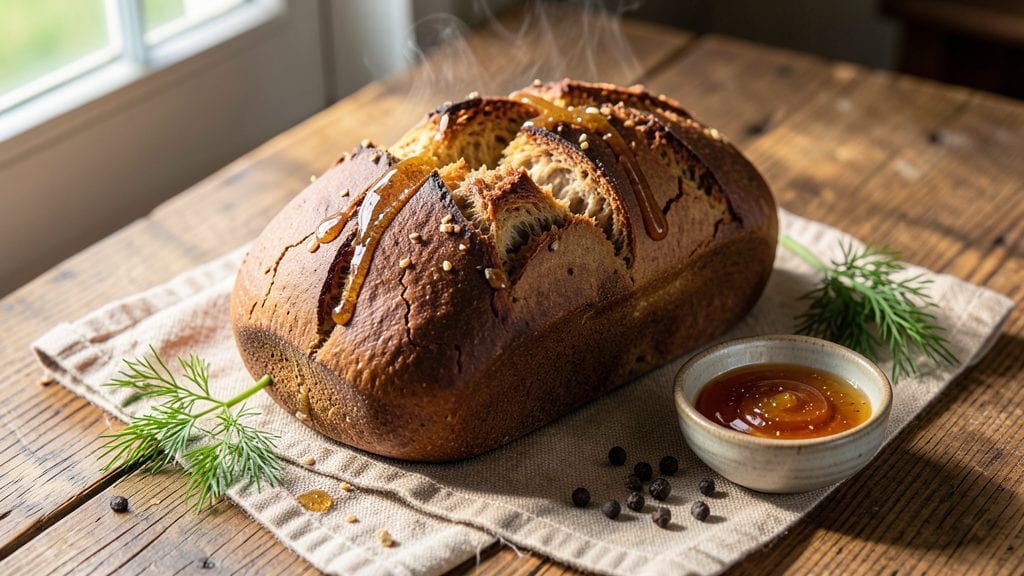
This Amish rye bread recipe delivers the signature dense crumb and tangy depth that makes it a staple at family tables. The sourdough crust adds a rustic complexity that transforms simple ingredients into something extraordinary—every slice packed with hearty texture and subtle sweetness.
I developed this version after years of perfecting the balance between fermentation time and oven temperature to achieve that signature crunch without compromising moisture.
The secret lies in the starter—whether you use a traditional sourdough culture or commercial yeast, the fermentation process is what creates that signature tang. Rye flour contributes the deep, earthy flavor while keeping the bread dense rather than light.
With just 10 ingredients and 3 hours of active time (mostly hands-off), you’ll end up with a loaf that rivals what you’d find at a Pennsylvania Amish market.
What makes this recipe special is how it combines tradition with simplicity. The dough requires no kneading—just mixing, resting, and shaping—making it accessible even for home bakers.
The result is a loaf with a crisp, caramelized crust that gives way to a tender, slightly chewy interior with pockets of air and that unmistakable rye flavor. Perfect for sandwiches, toast, or served alongside soups and stews.
For added texture, consider mixing in caraway seeds or flaxseeds during the final knead. The bread keeps well for up to 5 days at room temperature, making it ideal for meal prep. Let’s get started on creating this classic loaf that brings a taste of tradition to your kitchen.
Ingredients for amish rye bread
Ten simple ingredients transform into a rustic loaf with sourdough crust and dense rye heart.
| Ingredient | Amount | Notes |
|---|---|---|
| Active Sourdough Starter 🍞 | ½ cup | Hydrated to 100% consistency |
| Rye Flour 🌾 | 3 cups | Dark rye for authentic flavor |
| All-Purpose Flour 🌾 | 1 cup | For structural balance |
| Granulated Sugar 🍚 | 1 tbsp | Enhances crust caramelization |
| Instant Yeast 🍞 | ¼ tsp | For consistent rise |
| Diamond Crystal Kosher Salt 🧂 | 1 ½ tsp | Adjusts to taste |
| Unsalted Butter 🧈 | ¼ cup | Cold, cubed for richness |
| Whole Milk 🥛 | ½ cup | Warmed for fermentation |
| Honey 🍯 | 1 tbsp | Feeds yeast naturally |
| Caraway Seeds 🌿 | 1 tsp | Optional for traditional flavor |
| Water 💧 | 1 ½ cups | Lukewarm for hydration |
The rye flour is non-negotiable here—Bob’s Red Mill or King Arthur dark rye deliver that signature earthy depth. If you can’t find dark rye, pumpernickel rye flour works in a pinch, but the color and flavor won’t be as authentic. The sourdough starter? Homemade is ideal, but a 1/4 cup packet of sourdough starter from the baking aisle at Whole Foods or King Arthur will get you close. For the butter, Plugrá or Land O’Lakes unsalted melt beautifully—don’t use salted. The honey should be raw and unfiltered for that floral note that enhances the crust’s caramelization. Caraway seeds? Skip if you dislike licorice, but they’re worth it if you’re going for full Amish market vibes.
No rye flour? Substitute with pumpernickel or even whole wheat, but expect a slightly lighter loaf. Running low on sourdough starter? Commercial yeast at double the amount will work, though the tang will be milder. The milk can be swapped for buttermilk or plain yogurt—just add a splash of water to thin it to the same consistency. Butter too expensive? Coconut oil or vegetable shortening keeps the bread tender, though it won’t have the same richness. For the honey, maple syrup works in a bind, but it’ll taste more like syrup than honey. And if you’re feeling adventurous, swap half the rye flour for spelt flour for a nuttier twist.
This dough is a hands-off project—mix it, let it rest, then bake. The bread peaks at 2 days after baking when the flavors meld perfectly. Wrap it in a clean kitchen towel inside an airtight bag to keep it fresh longer. For extra crunch, brush the crust with melted butter right after baking. Freezes beautifully for up to 3 months—just thaw at room temperature before slicing. And if you’ve got leftovers? Toast it—the crispy edges make everything better.
Why You'll Love This Recipe
- No-Knead Magic: I mix the dough in 10 minutes flat—just toss the sourdough starter, rye flour, and a pinch of sugar. The yeast does all the work while I sip coffee.
- Earthy Crunch: That first bite? The rye flour gives it a deep, nutty bite that pairs perfectly with butter or jam. Honestly, it’s the kind of bread that makes you slow down.
- Weeknight Hero: Toss a slice in the toaster for breakfast or use it to soak up gravy at dinner. I’ve even used it as a base for open-faced sandwiches—versatile enough for any meal.
- Budget-Friendly Staple: A small bag of rye flour and a starter go a long way. This loaf feeds my family for days, and the leftovers? Perfect for French toast or bread pudding.
Step-by-step instructions for Amish rye bread
This method delivers that signature Amish rye flavor—deep, complex, and packed with crunchy crust.
Prepare the Sourdough Starter and Mix Wet Ingredients
First, check your 0.5 cup active sourdough starter—it should be bubbly and have doubled in size within 4-6 hours. If it's sluggish, feed it 1 tablespoon rye flour and 1 tablespoon water and let it sit another hour. This starter is the soul of your bread, so don't skip verifying its activity.
In a large mixing bowl, combine the 1.5 cups lukewarm water, 1 tbsp honey, and 0.5 cup warmed whole milk. Stir in the 1 tbsp granulated sugar until fully dissolved. The honey will feed the yeast while the sugar enhances browning. Let this mixture sit for 5 minutes to allow the sugar to fully integrate—you'll see a slight sheen on the surface when it's ready.
Next, add the 0.5 cup active sourdough starter and mix gently. The starter should be fully incorporated without any lumps. This is where the fermentation begins, so work quickly but thoroughly. The mixture will look like a thin batter at this stage, which is perfect for capturing that signature rye density.
Combine Dry Ingredients and Develop the Dough
In a separate bowl, whisk together the 3 cups rye flour, 1 cup all-purpose flour, 1.5 tsp diamond crystal kosher salt, 0.25 tsp instant yeast, and 1 tsp caraway seeds. The rye flour will be coarse and dark—this is what gives Amish rye its distinctive color and flavor. Sift the mixture lightly to aerate the flours and distribute the yeast evenly.
Gradually add the dry ingredients to the wet mixture, stirring with a wooden spoon until a shaggy dough forms. You'll notice the dough will be sticky—this is normal with rye's high hydration. Once combined, let it rest for 10 minutes. This brief rest allows the flour to absorb the liquid and the gluten to begin relaxing, making the next steps easier.
After resting, wet your hands with water and begin kneading the dough on a lightly floured surface. The dough will be dense and resistant at first, but keep kneading for 8-10 minutes until it becomes smoother and more elastic. You're not looking for a light, airy texture here—rye dough should feel firm and slightly tacky. If it's too sticky, add 1 tablespoon rye flour at a time until it's manageable.
First Rise and Shape the Loaf
Lightly grease a large mixing bowl with a bit of unsalted butter and place the dough inside. Cover the bowl with a damp kitchen towel and let it rise in a warm place for 1.5 to 2 hours. The dough should rise until it's about 50% larger and has puffy, rounded edges. Rye dough rises more slowly than wheat dough, so be patient—rushing this step will result in a dense, flat loaf.
Once the dough has risen, punch it down gently to release the air. This step helps develop the structure and ensures even baking. Divide the dough into two equal portions and shape each into a smooth, round loaf. For a traditional Amish presentation, you can also shape them into ovals or leave them as rounds—both work beautifully. Place the shaped loaves on a parchment-lined baking sheet, cover them again, and let them rise for another 30-45 minutes until they've puffed slightly.
Bake to a Crispy, Golden Crust
Preheat your oven to 375°F. While it's heating, brush the tops of the loaves with a bit of melted unsalted butter and sprinkle lightly with rye flour for extra texture. This step is optional but adds a beautiful golden crust and enhances the flavor. Place the baking sheet on the middle rack and bake for 35-40 minutes, until the crust is deep golden brown and sounds hollow when tapped on the bottom.
Here's the thing—rye bread can dry out quickly, so keep an eye on it after 30 minutes. If the crust starts to darken too quickly, tent the loaves with foil to prevent over-browning. The internal temperature should reach 190-200°F at the center. When you pull the loaves from the oven, they should have a crispy crust that gives way to a dense, moist interior with pockets of air.
Let the bread cool on a wire rack for at least 1 hour before slicing. This resting period allows the crumb to set and makes slicing much easier. The aroma as it cools will fill your kitchen with the rich, caramelized scent of freshly baked rye bread—worth every minute of the process.
Pro Tips For Making Amish Rye Bread
- Hydrate the Rye First: Rye flour soaks up moisture like a sponge—mix it with warm water (or even a little of your starter) before combining with dry ingredients. I learned this the hard way when my first batch turned into a dense brick because the rye absorbed all the hydration during kneading. Do this step 10 minutes early, and your dough will behave.
- Use Cold Water for Starter: Your sourdough starter should be at room temp when you measure it, but if it’s warm, chill it in the fridge for 30 minutes first. Warm starter ferments faster, and you’ll end up with overproofed dough that collapses. I’ve ruined three batches by skipping this—now I keep a bowl of ice water ready.
- Skip the Yeast If Starter’s Strong: Amish rye bread often relies on the sourdough’s wild yeast, but recipes still call for instant yeast as insurance. If your starter is bubbly and doubles in 4–6 hours, cut the yeast in half—it’ll make the flavor more tangy and less "yeasty." I was skeptical until I tried it, and the difference is noticeable.
- Shape Loaves Tightly: Rye dough is sticky and wants to spread. After bulk fermentation, wet your hands and really press the dough into a tight log, sealing the edges so they don’t unravel in the pan. My first attempts looked like lumpy sausages—now I roll them like a burrito and tuck the ends under. The crust stays crisp, not gummy.
Troubleshooting perfect results
Dough Too Sticky
Rye dough is naturally dense and sticky due to its high hydration, but if it feels unmanageable, don’t panic. First, wet your hands with lukewarm water (not cold) to prevent absorbing too much flour, which can weaken the gluten structure.
If the dough still clings, add 1 tablespoon rye flour at a time while kneading until it becomes pliable but not dry. Overworking it can make it tough, so aim for 8-10 minutes of kneading—just until it pulls away from the bowl slightly.
For extra help, use a stand mixer with a dough hook on low speed to incorporate flour evenly. 💡
Underproofed Loaf
If your bread rises too quickly or not at all, the issue is likely temperature or yeast activity. Place your dough in a warm spot (75-80°F)—I use my oven with the light on or a proofing box.
If using a sourdough starter, ensure it’s active (bubbly and doubled in 4-6 hours). For commercial yeast, test it first by mixing 1 packet with ¼ cup warm water and 1 tsp sugar—it should foam within 5-10 minutes.
If your dough isn’t rising, let it rest another 30-60 minutes before shaping. Patience is key here! ⏳
Pale or Soft Crust
A pale crust usually means the bread didn’t bake long enough or the oven wasn’t hot enough. Preheat your oven to 375°F for at least 30 minutes—use an oven thermometer to confirm accuracy. Brush the loaves with melted butter and sprinkle with rye flour before baking to encourage browning.
If the crust still looks dull, broil for 1-2 minutes at the end (watch closely to avoid burning). For extra crunch, bake at 350°F for 35 minutes, then increase to 400°F for the last 5 minutes. 🔥
Dense or Heavy Texture
Over-kneading or underproofing often causes a dense crumb. Rye dough doesn’t need much kneading—just until it’s smooth and elastic. If your loaf feels heavy, check your fermentation time: it should rise 50% in 1.5-2 hours. If using yeast, ensure it’s fresh (test with the foam test above).
For a lighter texture, replace ½ cup rye flour with all-purpose flour, but expect a slightly less authentic flavor. Also, avoid overcrowding the pan—leave 1 inch of space between loaves for even baking. 🌾
Bread Collapses After Baking
This happens when the dough isn’t fully proofed or the oven isn’t hot enough. Let your dough rise until it’s 50% larger and springs back slowly when poked. If it collapses, it may have been overproofed—next time, shape it sooner.
For baking, ensure your oven is fully preheated and place a baking stone or steel on the middle rack to improve heat distribution. If using a dark metal pan, reduce baking time by 2-3 minutes to prevent over-browning. 🏺
Uneven Baking
Hot spots in your oven can cause uneven baking. Rotate your baking sheet halfway through baking for even browning. If one side is underdone, tent with foil and continue baking. For better results, use the middle rack and avoid opening the oven door during the first 20 minutes of baking.
If your oven runs hot, reduce the temperature by 25°F and bake for 5-10 minutes longer. A simple fix is to place a tray of water on the lower rack to add moisture and steam. 💧
Nutrition facts
Frequently asked questions
What makes Amish rye bread different from regular rye?
Traditional Amish rye relies on a sourdough starter for that signature tangy depth, while commercial rye often uses yeast. The dough also includes rye flour (75%) for dense texture and all-purpose flour (25%) for structure, creating a heartier loaf with a crisp crust. The fermentation process develops complex flavors that store-bought versions can't match.
Can I substitute sourdough starter with yeast?
Yes! Use 1/4 teaspoon instant yeast instead of the starter, but the flavor will be milder. For best results, let the dough ferment 1 extra hour before shaping to develop some natural tang. The crust may be less complex, but the texture will still be excellent.
How do I store Amish rye bread to keep it fresh?
Wrap cooled loaves in a clean kitchen towel, then place in an airtight container. It stays fresh for 5 days at room temperature. For longer storage, freeze slices in a bag for up to 3 months. Toasting revives stale slices beautifully.
Why does my rye dough feel so sticky?
The high rye flour content creates a dense, hydrated dough that's naturally sticky. Wet your hands with lukewarm water when handling it, and only add 1 tablespoon flour at a time if needed. Over-flouring weakens the gluten structure. A stand mixer with a dough hook works wonders for even mixing.
What's the best way to serve Amish rye?
Slice thick for open-faced sandwiches, toast with butter for breakfast, or serve with soups and stews. The dense crumb holds up perfectly to hearty toppings like smoked salmon or sharp cheeses. For dessert, try it with honey or jam—it's surprisingly delicious!