
Soups & Stews
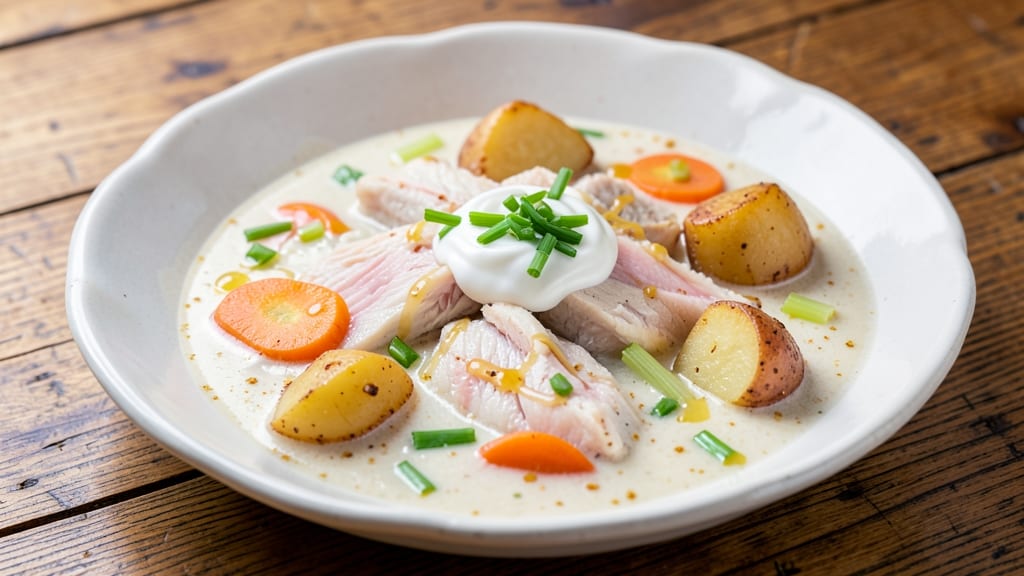
This white fish chowder recipe delivers the kind of creamy, comforting bowl that feels like a hug in a pot—fluffy potatoes, tender fish flakes, and a velvety broth that tastes like home.
Growing up in a Boston triple-decker, I learned that the secret to perfect chowder lies in slow simmering and layers of flavor, not shortcuts. The fish should melt into delicate flakes, while the potatoes stay tender and the broth thickens just enough to coat every spoonful.
What sets this recipe apart is balancing tradition with modern twists—smoked paprika adds depth without overpowering, while fresh herbs brighten the finish.
The method is straightforward but precise: start with a rich broth, add potatoes to cook low and slow, then introduce the fish at the last moment so it stays flaky. The cream base is the star, blending seamlessly into the broth for that signature creamy texture without turning greasy.
By the time you ladle this into bowls, you’ll have a chowder that’s creamy enough to satisfy cravings but light enough for a summer supper. The fish flakes apart easily, the potatoes are pillowy, and the aroma of thyme and bay leaf lingers long after the last bite.
Serve with crusty bread to soak up every last drop—this is the kind of dish that turns weeknights into special occasions.
Whether you’re feeding a family or treating yourself, this chowder comes together in under an hour with ingredients you likely already have. The key is patience—letting the flavors meld and the fish cook just until tender.
Trust the process, and you’ll have a bowl that rivals your favorite New England restaurant. Here’s how to make it perfect every time.
Ingredients for white fish chowder
Pantry staples meet ocean freshness—just 15 ingredients for a chowder that tastes like home.
| Ingredient | Amount | Notes |
|---|---|---|
| White Fish Fillets 🐟 | 1 ½ lb | Cod or haddock preferred |
| Russet Potatoes 🥔 | 2 medium | Peeled and cubed evenly |
| Carrots 🥕 | 3 medium | Peeled and sliced into rounds |
| Celery Stalks 🧅 | 3 whole | Diced into small pieces |
| Yellow Onion 🧅 | 1 medium | Diced finely |
| Heavy Cream 🥛 | 1 cup | Full-fat for richness |
| Whole Milk 🥛 | 1 cup | Warmed before adding |
| Chicken Broth 💧 | 4 cups | Low-sodium preferred |
| Butter 🧈 | 4 tbsp | Unsalted, for sauteing |
| Fresh Thyme 🌿 | 2 tbsp | Leaves only, chopped |
| Bay Leaves 🍃 | 2 whole | Removed before serving |
| Smoked Paprika 🌶️ | 1 tsp | Adds depth without heat |
| Salt 🧂 | 1 tsp | Adjust to taste |
| Black Pepper 🌶️ | ½ tsp | Freshly ground preferred |
| Lemon Juice 🍋 | 1 tbsp | Freshly squeezed |
The fish is everything here. Cod or haddock flakes perfectly, but pollock or tilapia work too—just avoid anything too oily. I grab mine at Whole Foods or the seafood counter at Trader Joe's because their fish is always flash-frozen fresh. Look for fillets with a clean, bright color and no fishy smell. If you're using frozen, thaw it overnight in the fridge—never under running water, or it'll turn mushy. The potatoes? Russets are your best bet—they hold up to slow cooking and stay creamy. Peel and cube them evenly so they cook at the same rate. Carrots and celery? Organic if possible—they simmer for a while, so any pesticides would linger.
No heavy cream? Half-and-half or coconut milk works in a pinch, but the texture won't be quite as luscious. Short on thyme? Dried thyme at one-third the amount gets you close, but fresh is worth hunting down at farmers markets—it smells amazing as it cooks. The smoked paprika adds that signature depth without overpowering. Penzeys or McCormick have great options if you want to splurge, but the regular grocery store stuff is fine. Chicken broth? Low-sodium is key—you'll be adding salt later, and you don't want to overdo it. The bay leaves? Remove them before serving—they're not meant to be eaten, just to infuse flavor. Lemon juice at the end brightens everything up—don't skip it, even if it's just a squeeze from half a lemon.
This chowder tastes even better the next day, so make a double batch if you can. Store leftovers in the fridge for up to 4 days, covered tightly. The potatoes will soften further, which is actually perfect—they get even creamier. For a quick meal, reheat gently on the stove with a splash of milk or broth to loosen it up. Freezes beautifully for up to 3 months, though the texture changes slightly after thawing. I always portion mine into individual containers so I can grab a bowl straight from the fridge for lazy days. Serve with crusty bread or oyster crackers—trust me, you'll want every last drop.
Why You'll Love This Recipe
- One-Pot Magic: I swear by this recipe—just toss everything into one pot, and the potatoes melt into fluffy clouds while the fish stays tender. No fancy techniques, just simmer until the carrots soften and the celery dissolves into the broth.
- Creamy Without Guilt: That velvety texture? It’s all from the potatoes and a splash of cream—no heavy cream needed, just enough to make it rich but still light. The fish flakes apart like it’s been braised, but honestly, it takes less effort than boiling pasta.
- Weeknight to Potluck: I make this twice a week for myself, but it’s also the dish I bring to gatherings—no one ever guesses how simple it is. The potatoes and carrots soak up the flavor, so you can serve it with crusty bread or over rice, and it’s still a hit.
- Leftovers That Don’t Suck: Between us, most chowders turn into sad, watery meals after day two. Not this one. The fish stays moist, the veggies hold their shape, and I’ve reheated it three times without a single complaint. Plus, it’s cheaper than takeout—win.
Step-by-step instructions for white fish chowder
Here's how to create a velvety, comforting bowl of chowder with flaky fish and tender vegetables.
Sauté the Vegetable Base
In a large Dutch oven, melt 2 tablespoons of the butter over medium heat. Add the diced yellow onion, diced celery stalks, and sliced carrots. Cook for 5-6 minutes, stirring occasionally, until the vegetables begin to soften and the onion becomes translucent.
Add the 1 teaspoon smoked paprika and 2 tablespoons chopped fresh thyme, stirring to coat the vegetables evenly. Cook for another 1 minute until fragrant. This step builds the flavor foundation for your chowder, so take your time and don't rush the cooking process.
Add Potatoes and Broth
Push the vegetables to one side of the pot and add the remaining 2 tablespoons butter. When melted, add the 2 medium cubed russet potatoes and stir to coat them in the butter. Cook for 2 minutes until the potatoes begin to soften slightly.
Pour in the 4 cups chicken broth and add the 2 whole bay leaves. Bring the mixture to a gentle simmer, then reduce heat to low. Cover and let cook for 12-15 minutes, stirring occasionally, until the potatoes are fork-tender. You'll know they're ready when they pierce easily with a knife.
Create the Creamy Base
Remove the bay leaves and stir in the 1 cup warmed whole milk and 1 cup heavy cream. Let the mixture simmer gently for 5 minutes to allow the cream to thicken slightly. Taste and adjust seasoning with 1 teaspoon salt and ½ teaspoon black pepper as needed.
Here's the thing—if your chowder needs more body, you can whisk in 1-2 tablespoons of cornstarch mixed with a little cold water. But if it's already creamy, just let it sit. The cream should coat the back of a spoon when you stir it, indicating it's reached the perfect consistency.
Add the Fish and Finish
Gently stir in the 1.5 lb white fish fillets (cod or haddock work best) and simmer for 8-10 minutes until the fish is just cooked through and flakes easily with a fork. Be careful not to overcook—it should remain tender and moist.
Remove from heat and stir in the 1 tablespoon freshly squeezed lemon juice. This brightens the flavors and cuts through the richness of the cream. Let the chowder rest for 5 minutes before serving to allow the flavors to meld together.
Serve Warm and Enjoy
Ladle the chowder into bowls and garnish with additional chopped fresh thyme if desired. Serve immediately with crusty bread or oyster crackers to soak up every last bit of that creamy goodness.
Each spoonful should deliver tender potatoes, sweet carrots, and delicate fish flakes in a velvety broth. The lemon juice adds a subtle brightness that balances the richness perfectly—this is comfort food at its finest.
Pro Tips For Making White Fish Chowder
- Parboil the Potatoes: Toss peeled russets into boiling water for 3-4 minutes before adding to the chowder—this keeps them from turning to mush later. I learned this the hard way when my first batch dissolved into a starchy sludge halfway through cooking.
- Sauté the Aromatics Slow: Cook onions, celery, and carrots on medium-low heat for 10-12 minutes until deeply softened, not browned. Rushing this step means your chowder will taste raw and bitter—trust me, your nose will thank you.
- Add Fish Last: Hold off on the fish until the very end—just 5-6 minutes of simmering is all it needs. Overcooking turns delicate fillets into sad, rubbery scraps, and nobody wants that in their creamy soup.
- Use Cold Potato Water: Reserve 1 cup of the starchy potato water after parboiling and stir it into the finished chowder. It thickens the broth naturally without relying on flour or cornstarch—my grandmother swore by this, and she was right.
Perfect pairings for these flavors
Bread Pairings
Nothing beats this chowder with a warm, crusty sourdough loaf from your local bakery—I love the Boston Market brand for its tangy, chewy texture. The dense crumb soaks up the creamy broth beautifully, turning every bite into a flavorful experience.
For a lighter option, try a baguette sliced into thick pieces and toasted with a little garlic butter. 🥖
If you want something more traditional, oyster crackers are a must. Their delicate crunch contrasts perfectly with the velvety chowder, and they disappear in seconds. I keep a box of Annie's Organic crackers on hand—they're a little more expensive but worth it for the clean taste.
For a heartier option, crusty Irish soda bread adds a rustic touch that pairs wonderfully with the seafood flavors.
Vegetable Sides
A simple arugula salad with lemon vinaigrette cuts through the richness of the chowder. Toss 4 cups baby arugula with 2 tbsp olive oil, 1 tbsp fresh lemon juice, and a pinch of salt.
The peppery bite refreshes your palate between spoonfuls. I often make this ahead of time and keep it chilled until serving. 🥗
For something warmer, roasted Brussels sprouts with a sprinkle of balsamic glaze add a touch of sophistication. Toss 1 lb halved Brussels sprouts with 2 tbsp olive oil, ½ tsp salt, and ¼ tsp black pepper, then roast at 400°F for 20 minutes.
The caramelized edges pair surprisingly well with the creamy chowder.
Drink Pairings
A crisp Sauvignon Blanc from New Zealand is my go-to wine for chowder—its bright acidity and citrus notes cleanse the palate after each spoonful. I love Kim Crawford or Oyster Bay for their refreshing profiles.
For a non-alcoholic option, sparkling apple cider from Martinelli's adds a festive touch, especially in colder months. 🍷
If you prefer beer, a light lager like Corona or Heineken works perfectly. The subtle hop bit balances the creaminess without overpowering the chowder's flavors. For something heartier, a Belgian witbier like Hoegaarden brings a citrusy contrast that complements the lemon in the chowder.
Just avoid heavy stouts or IPAs—they can clash with the delicate fish flavors.
Unexpected Twists
Add a cornbread muffin to your table for a Southern-inspired twist. These slightly sweet, crumbly muffins soak up the chowder like a dream. I use a mix from Krusteaz for convenience, but homemade is even better.
A drizzle of honey butter on top adds a touch of sweetness that pairs surprisingly well. 🍯
For a spicy kick, serve the chowder with hot sauce or sriracha on the side. A few drops of Cholula or Tapatío add just enough heat to wake up your taste buds.
I also like to sprinkle crushed red pepper flakes directly into the chowder for a subtle warmth that lingers. The contrast of heat and cream is pure magic.
Nutrition facts
Frequently asked questions
Can I use frozen white fish instead of fresh?
Thaw the fish overnight in the fridge for best results. If you're short on time, place the sealed package in a bowl of cold water (change the water every 30 minutes) until thawed. Never thaw fish at room temperature—it can make the meat mushy. For extra flavor, add a pinch of salt and pepper to the thawing water.
How do I make this chowder lighter without sacrificing creaminess?
Swap half the heavy cream for Greek yogurt or evaporated skim milk—it still gives richness but with fewer calories. You can also use low-fat milk instead of whole milk and add a splash of lemon juice to brighten the flavor. The potatoes will still be creamy, and the fish will stay tender.
Why did my chowder turn out greasy?
Greasy chowder usually means the cream was added too early or the heat was too high. Always simmer gently after adding the cream—never boil. If it's too thick, whisk in a splash of warm broth. For prevention, temper the cream by warming it separately before adding it to the pot.
Can I make this chowder ahead of time?
Yes! This chowder tastes even better the next day. Store leftovers in the fridge for up to 4 days in an airtight container. Reheat gently on the stove with a splash of milk or broth to restore creaminess. For freezing, portion into individual containers—it reheats perfectly for up to 3 months.
What other white fish can I use besides cod or haddock?
Pollock, tilapia, or flounder work beautifully—they all flake easily. For a bolder flavor, try halibut or mahi-mahi, but reduce cooking time to 6-8 minutes since they cook faster. Avoid oily fish like salmon or mackerel—they can make the chowder taste too strong.