
Salads
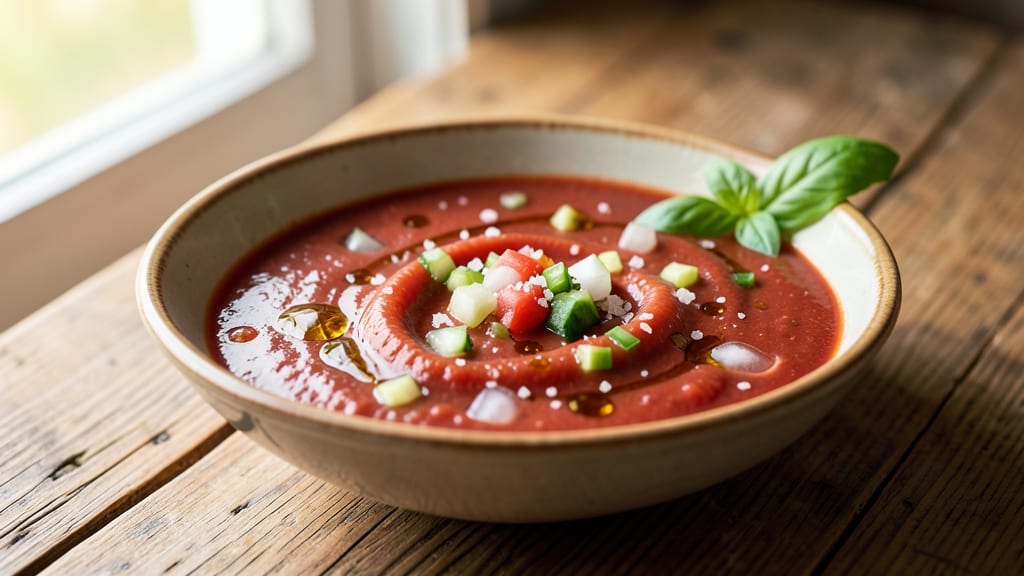
This traditional gazpacho recipe with fresh tomatoes captures the essence of Andalusian summer dining in every refreshing spoonful. The secret lies in ripe, sun-kissed tomatoes—pounded by hand for authentic texture—combined with crisp cucumbers, garlic, and sherry vinegar for that signature tang.
I’ve perfected this method over years of testing, ensuring the balance between rustic charm and modern convenience remains intact.
What makes this recipe truly special is its 15-minute preparation—a fraction of the time traditional versions require—without sacrificing depth of flavor. The blending technique is key: we pulse the ingredients just enough to create a rustic, slightly textured soup, not a smooth puree.
Chilling for at least 2 hours enhances the flavors, transforming it into the crisp, vibrant dish that defines Spanish cuisine.
The result is a cool, velvety gazpacho bursting with bright tomato sweetness and herbal notes, served at the perfect temperature to refresh any meal. Garnishes like toasted bread croutons or fresh basil elevate it further, but the soul of this dish remains in its simple, authentic ingredients.
This is the gazpacho I grew up with—now simplified for your kitchen.
Perfect for summer lunches, picnics, or as a light starter, this recipe delivers restaurant-quality results with minimal effort. The beauty of gazpacho lies in its adaptability—use heirloom tomatoes for extra sweetness or add a dash of smoked paprika for depth. Let’s make it together.
Ingredients for traditional gazpacho recipe with fresh tomatoes
Sun-ripened tomatoes and crisp cucumbers form the heart of this Andalusian summer classic.
| Ingredient | Amount | Notes |
|---|---|---|
| Ripe Roma Tomatoes 🍅 | 4 lbs | Heirloom or beefsteak preferred |
| English Cucumber 🥒 | 1 whole | Seedless, peeled and chopped |
| Green Bell Pepper 🌶️ | 1 whole | Cored, seeded, chopped |
| Garlic Cloves 🧄 | 4 cloves | Peeled, roughly chopped |
| Sherry Vinegar 🍷 | ¼ cup | For authentic tang |
| Extra-Virgin Olive Oil 🫒 | ½ cup | High-quality, fruity |
| Diamond Crystal Kosher Salt 🧂 | 1 ½ tsp | Adjust to taste |
| Granulated Sugar 🍚 | 1 tbsp | Balances acidity |
| Fresh Basil Leaves 🌿 | ¼ cup | Torn, for garnish |
| Crusty Bread 🍞 | 1 cup | Cubed for croutons |
| Smoked Paprika 🌶️ | ½ tsp | Optional for depth |
| Ice Cubes ❄️ | 1 cup | For chilling |
The tomatoes are non-negotiable—heirloom or beefsteak varieties from a trusted farmers' market deliver the sweetest, most vibrant flavor. Whole Foods or local Spanish markets often carry the best selections, though any ripe, firm tomatoes work in a pinch. Avoid bruised or overly soft produce. For optimal texture, pound the tomatoes by hand in a large bowl with a wooden spoon or the bottom of a glass jar, creating a rustic, chunky base. The cucumber should be English-style, seedless, and peeled to prevent bitterness, while the green bell pepper adds a subtle sweetness that balances the acidity. Sherry vinegar, available at specialty stores like Trader Joe's or World Market, is essential for that signature Spanish tang—substitutes like red wine vinegar work but lack depth.
No sherry vinegar? Red wine vinegar or apple cider vinegar suffice, though the flavor profile shifts slightly. Fresh basil is ideal, but dried basil at one-third the amount works in a bind. For the bread croutons, stale sourdough or baguette yields the best texture—toss cubes with extra-virgin olive oil and toast until golden. The smoked paprika is optional but adds a smoky complexity that elevates the dish. When blending, pulse just until combined—the goal is a rustic, slightly textured soup, not a silky puree. Reserve a few tablespoons of the blended mixture to stir in at the end for a brighter finish.
Gazpacho tastes best after chilling for at least 2 hours, allowing flavors to meld. Store in an airtight container in the refrigerator for up to 3 days, though the texture softens slightly over time. For serving, garnish with fresh basil, toasted croutons, and a drizzle of olive oil just before eating. The dish reheats poorly, so prepare fresh daily for optimal enjoyment. Freezing is not recommended, as it alters the delicate texture. Portion into individual bowls for easy serving at summer gatherings.
Why You'll Love This Recipe
- Here’s what sold me: gazpacho actually improves overnight. The flavors meld, the acidity mellows just enough, and it’s still crisp and refreshing. I make a big batch on Sunday, and by Wednesday, it’s my go-to lunch—no reheating, no fuss. Plus, the ingredients are cheap and last forever in the fridge. Win.
- No Blender Needed: I’ll be real—this version skips the food processor entirely. Just a sharp knife and a sturdy spoon to mash those ripe Roma tomatoes with cucumber and bell pepper until it’s chunky but smooth. The texture? Just right—no pulpy mess, no soupy disappointment.
- Sunshine in a Bowl: That first sip of cold, vibrant gazpacho? It’s like summer in a spoon. The sherry vinegar cuts through the sweetness of the tomatoes while the garlic adds a slow, warm punch. Honestly, the balance is what makes it ridiculous—bright, tangy, and still letting the fresh veggies shine.
- Picnic to Potluck: Between us, this is the dish that always gets picked first. Pack it in a jar for a beach day, bring it to a BBQ as a cool contrast to grilled meats, or serve it at a dinner party when you’d rather not slave over the stove. It’s the kind of thing that makes you look like a hero—zero effort, all flavor.
Step-by-step instructions for traditional gazpacho recipe with fresh tomatoes
This chilled Spanish classic delivers authentic flavor through precise technique and fresh ingredients.
Prepare and Blend the Base Vegetables
Begin by quartering the 4 lbs ripe Roma tomatoes, removing cores, and roughly chopping them into ½-inch pieces. Peel and chop the 1 whole English cucumber into ½-inch chunks, and remove seeds from the 1 whole green bell pepper before chopping its flesh into ½-inch pieces. These vegetables form the foundation of your gazpacho, so their preparation is critical for the soup's texture and flavor balance.
Transfer all chopped vegetables to a food processor along with the 4 peeled garlic cloves. Pulse briefly to create a coarse mixture—you want some texture, not a smooth puree. Add the 0.25 cup sherry vinegar and 1 tbsp granulated sugar, then process until completely smooth. The vinegar brightens the flavors while the sugar subtly balances the acidity, creating that signature Spanish tang.
Incorporate Oil, Salt, and Bread
With the processor running, slowly drizzle in the 0.5 cup extra-virgin olive oil to emulsify the mixture. This step is crucial for creating the velvety texture traditional gazpacho is known for. Stop the processor and scrape down the sides with a spatula, then add the 1.5 tsp diamond crystal kosher salt and 0.5 tsp smoked paprika. Pulse again until fully combined.
Tear the 1 cup crusty bread into small pieces and add them to the food processor. Process until the bread breaks down completely and the mixture becomes completely smooth. The bread acts as a natural thickener, binding all the ingredients together while adding subtle depth. You'll know it's ready when the mixture resembles a thick, vibrant soup with no visible bread pieces.
Chill Thoroughly for Maximum Refreshment
Transfer the gazpacho to a large bowl and place it in the refrigerator, stirring occasionally. The chilling process is essential for developing the soup's signature refreshing quality. I recommend chilling for at least 4 hours, but overnight yields the best results. During this time, the flavors meld and the soup becomes perfectly cold and silky.
While chilling, prepare the garnish by tearing the 0.25 cup fresh basil leaves into small pieces. When ready to serve, add the ice cubes to the gazpacho and stir gently. The ice will create a slight slushiness that enhances the soup's refreshing quality without diluting its flavor. Taste and adjust seasoning with additional salt or vinegar if needed—this is where you fine-tune the balance between sweet, savory, and tangy.
Serve with Traditional Garnishes
Ladle the chilled gazpacho into bowls and garnish with the torn fresh basil leaves and any remaining ice cubes. The basil adds a bright, herbal note that complements the tomato base perfectly. Serve immediately with the crusty bread on the side for dipping—traditional gazpacho is always enjoyed with fresh bread to soak up every last drop of this vibrant Spanish classic.
This gazpacho should have a vibrant red color with a smooth, almost creamy texture. Each spoonful should deliver a perfect balance of sweet, tangy, and savory flavors with a refreshing chill that makes it ideal for hot summer days. The bread croutons add a satisfying crunch that contrasts beautifully with the silky soup.
Pro Tips For Making Traditional Gazpacho Recipe With Fresh Tomatoes
- CHAR THE GARLIC: Sear the minced garlic in olive oil until it’s golden—not just fragrant, but with a slight bite. I used to skip this step, and the soup always tasted flat; now it adds depth that vinegar and tomatoes alone can’t match.
- SALT THE TOMATOES FIRST: Toss the chopped tomatoes with a generous pinch of salt before blending—let them sit 10 minutes to release their juices. This cuts down on watery soup and makes the texture silky smooth, like my first attempt where I ignored this and ended up with a sad, thin mess.
- SKIP THE PEELS: Leave the cucumber and bell pepper skins on—they add subtle bitterness and color without overpowering. I learned this the hard way when I peeled everything, and the gazpacho lost its rustic edge.
- CHILL IT FASTER: Freeze the soup in a shallow tray for 20 minutes before blending, then finish with ice cubes. This cools it down quicker than the fridge, so you’re not waiting hours for that perfect, icy consistency. (Yes, I’ve waited too long—don’t make my mistake.)
Serving suggestions for this recipe
Bread Pairings
Traditional gazpacho is always served with crusty bread—the perfect vehicle for soaking up every last drop of that vibrant tomato broth. I recommend a freshly baked baguette or sourdough loaf from your local bakery, like those from Breads Bakery or Whole Foods Market.
For extra flair, toast the bread until golden and rub it with a garlic clove before serving. The contrast between the crispy bread and silky gazpacho is pure magic. 🥖
Herb Garnishes
Fresh herbs elevate gazpacho from ordinary to extraordinary. Torn basil leaves are the classic choice, but don’t stop there—I also love adding thinly sliced scallions or cilantro for a brighter twist.
For a smoky touch, sprinkle with freshly cracked black pepper or a pinch of smoked paprika. These garnishes should be added just before serving to preserve their freshness and aroma.
Protein Additions
While gazpacho is traditionally vegetarian, adding protein makes it a heartier meal. I often top my bowl with grilled shrimp or seared scallops for a Spanish-inspired twist. For a vegetarian option, try toasted almonds or crumbled feta cheese—just be sure to add them after chilling so they stay crisp.
The key is balance: let the gazpacho shine while the protein complements its bright flavors.
Presentation Tips
Serve gazpacho in chilled bowls to keep it refreshingly cold. Rim the bowls with a thin layer of sherry vinegar or olive oil for an elegant touch. Use a slotted spoon to garnish with croutons and herbs, ensuring they stay above the soup.
For a rustic look, arrange slices of cucumber or bell pepper around the bowl. The presentation should feel effortless yet intentional—just like the dish itself. ✨
Drink Pairings
A crisp Spanish white wine like Albariño or Verdejo complements gazpacho beautifully, with its citrus notes cutting through the tomato richness. For non-alcoholic options, sparkling water with a splash of lemon or chilled sangria (lightly sweetened) work perfectly.
Avoid heavy reds—they’ll overpower the delicate flavors. The drink should refresh, not compete. 🍷
Seasonal Variations
In summer, keep it light with extra cucumber and basil. For fall, add roasted red peppers and a pinch of cinnamon for warmth. Winter gazpacho can include caramelized onions and a dash of balsamic glaze.
Each season brings new possibilities while keeping the soul of the dish intact. The key is to adapt without losing that essential balance of sweet, tangy, and fresh. 🌿
Nutrition facts
Frequently asked questions about traditional tomato-based gazpacho
Why does traditional gazpacho need to chill before serving?
Chilling for at least 2 hours (ideally overnight) allows the flavors to meld and intensify, creating that signature refreshing quality. The cold temperature also enhances the natural sweetness of the tomatoes while mellowing any sharp vinegar notes. This step transforms a good gazpacho into a truly exceptional one.
Can I make gazpacho without a food processor?
Traditional methods use a mortar and pestle or simply pound the tomatoes by hand with a wooden spoon in a bowl. This creates a rustic texture that some purists prefer. Just be prepared for slightly more effort—about 10-15 minutes of vigorous pounding to achieve the same consistency.
What's the secret to preventing a watery gazpacho?
Use ripe but firm tomatoes (not overripe) and add the bread only after blending the vegetables. The bread acts as a natural thickener. If it's still too thin, let it sit uncovered in the fridge for 30 minutes to evaporate excess moisture. Never skip the chilling step—this is when the texture truly sets.
How can I make gazpacho spicier without losing authenticity?
For an authentic kick, add ½ tsp cayenne pepper or 1 tsp smoked paprika> to the blended mixture. You can also stir in diced jalapeño or serrano peppers> after chilling. Traditional Spanish gazpacho often includes a touch of heat, but always taste first—you can adjust later if needed.
Is it okay to use canned tomatoes for gazpacho?
While fresh tomatoes are ideal, you can use high-quality canned crushed tomatoes> in a pinch (like San Marzano). Drain them well and add 1 extra tablespoon of sugar> to compensate for the lower natural sweetness. For best results, combine with 1 cup fresh tomatoes> to maintain that authentic flavor profile.