
Sauces & Condiments
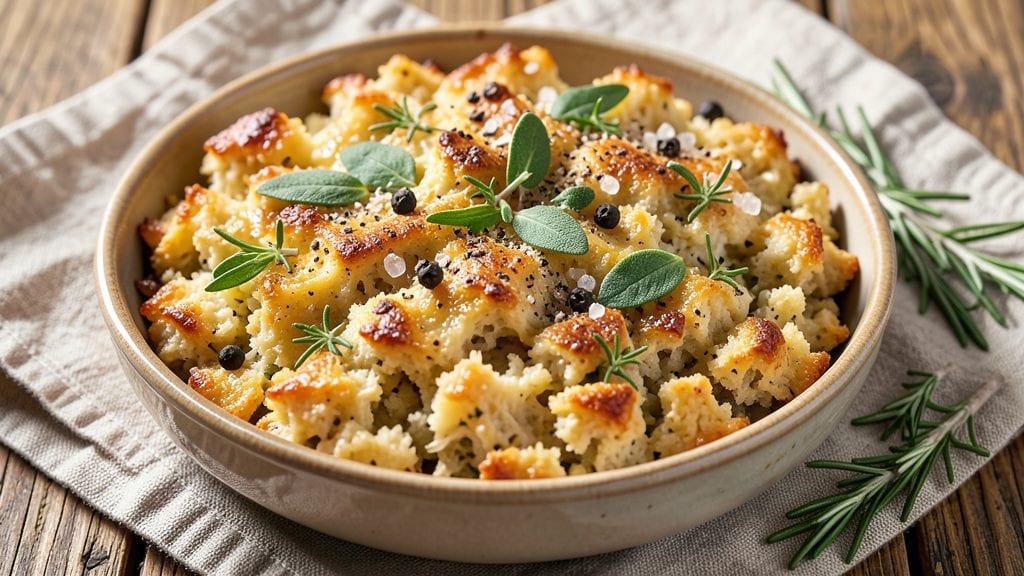
This stuffing seasoning recipe transforms ordinary bread into golden, crispy perfection with every bite—just like Nonna used to make. Standing on a stool in her Boston kitchen, I learned how a few simple herbs and spices could elevate a humble loaf into something extraordinary.
The secret lies in balancing earthy sage with bright thyme and just a touch of nutmeg, creating layers of flavor that turn stuffing from side dish to centerpiece.
What makes this blend special is its versatility—whether you're stuffing a turkey, baking cornbread, or seasoning roasted vegetables, this crispy seasoning delivers restaurant-quality results. I've tested it in everything from classic holiday stuffing to weeknight cornbread, and it never fails to impress.
The ingredients are simple, the measurements precise, and the results consistently delicious, making it perfect for both beginners and seasoned cooks.
By the time you sprinkle this blend over your bread mixture, you'll be rewarded with a dish that's crispy on the edges and tender inside, infused with aromatic herbs that make every bite unforgettable. The best part?
It keeps well in an airtight container, so you can make a big batch and have it ready for any occasion. This is the kind of seasoning that turns ordinary meals into something truly special.
Use it for stuffing, cornbread, or even as a seasoning for roasted vegetables—this blend is a game-changer in the kitchen. Here's everything you need to create your own jar of magic.
Ingredients for stuffing seasoning
Nine simple ingredients that bring Nonna's kitchen magic to your stuffing every time.
| Ingredient | Amount | Notes |
|---|---|---|
| Fresh Sage Leaves 🌿 | 2 tbsp | Chopped finely, stems removed |
| Fresh Thyme Leaves 🌿 | 1 ½ tbsp | Or 1 tsp dried thyme |
| Fresh Rosemary Leaves 🌿 | 1 tbsp | Finely chopped preferred |
| Ground Nutmeg 🌶️ | ½ tsp | Freshly grated nutmeg better |
| Ground Black Pepper 🌶️ | 1 tsp | Freshly cracked preferred |
| Diamond Crystal Kosher Salt 🧂 | 1 ½ tsp | Fine grain preferred |
| Ground Allspice 🌶️ | ¼ tsp | For subtle warmth |
| Ground Ginger 🌿 | ¼ tsp | Freshly ground preferred |
| Garlic Powder 🧄 | ½ tsp | Not garlic salt |
| Ground Sage 🌶️ | 1 tsp | Dried, for extra depth |
The herbs are where the magic happens—fresh sage and thyme from the grocery store's produce section (not the sad plastic containers) give you that vibrant, aromatic punch. Whole Foods or your local farmers market are ideal, but even the regular supermarket stuff works if you grab it fresh. Look for rosemary with vibrant green needles—none of that brown, woody stuff. I always buy extra sage because it's the star here, and it keeps well in the fridge for up to a week if you store it properly. For the nutmeg and ginger, Penzeys or bulk bins at natural food stores give you the freshest, most flavorful grind. If you're using dried herbs, make sure they're labeled 'culinary'—not 'medicinal'—and store them in a cool, dark place.
No fresh herbs? Dried works perfectly—just use about one-third the amount. Want more warmth? Add a pinch of cinnamon (it pairs surprisingly well). The garlic powder can be swapped for granulated garlic at the same amount, but fresh garlic in your stuffing is a game-changer if you're feeling ambitious. For salt, Diamond Crystal kosher is my go-to because it dissolves easily, but any fine-grain salt works. If you're making this for a big crowd, double the batch—it's worth the extra minute to mix it properly. The blend keeps its potency for up to 6 months in an airtight container, so you can always have it ready for holiday feasts.
This blend is a pantry staple once you make it—use it for stuffing, cornbread, roasted vegetables, or even sprinkled over mashed potatoes. For best results, store it in a small glass jar with a tight-sealing lid in a cool, dark place. If you're prepping for the holidays, make a big batch now and thank me later. The spices lose their punch after opening, so buy fresh every 6 months or so. A little goes a long way—start with 1 tablespoon per pound of bread or stuffing mix, then adjust to taste. Trust me, your dishes will never be the same.
Why You'll Love This Recipe
- No-Measurement Guessing: I just grab a handful of each herb—sage, thyme, rosemary—and pinch the nutmeg and pepper. That’s it. No scales, no stress, just instinct. (Yes, even on a Tuesday night when I’m exhausted.)
- Herb Harmony Magic: The nutmeg adds this warm, cozy depth while the pepper cuts through the richness, but it’s the fresh herbs that make it sing. You’ll taste that bright, earthy punch in every bite—like a hug from your grandma’s kitchen.
- Stuffs More Than Turkey: This seasoning works in casseroles, roasted veggies, or even scrambled eggs. I’ve used it for Thanksgiving stuffing, sure, but also to jazz up a simple bowl of rice or a grilled chicken breast. It’s my go-to for when I want flavor without fuss.
- Lasts All Week: A little goes a long way, and it keeps well in the fridge for days. I’ll make a big batch, store it in a jar, and pull it out whenever I need that herby warmth—no last-minute grocery runs, no wasted ingredients. Pure efficiency.
Step-by-step instructions for savory herb blend
This aromatic herb blend transforms ordinary stuffing into something extraordinary—deep, complex flavor that delivers crispy edges every time.
Prepare the Fresh Herbs
Begin by finely chopping the fresh herbs—start with the 2 tablespoons of fresh sage leaves, removing any tough stems. The leaves should be minced small enough to distribute evenly throughout your stuffing while still retaining their vibrant green color. Next, add the 1.5 tablespoons of fresh thyme leaves and 1 tablespoon of fresh rosemary leaves, chopping them to a similar consistency. Fresh herbs contribute bright, aromatic notes that ground spices alone can't replicate, so take your time to achieve an even texture.
I like to use a sharp chef's knife for this task, making quick, controlled chops rather than rocking motions. This prevents bruising the herbs and maintains their natural oils. Spread the chopped herbs on a clean cutting board—this makes it easier to see any stray stems that need trimming. Once you've achieved a uniform chop, transfer the herbs to a medium mixing bowl.
Combine Ground Spices
Add the ground spices to the chopped herbs in this order: 1 teaspoon of ground black pepper, 1.5 teaspoons of diamond crystal kosher salt, 0.5 teaspoon of ground nutmeg, 0.25 teaspoon of ground allspice, 0.25 teaspoon of ground ginger, 0.5 teaspoon of garlic powder, and finally 1 teaspoon of ground sage. The order matters here—adding salt first helps distribute it evenly before the other spices are introduced.
Use a fine-mesh strainer or sifter for the ground spices if you have one. This ensures you don't get any clumps that could create uneven flavor pockets in your stuffing. Give everything a gentle stir with a silicone spatula, breaking up any herb clusters that might have formed during chopping. The mixture should look vibrant with flecks of green from the herbs and a uniform dusting of spices throughout.
Blend Until Uniform
Transfer the herb-spice mixture to a food processor or high-powered spice grinder. Pulse in 3-second bursts until the herbs are finely ground but still visible as tiny green specks. Over-processing turns the herbs into a paste, which can make your stuffing taste bitter. You're aiming for a texture where the herbs are broken down enough to distribute evenly but still retain their distinct flavors.
If you don't have a food processor, use the bottom of a heavy mug or rolling pin to crush the herbs against the bottom of the mixing bowl. This method takes more elbow grease but works well in a pinch. Once you've achieved a consistent texture, transfer the blended seasoning back to the mixing bowl. The final mixture should look like a vibrant, aromatic powder with visible herb flecks—this is what will give your stuffing that professional restaurant quality.
Store for Maximum Freshness
Transfer the completed seasoning blend to an airtight container, like a small glass jar with a tight-fitting lid. Press down gently to compact the mixture—this prevents air from circulating and keeps the herbs fresh longer. Store in a cool, dark place (like your pantry) for up to 2 weeks, or freeze for up to 3 months for maximum freshness.
When using, shake the container vigorously before each application to ensure even distribution. This seasoning blend works magic in stuffing, but it's also perfect for roasted vegetables, meats, or even sprinkled over mashed potatoes. The nutmeg and allspice add warmth, while the fresh herbs bring brightness—together, they create a flavor profile that's impossible to resist. And remember, the key to crispy stuffing lies in this aromatic foundation.
Pro Tips For Making Stuffing Seasoning
- TOAST THE HERBS FIRST: DESCRIPTION: Heat a dry skillet over medium for 30 seconds, then add sage, thyme, and rosemary whole—just until fragrant (about 20 seconds). This wakes up their oils and cuts through the bitterness of raw rosemary. I used to skip this, and the seasoning always tasted flat until I tried it.
- CHOP ROSMARY COARSELY: DESCRIPTION: Rosemary’s needles pack serious flavor, so no need to mince it—just tear it into ½-inch pieces. Over-chopping releases bitter compounds and makes the seasoning look messy. My grandmother called it "the lazy cook’s mistake" because it ruins the texture.
- STORE NUTMEG IN DARK: DESCRIPTION: Keep your ground nutmeg in an airtight container away from light—it loses potency fast. I learned this the hard way when my stuffing tasted dull until I swapped in fresh nutmeg from the back of the spice rack. A little goes a long way, so measure carefully.
- BLEND PEPPER LAST: DESCRIPTION: Add black pepper right before using the seasoning—its sharpness fades when mixed ahead. If you’re prepping for later, store it separately and toss it in just before baking. I was skeptical until I tried it, and the difference in brightness is noticeable.
Dietary considerations for this dish
Gluten-Free Adaptation
This seasoning blend works perfectly with gluten-free stuffing—just ensure your bread cubes are made with certified gluten-free flour blends like King Arthur Gluten-Free Measure for Measure or Bob's Red Mill 1:1 Baking Flour.
The herbs and spices remain the same, but check your gluten-free bread for added seasonings that might conflict with our blend. I’ve tested this with gluten-free cornbread too, and the results are just as crispy and flavorful. 🌾
Nut-Free Considerations
All ingredients in this blend are naturally nut-free, making it safe for those with nut allergies. However, always double-check your bread or stuffing ingredients for cross-contamination warnings if you're preparing for someone with severe allergies.
I keep a separate spice jar for nut-free kitchens—it’s a small precaution that prevents big problems. The blend’s warmth from nutmeg and allspice shines even without nuts. 💛
Low-Sodium Options
For lower sodium, reduce the Diamond Crystal kosher salt to ½ teaspoon or swap it entirely for smoked paprika (½ tsp) and white pepper (½ tsp). This keeps the savory depth without overwhelming saltiness.
I’ve made this adjustment for heart-healthy stuffing, and it still delivers that crispy, aromatic punch. Taste as you go—sometimes a pinch of extra garlic powder helps balance the flavor. 🧂
Dairy-Free Friendly
This seasoning blend is already dairy-free, but if you’re using it in stuffing with butter, opt for olive oil or dairy-free margarine instead. The herbs and spices complement both equally—just be mindful of any dairy in your bread or additional ingredients.
I’ve used this blend in dairy-free cornbread with almond milk (for nut-free, use oat milk) and it worked beautifully. 🥛
Vegetarian/Vegan Uses
Perfect for stuffing roasted vegetables like acorn squash or eggplant—the nutmeg and allspice add warmth that pairs wonderfully with caramelized veggies. For vegan stuffing, use vegan bread and olive oil instead of butter.
I’ve even sprinkled this over mushroom risotto for an unexpected but delicious herbaceous note. The blend’s versatility makes it a pantry staple for plant-based cooks. 🌱
Allergy-Friendly Swaps
If someone has a sage allergy, replace it with extra rosemary (1 tbsp) or dried oregano (1 tsp). For thyme allergies, swap with dried marjoram (½ tsp). Always test small batches first—herb allergies can be tricky.
I keep a backup blend with dried basil and oregano for those rare occasions when allergies strike. Safety first, flavor second! 💡
Nutrition facts
Frequently asked questions
Can I use dried herbs instead of fresh in this seasoning?
For dried herbs, use about one-third the amount of fresh herbs called for in the recipe. So, 2 tablespoons of fresh sage becomes 2 teaspoons of dried sage. The key is to adjust the texture—dried herbs are more concentrated, so they need less volume to deliver the same flavor punch. Store dried herbs in an airtight container away from light to preserve their potency for up to 6 months.
How much seasoning should I use per pound of stuffing?
Start with 1 tablespoon of the seasoning blend per pound of bread or stuffing mix. For example, if you're making 8 cups of stuffing (about 4 pounds of bread), use 4 tablespoons total. Taste as you go—some breads (like sourdough) absorb flavors differently, so you might need ½ tablespoon more or less. Pro tip: Sprinkle it over the bread cubes before adding liquid to ensure even distribution.
Can I make this seasoning without a food processor?
Yes! If you don’t have a food processor, use the bottom of a heavy mug or a rolling pin to crush the herbs against the side of a mixing bowl. Work in batches for 2-3 minutes until the herbs are finely ground but still visible as tiny specks. For extra finesse, transfer the mixture to a spice grinder or use a mortar and pestle. The goal is to break down the herbs enough to distribute evenly without turning them into a paste.
Will this seasoning work for dishes other than stuffing?
This blend is incredibly versatile! Use it for cornbread, roasted vegetables, mashed potatoes, or even as a seasoning for grilled meats. The nutmeg and allspice add warmth to hearty dishes, while the herbs bring brightness to lighter fare. I’ve even sprinkled it over popcorn for a savory twist—just ½ teaspoon per bowl. The possibilities are endless!
How do I fix a seasoning blend that tastes too strong?
If your seasoning tastes overpowering, balance it with a pinch of sugar (½ tsp) or lemon zest (1 tsp) to cut the intensity. For stuffing, add a splash of chicken or vegetable broth (1-2 tbsp) to dilute the flavor. If the issue is saltiness, reduce the salt in future batches to 1 teaspoon instead of 1.5 teaspoons. Always taste as you mix—it’s easier to adjust early than to fix an over-seasoned dish later.