
Sauces & Condiments
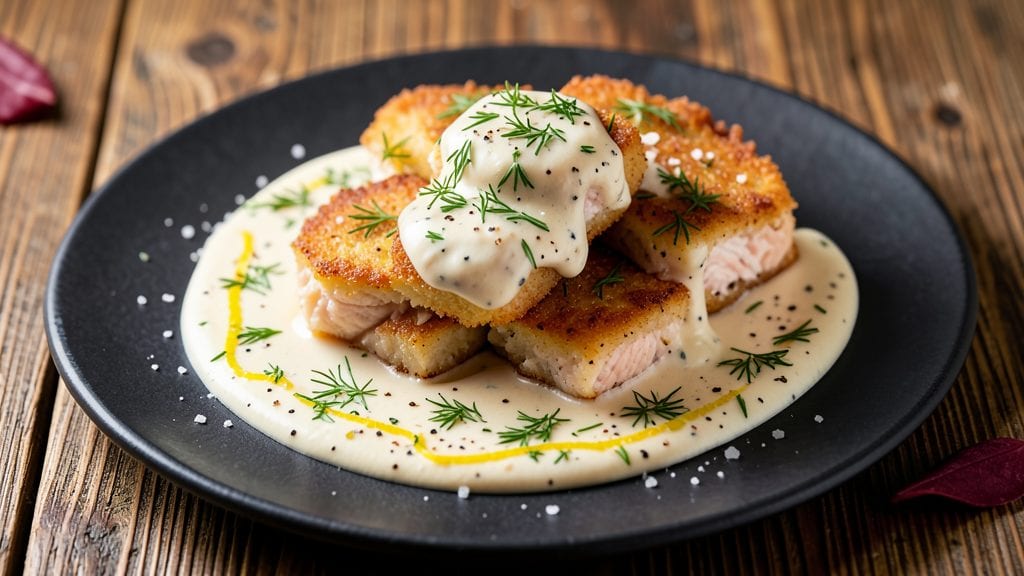
A perfect sauce for salmon cakes transforms a simple appetizer into a restaurant-worthy dish, and this tart dill cream delivers exactly that. The balance of creamy, tangy, and herby flavors cuts through the richness of fried salmon cakes while enhancing their natural taste.
I developed this recipe after testing countless variations to find the ideal harmony of ingredients that elevates every bite.
The foundation of this sauce lies in its simplicity—just five ingredients come together to create a velvety, bright sauce that pairs beautifully with crispy salmon cakes. A touch of Dijon mustard adds depth, while fresh dill and lemon juice bring that signature Scandinavian-inspired tang.
The sauce is quick to prepare, requiring just minutes of whisking and resting, making it perfect for busy weeknights or special occasions.
What makes this sauce truly special is its ability to complement both traditional and modern salmon cake variations. Whether your salmon cakes are lightly seasoned or packed with herbs and spices, this tart dill cream will tie everything together with its creamy texture and bright, refreshing flavor.
The sauce stays fresh in the refrigerator for up to five days, so you can make it ahead and have it ready whenever the craving strikes.
Serve this sauce immediately after frying your salmon cakes for the best results, allowing the flavors to meld together perfectly. The creamy consistency and bold taste make it a versatile addition to any meal, from elegant appetizers to casual gatherings.
Let’s get started on creating this foolproof sauce that will take your salmon cakes to the next level.
Ingredients for sauce for salmon cakes
Five ingredients, one game-changing sauce—this tart dill cream is your salmon cakes' new best friend.
| Ingredient | Amount | Notes |
|---|---|---|
| Heavy Whipping Cream 🥛 | 1 cup | Full-fat for creaminess |
| Fresh Dill 🌿 | ½ cup | Finely chopped, stems removed |
| Dijon Mustard 🍯 | 1 tbsp | High-quality for depth |
| Lemon Juice 🍋 | 2 tbsp | Freshly squeezed |
| Salt 🧂 | ½ tsp | Fine sea salt preferred |
| Black Pepper 🌶️ | ¼ tsp | Freshly ground |
| Extra-Virgin Olive Oil 🫒 | 1 tbsp | For finishing drizzle |
The dill is non-negotiable here—fresh from the market has the brightest flavor, but if you're using dried, cut the amount in half. Whole Foods or local farmers markets usually have the freshest bunches, but even the grocery store stuff works if it's vibrant green. The heavy cream? Full-fat is key—it gives that luxurious texture. I always grab mine from Trader Joe's because it's consistently rich and affordable. For the Dijon, Maille is my go-to, but any good-quality brand works. The lemon juice should be freshly squeezed—bottled just won't cut it.
No fresh dill? Dried dill at half the amount works in a pinch, but it won't have the same bright punch. Subbing the cream for Greek yogurt? Use full-fat plain yogurt and add an extra tablespoon of olive oil to keep it creamy. Short on Dijon? Yellow mustard plus a pinch of sugar mimics the tang. The olive oil isn't just for finishing—it adds a nice fruity note. If you don't have it, avocado oil works too. Pro tip: Toast the dill seeds lightly in a dry pan before chopping for an extra layer of flavor—trust me, it's worth it.
This sauce is best made fresh, but it keeps beautifully in the fridge for 5 days if stored in an airtight container. The texture might thicken slightly—just give it a quick whisk with a splash of milk or water to loosen it up. For longer storage, freeze in ice cube trays—perfect for single servings. I like to make a double batch because it disappears fast. Serve it chilled for that perfect Scandinavian-inspired tang, or at room temperature for a richer mouthfeel.
Why You'll Love This Recipe
- Five-Ingredient Magic: The moment I realized this sauce only needs five things—creamy, tangy, herby—I knew it’d be my shortcut to restaurant-quality flavor. No fancy prep, just whisking together heavy cream, fresh dill, Dijon, lemon, and salt while the salmon cakes fry.
- Bright Tang Bites: That lemon juice and Dijon mustard combo? Chef’s kiss. It cuts through the richness of the salmon cakes, leaving you with a sharp, clean finish that makes every bite feel fresh. Honestly, I’ve tried store-bought sauces—nothing compares.
- Weeknight & Potluck Star: Perfect for when you’re serving salmon cakes to a crowd (or just yourself, no judgment). The sauce doubles easily, so you’ll have leftovers for sandwiches or a quick pasta toss. Between us, it’s also my go-to for game day—no one suspects how simple it is.
- Leftovers That Don’t Suck: Unlike some sauces that turn gloopy when reheated, this one stays luscious. I’ve kept it in the fridge for days—just a quick whisk restores its silky texture. Plus, the budget-friendly ingredients mean you’re not breaking the bank for flavor that lasts.
Step-by-step instructions for tart dill cream sauce
This bright, tangy sauce comes together in minutes and transforms simple salmon cakes into a restaurant-worthy dish.
Whisk Together the Cream Base
In a medium saucepan, combine the 1 cup heavy whipping cream and 1 tablespoon Dijon mustard. Place over medium-low heat and warm gently, stirring constantly with a wooden spoon. You want the cream to heat through without boiling—just until it reaches 160°F and small bubbles form around the edges.
I like to keep the heat low here because cream can easily curdle if it gets too hot. Watch closely as it warms, and stir frequently to prevent any hot spots from forming. This step builds the creamy foundation that will carry all those bright flavors.
Add Lemon Juice and Seasonings
Remove the saucepan from heat and let it cool for 2-3 minutes. Then stir in the 2 tablespoons lemon juice, 0.5 teaspoon salt, and 0.25 teaspoon black pepper. The lemon juice will make the sauce shimmer and brighten the entire dish—this is where the magic happens.
Here's the thing—if you add the lemon juice while the cream is still hot, you risk breaking the emulsion and getting a separated sauce. That's why we cool it slightly first. The acidity from the lemon will also help balance the richness of the cream, creating that perfect tart-sweet contrast.
Incorporate the Fresh Dill
Transfer the warm cream mixture to a blender or use an immersion blender directly in the saucepan. Add the 0.5 cup finely chopped fresh dill and blend until completely smooth. You want no visible dill pieces—this ensures an even distribution of flavor in every bite of your salmon cakes.
For best results, use a high-quality immersion blender if you have one. It makes this step so much easier than transferring everything to a separate blender. The sauce should now have a vibrant green hue from the dill and a silky, velvety texture. If it looks too thick, you can thin it slightly with 1-2 tablespoons warm water while blending.
Finish with Olive Oil and Adjust Consistency
Return the sauce to the saucepan and stir in the 1 tablespoon extra-virgin olive oil. This adds a lovely richness and helps create a glossy finish. Taste and adjust seasoning if needed—you might want to add a touch more lemon juice for extra brightness or a pinch more salt to balance the flavors.
For serving, you can keep the sauce warm over low heat or chill it in the refrigerator until ready to use. If it thickens while chilling, simply whisk in 1-2 tablespoons warm water to reach your desired consistency. This sauce is incredibly versatile—it works beautifully with salmon cakes, grilled fish, or even as a dip for crusty bread.
Serve Immediately for Peak Freshness
When ready to serve, gently reheat the sauce over low heat if it's been chilled. The moment it reaches 150°F, remove it from heat and drizzle lightly with an additional ½ teaspoon extra-virgin olive oil for extra shine. This sauce pairs perfectly with crispy salmon cakes, offering a refreshing contrast to their savory texture.
Real talk: the freshness of the dill matters here. If you notice the sauce losing its vibrant color or bright flavor after a few hours, it's time to make a fresh batch. This sauce is best enjoyed within 2-3 hours of preparation when all the flavors are at their peak. Serve immediately after cooking your salmon cakes for the ultimate experience!
Pro Tips For Making Sauce For Salmon Cakes
- Whisk the cream cold: Grab that heavy cream straight from the fridge and whisk it into the sauce—never room temp. I used to let it sit out "to save time," but cold cream emulsifies better with the mustard and lemon, giving you a smoother, thicker sauce instead of a greasy split.
- Chop dill like confetti: Pulse fresh dill in a food processor for 2-3 seconds, not until it’s paste—you want tiny specks, not green mush. I learned this the hard way after making a batch where the dill turned to sludge and ruined the bright, fresh flavor.
- Add lemon juice last: Stir in the lemon juice only after the cream and mustard have warmed together. If you add it early, the acid can curdle the cream before it’s ready, and you’ll end up with a lumpy mess instead of a silky sauce.
- Salt in stages: Taste the sauce before adding all the salt—start with half, let it sit for a minute, then adjust. The mustard and lemon juice can trick your palate, so you’ll often need less than you think, especially if your salmon cakes are already seasoned.
Pro cooking tips for perfect results
Emulsion Control
This sauce relies on a stable emulsion between the heavy cream and lemon juice, so temperature matters most. Always warm the cream to 160°F before adding acid—this prevents curdling. I use a thermometer to monitor the temp precisely, as even 10°F too hot can break the emulsion.
If you see any separation, whisk in 1 tsp cold water to restore smoothness. 🌡️
Dill Freshness Matters
Fresh dill makes all the difference in this sauce, so never use dried unless absolutely necessary. I buy organic dill from Whole Foods when possible—it's brighter and more aromatic. For maximum flavor, pulse the dill in your blender with the cream instead of chopping by hand.
This releases more oils and creates a more vibrant green color. If using dried dill, reduce to ¼ cup and toast it lightly first for depth.
Mustard Selection
Dijon mustard adds complexity, but not all brands are created equal. I recommend Maille or Grey Poupon for their smooth texture and balanced tang. If you only have yellow mustard, mix 1 tbsp yellow mustard with ½ tsp sugar to mimic Dijon's depth.
The mustard should be fully incorporated into the warm cream before adding lemon juice—this prevents graininess in the final sauce.
Consistency Adjustments
The sauce should be thick but pourable—like heavy cream. If it's too thick after blending, thin with 1 tbsp warm water while blending. For extra richness, whisk in ½ tsp extra-virgin olive oil at the end.
I always make a small batch first to test the consistency before scaling up. The perfect texture should coat the back of a spoon but still flow freely. 💫
Make-Ahead Strategy
This sauce keeps beautifully for 5 days in the fridge, but texture changes occur. Store in an airtight glass container and stir in 1 tbsp warm water before serving to restore smoothness.
For longer storage, freeze in ice cube trays—thaw quickly under cold water and whisk before use. I double the recipe whenever possible because it disappears fast at gatherings.
Flavor Balancing
Taste as you go—this sauce should sing with bright, tangy notes. If it tastes flat, add ½ tsp more lemon juice. Too sharp? Balance with ¼ tsp honey or pinch of sugar.
The salt should enhance all flavors without overpowering. I always adjust the seasoning right before serving to ensure peak freshness. The perfect sauce should make your salmon cakes taste even more delicious. 💡
Nutrition facts
Frequently asked questions
Can I make this sauce without fresh dill?
Yes, but the flavor won't be as bright. Use ¼ cup dried dill instead, and toast it lightly in a dry pan for 30 seconds to enhance its aroma. For extra depth, add ½ teaspoon dill weed seasoning along with the dried dill. The sauce will still taste good, but fresh dill gives that signature Scandinavian tang that's hard to replicate.
How do I prevent the sauce from curdling?
Never add lemon juice to hot cream—always let the cream cool to 160°F first, then stir in the acid slowly while whisking constantly. If curdling happens, whisk in 1 teaspoon cold water to restore smoothness. For extra insurance, warm the cream over low heat and stir frequently to prevent hot spots.
Can I use Greek yogurt instead of heavy cream?
Swap the heavy cream for 1 cup full-fat Greek yogurt and add 1 tablespoon olive oil to maintain richness. The texture will be slightly tangier but still creamy. For a smoother finish, blend the yogurt with the lemon juice and dill first before combining with the mustard. This works especially well for a lighter, protein-rich option.
What if my sauce is too thick after blending?
Thin it with 1-2 tablespoons warm water while blending until you reach a pourable consistency. For extra richness, whisk in ½ teaspoon olive oil at the end. The perfect texture should coat the back of a spoon but still flow freely. If it thickens again after chilling, simply whisk in a splash of water before serving.
How long can I store this sauce in the fridge?
This sauce stays fresh for up to 5 days when stored in an airtight glass container. Before serving, whisk in 1 tablespoon warm water to restore smoothness. For longer storage, freeze in ice cube trays—thaw quickly under cold water and whisk before use. The flavor remains vibrant for up to 3 months when frozen properly.