
Sauces & Condiments
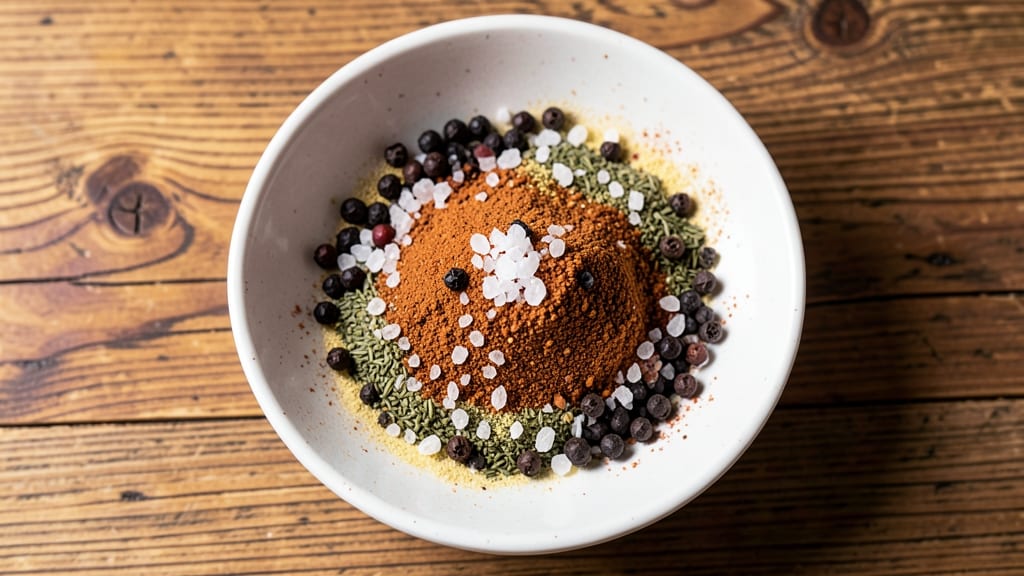
Creating the perfect crust on prime rib roast starts with this professional-grade dry rub designed to deliver that signature steakhouse bark. The blend of coarse kosher salt, black pepper, and aromatic spices transforms tender beef into a flavor powerhouse with every bite.
I developed this recipe after years of testing commercial rubs that never quite hit the mark—this one delivers bold, smoky depth without overpowering the natural richness of the meat.
What makes this rub special is its balanced profile: 1 tablespoon coarse salt anchors the blend, 1 tablespoon freshly cracked black pepper adds heat, while 1 teaspoon each of garlic powder, onion powder, and smoked paprika create layers of complexity.
The addition of ½ teaspoon each of ground coriander and mustard powder elevates it beyond basic seasoning, giving it that professional restaurant quality. This blend is designed to be applied 1-2 hours before roasting for maximum adhesion and flavor penetration.
The result is a deeply caramelized crust that contrasts beautifully with the melt-in-your-mouth interior of your prime rib. The spices develop during roasting, creating an aromatic crust that's impossible to resist.
This rub works equally well on standing rib roasts or smaller cuts, making it versatile for both holiday feasts and intimate dinners. Store any unused rub in an airtight container for up to 3 months—it's worth making extra.
For best results, apply the rub generously and let it sit uncovered in the refrigerator while the oven preheats. This allows the spices to adhere fully and develop their full flavor potential.
Whether you're cooking for a crowd or treating yourself to a special meal, this rub guarantees a restaurant-quality crust that will impress even the most discerning guests.
Ingredients for prime rib roast rub
Nine simple spices transform prime rib into a steakhouse masterpiece with every bite.
| Ingredient | Amount | Notes |
|---|---|---|
| Coarse Kosher Salt 🧂 | 1 tbsp | Diamond Crystal preferred for texture |
| Freshly Cracked Black Peppercorns 🌶️ | 1 tbsp | Coarsely cracked, not ground |
| Smoked Paprika 🌶️ | 1 tsp | High-quality Spanish smoked |
| Garlic Powder 🧄 | 1 tsp | Freshly ground preferred |
| Onion Powder 🧅 | 1 tsp | Finely ground for even distribution |
| Ground Coriander 🌿 | ½ tsp | Lightly toasted for warmth |
| Mustard Powder 🌶️ | ½ tsp | Yellow mustard preferred |
| Ground Cumin 🌿 | ¼ tsp | Toasted for deeper flavor |
| Brown Sugar 🍯 | ½ tsp | Light brown preferred |
The kosher salt is non-negotiable—Diamond Crystal or Morton's coarse salt creates that perfect crust texture. I always buy mine in bulk from Whole Foods or Penzeys because the grain size is consistent. Freshly cracked peppercorns make all the difference: toast them lightly in a dry pan before grinding for maximum aroma. For smoked paprika, Spanish varieties like Pimentón de la Vera deliver that authentic smoky depth without overpowering. Store all spices in airtight containers away from light to preserve their punch.
No smoked paprika? Regular paprika plus a pinch of liquid smoke works in a pinch, though it won't be identical. Substituting ground coriander for whole seeds? Toast the seeds first, then grind them fresh for that nutty warmth. The brown sugar adds subtle caramelization—white sugar works if that's all you have, but the molasses notes in brown sugar elevate the crust. For a spicier kick, add an extra ¼ teaspoon cayenne. This blend is designed to be mixed fresh, but if you must store it, keep it in a dark glass jar for up to 3 months.
This rub develops best when applied 1-2 hours before roasting—let it sit uncovered in the fridge while your oven preheats. The spices will adhere better and create that signature crust. For extra adhesion, lightly mist the meat with water before applying. Leftovers? Store in an airtight container for up to 3 months—it's worth making extra. The flavors actually improve slightly as the spices meld together over time.
Why You'll Love This Recipe
- Five-Ingredient Magic: I swear by this rub—just salt, pepper, smoked paprika, and those two powders. No fancy prep, no measuring cups, just a quick shake and pat. My kids even help "distribute the seasoning" (read: they dump it on the meat).
- Smoky Depth in Minutes: That smoked paprika? It’s the secret weapon. One layer of it and you’ve got restaurant-quality flavor without the fuss. The garlic and onion powders sneak in warmth that lingers—every bite tastes like it’s been slow-roasted for hours.
- Holiday or Tuesday Night: I use this rub for Thanksgiving leftovers and my lazy Sunday breakfast. Slice the roast thin, toss it on toast with horseradish—suddenly, you’ve got a fancy brunch. Or serve it whole at Christmas. No stress, all wins.
- Leftovers That Shine: Forget sad, dry reheats. This rub makes even day-old slices taste like they just came out of the oven. I portion it into containers with a side of au jus, and it’s my go-to for game days or when I’m too tired to cook. Budget-friendly? Absolutely. But mostly, it’s just reliable.
Step-by-step instructions for prime rib roast rub recipe
This bold spice blend delivers a steakhouse-worthy crust every time—simple to mix, powerful in flavor.
Measure and Prepare Your Ingredients
Start by gathering all your ingredients in a small bowl. I like to use a fine-mesh strainer for the freshly cracked black peppercorns to ensure even distribution. The coarse kosher salt should be flaky and dry—no lumps or clumps. For the smoked paprika, I recommend using a high-quality Spanish smoked variety for that authentic, slightly smoky depth that pairs perfectly with prime rib.
Lightly toast the ground coriander and ground cumin in a dry skillet over medium heat for about 30 seconds until fragrant. This simple step enhances their natural warmth and depth, which will shine through in your rub. Let them cool completely before adding to your mixture—this prevents moisture from developing in your spices, which could make the rub clump.
Combine Dry Ingredients Thoroughly
Add the 1 tablespoon of coarse kosher salt to your bowl first. This is your base—it helps distribute all the other flavors evenly. Next, add the 1 tablespoon of freshly cracked black peppercorns. I like to use my fingers to gently break up any large peppercorn clusters, ensuring a consistent texture throughout the rub.
Now, add the remaining ingredients in this order: 1 teaspoon each of smoked paprika, garlic powder, and onion powder. Then, add the 0.5 teaspoon of ground coriander, 0.5 teaspoon of mustard powder, 0.25 teaspoon of ground cumin, and finally, the 0.5 teaspoon of brown sugar. The brown sugar adds a subtle caramelized sweetness that balances the smoky and savory notes, creating that perfect steakhouse crust.
Whisk or Stir Until Uniform
Use a whisk or a fork to blend everything together until you achieve a completely uniform color and texture. You should see no distinct specks of any single ingredient—this ensures every bite of your prime rib gets the full flavor profile. If you're using a fork, work in small circles to break up any clumps that might form from the coarse salt or peppercorns.
Here's the thing—don't rush this step. It might take 2-3 minutes of consistent stirring to get everything perfectly mixed. The goal is to create a cohesive blend where each spice supports the others, rather than competing for attention. Once fully combined, transfer the rub to an airtight container for storage.
Apply Generously to Prime Rib
When you're ready to use the rub, apply it generously to all sides of your prime rib, including the fat cap. I like to press the rub firmly into the meat so it adheres well and doesn't fall off during cooking. For a 4-pound roast, you'll need about 2 tablespoons of this rub—enough to create that signature steakhouse crust without overwhelming the natural beef flavor.
Let the seasoned prime rib sit at room temperature for 30 minutes before cooking. This allows the rub to penetrate the meat slightly and develop a better crust. Don't skip this step—it makes a noticeable difference in both flavor and texture. The rub will develop a rich, aromatic crust that's both flavorful and visually impressive when your prime rib comes out of the oven.
Pro Tips For Making Prime Rib Roast Rub
- CRUSH THOSE PEPPERCORNS: Freshly cracked black peppercorns make a world of difference—don’t just grind them in the jar. Use a mortar and pestle or a dedicated pepper grinder to release the oils fully. I used to skip this, and the flavor was always flat, like someone forgot to season it.
- SALT THE NIGHT BEFORE: Apply the kosher salt at least 12 hours ahead of cooking. The salt needs time to penetrate the meat and draw out moisture, which then evaporates, creating that perfect crust. I learned this the hard way—rushing it leaves you with a soggy exterior no matter how hot your pan gets.
- DON’T SKIP THE SMOKED PAPRIKA: That smoked paprika isn’t just for color—it’s the backbone of the rub’s depth. Use about 1 teaspoon per pound of meat, and don’t substitute with regular paprika. I was skeptical until I tried it; now, it’s non-negotiable for that rich, smoky flavor that ties everything together.
- SEAR IN BATCHES: Prime rib is big, and crowding the pan kills the sear. Work in batches if needed—even if it takes longer. A proper crust forms when the meat hits high, dry heat, not when it steams in its own juices. Trust me, your future self will notice the difference.
Regional styles of this recipe
Classic Steakhouse Style
The foundation of any great prime rib experience is the classic steakhouse approach, and this rub delivers exactly that.
In New York City, prime rib is traditionally seasoned with just salt and pepper, but I've elevated it with a touch of smoked paprika and garlic powder to capture that iconic flavor.
The key here is using freshly cracked black peppercorns—I always grind them myself with a peppermill just before applying. This method creates a more aromatic crust than pre-ground pepper. 🌶️
Texas BBQ Twist
For a bold, smoky kick, Texas-style pitmasters often add extra heat and depth to their rubs. Swap out half the smoked paprika for chili powder and add ¼ teaspoon cayenne pepper to this blend.
The result is a rub that's perfect for slow-smoked prime rib, giving you that signature Texas BBQ bark. I like to use Penzeys Texas-style chili powder for its balanced heat and smoky notes.
English Roast Beef Style
Across the pond, English roast beef gets its signature flavor from a simpler, more herb-forward approach. For an English-inspired version, reduce the black pepper to ½ teaspoon and add ½ teaspoon each of dried rosemary and thyme.
The herbs add an earthy, aromatic quality that pairs beautifully with the rich beef. I recommend using freshly dried herbs from McCormick for the best flavor.
French Herb Crust
In Parisian bistros, prime rib often features a delicate herb crust that enhances rather than overpowers the meat. For this variation, replace the coriander and cumin with ½ teaspoon each of dried tarragon and marjoram.
The addition of ½ teaspoon dried parsley adds brightness. This blend is perfect for a medium-rare roast, as the herbs complement the beef's natural richness without competing with it.
Italian-Inspired Version
For an Italian twist, swap the smoked paprika for 1 teaspoon dried oregano and add ½ teaspoon fennel seeds (lightly toasted). The fennel adds a subtle anise-like sweetness that pairs beautifully with the beef.
This version works exceptionally well with a red wine reduction drizzled over the top after roasting. I like to use Italian dried herbs from De Cecco for authentic flavor.
Spicy Korean-Inspired
For a bold, spicy kick with umami depth, add 1 teaspoon gochugaru (Korean chili flakes) and ½ teaspoon toasted sesame seeds to the base rub. The gochugaru brings a fruity heat that complements the beef perfectly.
This version is ideal for those who love a little heat with their prime rib, and it pairs wonderfully with a sesame-ginger glaze on the side. 🔥
Nutrition facts
Frequently asked questions
Can I make this rub ahead of time?
This blend actually tastes better when mixed 1-2 days in advance—the spices meld together for deeper flavor. Store in an airtight container in a cool, dark place for up to 3 months. Just give it a quick stir before using to redistribute any settled spices. The brown sugar helps prevent clumping over time.
What's the best way to apply the rub to prime rib?
Pat the meat dry first, then apply the rub 1-2 hours before roasting for maximum adhesion. Press it firmly into all sides, including the fat cap, using your fingertips. For extra grip, lightly mist the meat with water before applying. Let it sit uncovered in the fridge while preheating the oven—this helps the spices develop their full aroma.
Can I use this rub on other meats?
Yes! This versatile blend works beautifully on ribeye steaks, New York strip, or even lamb chops. For chicken thighs, reduce the salt to ½ teaspoon and add ¼ teaspoon thyme. The key is adjusting the application time—30 minutes for steaks vs 1 hour for larger cuts. The crust develops differently on each meat, but the flavor profile remains delicious.
Why does my crust sometimes fall off?
This usually happens when the meat isn't dry enough or the rub isn't applied properly. Always pat the meat dry with paper towels before seasoning, and press the rub firmly into the surface. Another common issue is cooking too quickly—start with a medium-low oven temperature to allow the crust to form gradually. The fat cap should render slowly to help bind the spices.
How do I adjust the heat level?
For a milder version, reduce the black pepper to ½ teaspoon and omit the cayenne. For extra heat, add ¼ teaspoon cayenne or swap half the smoked paprika for chili powder. The brown sugar can also be reduced to ¼ teaspoon if you prefer less sweetness. Always taste the rub before applying—it should be bold but balanced, not overpowering.