
Main Courses
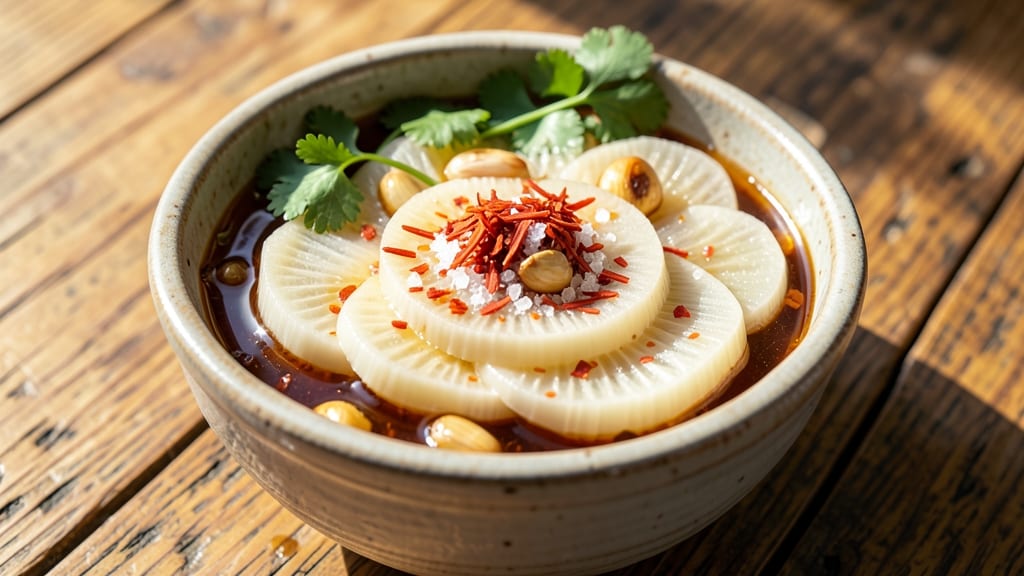
This pickled lotus root recipe transforms a humble root vegetable into crispy, tangy sticks that add texture and brightness to any dish. 💛 I first discovered lotus root while shopping at a Boston neighborhood market, and its delicate crunch made me wonder how to preserve that satisfying bite.
The key lies in a precise vinegar brine that tenderizes the root just enough while keeping it firm and satisfyingly crisp.
The process is straightforward but requires patience—thinly sliced lotus root soaks in a vinegar mixture for at least 24 hours, allowing the flavors to penetrate while maintaining that signature crunch.
You’ll need just five simple ingredients: fresh lotus root, white vinegar, sugar, salt, and a touch of garlic for depth. This recipe delivers restaurant-quality results without requiring specialized equipment.
By the time you’re done, you’ll have vibrant, tangy sticks that pop in salads, elevate charcuterie boards, or serve as a refreshing snack. The lotus root stays crisp enough to hold its shape while absorbing the bright, slightly sweet vinegar flavor.
Store them in the fridge for up to two weeks, and you’ll always have a crunchy, flavorful addition ready for any meal.
Whether you’re serving as a side, garnish, or standalone snack, these pickled lotus root sticks bring a sophisticated crunch to the table. Let’s get started on this surprisingly easy yet impressive recipe!
Ingredients for pickled lotus root
Five simple ingredients create restaurant-worthy crunchy sticks that brighten any dish.
| Ingredient | Amount | Notes |
|---|---|---|
| Fresh Lotus Root 🥕 | 1 ½ lb | Thinly sliced into sticks |
| White Vinegar 💧 | 2 cups | Distilled preferred for clarity |
| Granulated Sugar 🍚 | ½ cup | White or raw preferred |
| Sea Salt 🧂 | 1 tbsp | Fine grain preferred |
| Garlic Cloves 🧄 | 2 cloves | Thinly sliced for infusion |
| Red Chili Flakes 🌶️ | ½ tsp | Optional for heat (adjust to taste) |
| Fresh Dill Sprigs 🌿 | 2 whole | For aroma and garnish |
Fresh lotus root is the star—look for firm, pale roots with no soft spots. Asian markets usually carry them, but some well-stocked grocery stores stock them too. I grab mine from H Mart because they're consistently fresh. If your root feels rubbery, soak it in cold water for 10 minutes to firm it up. The thinner you slice the sticks, the more satisfying the crunch—aim for about 1/8-inch thickness. For the vinegar, distilled white vinegar keeps things clear, but apple cider vinegar adds subtle sweetness if you prefer that. The sugar and salt balance the acidity perfectly, so don't skimp here.
No fresh dill? Fresh parsley or tarragon work just as well for garnish. Short on garlic? One clove is fine, but skip it if you dislike the flavor—it's just for depth. The chili flakes are totally optional, but they add a nice kick that pairs perfectly with the vinegar. If you're making this ahead, the flavor actually improves after 48 hours in the fridge, so plan accordingly. For extra crunch, try adding 1 tsp of cornstarch to the vinegar mixture—it helps maintain texture during storage. And if you're feeling fancy, swap the plain sugar for turbinado sugar for a subtle caramel note.
These keep beautifully in the fridge for up to 2 weeks if stored in an airtight container with the brine. The sticks stay crisp for the first week, then become more tender—perfect for stir-fries or soups. For longer storage, transfer to a clean jar and keep in the fridge for up to 3 months. I like to portion them into small containers so I always have crunchy sticks ready for salads or snacks. The brine can be reused once or twice if you strain and store the sticks separately—just add fresh vinegar and sugar to maintain the balance.
Why You'll Love This Recipe
- No-Fuss Prep: I swear by this recipe because it’s basically hands-off after the initial chop. Slice the lotus root into even rounds—no peeling needed—and toss it straight into the vinegar mix. Fifteen minutes later, you’ve got crunchy, tangy bites with zero fuss.
- Tangy Crunch Magic: That first bite? Sweet, sharp, and just a little garlicky—like a cross between pickled ginger and a light, refreshing crunch. The sugar and salt balance the vinegar perfectly, so it’s never too harsh or cloying. (Honestly, I reach for it before my chips even hit the table.)
- Meal Prep MVP: This keeps for weeks in the fridge, so I make a big batch and toss it into bowls, salads, or even sandwiches. It’s my go-to for lazy nights when I need something that adds texture without effort. Pro tip: It’s also weirdly good with grilled meats—trust me, the contrast is next-level.
- Budget Crunch-Saver: Lotus root’s cheap at Asian markets, and a single jar of vinegar stretches across multiple batches. I’ve made this for potlucks, picnic leftovers, and even as a snack when I’m too tired to cook. It’s the kind of thing that makes you feel fancy without breaking the bank.
Step-by-step instructions for crispy pickled lotus root
Here's how to transform fresh lotus root into vibrant, crunchy sticks perfect for salads and snacks.
🔪 Step 1: Prep the Lotus Root for Perfect Crunch
Start by peeling the 1.5 lb fresh lotus root using a sharp vegetable peeler or knife. The thick, fibrous outer skin needs to go—it's tough and doesn't pickle well. Cut off both ends and slice the root lengthwise into ¼-inch thick sticks. I like to work in batches so I don't overload my cutting board.
For even pickling, trim each stick to about 3-4 inches long. Soak the sliced lotus root in cold water for 10 minutes to remove any remaining starch. This prevents the sticks from turning mushy during pickling. Drain well after soaking—you want them damp but not dripping wet.
👨🍳 Step 2: Create the Flavor-Packed Brine
In a medium saucepan, combine the 2 cups white vinegar, 0.5 cup granulated sugar, and 1 tablespoon sea salt. Bring to a gentle simmer over medium heat, stirring until the sugar and salt fully dissolve. You'll see the mixture turn completely clear—this ensures even flavor distribution.
Add the 2 thinly sliced garlic cloves and 0.5 teaspoon red chili flakes to the simmering liquid. Let it cook for 2 minutes to infuse the flavors. Remove from heat and let the mixture cool to room temperature. This pre-infusion gives your pickled lotus root that signature tangy, slightly spicy kick.
⏰ Step 3: Pack and Preserve the Lotus Root
Transfer the drained lotus root sticks to a clean, quart-sized mason jar. Pack them tightly but not forcefully—you want them to stay submerged in the brine. Add the 2 whole fresh dill sprigs to the jar for a bright herbal note. Pour the cooled vinegar mixture over the lotus root until completely covered.
Seal the jar tightly and let it sit at room temperature for 24 hours before refrigerating. This initial room-temperature phase allows the flavors to fully penetrate the lotus root. After 24 hours, transfer the jar to the refrigerator where it will keep for up to 2 weeks. The longer it sits, the more flavorful it becomes!
🍽️ Step 4: Serve and Enjoy Your Crunchy Creation
When ready to serve, remove the lotus root sticks from the jar and pat them dry gently with paper towels. The sticks should be crisp-tender with a beautiful golden hue from the vinegar. Taste the brine—if it's too strong, drain the sticks and rinse briefly in cold water before serving.
Use these vibrant sticks in salads, as a crunchy topping for tacos, or enjoy them straight from the jar as a refreshing snack. The combination of sweet, tangy, and slightly spicy flavors makes them irresistibly addictive. Store any remaining brine separately in the refrigerator for up to 1 month—it makes a fantastic marinade for meats or vegetables!
Pro Tips For Making Pickled Lotus Root
- PEEL THIN, NOT THICK: I learned this the hard way—peeling lotus root too thick leaves you with a chewy, undercooked center while the outer layers turn mushy. Aim for a ¼-inch peel, then slice into even ½-inch rounds so the vinegar penetrates every bit. Uneven slices mean uneven pickling.
- BOIL FIRST, THEN BRINE: Skipping the initial boil is how you end up with bland, limp lotus root. Parboil the slices for 3–4 minutes until they’re just fork-tender, then shock them in ice water to stop cooking. This guarantees they hold their shape when pickling, not turning to mush in the jar.
- SALT THE GARLIC: Whole garlic cloves in pickles often stay bland. Crush them lightly with a pinch of salt before adding to the vinegar—this breaks down their membranes so they infuse flavor faster. No need to overdo it; just a few gentle smashes makes a real difference.
- USE COLD VINEGAR: Pouring hot vinegar over the sugar and salt makes a sludgy, uneven brine. Mix the sugar and salt into cold vinegar first—it dissolves cleanly and gives you a crystal-clear pickle liquid. Trust me, your jar will look (and taste) like a pro made it.
Make-ahead tips for this dish
Prep Ahead for Crunch
Slice the lotus root sticks up to 3 days in advance and store them in an airtight container with a damp paper towel. This prevents drying out while keeping them ready for pickling. I like to label the container with the date so I remember when to start the process.
The key here is to keep them damp but not soggy—this maintains their structure for perfect pickling. 🥕
Brining in Batches
Make the vinegar brine in double batches if you plan to pickle multiple jars. The flavor develops more intensely in larger quantities, and you’ll have extra for future projects. I’ve used this extra brine to marinate grilled shrimp or chicken—it adds a bright, tangy kick.
Store any unused brine in a clean glass jar in the fridge for up to 1 month. Just remember to sterilize your jars and tools before reuse to avoid contamination.
Flavor Development Timeline
The magic happens after 48 hours in the fridge. That’s when the lotus root absorbs the full depth of flavor, becoming crisp-tender with a perfect balance of sweet, tangy, and slightly spicy notes. I like to taste-test after 24 hours and again at 48 hours—the difference is noticeable!
If you’re short on time, 24 hours still works, but the flavor will be milder. For maximum impact, let them sit for 3-4 days if possible.
Portioning for Convenience
Divide the pickled lotus root into small, reusable containers right after pickling. This way, you can grab a handful for salads or snacks without digging through a big jar. I use glass containers with snap-on lids because they keep the sticks crisp longer than plastic.
Label each container with the date—this helps track freshness. A little goes a long way, so a pint-sized container is perfect for a week’s worth of snacks or side dishes. 💡
Freezing for Long-Term Use
If you’re not planning to use the pickled lotus root within 2 weeks, freeze it! Drain the sticks well, pat them dry, and spread them out on a baking sheet in a single layer. Freeze for 1 hour to solidify, then transfer to a freezer-safe bag or container.
When ready to use, thaw in the fridge overnight—they’ll be slightly softer but still packed with flavor. This method works best for stir-fries or soups where texture isn’t as critical. ❄️
Reusing the Brine
The vinegar brine can be reused once or twice if stored properly. After removing the lotus root, strain the brine through a fine-mesh sieve to remove any debris. Pour it back into a clean jar and refrigerate.
To reuse, simply add 1 tablespoon of sugar and ½ teaspoon of salt per cup of brine to restore balance. I’ve used this trick to pickle radishes or cucumbers—it saves money and reduces waste. Just don’t reuse it more than twice to avoid flavor degradation.
Nutrition facts
Frequently asked questions
Can I use apple cider vinegar instead of white vinegar?
Yes, you can absolutely substitute apple cider vinegar! It adds a subtle sweetness and deeper flavor that works beautifully with lotus root. Just reduce the sugar slightly to 1/4 cup since apple cider vinegar is naturally sweeter. The texture and pickling process remain the same, but you'll get a more complex, fruity note.
Why did my pickled lotus root turn mushy?
Mushiness usually happens when the lotus root wasn't sliced thinly enough or wasn't drained properly after soaking. Always aim for 1/8-inch thick sticks and pat them completely dry before packing. Also, make sure to use fresh, firm lotus root—avoid any with soft spots. If it's still too soft after pickling, try adding 1 teaspoon of cornstarch to the vinegar mixture next time.
How can I make this recipe spicier?
For extra heat, increase the red chili flakes to 1-2 teaspoons or add 1/2 teaspoon of cayenne pepper to the brine. You can also infuse the vinegar with 1 thinly sliced fresh chili pepper (like jalapeño or serrano) while heating it. For a smoky kick, add 1/2 teaspoon of smoked paprika to the mixture. Just remember to taste as you go!
Can I use this pickled lotus root in hot dishes?
Yes! These pickled sticks hold up well in hot dishes, though they'll soften more than when eaten raw. Use them in stir-fries, soups, or noodle dishes where they'll add a tangy crunch. For best results, add them at the end of cooking to preserve some texture. They also work beautifully in fried rice or as a topping for pho or ramen.
What's the best way to store leftovers?
Store the pickled lotus root sticks in an airtight container with some of the brine in the fridge for up to 2 weeks. For longer storage, transfer to a clean jar and keep in the fridge for up to 3 months. The sticks stay crisp for the first week, then become more tender—perfect for hot dishes. Always keep them submerged in the brine to maintain flavor and texture.