
Appetizers
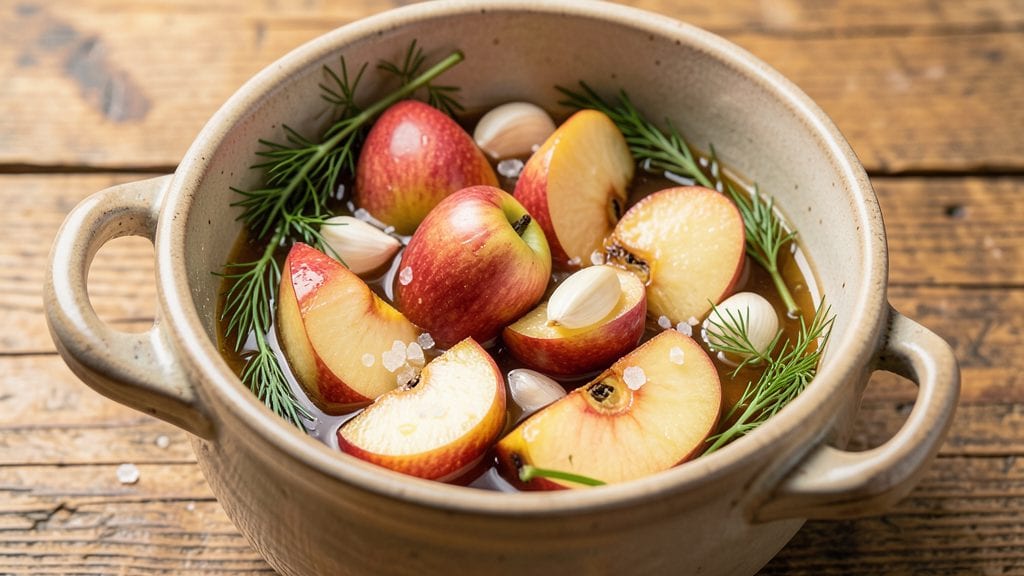
This old-fashioned pickled crab apples recipe transforms tart crab apples into vinegar-bright, tangy bites perfect for snacks or salads. The traditional method preserves their crisp texture while infusing them with bold flavors through a simple yet precise pickling process.
I developed this recipe after discovering how regional Mid-Atlantic families used to preserve crab apples in vinegar and spices during harvest season.
The process begins with carefully selecting firm crab apples—either fresh or canned—and combining them with a balanced brine of vinegar, sugar, and aromatic spices. Unlike modern quick-pickling methods, this recipe follows a time-honored approach that develops deeper flavor over weeks.
The result is a dish that bridges preservation traditions with modern snacking habits.
What you’ll achieve is a jar of pickled crab apples with a satisfying crunch and complex tang-sweet balance. Their vibrant color and bright acidity make them ideal for charcuterie boards, sandwich toppings, or as a refreshing side. The recipe’s simplicity hides its versatility—perfect for both everyday snacking and special occasions.
This method yields enough to share, with storage tips ensuring freshness for months. Whether you’re reviving a family tradition or discovering a new flavor profile, these pickled crab apples deliver authentic regional charm with minimal effort. Let’s get started with the complete process.
Ingredients for old fashioned pickled crab apples
Traditional Mid-Atlantic preservation meets modern snacking with these authentic pickled crab apples.
| Ingredient | Amount | Notes |
|---|---|---|
| Crab Apples 🍎 | 2 lbs | Firm, unblemished, fresh or canned |
| White Vinegar 💧 | 2 cups | Distilled white vinegar preferred |
| Granulated Sugar 🍚 | 1 ½ cups | White or light brown |
| Coarse Kosher Salt 🧂 | ½ cup | Diamond Crystal preferred |
| Fresh Garlic Cloves 🧄 | 6 cloves | Smashed, not minced |
| Fresh Dill Sprigs 🌿 | ¼ cup | Tightly packed, stems intact |
| Fresh Black Peppercorns 🌶️ | 1 tbsp | Crushed, not ground |
| Allspice Berries 🌶️ | 1 tsp | Whole, lightly crushed |
| Mustard Seeds 🌶️ | 1 tsp | Yellow, whole |
| Fresh Ginger Root 🌿 | 1 inch | Thinly sliced, peeled |
| Red Wine Vinegar 🍷 | ½ cup | For depth of flavor |
| Bay Leaves 🍃 | 2 whole | Fresh preferred |
The crab apples are the foundation—look for firm, tart varieties at local orchards or specialty grocers like Whole Foods. If using canned, opt for unsweetened varieties to maintain balance. The vinegar should be distilled white for clarity, though red wine vinegar adds complexity. For spices, Penzeys carries authentic allspice berries and mustard seeds that elevate the traditional flavor profile. Fresh ginger should be organic when possible to avoid bitterness from non-organic peels.
No fresh dill? Dried dill at one-third the amount works, though fresh delivers superior aroma. Substitute red wine vinegar with additional white vinegar if unavailable, but reduce by one-quarter cup to maintain acidity balance. For a quicker version, use store-bought pickling spice blends (like McCormick's) instead of individual spices. The garlic and ginger can be prepped ahead—store in airtight containers for up to 5 days in the fridge, though fresh is always preferred for optimal flavor development.
This preserves best in sterilized glass jars with tight-sealing lids, stored in a cool, dark pantry. The flavor improves over 4-6 weeks, with peak freshness lasting 6-12 months. For gifting, use amber glass jars to protect from light degradation. The brine reduces as it ages—simply add 1:1 white vinegar to water to refresh jars if needed.
Why You'll Love This Recipe
- No-Fuss Pantry Staples: I swear by this recipe because it uses what’s already lurking in my cabinets—no fancy shopping required. That jar of white vinegar? Already there. Sugar? Check. A head of garlic? Probably still in the drawer. Honestly, I’ve made this on a whim when I forgot to buy something else entirely, and it still comes out spot-on.
- Tangy-Sweet Magic: The balance here is chef’s kiss—crisp crab apples softened just enough, kissed by vinegar’s sharp bite, then rounded out with sugar’s caramelized cling. Between us, the garlic cloves smashing into the jar bottom? That’s where the real flavor lives. It’s the kind of pickled thing that makes you reach for seconds without thinking.
- Year-Round Hosting Hero: I keep a batch in the fridge for when friends drop by unexpectedly. It’s effortless to toss into charcuterie boards, pair with sharp cheddar, or even stir into cocktails (yes, really). My college-aged nephew once called it “the best snack ever”—and that’s the gold standard.
- Lasts Like a Champ: This isn’t one of those pickles that turns to mush after a week. Properly sealed, mine stay crisp and vibrant for months—ideal for lazy Sundays or when I forget to meal prep. I’ll be real: I’ve had jars sit untouched for weeks, only to pull them out and still get that same bright, punchy crunch. Budget-friendly? Absolutely. Time-saving? Even more so.
Step-by-step instructions for preserving vinegar-bright crab apples
This traditional method transforms tart crab apples into a tangy, crunchy preserve perfect for salads or snacks.
Prepare the Crab Apples for Pickling
Wash the 2 lbs of crab apples thoroughly under cold water, then pat completely dry. Using a sharp paring knife, peel each apple if desired, though many traditional recipes leave the skins for added texture and color. Cut each apple into ½-inch thick slices, ensuring uniform thickness for even pickling. For best results, work with fresh apples within 24 hours of harvest to maintain crispness.
Arrange the apple slices in a single layer on a clean kitchen towel and lightly sprinkle with ¼ cup of the 0.5 cup coarse kosher salt. This initial salting draws out excess moisture and helps preserve the apples' natural crunch. Let them sit for 30 minutes while you prepare the remaining ingredients. This step prevents the apples from becoming mushy during the long pickling process.
Create the Flavorful Vinegar Brine
In a large, non-reactive pot, combine the 2 cups white vinegar, 0.5 cup red wine vinegar, and 1.5 cups granulated sugar over medium heat. Stir until the sugar completely dissolves, then add the smashed 6 cloves fresh garlic, 0.25 cup fresh dill sprigs, 1 tbsp crushed fresh black peppercorns, 1 tsp lightly crushed allspice berries, 1 tsp whole mustard seeds, 1 inch thinly sliced fresh ginger root, and 2 whole bay leaves.
Bring the mixture to a gentle simmer for 5 minutes, allowing the flavors to meld. The liquid should be fragrant with notes of garlic, dill, and spice. Remove the pot from heat and let the brine cool to room temperature. This infused vinegar forms the aromatic base that will penetrate the apple slices during the pickling process, creating complex flavor layers.
Sterilize and Pack the Apples
While the brine cools, prepare your storage containers. For best results, use clean, sterilized quart-sized mason jars with tight-fitting lids. Place the apple slices into the jars, packing them tightly but not mashing. Distribute the slices evenly so each jar contains an equal number of apple pieces.
Using a funnel, carefully pour the cooled brine over the apple slices in each jar, ensuring they are completely submerged. Leave at least 1 inch of headspace at the top of each jar to allow for expansion during processing. Tap each jar gently on the counter to remove any air bubbles trapped between the apple slices. This ensures proper preservation and prevents spoilage.
Process and Store for Long-Term Preservation
Place the filled jars in a large pot and cover with water, ensuring the jars are completely submerged. Bring the water to a rolling boil and process the jars for 10 minutes. This boiling step kills any potential bacteria and creates a vacuum seal as the jars cool. Remove the jars from the pot using tongs and place them on a clean kitchen towel.
Allow the jars to cool completely at room temperature, then check the seals by pressing down on the lids. If the lids pop back up, the seal is broken and the jar should be refrigerated and used within a week. Once properly sealed, store the jars in a cool, dark place for up to 12 months. The apples will develop deeper flavor and crispness as they age in the brine.
Pro Tips For Making Old Fashioned Pickled Crab Apples
- STERILIZE JARS HOT: I learned this the hard way—cold jars straight from the dishwasher or shelf can fail even with perfect seals. Run your jars and lids through a 200°F oven for 10 minutes first, then fill while they’re still hot. The heat kills lingering bacteria, and the glass expands just enough to guarantee a tight seal later.
- PEEL GARLIC RIGHT: Fresh garlic cloves with papery skins? Skip the knife and smash them flat with the side of your knife first. Then peel—no more struggling with stubborn skins. For this recipe, 4-5 cloves is plenty, but if you’re adding them whole, leave the skin on for a milder, more even flavor infusion.
- WEIGH DOWN APPLES: Crab apples float, and floating apples don’t pickle evenly. Use a clean dinner plate or a dedicated jar weight to keep them submerged in the vinegar-sugar brine. If you’re short on weights, toss in a few extra garlic cloves or a small bag of rice—just make sure it’s food-safe and won’t react with the vinegar.
- SWEAT SUGAR FIRST: Dumping sugar straight into cold vinegar makes a syrupy sludge that clumps around the apples. Instead, dissolve the sugar in a splash of warm water (just enough to wet it) before mixing it into the vinegar. This ensures an even, smooth brine that coats every apple perfectly—no sticky surprises later.
Wine and beer pairings for old fashioned pickled crab apples
Crisp White Wine Pairings
For these tangy, vinegar-bright pickled crab apples, I reach for a dry Riesling from Germany—specifically a Mosel Riesling like Dr. Loosen "Blue Slate." The wine's crisp acidity and mineral notes mirror the pickles' bright tang while its subtle sweetness balances the vinegar's sharpness.
Serve chilled (45-50°F) to enhance the refreshing contrast between the two.
Dry Sparkling Wine
A Prosecco or Cava works beautifully with these pickles, especially when serving them as an appetizer. The effervescence cuts through the vinegar's intensity while the wine's delicate fruit notes complement the apples' natural sweetness.
I love La Marca Prosecco for its crisp, floral profile that pairs effortlessly with the dish. Keep the wine well-chilled (40-45°F) to maintain its lively bubbles.
Malty Amber Ale
For beer lovers, a Belgian-style amber ale like Allagash Amber or Duvel Moortgat’s Amber Ale offers a perfect balance. The beer's caramel and toasted malt notes harmonize with the pickles' sweet-tart profile, while its moderate bitterness prevents the vinegar from overpowering.
Serve at 50-55°F to let the flavors shine without numbing the palate.
Gin Cocktail Twist
Get creative with a gin-based cocktail like a Pickled Crab Apple Gin Fizz. Mix 2 oz gin (I prefer Hendrick’s or The Botanist), 1 oz fresh lemon juice, and ½ oz simple syrup, then top with club soda.
Add a few pickled apple slices as garnish—their bright acidity elevates the drink’s complexity. Serve over ice with a twist of lemon for a refreshing sipper.
Regional Cider Pairing
In the Mid-Atlantic region where this recipe originated, a dry hard cider like Strongbow Original or Angry Orchard Crisp Apple works wonderfully. The cider’s apple-forward notes create a natural bridge between the pickled crab apples and the dish itself.
Opt for a dry or semi-dry variety to avoid clashing with the vinegar’s sharpness. Serve slightly chilled (45°F) for the best experience.
After-Dinner Digestif
For a sophisticated finish, pair these pickles with a dry vermouth like Martini Rosso or Carpano Antica Formula**. The vermouth’s herbal and citrus notes complement the pickles' aromatic spices, while its slight bitterness balances the sweetness. Serve at 50-55°F in small glasses for a refined after-dinner experience. 🍷
Nutrition facts
Frequently asked questions
Can I use regular apples instead of crab apples?
While you can substitute regular apples like Granny Smith, crab apples are essential for this recipe. Their natural tartness and firm texture create the perfect balance with the vinegar brine. Regular apples tend to get mushy during the long pickling process, losing the satisfying crunch these pickles are known for. For a similar texture, choose very firm, tart apple varieties like Pink Lady or Braeburn.
How long do these pickled crab apples stay fresh?
Properly sealed jars last up to 12 months in a cool, dark pantry. The flavor actually improves over time, becoming more complex. Once opened, refrigerate and use within 3-4 weeks. If you notice any mold or off smells, discard immediately. The vinegar brine acts as a natural preservative, but always check seals before opening.
What if my apples turned mushy during pickling?
Mushy apples usually happen from overcrowding jars or using soft apples. To prevent this, ensure each apple slice has space between them and stays fully submerged in the brine. For this recipe, use only firm, unblemished crab apples and cut them into even ½-inch slices. If it happens, you can still use them in cooked dishes like pies or sauces where texture matters less.
Can I adjust the spice level for milder flavors?
Reduce the black peppercorns to ½ teaspoon and omit the allspice berries for a milder profile. You can also decrease the garlic to 4 cloves if you prefer less intensity. The recipe's balance works well with these adjustments—just taste the cooled brine before pouring it over the apples to check the flavor.
Are these pickles safe to eat during pregnancy?
While vinegar preserves are generally safe, pregnant individuals should exercise caution with raw garlic and high-vinegar foods. For this recipe, reduce garlic to 2 cloves and ensure the vinegar concentration is at least 5% acidity (standard for white vinegar). If concerned, consult your healthcare provider before consuming homemade pickled foods during pregnancy.