
Main Courses
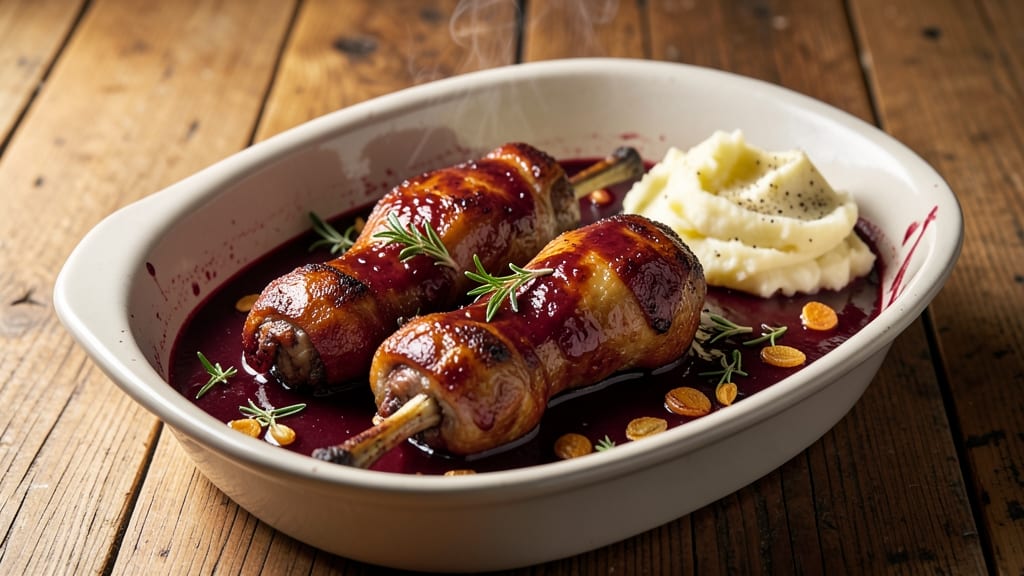
Mary Berry's lamb shanks in red wine recipe transforms tough cuts into melt-in-your-mouth tenderness through slow braising and rich wine infusion. This classic technique relies on patience and precise timing to create a dish that's both comforting and impressive—perfect for special occasions or weekend projects.
The deep flavors develop as the lamb simmers for hours, absorbing the aromatic herbs and bold red wine.
What makes this recipe special is Mary Berry's approach to balancing simplicity with sophistication. You'll start with a dry sear to build flavor, then deglaze with red wine and stock before adding fresh herbs and vegetables.
The slow cook in the oven ensures even cooking and maximum tenderness, while the wine reduces to create a luscious sauce that coats every bite.
The result is a dish that's rich in both flavor and texture—fall-apart lamb shanks swimming in a velvety red wine sauce. The herbs add freshness, while the wine brings depth and complexity that elevates this classic preparation. This recipe delivers restaurant-quality results with a method that's accessible for home cooks.
Serve with mashed potatoes or crusty bread to soak up every drop of that delicious sauce. The combination of tender lamb and aromatic wine sauce makes this a standout main course that will impress even the most discerning guests. Let's get started on this timeless favorite!
Ingredients for mary berry lamb shanks in red wine
Four lamb shanks and a handful of pantry staples create Mary Berry's legendary wine-braised masterpiece.
| Ingredient | Amount | Notes |
|---|---|---|
| Lamb Shanks 🍖 | 4 whole | Bone-in, 1.5-2 lb each |
| Dry Red Wine 🍷 | 1 ½ cups | Bold variety like Cabernet Sauvignon |
| Beef Stock 🥫 | 2 cups | Homemade or high-quality store-bought |
| All-Purpose Flour 🌾 | ½ cup | For dredging lamb shanks |
| Fresh Rosemary 🌿 | ¼ cup | Chopped, stems removed |
| Fresh Thyme 🌿 | ¼ cup | Stems removed, leaves only |
| Garlic Cloves 🧄 | 6 cloves | Peeled, smashed slightly |
| Carrots 🥕 | 4 whole | Medium, peeled, sliced |
| Onions 🧅 | 2 whole | Yellow or red, sliced |
| Tomato Paste 🍅 | 2 tbsp | Smooth, not chunky |
| Olive Oil 🫒 | ¼ cup | Extra-virgin for richness |
| Salt 🧂 | 1 ½ tsp | Kosher or sea salt |
| Black Pepper 🌶️ | 1 tsp | Freshly ground preferred |
| Bay Leaves 🍃 | 2 whole | Dried, standard size |
The lamb shanks are the star—look for bone-in cuts with good marbling for maximum flavor. Costco or your butcher shop will have the best quality, but any reputable grocery store carries them. If you're buying a whole leg, ask the butcher to cut four equal shanks. The wine should be bold and dry—Cabernet Sauvignon or Merlot work perfectly. Avoid sweet dessert wines. For the beef stock, homemade is best, but store-bought brands like Kitchen Basics or Pacific Foods are reliable. The herbs should be fresh and fragrant—if they smell musty, skip them.
No red wine? Dry white wine or beef broth with a splash of balsamic vinegar works in a pinch. Fresh herbs unavailable? Dried thyme at one-third the amount and dried rosemary at half will suffice. The tomato paste can be substituted with 1 cup crushed tomatoes if you prefer. For the carrots and onions, baby carrots or pre-sliced onions save time. If you're short on garlic, garlic powder at half the amount works, though fresh is ideal. The olive oil matters here—use extra-virgin for the best flavor, not the cheap vegetable oil kind.
This dish tastes even better the next day when flavors fully meld. Store leftovers in an airtight container in the fridge for up to 5 days. The sauce thickens as it cools, so add a splash of beef stock or water when reheating. For freezing, portion into individual containers—each serving reheats beautifully. The lamb shanks can be par-cooked ahead and frozen raw, then braised directly from frozen (add 30 minutes to cooking time).
Why You'll Love This Recipe
- One-Pot Magic: The lamb shanks practically cook themselves while you sip that same red wine you’re simmering—no extra bowls, no mess. Just brown the meat, toss in the flour, and let the wine and rosemary work their magic while you stir once or twice.
- Rich Without Effort: That deep, velvety sauce? It’s all in the slow braise—no fancy techniques, just time and the lamb’s natural collagen melting into perfection. The rosemary adds a bright, herbal punch that cuts through the richness, and the wine? It’s the secret weapon turning simple beef stock into something luxurious.
- Weeknight or Sunday Feast: Make it for a lazy Tuesday when you’re craving something hearty, or pull it out for guests when you want to impress without slaving. The leftovers reheat beautifully—better the next day, honestly—and the flavors only deepen, making it my go-to for both lazy nights and special occasions.
- Budget-Friendly Luxury: Lamb shanks stretch further than you’d think, and the wine and stock make this taste like a restaurant dish without the price tag. I’ll be real: the first time I made this, I thought it was too good to be true—now it’s my way to eat fancy on a tight budget. Plus, the flour coating adds that satisfying crunch without extra cost.
Step-by-step instructions for Mary Berry's lamb shanks in red wine
This classic method delivers melt-in-your-mouth lamb with a rich, herb-infused red wine sauce.
Prepare the Lamb Shanks for Browning
Pat the 4 whole lamb shanks completely dry with paper towels—this ensures a proper sear. Place them in a large bowl and add the 0.5 cup all-purpose flour, 1.5 teaspoons salt, and 1 teaspoon black pepper. Toss gently to coat evenly, shaking off any excess flour. The flour creates a golden crust while helping to thicken the sauce later.
Heat the 0.25 cup olive oil in a large, heavy pot or Dutch oven over medium-high heat until shimmering but not smoking. Working in batches if needed, brown the lamb shanks for 3-4 minutes per side until deeply golden brown. Don't crowd the pot—this prevents proper browning. Transfer the browned shanks to a plate and set aside.
Sauté Vegetables and Deglaze the Pot
In the same pot, reduce heat to medium and add the 2 whole onions and 4 whole carrots, both sliced into ¼-inch pieces. Cook for 5-6 minutes until softened but not colored. Add the 6 cloves garlic (smashed), 0.25 cup fresh rosemary, and 0.25 cup fresh thyme, stirring for 30 seconds until fragrant.
Pour in the 1.5 cups dry red wine and scrape up all the browned bits from the bottom of the pot with a wooden spoon. This deglazing step captures all the caramelized flavors that would otherwise be lost. Let the wine simmer for 3-4 minutes until reduced by about half, intensifying its flavor.
Build the Braising Liquid
Stir in the 2 tablespoons tomato paste and cook for 1 minute until it darkens slightly. Return the lamb shanks to the pot, along with the 2 cups beef stock and 2 whole bay leaves. The liquid should come about halfway up the sides of the shanks—if not, add a splash of water.
Bring to a gentle simmer, then reduce heat to maintain a bare bubble at the surface. Cover the pot and transfer to a preheated 325°F oven. This low-and-slow approach ensures tender lamb without drying it out. Bake for 2 hours, then carefully flip the shanks and bake for another 1 hour.
Finish and Rest the Lamb
Remove the lamb shanks from the oven and let them rest in the braising liquid for 15 minutes before serving. This resting period allows the juices to redistribute throughout the meat, ensuring each bite is succulent. The sauce should be rich and slightly reduced, with the shanks falling off the bone when tested with a fork.
Skim any excess fat from the surface of the sauce if desired, then serve the lamb shanks with the sauce spooned over the top. The combination of tender lamb, aromatic herbs, and deep red wine flavors makes this dish truly special. Pair with crusty bread or roasted potatoes to soak up every last bit of sauce.
Pro Tips For Making Mary Berry Lamb Shanks In Red Wine
- SEAR THE SHANKS HARD: Don’t be gentle—crank the heat to medium-high and get those shanks deeply browned before adding wine. I learned this the hard way; pale, under-seared shanks mean a sauce that’s more watery than rich. Two minutes per side until a crust forms, then let them rest while you deglaze.
- USE A GOOD RED WINE: Skip the cheap plonk. A dry, medium-bodied red like Chianti or Côtes du Rhône adds depth without overpowering. I was skeptical until I tried it—cheap wine makes the sauce taste like cooking sherry. Pour in enough to just deglaze, then reduce it properly.
- SKIP THE RUSH ON REDUCTION: Let the wine simmer uncovered for at least 10 minutes after adding the stock, stirring occasionally. I used to speed this up and ended up with a thin, alcohol-heavy sauce. Patience here makes the difference between a glossy, flavorful sauce and something that tastes like it was made in a hurry.
- SALT THE STOCK LIBERALLY: Beef stock is often bland—add 1-2 extra teaspoons of salt when combining it with the wine and herbs. My grandmother swore by this, and she was right: the sauce carries the flavor, so don’t skimp. Taste and adjust before adding the shanks.
Troubleshooting this recipe
Uneven Browning
If your lamb shanks aren't browning evenly, your pot is likely overcrowded or the heat isn't distributed properly. Brown shanks in single layers with medium-high heat for 3-4 minutes per side, and avoid stacking them.
A heavy-bottomed Dutch oven like Le Creuset distributes heat better than thin pans. Preheat your pot for 5 minutes before adding oil to ensure even searing. 🔥
Sauce Too Thin
A thin sauce usually means the wine and stock weren't reduced enough. After deglazing, simmer the wine uncovered for 5-7 minutes to reduce by half before adding tomato paste and stock.
If the sauce is still too thin after braising, mix 1 tablespoon cornstarch with 1 tablespoon cold water, stir into the sauce, and simmer for 2-3 minutes until thickened. For Mary Berry's touch, skim excess fat first—it can dilute flavors.
Lamb Not Tender
Undercooked lamb shanks happen when the oven temperature isn't steady or the cooking time is insufficient. Use an instant-read thermometer to check internal temp—shanks should reach 195-203°F for fall-apart tenderness. If your oven runs hot, reduce temp to 300°F and braise for 3-4 hours.
For extra insurance, flip shanks halfway through cooking. A slow cooker on low for 8 hours also works perfectly.
Herb Flavors Missing
Weak herb flavors often mean they weren't cooked long enough or were added too late. Add fresh rosemary and thyme after sautéing onions and carrots, but before deglazing with wine. Let them steep in the braising liquid for the full 3 hours of cooking time.
For dried herbs, use half the amount and add them with the bay leaves at the start. A sprig of fresh rosemary garnish at serving time adds a bright finish. 🌿
Wine Taste Overpowering
If the wine flavor dominates, your braising liquid wasn't balanced properly. The key is using equal parts wine and stock (1.5 cups each) and reducing the wine first. Add tomato paste to mellow the acidity, and include carrots and onions to sweeten the sauce naturally.
For a more balanced flavor, add 1 teaspoon brown sugar with the tomato paste. Always use a dry red wine—avoid sweet varieties like Port.
Pot Stuck Together
When braising liquid sticks to the bottom, it's usually from insufficient deglazing or high heat. Always scrape up browned bits with a wooden spoon during deglazing, and never let the pot boil vigorously.
If stuck-on bits appear after braising, soak the pot in hot water with baking soda for 30 minutes before scrubbing. A nonstick Dutch oven can help, but it won't develop the same rich flavors as cast iron or stainless steel. 💡
Nutrition facts
Frequently asked questions
Can I substitute white wine if I don’t have red?
Yes, but choose a dry white wine like Sauvignon Blanc or Chardonnay. Use 1.5 cups and add 1 teaspoon balsamic vinegar to mimic red wine’s depth. For best results, balance with an extra ½ cup beef stock to compensate for the lighter flavor. The sauce will be slightly different but still delicious.
How do I know when lamb shanks are fully cooked?
Lamb shanks are done when they reach an internal temperature of 195-203°F and fall apart easily with a fork. For extra assurance, check after 2.5 hours of braising—if they’re still firm, add 30 more minutes. The sauce should be rich and slightly reduced, clinging beautifully to the meat.
Can I make this recipe in a slow cooker?
Brown the shanks first, then transfer everything to a slow cooker. Add 1 cup water to the pot (the wine and stock will reduce naturally) and cook on low for 8 hours or high for 5-6 hours. The slow cooker’s gentle heat ensures tender lamb without drying it out. The sauce may need thickening with a cornstarch slurry at the end.
What sides pair best with this dish?
Mary Berry often serves this with creamy mashed potatoes, but roasted root vegetables (carrots, parsnips, or beets) or crusty bread work beautifully. For a lighter option, try a simple green salad with a citrus vinaigrette to cut through the richness. The wine sauce also complements polenta or buttery egg noodles.
Why does Mary Berry’s method use flour?
The flour creates a golden crust on the lamb during searing and helps thicken the sauce as it cooks. This technique, called "dredging," adds texture and body to the dish. Just shake off excess flour before browning—you only need a light coating. The flour also helps emulsify the sauce, making it silky and rich.