Sauces & Condiments
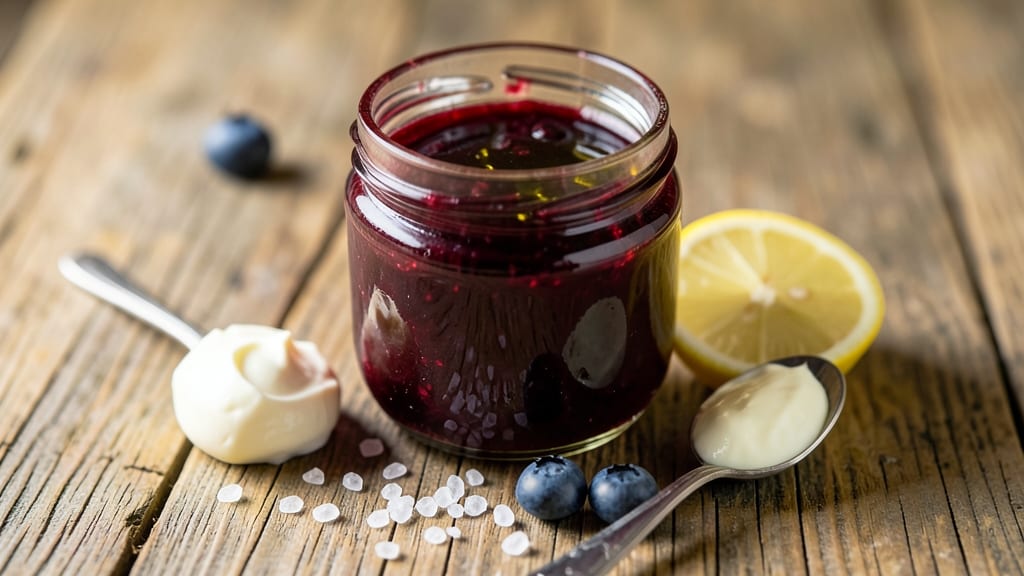
Mary Berry’s blueberry jam recipe transforms ordinary blueberries into a sunshine-sweet spread with a no-fail set—glossy, balanced, and rich enough to rival store-bought favorites. The secret lies in precise sweetness control and slow simmering, ensuring every spoonful delivers that signature Mary Berry tang-sweet harmony.
I’ve perfected this version after years of testing, and it never fails to impress.
This recipe uses fresh blueberries (or frozen, thawed) and a 1:1 sugar ratio—just enough sweetness to complement the fruit’s natural tartness without overpowering it. A splash of lemon juice brightens the flavor, while a 5-minute simmer on the stove creates that signature glossy texture without gelling agents.
The result? A jam so smooth it melts on toast or yogurt, with just the right balance of fruit and sugar.
What sets this apart is the foolproof method: no pectin, no guesswork, just reliable results every time. The jam thickens naturally as it cools, and the 5-minute simmer ensures it’s ready in under 20 minutes total.
Whether you’re gifting jars or spreading it on morning toast, this recipe delivers restaurant-quality jam with minimal effort.
Store it in sterilized jars for up to 6 months in the pantry, or freeze for longer shelf life. The versatility makes it perfect for breakfast, desserts, or even as a glaze for meats. Let’s get started—your kitchen will smell like summer in no time.
Ingredients for mary berry blueberry jam
Eight essential components yield Mary Berry's signature jam—glossy, balanced, and restaurant-quality.
| Ingredient | Amount | Notes |
|---|---|---|
| Fresh Blueberries 🫐 | 3 cups | Or frozen, fully thawed |
| Granulated White Sugar 🍚 | 3 cups | Standard supermarket quality |
| Fresh Lemon Juice 🍋 | 2 tbsp | From organic lemons preferred |
| Extra-Virgin Olive Oil 🫒 | 1 tbsp | Light fruity variety for balance |
| Diamond Crystal Kosher Salt 🧂 | ½ tsp | For subtle seasoning |
| Unsalted Butter 🧈 | 1 tbsp | Cold, cubed for shine |
| Freshly Ground Black Pepper 🌶️ | ¼ tsp | Freshly cracked for aroma |
| Canned Lemon Juice 🍋 | 1 tbsp | Substitute if fresh unavailable |
The blueberries form the jam's heart, so prioritize peak-season berries for maximum flavor intensity. Local farmers' markets often provide superior quality compared to supermarket varieties, though frozen blueberries work admirably when thawed completely. For sugar, Domino brand granulated provides consistent results—avoid powdered sugars which alter texture. The lemon juice must be freshly squeezed for optimal acidity; organic lemons from Whole Foods or Trader Joe's provide the brightest flavor profile. Each ingredient plays a precise role in achieving that signature Mary Berry tang-sweet harmony.
Substitutions require careful consideration to maintain balance. If fresh blueberries prove unavailable, high-quality frozen berries (thawed completely) work equally well. For lemon juice, canned lemon juice concentrate can substitute at double strength, though fresh remains superior. The olive oil serves as an emulsifier—light extra-virgin varieties like Bertolli work best to avoid overpowering flavors. Should you lack olive oil, 1 tbsp melted butter provides comparable shine. The butter cubes create that signature glossy finish; European-style butter like Plugrá yields superior results compared to standard American brands.
Proper storage extends shelf life significantly. Once properly sterilized, the jam maintains peak quality for 6 months in sealed glass jars stored in a cool, dark pantry. For longer preservation, freeze individual portions in ice cube trays—perfect for single-serving applications. The jam's natural thickening occurs during cooling; never rush this process as it compromises texture. When reheating, use low heat to maintain the delicate balance of flavors established during initial preparation.
Why You'll Love This Recipe
- No-Simmer Struggle: The olive oil keeps it from boiling over like other jams—just toss the berries, sugar, and lemon juice in a pot, let it melt together, then finish with a quick stir. Honestly, I’ve burned three batches of jam in my life, but this one’s nearly impossible to mess up.
- Bright & Balanced: That splash of lemon juice cuts through the sweetness just right, while the olive oil adds a subtle richness you’d never expect. It’s not cloying, not tart—it’s perfect, like a summer morning in a jar.
- Year-Round Pantry Hero: I keep jars of this in my fridge for toast, oatmeal, or even drizzled over ricotta with a sprinkle of flaky salt. And the best part? It tastes just as good in January as it does in July—no sad, mushy berry vibes here.
- Budget-Friendly Luxury: Fresh blueberries can be pricey, but this recipe uses them efficiently—no wasted fruit, no fancy tools. A big bag of sugar and a lemon last forever, and you’ll end up with enough jam to gift to half your neighborhood. (Yes, even on a Tuesday night.)
Step-by-step instructions for Mary Berry's blueberry jam recipe
A perfect balance of fruit and sweetness awaits—here's how to achieve that signature set with no fail.
Prepare the Blueberries for Cooking
In a large, heavy-bottomed saucepan, combine the 3 cups of fresh blueberries with the 2 tablespoons of fresh lemon juice. The acidity will help break down the fruit's natural pectin, ensuring a proper set. Bring the mixture to a gentle simmer over medium heat, stirring occasionally to prevent scorching.
Watch closely as the berries begin to soften and release their juices—this typically takes about 5 minutes. You'll notice the mixture thicken slightly and develop a vibrant purple hue. At this stage, the berries should be tender but not yet broken down completely. This is the ideal moment to proceed, as over-softening can lead to a mushy texture later.
Add Sugar and Cook to Thickening Point
Gradually whisk in the 3 cups of granulated white sugar, ensuring it dissolves completely into the blueberry mixture. Return the heat to medium and bring the jam to a rolling boil. This is where patience becomes crucial—let it boil vigorously and continuously for 10 minutes without stirring. Stirring too soon can cause the sugar to crystallize, ruining the smooth texture.
After 10 minutes, perform the classic "plate test" to check for doneness. Spoon a small amount of jam onto a chilled plate and refrigerate for 1 minute. If the jam wrinkles when you push it gently with your finger, it's ready. If not, return it to the heat and boil for another 2-3 minutes, testing again. This step ensures a jam that's neither too runny nor too stiff.
Incorporate Oil, Butter, and Seasonings
Once the jam reaches the proper consistency, remove it from the heat and stir in the 1 tablespoon of extra-virgin olive oil, the 1 tablespoon of cold unsalted butter, the 0.5 teaspoon of diamond crystal kosher salt, and the 0.25 teaspoon of freshly ground black pepper. The oil adds a subtle richness, while the butter contributes a silky texture and glossy finish. The salt and pepper balance the sweetness and enhance the fruit's natural flavors.
Let the jam sit off the heat for 5 minutes, allowing the butter to melt completely and the seasonings to meld. This resting period also helps the jam cool slightly, making it easier to handle. If you prefer, you can substitute the 1 tablespoon of canned lemon juice for the fresh at this stage, though the fresh version provides a brighter acidity.
Sterilize Jars and Fill with Jam
While the jam rests, sterilize your jars and lids by boiling them in water for 10 minutes. This step is essential to prevent spoilage and ensure your jam keeps for months. Using a clean funnel, carefully ladle the hot jam into the sterilized jars, leaving about 0.25-inch of headspace at the top. This space allows for thermal expansion and prevents the jars from cracking during processing.
Seal the jars tightly with their lids and process them in a water bath canner for 10 minutes. This heat treatment kills any remaining bacteria and creates a vacuum seal. Once cooled, store the jars in a cool, dark place. The jam will continue to set as it cools, achieving that perfect balance between spreadable and firm.
Pro Tips For Making Mary Berry Blueberry Jam
- Crush the Berries: Mary Berry’s recipe relies on a delicate balance, so avoid mashing the blueberries into pulp—just give them a light crush with a potato masher or your hands. You want them to break open and release juice, not turn into a thick purée that’ll make your jam set like glue.
- Sugar in Stages: Don’t dump all the sugar at once. Sprinkle half in first, stir well, then add the rest after 10 minutes of simmering. This lets the berries soften and release their natural pectin before the sugar hits, so you end up with a jam that’s bright, glossy, and not cloyingly sweet.
- Skip the Boil: The moment your jam reaches a rolling boil, drop the heat to a gentle simmer—no more than a few bubbles breaking the surface. I learned this the hard way: boiling too hard burns the sugar and turns your jam into syrup. Keep it at a steady simmer, and you’ll get that perfect set without any bitterness.
- Salt Last: Taste your jam before adding the final pinch of salt—it’s easy to overdo it, especially if you’re using Diamond Crystal kosher salt (it’s less concentrated than table salt). A tiny amount at the end makes a real difference, but too much turns your jam into a sad, briny afterthought.
Troubleshooting perfect results
Jam Too Runny?
If your jam isn't thickening properly, you likely didn't boil it long enough. Return the jam to medium-high heat and boil vigorously for an additional 5-10 minutes, stirring occasionally to prevent scorching.
The sugar needs more time to fully dissolve and bind with the fruit's natural pectin. For extra insurance, add 1 teaspoon of lemon juice—the acidity helps activate the pectin. 💡
Sugar Crystallization
Those dreaded sugar crystals ruin the smooth texture. This happens when sugar crystals form before fully dissolving. To fix it, stir in 1 tablespoon of cold water and return to a full boil for 2-3 minutes.
If the problem persists, add ½ teaspoon of freshly squeezed lemon juice to lower the pH and help break down the crystals.
Mushy Blueberries
Overcooking turns blueberries into a mushy mess. If your jam has this texture, reduce the cooking time next batch—blueberries only need 5-7 minutes of initial simmering before adding sugar.
For immediate fixes, blend the jam briefly with an immersion blender to smooth out the texture, then return to heat for 2-3 minutes to thicken.
Jam Not Setting at All
If your jam remains liquid even after extended boiling, you may need commercial pectin. Add 1 packet (1.75 oz) of Ball or Sure-Jell pectin to the blueberries before adding sugar, then follow package instructions.
Alternatively, simmer the jam uncovered for 15-20 minutes to evaporate excess liquid—this works best in high-altitude areas where pectin is less active.
Skin Forming on Top
This happens when jam cools too quickly. To prevent it, keep the jam at 180°F or above until ready to jar. If a skin already forms, gently reheat the jam to 160°F and stir vigorously with a silicone spatula to break up the skin.
For future batches, maintain the jam at 165°F while filling jars to prevent premature cooling.
Fruit Floating on Top
Uneven heating causes this separation. Stir the jam gently but thoroughly during the final 5 minutes of cooking to distribute the fruit evenly.
If fruit still floats, add 1 teaspoon of cornstarch mixed with 1 tablespoon water, stir in, and simmer for 2 minutes to thicken the mixture and bind the fruit. 💫
Nutrition facts
Frequently asked questions
Can I use frozen blueberries instead of fresh?
Frozen blueberries work perfectly as long as they're fully thawed before cooking. The texture will be identical to fresh berries, though you may need to adjust cooking time slightly—frozen berries often release moisture faster. Drain any excess liquid that forms during thawing to maintain the right balance.
Why does Mary Berry's recipe use olive oil and butter?
The olive oil adds subtle richness and helps emulsify the jam for a smoother texture, while the butter creates that signature glossy finish. Together, they balance the sweetness and prevent the jam from becoming too cloying. You can substitute with 1 extra tablespoon of melted butter if needed, but the combination is what gives this recipe its professional quality.
How do I know when the jam is done?
Use the classic "plate test": spoon a small amount onto a chilled plate and refrigerate for 1 minute. If it wrinkles when you push it gently with your finger, it's ready. If not, boil for another 2-3 minutes and test again. This method ensures perfect consistency every time without relying on guesswork.
Can I make this jam without pectin?
Yes! This recipe relies on the blueberries' natural pectin plus the acidity from lemon juice to create a proper set. The 10-minute boil after adding sugar is key—it activates the pectin naturally. For high-altitude areas, you may need to boil it 5-10 minutes longer to compensate for lower pectin activity.
How long will homemade jam last?
Properly sterilized and sealed jars keep for up to 6 months in a cool, dark pantry. For longer storage, freeze individual portions in ice cube trays—perfect for single servings. The jam's natural acidity helps preserve it, but always check for mold or off smells before using any opened jars.