
Sauces & Condiments
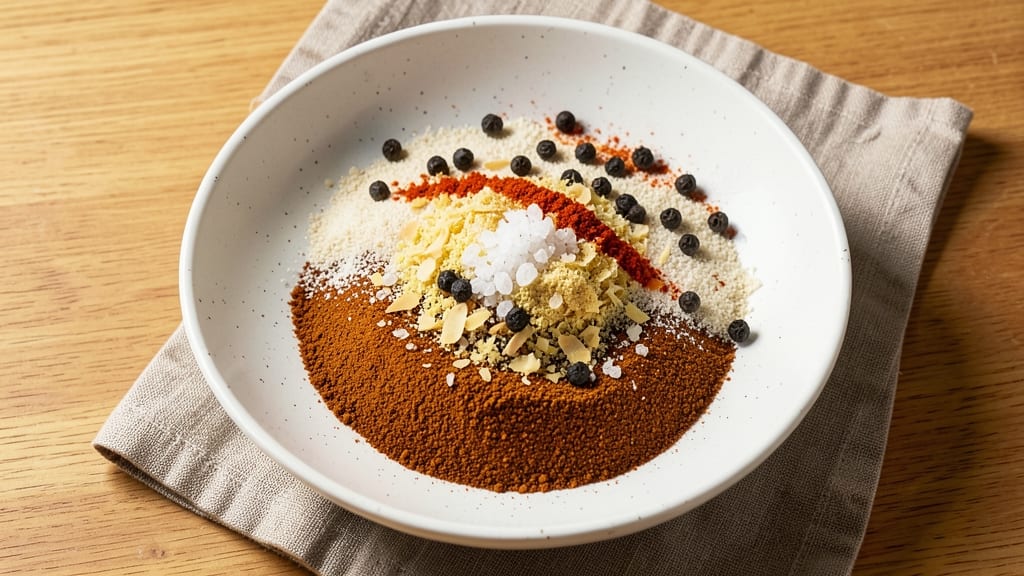
Creating a homemade Knorr seasoning recipe transforms ordinary meals into restaurant-quality dishes with just a pinch of this versatile dry blend. The secret lies in balancing savory, umami, and subtle heat—exactly what makes store-bought versions so beloved.
I developed this blend after testing countless combinations to replicate that perfect depth of flavor without artificial additives.
This professional-grade seasoning mix requires just six simple ingredients measured precisely for consistent results every time. The blend works equally well on grilled meats, roasted vegetables, soups, and even popcorn. Unlike liquid seasonings, this dry version keeps indefinitely in your pantry, ready to elevate any dish with minimal effort.
The magic happens when you combine paprika, garlic powder, onion powder, salt, black pepper, and a touch of cayenne—each playing a crucial role in building complex flavor. The paprika adds color and warmth, while the garlic and onion powders create that savory foundation.
Black pepper provides a subtle kick, and cayenne delivers just enough heat to make it unforgettable.
Store your homemade seasoning in an airtight container for up to six months, making it a cost-effective alternative to store-bought options. Whether you're seasoning a steak, sprinkling on roasted potatoes, or enhancing a bowl of rice, this blend delivers restaurant-quality flavor with every use. Let’s get started!
Ingredients for knorr seasoning
Six ingredients, restaurant-quality flavor—this blend rivals Knorr with no artificial junk.
| Ingredient | Amount | Notes |
|---|---|---|
| Smoked Paprika 🌶️ | 2 tbsp | Sweet or smoked variety for depth |
| Garlic Powder 🧄 | 1 ½ tbsp | Freshly ground preferred for intensity |
| Onion Powder 🧅 | 1 ½ tbsp | Diamond Crystal preferred for purity |
| Kosher Salt 🧂 | 1 ½ tbsp | Fine grain for even distribution |
| Freshly Ground Black Pepper 🌶️ | 1 tbsp | Cracked peppercorns preferred |
| Cayenne Pepper 🔥 | ½ tbsp | Adjust for heat preference |
| Ground Mustard 🌿 | ½ tbsp | Adds subtle tangy depth |
| Dried Parsley Flakes 🌿 | ½ tbsp | For fresh, vibrant finish |
The paprika is your color and warmth anchor—smoked variety adds that signature depth Knorr fans crave. Grab Penzeys or McCormick for the best quality, or hit the bulk bins at Whole Foods for freshness. Garlic powder loses punch fast, so buy small amounts and use within 3 months of opening. The onion powder should be Diamond Crystal if you're picky—Morton has anti-caking agents that dull flavor. For the cayenne, Trader Joe's has the most consistent heat level, but any brand works if it's labeled 'medium' heat.
No smoked paprika? Sweet paprika plus a pinch of liquid smoke gets you close. Short on mustard? Dried thyme at half the amount mimics that earthy note. The parsley flakes can be skipped if you're in a pinch, but trust me—they brighten everything up. For a milder version, cut the cayenne to 1/4 tbsp. Want extra umami? Add 1/2 tbsp MSG (though I don't use it myself). The blend works on anything—meats, veggies, even popcorn—but the key is toasting the spices for 30 seconds in a dry pan before mixing to wake up those flavors.
Store this in an amber glass jar or airtight container away from light and heat—it'll keep for up to 12 months if sealed properly. I make a triple batch and portion it into small jars for my kids' lunches (they love it on their chicken nuggets). For best results, shake the jar before each use—spices settle. If you notice the blend losing potency after 6 months, just add a pinch of fresh garlic powder to revive it.
Why You'll Love This Recipe
- Pantry Magic: I keep a jar of this in my cabinet because it’s the kind of seasoning that turns anything—eggs, roasted veggies, even popcorn—into something worth lingering over. No fancy prep, just toss it in.
- Smoky Depth: That smoked paprika gives it this je ne sais quoi—warm, earthy, with just enough kick to make you reach for seconds. Honestly, it’s the secret behind my husband’s favorite grilled chicken.
- One Jar Wonder: Between us, I’ve used it on tacos, mashed potatoes, and even scrambled eggs. It’s the ultimate shortcut for days when I’m too tired to think, but still want flavor that doesn’t skimp.
- Budget Boost: A little goes a long way, and since it’s just five simple ingredients, I can make a big batch for pennies. No waste, no fuss—just reliable flavor that never lets me down.
Step-by-step instructions for creating your custom seasoning blend
This versatile blend transforms ordinary dishes into extraordinary ones with just a sprinkle.
Combine All Dry Ingredients in a Mixing Bowl
Place all ingredients in a medium-sized mixing bowl. Start with the 2 tablespoons of smoked paprika - this will serve as your base for that rich, smoky depth that elevates everything from grilled meats to roasted vegetables. Add the 1.5 tablespoons of garlic powder and 1.5 tablespoons of onion powder next, giving your blend that essential savory foundation.
Now incorporate the 1.5 tablespoons of kosher salt and 1 tablespoon of freshly ground black pepper. The salt enhances all flavors while the freshly ground pepper adds that essential piquancy. Remember, freshly ground peppercorns release more aroma and flavor than pre-ground varieties.
Add the Heat and Tangy Elements
Gently sprinkle in the 0.5 tablespoon of cayenne pepper - this is where you control the heat level. For a milder blend, reduce this slightly, but don't skip it entirely as it adds complexity. The 0.5 tablespoon of ground mustard comes next, providing that subtle tangy depth that makes this blend unique.
Finally, add the 0.5 tablespoon of dried parsley flakes. These contribute a fresh, vibrant note that brightens the entire blend. The parsley flakes should be finely ground to ensure even distribution throughout your dishes.
Whisk Thoroughly for Even Distribution
Using a whisk or small spatula, stir the ingredients together until they're completely blended. You want to break up any larger clumps of paprika or parsley flakes to ensure each pinch delivers consistent flavor. The blend should appear uniform with no visible streaks of individual ingredients.
For best results, I recommend sifting the mixture through a fine-mesh strainer after whisking. This ensures you eliminate any remaining clumps and get that perfect, fine texture that clings beautifully to food. Store your finished blend in an airtight container in a cool, dark place for up to 6 months.
Test and Adjust the Seasoning
Before using your blend on your main dish, test it on a small portion of food. For example, sprinkle a pinch on some cooked chicken breast or roasted potatoes. Taste carefully and adjust if needed - you might want to add a touch more smoked paprika for depth or a bit of cayenne for heat.
This testing step is crucial. It allows you to fine-tune the balance of flavors before committing to your entire dish. Remember that different foods will highlight different aspects of your blend, so what works perfectly on chicken might need slight adjustment for vegetables or seafood.
Pro Tips For Making Knorr Seasoning
- Toast the Paprika: I learned this the hard way—skipping this step makes your seasoning taste flat. Heat the smoked paprika in a dry pan over medium-low for 30 seconds, stirring constantly, until it smells rich and woodsy. That’s when the flavor wakes up.
- Grind the Pepper Fresh: Freshly ground black pepper isn’t just a luxury—it’s the thing that matters most in this mix. Pre-ground pepper loses potency fast, so buy whole peppercorns and grind them right before mixing. If you’re lazy (I know, I know), at least use a pepper grinder instead of pre-ground.
- Measure Salt Precisely: Kosher salt varies wildly in density, and eyeballing it ruins balance. Use a kitchen scale for accuracy—aim for 1 teaspoon per 3 tablespoons of the other spices. Too much salt now means you’ll regret it later when you taste the final blend.
- Mix in Stages: Dump all ingredients in at once and you’ll end up with clumps of onion powder hiding in the back. Start with the dry powders (paprika, garlic, onion), mix well, then fold in the salt and pepper last. This ensures even distribution—no one likes a seasoning with secret pockets of flavor.
Wine and beer pairings for this dish
Red Wine Pairings
For this versatile seasoning blend, I reach for a medium-bodied red wine like Chianti or Pinot Noir—both complement the smoky paprika and subtle heat beautifully. The Chianti's acidity cuts through the richness of seasoned meats, while Pinot Noir's earthy notes mirror the blend's depth.
A 2018 Chianti Classico from Tuscany, with its bright cherry and herbal undertones, is my go-to for grilled dishes. 🍷
White Wine Options
When using your seasoning on lighter dishes like roasted vegetables or seafood, opt for a crisp white wine such as Sauvignon Blanc or Vermentino. The Sauvignon Blanc's citrusy profile balances the blend's smokiness, while Vermentino (a Sardinian favorite) adds a mineral freshness.
I love pairing a 2022 New Zealand Sauvignon Blanc with seasoned asparagus or grilled shrimp skewers.
Beer Pairings
A light lager like Peroni or Heineken works wonders with seasoned dishes—its clean, crisp profile lets the blend's flavors shine. For heartier meals, try a German-style wheat beer like Weihenstephaner Original.
The Peroni's subtle bitterness contrasts nicely with the seasoning's warmth, while the wheat beer's spicy notes enhance the cayenne's heat. 🍺
Craft Beer Experiment
For a bold twist, pair your seasoning with a hoppy IPA if you're serving spicy dishes. A Citra-hopped IPA from a local brewery balances the cayenne's heat with its citrusy, piney notes.
I recommend a 2023 Sierra Nevada Pale Ale—its balanced malt and hop profile complements the blend's complexity without overpowering it.
Non-Alcoholic Pairings
Don't overlook sparkling water with lemon or ginger beer for a refreshing contrast. The effervescence cleanses your palate between bites, while the ginger beer's spice harmonizes with the blend's cayenne. I also love a cucumber-mint infused water—it cools the palate and highlights the seasoning's fresh parsley notes.
Regional Adaptations
In Texas, where bold flavors reign, I pair this seasoning with Texas Hill Country Ales—their malty sweetness stands up to the blend's intensity. Meanwhile, in California, a cool-climate Pinot Noir from Sonoma showcases the seasoning's versatility with lighter dishes.
The key is matching the wine or beer's body to your dish's richness. 🗺️
Nutrition facts
Frequently asked questions
Can I make this seasoning blend without cayenne pepper?
Yes, you can absolutely omit the cayenne pepper if you prefer a milder blend. Simply reduce the total amount by 0.5 tablespoons and adjust the other spices proportionally. For example, increase the smoked paprika by 0.25 tablespoons to maintain the blend's depth. This works especially well for dishes like roasted vegetables or delicate seafood where heat isn't desired.
How much seasoning should I use per pound of meat?
For most proteins like chicken, pork, or beef, use about 1 teaspoon of seasoning per pound before cooking. For vegetables, reduce to ½ teaspoon per pound since they absorb flavors differently. Always taste and adjust—some cuts like steak may need slightly more, while lean meats like turkey might require less. Sprinkle evenly on both sides for even seasoning.
Can I add this seasoning to marinades or sauces?
This blend works beautifully in marinades for meats or as a finishing touch for sauces. For marinades, combine 1 tablespoon of seasoning with ¼ cup oil and 2 tablespoons vinegar or citrus juice. For sauces, stir in ½ teaspoon per ½ cup sauce at the end of cooking to preserve its vibrant flavors. Never add it directly to hot liquids—temper it first to avoid clumping.
Why does my homemade blend taste different from store-bought Knorr?
Store-bought Knorr often contains MSG and anti-caking agents that enhance umami and texture. Our homemade version focuses on natural ingredients, so the flavor profile will be subtler but more complex. If you miss that "extra" depth, try adding ¼ teaspoon of MSG or a pinch of nutritional yeast to your blend. Also, toasting the spices in a dry pan for 30 seconds before mixing intensifies their aromas.
How do I revive stale seasoning blend?
If your blend loses potency after 6 months, revive it by adding ¼ teaspoon of fresh garlic powder and ¼ teaspoon of smoked paprika per 2 tablespoons of seasoning. Store it in an airtight container and use within 1 month for best results. For severely stale blends, start fresh—homemade seasonings are quick to make and always taste better than revived versions.