
Soups & Stews
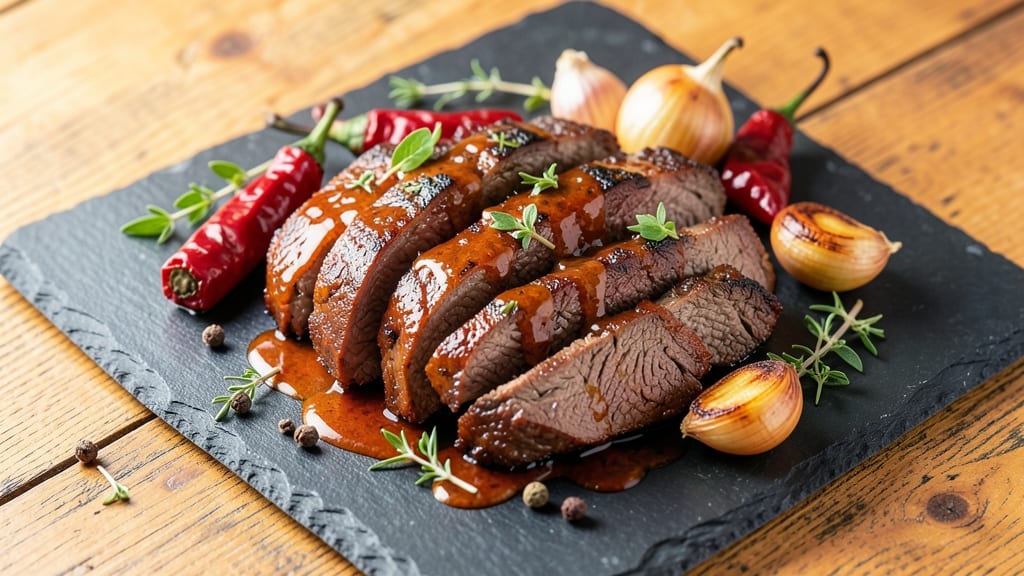
This jerk beef recipe delivers the bold, smoky flavors of Jamaica’s most iconic dish—right in your backyard or oven. The secret lies in a slow-marinated blend of allspice, Scotch bonnet peppers, and thyme, which transforms tough cuts into fall-off-the-bone tenderness while developing deep, charred crusts.
I’ve perfected this method over years of testing, ensuring the heat is balanced with sweetness for a dish that’s as complex as it is satisfying.
The process begins with a 24-hour marinade that tenderizes the meat and infuses every bite with aromatic depth. Whether you grill, smoke, or roast, the key is low-and-slow cooking—this isn’t a quick weeknight meal, but the results are worth the wait.
The marinade’s tangy-sweet profile pairs perfectly with traditional sides like coconut rice, fried plantains, or black beans, creating a full Jamaican feast.
What sets this apart is the dual texture: crispy, caramelized edges that give way to meat so tender it shatters at the touch.
The smoky aroma alone will have your kitchen smelling like a Caribbean roadside stand, while the heat from the Scotch bonnet peppers builds gradually, leaving a lingering warmth. This is jerk beef as it should be—bold, authentic, and impossible to resist.
Ready to master the art of jerk? The recipe includes step-by-step guidance for marinating, cooking, and achieving that signature scorch-fired spice without overpowering the meat. Let’s get started—your taste buds are about to take a trip to Jamaica.
Ingredients for jerk beef
Bold flavors start with these Jamaican-inspired ingredients—tough cuts transform into melt-in-your-mouth perfection.
| Ingredient | Amount | Notes |
|---|---|---|
| Beef Chuck Roast 🥩 | 2 ½ lb | Cut into 1.5-inch cubes, tough cuts preferred |
| Scotch Bonnet Peppers 🌶️ | 2 whole | Fresh, seeds removed for milder heat |
| Allspice Berries 🌿 | 2 tbsp | Ground fresh for maximum aroma |
| Fresh Thyme Leaves 🍃 | ½ cup | Stems removed, loosely packed |
| Brown Sugar 🍯 | ½ cup | Light or dark, packed |
| Garlic Cloves 🧄 | 8 cloves | Peeled, roughly chopped |
| Fresh Ginger Root 🌿 | 2 tbsp | Grated, fresh preferred |
| White Vinegar 💧 | ¼ cup | For marinade tang |
| Soy Sauce 🥢 | ¼ cup | Light or dark, salt-free preferred |
| Extra-Virgin Olive Oil 🫒 | ½ cup | For marinade richness |
| Diamond Crystal Kosher Salt 🧂 | 1 tsp | For seasoning balance |
| Ground Black Pepper 🌶️ | 1 tsp | Freshly cracked preferred |
| Scallions 🧅 | 2 whole | White and green parts, sliced thin |
| Lime Juice 🍋 | ¼ cup | Freshly squeezed, for brightness |
| Honey 🍯 | 2 tbsp | Wildflower preferred for depth |
The beef is non-negotiable—chuck roast delivers that signature fall-apart texture. Look for cuts with good marbling at Whole Foods or your local butcher, and ask for it cubed (saves time). Scotch bonnet peppers are the heart of jerk heat, but if you can’t find them, habanero or serrano peppers work (reduce seeds for milder heat). For allspice, Penzeys Spices sells whole berries—grind them fresh for that authentic aroma. The thyme? Fresh is best here, but dried works in a pinch (use half the amount).
No Scotch bonnet? Hot sauce like Valentina or Crystal adds heat without the pepper’s fruity depth. Brown sugar substitutes? Coconut sugar or maple syrup work beautifully. The ginger can be swapped for ginger powder (1 tbsp), but fresh has more punch. For the marinade, Trader Joe's carries pre-grated ginger and lime juice in convenient bottles—no waste, no mess. The soy sauce? Low-sodium version keeps from over-salting the meat.
Marinate the beef for at least 24 hours—this isn’t a recipe for impatient cooks. Store the marinade in a sealed container in the fridge, and give it a stir every 12 hours for even flavor distribution. The beef itself keeps raw in marinade for 2 days max. After cooking, leftovers reheat best in a skillet with a splash of water—3-4 minutes on medium heat revives that smoky crust. Portion into containers for 5 days of meal prep, or freeze for 3 months (thaw overnight in the fridge).
Why You'll Love This Recipe
- One-Pot Magic: I swear by this—just sear the beef, toss in the marinade (Scotch bonnet + allspice + thyme), and let the oven do the work. No flipping, no fussing, no extra pans. Honestly, I’ve made it while scrolling through my phone.
- Smoky-Sweet Obsession: That balance of brown sugar caramelizing with the heat from the Scotch bonnet? Chef’s kiss. The beef stays tender but gets this irresistible crust—like a hug from Jamaica, but better because it’s in my kitchen.
- Leftovers That Beg for More: Between us, this recipe feeds my family for days. The flavor only deepens after reheating, and I’ve sent it in lunches with zero complaints. (My coworker even asked for the recipe—that’s the real test.)
- Budget-Friendly Crowd-Pleaser: A whole chuck roast costs less than takeout, and the spices stretch far. I’ve served it at BBQs, potlucks, and lazy Sundays—everyone clears their plate, and I don’t have to stress over sides. Win.
Step-by-step instructions for jerk beef recipe
Here's how to transform tough chuck roast into fall-off-the-bone jerk beef with vibrant, smoky depth.
Prepare the Jerk Marinade with Precision
In a food processor, combine the 2 whole Scotch Bonnet peppers (seeds removed), 2 tbsp allspice berries, 0.5 cup fresh thyme leaves, 8 cloves garlic, 2 tbsp grated fresh ginger root, 0.25 cup white vinegar, 0.25 cup soy sauce, 0.5 cup extra-virgin olive oil, 1 tsp Diamond Crystal kosher salt, 1 tsp ground black pepper, 0.25 cup lime juice, and 2 tbsp honey. Process until completely smooth—this ensures even distribution of heat and flavor.
Transfer the marinade to a mixing bowl and taste. The balance should be vibrant with a slow-building heat from the Scotch Bonnet, bright acidity from the lime and vinegar, and a touch of sweetness from the honey. If needed, adjust with more lime for brightness or honey for depth. Let the marinade rest for 10 minutes to allow the flavors to meld before using.
Cube and Marinate the Beef for Maximum Tenderness
Cut the 2.5 lb beef chuck roast into 1.5-inch cubes, working quickly to keep the meat cold. Place the beef in a large resealable plastic bag and pour the marinade over it, coating each piece thoroughly. Seal the bag and massage the marinade into the beef, ensuring every surface is saturated. This step is critical—it breaks down tough fibers and infuses the meat with bold flavors.
Refrigerate the bagged beef for at least 12 hours, ideally 24 hours, turning the bag occasionally to distribute the marinade evenly. The acidity in the marinade begins tenderizing the meat immediately, but longer marinating yields the most dramatic results. For best texture, don't exceed 48 hours—beyond this, the meat can become mushy.
Sear the Beef for Deep Flavor and Color
Remove the beef from the marinade (reserve the marinade for later) and pat the cubes dry with paper towels. Heat a heavy skillet over high heat and add a thin layer of extra-virgin olive oil—just enough to coat the bottom. Working in batches to avoid crowding, sear the beef cubes for 2-3 minutes per side until they develop a deep mahogany crust. This step is non-negotiable—it locks in juices and creates the signature jerk beef texture.
As you sear, the beef will release its own juices, which should sizzle and caramelize in the pan. If the pan isn't hot enough, the beef will steam instead of sear. You'll know it's ready when the edges are crisp and the internal temperature reaches 140°F—just below the danger zone but far enough to ensure a perfect finish in the oven.
Braise to Fall-Off-Bone Tenderness
Preheat your oven to 325°F. In a large Dutch oven, combine the reserved marinade with the seared beef cubes. Bring the mixture to a simmer over medium-high heat, then transfer the Dutch oven to the preheated oven. Cover tightly with a lid and braise for 2.5 to 3 hours, turning the beef every 45 minutes to ensure even cooking and maximum flavor absorption.
Here's the thing—jerk beef is all about low-and-slow cooking. The combination of braising and the marinade's acidity and spices works together to break down collagen and connective tissue, transforming tough beef into melt-in-your-mouth perfection. The beef is done when it reaches an internal temperature of 205°F and a fork slides in with almost no resistance. If the liquid reduces too much, add 1-2 tablespoons of water to keep the beef moist.
Finish with Aromatics and Serve
Once the beef is tender, remove the Dutch oven from the oven and stir in the 2 whole sliced scallions. Let the mixture rest for 10 minutes—this allows the juices to redistribute, ensuring each bite is moist and flavorful. The scallions add a fresh, crisp contrast to the deep, smoky jerk flavors.
Serve the jerk beef immediately, spooning the rich, spiced sauce over each portion. The beef should be fork-tender, with a crisp exterior and juicy interior. Pair it with warm pita bread, steamed rice, or grilled plantains to soak up every last bit of that vibrant jerk sauce. The combination of sweet, spicy, tangy, and umami flavors makes this dish unforgettable.
Pro Tips For Making Jerk Beef
- Trim That Roast: Cut the chuck roast against the grain into 1.5-inch thick slices before marinating—thinner pieces cook faster and stay juicier. I used to leave it whole, and half the time it ended up dry by the time the edges were tender. This way, you get perfect doneness every slice.
- Toast the Allspice: Dry-toast the whole allspice berries in a pan for 30 seconds until fragrant—this unlocks their flavor. I learned this the hard way by just grinding them raw, and the dish tasted flat. A quick toast makes a real difference, especially with beef’s boldness.
- Handle Scotch Bonnets Carefully: Wear gloves when chopping Scotch Bonnets—their oils will burn your skin, and you’ll regret it. Also, remove seeds and membranes unless you want a dish that’s all heat, no depth. I once skipped this and spent the next hour fanning my face mid-bite.
- Braise, Don’t Grill: Jerk beef is better slow-cooked in a Dutch oven with ½ cup liquid (broth, beer, or even water) to keep it moist. I tried grilling it straight through, and it came out chewy. The liquid turns the tough chuck into melt-in-your-mouth perfection—trust the process.
Essential equipment for great jerk beef
Smoker Essentials
For authentic jerk beef, a smoker is ideal—it delivers that signature smoky depth. I recommend a Traeger Pellet Grill for beginners or a Weber Smokey Mountain for purists. Maintain a steady 225-250°F temperature using hickory or fruitwood pellets—these complement the jerk marinade beautifully.
If you don’t own a smoker, a charcoal grill with a water pan works too. 🔥
Cast Iron Dutch Oven
A heavy-duty Dutch oven (like the Lodge 5.5-Quart) is non-negotiable for braising. It distributes heat evenly and retains moisture, ensuring your beef stays tender. Preheat it before adding the beef to maintain a consistent 325°F temperature during braising.
Avoid thin, flimsy pots—they won’t hold up to the long cook time.
Food Processor
For a smooth, evenly distributed marinade, a food processor is a game-changer. I use the Cuisinart DLC-4A—it handles the Scotch bonnet peppers and allspice berries without overpowering the other ingredients.
If you’re short on time, a high-powered blender like the Vitamix works too. Just pulse until fully combined to avoid clumps.
Meat Thermometer
Accuracy is key with jerk beef. A dual-probe thermometer (like the ThermoWorks Smoke) lets you monitor both the smoker temperature and the internal temp of the beef. Aim for 205°F internal temperature—this ensures fall-off-the-bone tenderness without drying out. Never guess; jerks rely on precision. 🌡️
Heavy Skillet
For searing, a cast iron skillet (like the Lodge 10.25-Inch) is your best friend. It retains heat and creates those deep, caramelized crusts that define jerk beef. Heat it over high heat until it’s screaming hot before adding the beef.
If your skillet isn’t hot enough, the beef will steam instead of sear—resulting in a bland exterior.
Plastic Bag or Glass Container
Marinating jerk beef requires an airtight container—I use quart-sized Ziploc bags for convenience or glass Pyrex containers for a sturdier option. The marinade needs to coat every surface of the beef, so seal it tightly and massage the mixture into the meat.
Store it in the fridge for up to 48 hours—longer than that, and the acidity can break down the meat too much.
Nutrition facts
Frequently asked questions
Can I use chicken or pork instead of beef for jerk seasoning?
Jerk seasoning works beautifully on chicken or pork, but cooking times will differ. Chicken thighs (bone-in) cook best at 350°F for 45-50 minutes until reaching 165°F internally, while pork shoulder should hit 203°F for tender, pull-apart texture. The marinade's acidity tenderizes all meats, but pork benefits from longer marinating (36-48 hours) to break down fat.
What's the best substitute for Scotch bonnet peppers?
If you can't find Scotch bonnet peppers, use habanero (1:1 ratio) or serrano peppers (reduce seeds for milder heat). For less heat, blend 1 tbsp hot sauce (like Valentina) + 1 tsp smoked paprika into the marinade. Remember: Scotch bonnet adds fruity depth—hot sauces won't replicate that perfectly, but they'll add heat. Always taste before marinating!
How do I prevent my jerk beef from drying out?
Keep the beef moist by braising in liquid (use the reserved marinade) and covering tightly. Never skip the 24-hour marinade—it tenderizes the meat. For oven cooking, maintain 325°F and add 1-2 tbsp water if the sauce reduces too much. The beef is done at 205°F, but remove it from heat at 195°F to rest—it'll carry over to perfect doneness.
Can I make jerk beef in a slow cooker?
Yes! After searing, transfer the beef to a slow cooker with the marinade and cook on Low for 6-8 hours or High for 4-5 hours. The slow cooker's gentle heat mimics braising perfectly. For extra smokiness, add 1-2 wood chips (hickory or fruitwood) to the pot. Just avoid overcooking—check at 4 hours on High to prevent drying.
How do I store and reheat leftovers?
Store cooked jerk beef in an airtight container for 5 days refrigerated or 3 months frozen. Reheat in a skillet with 1 tbsp water over medium heat for 3-4 minutes to revive the crust. Microwaving works (30-second bursts), but it loses that smoky texture. For best results, reheat just before serving—leftovers taste best within 2 days.