Breakfast & Brunch
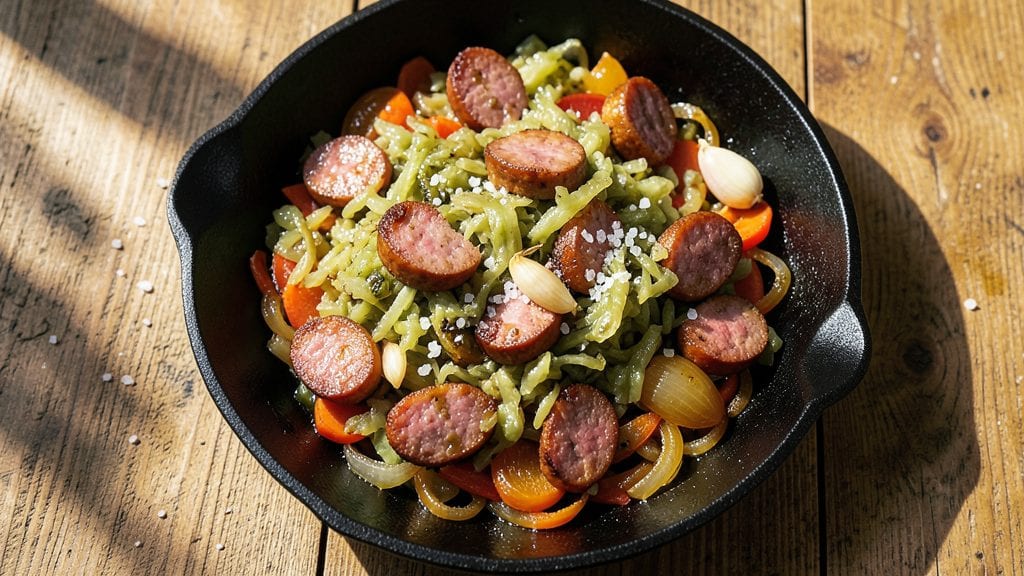
This fried sauerkraut and sausage recipe delivers crispy bites that balance tangy fermented flavors with hearty, savory sausage in every forkful. The secret lies in properly browning the sausage first—creating that satisfying crunch—before combining it with sauerkraut that's tender yet still holds its shape.
I developed this version after years of testing different cooking techniques, and it consistently delivers restaurant-quality results at home.
The beauty of this dish is its simplicity: just a few ingredients work together to create something deeply satisfying. You'll start by pan-frying sliced sausage until golden and crispy, then adding drained sauerkraut to the same pan where it absorbs all those delicious rendered fats.
The result is a dish that's rich, tangy, and packed with texture—crispy sausage meeting tender sauerkraut in perfect harmony.
By the time you're done, you'll have a plate of golden-brown sausage and sauerkraut that's crispy on the edges while remaining tender inside. The tangy flavor of the sauerkraut cuts through the richness of the sausage, creating a balance that's impossible to resist.
This dish comes together in about 30 minutes, making it perfect for weekend breakfasts or hearty weeknight dinners.
Serve it alongside buttered rye bread or fluffy pancakes for a complete meal that feels both comforting and special. The crispy texture and bold flavors make this dish equally at home on a chilly morning or as a satisfying lunch. Let's get cooking!
Ingredients for fried sauerkraut and sausage
Crispy sausage meets tender sauerkraut in this restaurant-style dish—just eight ingredients for bold, tangy-savory flavor.
| Ingredient | Amount | Notes |
|---|---|---|
| Kielbasa Sausage 🌭 | 1 lb | Smoked or fresh, sliced into half-moons |
| Sauerkraut 🥬 | 2 cups | Drained, rinsed if too sour |
| Extra-Virgin Olive Oil 🫒 | 2 tbsp | For frying, high smoke point |
| Carrots 🥕 | 2 medium | Julienned into matchsticks |
| Yellow Onion 🧅 | 1 medium | Thinly sliced |
| Garlic Cloves 🧄 | 3 cloves | Minced for depth |
| Carrots 🥕 | 1 tbsp | Grated for garnish |
| Fresh Thyme Leaves 🌿 | ½ tsp | Chopped, or 0.25 tsp dried |
| Diamond Crystal Kosher Salt 🧂 | 1 tsp | For seasoning |
| Freshly Ground Black Pepper 🌶️ | ½ tsp | Adjust to taste |
| Butter 🧈 | 1 tbsp | Unsalted, for finishing |
| Fresh Parsley 🌿 | ¼ cup | Chopped, for garnish |
The sausage is non-negotiable here—Kielbasa delivers that perfect balance of smokiness and richness. Costco or Whole Foods carry great smoked varieties, but any good-quality sausage works. Look for slices that are about 1/4-inch thick for even browning. The sauerkraut should be bright white, not yellowed, and packed tightly in the jar. If it smells too pungent, rinse it well. For the carrots, organic baby carrots from the store cut the prep time in half—just julienne them while you slice the sausage. The onions? Yellow or red work, but yellow adds a touch more sweetness that pairs beautifully with the tang.
No Kielbasa? Bratwurst or smoked sausage works just as well. The sauerkraut too sour? Mix in a tablespoon of apple cider vinegar to balance it. Short on time? Pre-shredded coleslaw mix (from the bag) replaces the carrots and onion—just drain it thoroughly. The thyme is optional but adds a lovely herbal note. Dried thyme at half the amount works in a pinch. For extra crunch, toss in crispy fried onions at the end. The butter at the finish? Full-fat only—it adds richness that cuts through the tang. Want more heat? A pinch of red pepper flakes with the thyme does the trick.
This dish reheats beautifully—3-4 minutes in a skillet over medium heat. Store leftovers in an airtight container for 3-4 days, but honestly, it's best fresh. The crispy bits lose their magic after a day. For meal prep, cook the sausage and sauerkraut separately, then combine just before serving to keep everything crispy. The garnish of parsley and grated carrots? Toss them in at the very end—they wilt fast if added earlier. Freezes well for up to 3 months if you're planning ahead.
Why You'll Love This Recipe
- One-Pan Magic: I swear by this recipe when I’m too tired to scrub pots—just toss everything (sausage, sauerkraut, onions, carrots) into one skillet with olive oil, and let it sizzle. The onions caramelize right alongside the crispy sausage edges, and the sauerkraut softens into something almost buttery.
- Tangy Crispy Perfection: That first bite? The sausage’s smoky bite cuts through the sauerkraut’s sharp tang, while the onions and carrots add a sweet, caramelized depth. Honestly, the olive oil makes it taste richer than any greasy pan could—like a hug for your taste buds.
- Potluck Star: Between us, this dish always gets raved about at gatherings. It’s hearty enough for a main but light enough for a side, and the flavors hold up in a bowl or straight from the pan. My cousin’s vegetarian friend even asked for seconds—proof it’s not just a meat-and-potatoes crowd pleaser.
- Budget-Friendly Leftovers: I make double batches on Sundays because it’s cheap (sausage and sauerkraut stretch far) and reheats like a dream. The next day, I toss it into eggs for breakfast or pile it on toast with a fried egg—zero waste, maximum flavor.
Step-by-step instructions for crispy fried sauerkraut and sausage
This method delivers perfectly crispy sausage and sauerkraut with that satisfying crunch you crave.
Prepare the Kielbasa and Sauerkraut Base
Slice the 1 lb kielbasa sausage into half-moon pieces about ½-inch thick. Pat the sliced kielbasa dry with paper towels—this ensures maximum crispiness when frying. In a large bowl, combine the 2 cups sauerkraut, 1 tsp diamond crystal kosher salt, and 0.5 tsp freshly ground black pepper. Toss gently to distribute the seasoning evenly. Let the mixture sit for 10 minutes while you prep the vegetables—this allows the sauerkraut to soften slightly and absorb the salt.
Real talk: Don't skip the drying step. Even a little moisture on the kielbasa will prevent that golden, shatteringly crisp crust we're after. The sauerkraut needs time to mellow out too—freshly drained sauerkraut is too sharp and won't caramelize properly.
Sauté the Aromatic Vegetables
Heat the 2 tbsp extra-virgin olive oil in a large skillet over medium-high heat until shimmering. Add the 2 medium carrots (julienned into matchsticks) and 1 medium yellow onion (thinly sliced), cooking for 5-6 minutes until the vegetables soften and begin to caramelize. Stir occasionally to prevent burning—you're looking for a deep golden color here.
After 3 minutes, add the 3 cloves minced garlic and 0.5 tsp chopped fresh thyme leaves. Cook for another 30 seconds until the garlic becomes fragrant and the thyme releases its earthy aroma. This aromatic base forms the flavor foundation for your dish—don't rush it. The garlic should sizzle gently without browning, and the thyme should perfume the entire kitchen.
Fry the Kielbasa Until Crispy
Working in batches if needed, add the sliced kielbasa to the skillet in a single layer. Cook undisturbed for 2-3 minutes per side until golden brown and crispy. You'll know it's ready when the edges develop a deep caramel color and the sausage releases easily from the pan. Transfer the crispy kielbasa to a paper towel-lined plate to drain excess oil.
I press down gently on the kielbasa during the first minute—this prevents it from curling and ensures even contact with the pan. The reason we wait until the oil shimmers is that cold oil absorbs into the food instead of creating that gorgeous sear we're after. If you see the kielbasa browning too quickly, reduce the heat slightly to medium.
Combine and Finish with Butter
Return the skillet to medium heat and add the sauerkraut mixture along with the cooked vegetables. Stir everything together and cook for 4-5 minutes until the sauerkraut begins to break down and release its juices. The mixture should look glossy and slightly sticky—this is when you know it's reaching that perfect texture.
Reduce heat to low and stir in the 1 tbsp unsalted butter. Let it melt completely, then add the crispy kielbasa back to the pan. Toss everything together gently for 1-2 minutes until the kielbasa is heated through and coated in the tangy-savory sauce. The butter adds richness that balances the acidity of the sauerkraut beautifully.
Garnish and Serve Immediately
Transfer the fried sauerkraut and sausage to serving plates. Sprinkle with the 0.25 cup chopped fresh parsley and the 1 tbsp grated carrots for color and freshness. Serve immediately while everything is hot and crispy—this dish tastes best straight from the pan when the kielbasa is still shattering between your teeth.
For maximum crunch, I like to serve this with a dollop of sour cream on top or alongside crusty rye bread to soak up all the delicious juices. The contrast between the crispy sausage, tender sauerkraut, and creamy garnish makes this dish irresistible. Leftovers? Reheat gently in a skillet to restore that crispy texture.
Pro Tips For Making Fried Sauerkraut And Sausage
- Slice Kielbasa Thin: I used to cut kielbasa into thick rounds and wondered why it stayed chewy. Thin slices—about ¼-inch—cook faster and soak up the sauerkraut’s tang better. A sharp knife and steady hand make this easier than it sounds.
- Drain and Rinse Kraut: Skimping here means a watery, bland mess. Drain the sauerkraut in a colander, then rinse it under cold water to strip excess acid. Pat it dry with a towel—wet kraut steams instead of frying.
- Start Sausage Separate: Crowding the pan turns fried into boiled. Sear the kielbasa slices first in olive oil over medium-high heat until golden, then remove them. This guarantees crisp edges before mixing everything together.
- Add Carrots Last: I learned this the hard way—soft carrots ruin the texture. Dice them small (¼-inch cubes) and toss them in only after the kraut and sausage have browned. They’ll cook through in minutes without turning to mush.
Essential equipment for this recipe
Skillet Selection
Your choice of pan makes all the difference for crispy results. I swear by a 12-inch cast iron skillet like the Lodge Pre-Seasoned—it retains heat beautifully and creates that perfect caramelized crust on the kielbasa.
If you don’t have cast iron, a heavy stainless steel skillet (like All-Clad) works too, but preheat it for 5 minutes on medium-high before adding oil. Avoid nonstick—it can’t handle the high heat needed for proper browning. 🔥
Oil Matters
Extra-virgin olive oil is your best friend here, but only if it’s high-quality—brands like California Olive Ranch or Colavita work perfectly. For even better heat resistance, use avocado oil (like Primal Kitchen) or grapeseed oil (such as Annie’s).
These oils have higher smoke points and won’t break down under the high heat. Avoid vegetable oil—it lacks flavor and can make the kielbasa greasy instead of crispy.
Essential Tools
A sharp chef’s knife (like Wüsthof) is a must for cleanly slicing the kielbasa and julienning carrots. I also recommend a pair of tongs (preferably OXO Good Grips) to flip the kielbasa without losing those crispy bits.
For draining excess oil, keep paper towels and a wire rack handy—this prevents soggy sausage. A microplane for grating carrots ensures even, fine shreds that caramelize beautifully. ✨
Optional Upgrades
For next-level results, invest in a meat thermometer (like ThermoWorks Smoke) to check kielbasa internal temp—aim for 160°F for juicy, safe-to-eat sausage. A fine-mesh strainer helps drain sauerkraut thoroughly if it’s particularly watery.
If you love crispy toppings, a small frying pan lets you make quick-pickled red onions (slice onions thin, soak in 1 tbsp vinegar + 1 tsp sugar for 10 minutes) to add brightness. 💡
Heat Control
Medium-high heat is key—too low, and the kielbasa steams instead of crisps. I use a kitchen torch (like Weck) to sear the edges of the kielbasa for extra crispiness if my stovetop isn’t hot enough.
For even cooking, a skillet with sloped sides (like Mauviel M’Cook) helps prevent overcrowding. If your stove has hot spots, rotate the pan occasionally for uniform browning. The goal? Golden, shatteringly crisp edges on every piece of sausage.
Nutrition facts
Frequently asked questions
Can I use any type of sausage for this recipe?
While kielbasa works beautifully, you can substitute with bratwurst, smoked sausage, or even Italian sausage for a different flavor profile. Just ensure the sausage is sliced ½-inch thick for even cooking. Avoid lean sausages—they won't crisp up as well.
How do I make the sauerkraut less sour?
If your sauerkraut tastes too sharp, rinse it under cold water until the liquid runs clear, then drain well. For extra balance, stir in 1 tablespoon apple cider vinegar or a pinch of sugar while cooking. The butter at the end also helps mellow the acidity.
Can I make this dish ahead of time?
Cook the sausage and sauerkraut separately, then store them in airtight containers for 3-4 days. Reheat in a skillet over medium heat for 3-4 minutes to restore crispiness. For best texture, combine them fresh when possible—the crispy bits lose their magic after sitting.
What's the best way to serve this dish?
Pair it with crusty rye bread, buttery mashed potatoes, or fluffy pancakes to soak up the juices. For extra flair, top with a dollop of sour cream or caramelized onions. It's also delicious as a hearty breakfast or lunch on its own.
Why did my sausage turn out greasy instead of crispy?
Skipping the drying step or using too much oil are common culprits. Always pat the sausage dry before cooking and use just 2 tbsp oil for a 12-inch skillet. Cook in batches if needed—overcrowding steams instead of crisps. Medium-high heat is key for that perfect crust.