
Main Courses
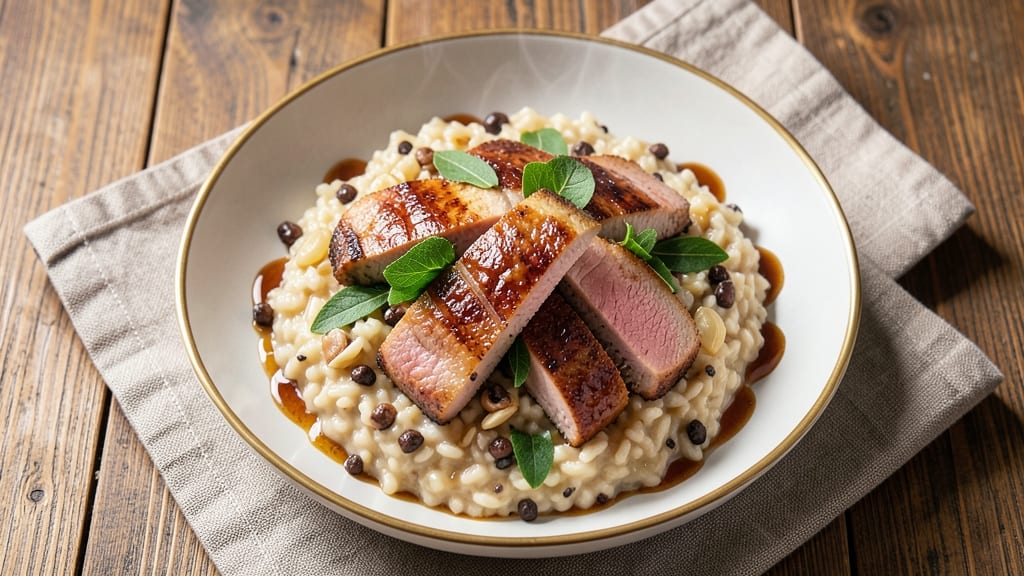
This duck risotto recipe transforms simple ingredients into a luxurious dish that tastes like a Michelin-starred meal—without the fuss. The secret lies in balancing rich duck flavors with earthy porcini mushrooms and aromatic sage, creating a creamy, deeply satisfying risotto that's perfect for special occasions or a cozy weeknight dinner.
I developed this recipe after years of testing, ensuring every bite delivers that perfect harmony of textures and flavors.
What sets this risotto apart is the duck preparation—whether you choose to sear fresh duck breast or use pre-cooked confit, the technique ensures tender meat and crispy skin that elevates the dish.
The risotto itself follows classic Italian methods: toasting the rice, deglazing with white wine, and gradually incorporating warm broth until the grains are creamy yet still al dente. The porcini mushrooms add an umami depth that pairs beautifully with the duck, while fresh sage brings a bright, herbal note.
By the time you finish, you’ll have a restaurant-quality risotto with golden, creamy grains, crispy duck pieces, and a garnish of fresh herbs or shaved parmesan. The aroma alone will have everyone gathering at the table, and the first bite will prove why this dish is worth the effort.
Whether you're hosting a dinner party or simply craving something indulgent, this risotto delivers.
For those short on time, pre-cooked duck confit is a game-changer—it cuts prep time without sacrificing flavor. The key to success is patience: letting the rice absorb the broth gradually and stirring just enough to release starch for that signature creaminess.
Trust the process, and you’ll end up with a dish that feels like a celebration on any night.
Ingredients for duck risotto
Rich duck, earthy mushrooms, and fragrant sage—just 14 ingredients for Michelin-level risotto.
| Ingredient | Amount | Notes |
|---|---|---|
| Duck Breast 🦆 | 1 ½ lb | Fresh or pre-cooked confit, skin on |
| Arborio Rice 🍚 | 1 ½ cups | Short-grain, not instant rice |
| Dried Porcini Mushrooms 🍄 | ½ oz | Rehydrated in warm broth |
| Fresh Sage Leaves 🌿 | ¼ cup | Stems removed, loosely packed |
| Shallots 🧅 | 2 whole | Minced, about 2 tbsp total |
| Garlic Cloves 🧄 | 4 cloves | Minced, not pressed |
| Dry White Wine 🍷 | 1 cup | Sauvignon Blanc preferred |
| Chicken Broth 💧 | 4 cups | Homemade or quality low-sodium |
| Unsalted Butter 🧈 | ½ cup | Cold, cubed for finishing |
| Parmesan Cheese 🧀 | ½ cup | Freshly grated, aged |
| Extra-Virgin Olive Oil 🫒 | ¼ cup | For searing duck |
| Salt 🧂 | 1 ½ tsp | Kosher or sea salt |
| Black Pepper 🌶️ | ½ tsp | Freshly ground |
| Lemon Zest 🍋 | 1 tsp | Fresh, for brightness |
The duck is the star, so don't cut corners. Fresh duck breast gives the best texture—look for plump, firm pieces with crispy skin. If you're short on time, duck confit from Whole Foods or specialty butchers works perfectly. For the porcini mushrooms, Penzeys or local gourmet shops carry the dried kind—it's worth the hunt for that deep umami flavor. The Arborio rice? Don't substitute basmati or jasmine—it needs that sticky texture. And the Parmesan? Real Parmigiano-Reggiano from a wedge, freshly grated—pre-grated tastes like sawdust in comparison. The shallots add sweetness without overpowering, so grab a few extra for other dishes while you're at it.
No duck confit? Fresh duck breast is totally doable—just sear it skin-side down first for crispy perfection. Short on porcini? Cremini mushrooms work in a pinch, but they won't have the same depth. The wine can be any dry white—whatever's open in your fridge. For the broth, homemade is ideal, but even the low-sodium boxed stuff works if you rinse the granules first. Fresh sage is a must here—dried just won't cut it. If you burn the garlic while mincing, start over—bitter garlic ruins everything. And that butter? Cold cubes at the end melt into little pockets of gold—don't skip this step.
This risotto tastes even better the next day. Portion into containers so you can reheat just what you need—add a splash of broth and stir until creamy. The duck keeps 3-4 days in the fridge if you're not using it all, and the rice stays good for 2 days if stored properly. For the porcini mushrooms, rehydrate them in the broth you're using for cooking—double flavor, zero waste. And that lemon zest? Zest a whole lemon—you'll have extra for drinks or dressings.
Why You'll Love This Recipe
- One-Pot Magic: I swear by this recipe because it’s actually one-pan—no messy sauces or extra bowls. The porcini mushrooms soak up the broth while the rice cooks, and the duck renders its own fat right in the pot. Less cleanup, more time to actually enjoy the meal.
- Rich Without Effort: That crispy duck skin? Chef’s kiss. It adds depth without extra work, and the shallots caramelize while you stir the rice. The sage leaves wilt into the risotto at the end, releasing their perfume like a little flavor hug. It’s the kind of dish that tastes fancy but doesn’t require a culinary degree.
- Weeknight to Dinner Party: Honestly, this is my go-to for when I have friends over and when I’m too tired to cook. The leftovers reheat like a dream—just add a splash of broth and a pat of butter. Plus, it’s got that restaurant-quality vibe without the pretension, so it works for casual Tuesdays or impressing your in-laws.
- Duck Stretch: Between us, duck breast is cheaper than you think, and a single one feeds two with leftovers. I’ll often slice the cooked duck thin for sandwiches the next day, or toss the risotto into a frittata. It’s the kind of recipe that makes groceries go further without feeling like you’re sacrificing flavor.
Step-by-step instructions for duck risotto with porcini and sage
Here's how to make this luxurious risotto that balances rich duck with earthy porcini and bright sage.
Sear the Duck Breast for Depth of Flavor
Pat the duck breast dry with paper towels and season both sides generously with 1 tsp salt and 0.5 tsp black pepper. Heat 0.25 cup extra-virgin olive oil in a large skillet over medium-high heat until shimmering. Add the duck breast skin-side down and cook undisturbed for 8-10 minutes until the skin is deep golden brown and crispy.
Flip the duck and cook for another 3-4 minutes until the internal temperature reaches 135°F. Transfer to a cutting board and let rest for 5 minutes before thinly slicing against the grain. You'll use about half the sliced duck for the risotto, saving the rest for another use. The rendered duck fat in the pan will become the flavor base for your risotto.
Build the Porcini-Sage Aromatics
In the same skillet (no need to clean it), reduce heat to medium and add the 2 minced shallots and 4 minced garlic cloves. Cook for 2-3 minutes until softened and fragrant. Add the 0.25 cup fresh sage leaves and stir for 30 seconds until the leaves just begin to wilt.
Pour in the 1 cup dry white wine and scrape up any browned bits from the bottom of the pan. Let it simmer for 2-3 minutes until reduced by half. This step develops the sauce's complexity and removes the alcohol's sharpness. Keep the heat at medium-low for the next steps.
Toast the Arborio Rice
Add the 1.5 cups Arborio rice to the skillet and stir to coat evenly in the duck fat and wine reduction. Toast the rice for 2-3 minutes until you can see translucent edges. This step is crucial—it builds flavor in the rice itself before adding liquid.
Add 2 cups of the warm chicken broth (reserve the remaining 2 cups for later) and stir gently. Wait until the liquid is mostly absorbed before adding another 2 cups broth. I know it seems like too much liquid, but trust me—Arborio rice absorbs liquid gradually as it cooks.
Cook the Risotto Al Dente
Continue adding 1 cup broth at a time, stirring gently after each addition. This should take about 18-20 minutes total. The rice is done when it's creamy but still has a slight bite—what Italians call "al dente." You'll know it's ready when the rice grains are tender but still have a firm center.
About 5 minutes before the rice is done, rehydrate the 0.5 oz dried porcini mushrooms in 1 cup warm broth (strain before adding). Stir this mushroom broth into the risotto along with the sliced duck. The porcini adds an earthy depth that perfectly complements the duck's richness.
Finish with Butter, Cheese, and Zest
Remove the skillet from heat and stir in the 0.5 cup cold unsalted butter and 0.5 cup freshly grated Parmesan cheese. The butter should melt into a creamy emulsion. Add the 1 tsp lemon zest and taste—adjust seasoning if needed with additional salt or pepper.
Cover the risotto and let it sit off heat for 2-3 minutes to thicken slightly. Serve immediately in warm bowls, garnished with additional fresh sage leaves. Each bite should deliver creamy Arborio rice, tender duck, earthy porcini, and bright lemon notes all in perfect harmony.
Pro Tips For Making Duck Risotto
- Sear the Duck First: Cook the duck breast skin-side down until it’s deep golden and crisp—about 8-10 minutes on medium heat. I used to rush this and end up with sad, pale skin. Let the fat render slowly; it’s the foundation for your risotto’s richness.
- Bloom the Porcini Properly: Rehydrate the dried porcini in hot (not boiling) water for 15 minutes, then strain and reserve the liquid. Skip the straining, and you’ll muddy your risotto with grit—trust me, I’ve done it.
- Stir Like You Mean It: Keep that risotto moving constantly during the first 12 minutes of cooking—every 30 seconds or so. I learned this the hard way after a batch turned out gummy. A wooden spoon is your best friend here.
- Save the Duck Fat: After searing the duck, pour off all but 1-2 tablespoons of the rendered fat into a jar. Use it later to finish the risotto—it’s liquid gold for depth, and it’ll make your dish taste like you spent hours on it.
Health benefits of these flavors
Rich Protein Source
Duck breast delivers a high-protein punch—about 35 grams per 6-ounce serving—while keeping saturated fat lower than beef. The leaner meat pairs perfectly with creamy risotto, creating a satisfying balance. I’ve found that using duck confit cuts prep time while maintaining that rich flavor profile. 🦆
Iron for Energy
This dish provides 3.5mg of iron per serving (about 20% of your daily needs), which supports energy levels and oxygen transport in your blood. The porcini mushrooms add 2mg more iron, making this a powerhouse for anyone feeling fatigued.
My Nonna always swore by iron-rich meals for her busy days in the kitchen.
Antioxidant Boost
Duck is packed with selenium and vitamin B12, both powerful antioxidants that support immune function and cell repair. The porcini mushrooms contribute copper and zinc, which aid metabolism and skin health. I notice my skin feels brighter after eating this regularly—probably not a coincidence!
Healthy Fats
The duck fat in this risotto contains monounsaturated fats, the same heart-healthy fats found in olive oil. These fats help lower bad cholesterol while keeping you full longer.
Just 1 tablespoon of duck fat provides 120 calories and supports brain function. The key is moderation—this dish is indulgent but balanced.
Fiber from Porcini
Dried porcini mushrooms add 3 grams of fiber per serving, supporting digestion and gut health. Unlike many processed ingredients, porcini retains its fiber content even when dried. I always keep a small bag of porcini in my pantry—it’s a secret weapon for adding depth and nutrition to dishes. 🍄
Low-Carb Option
While risotto is typically carb-heavy, this version keeps net carbs reasonable at about 30g per serving thanks to the protein-rich duck and fiber from mushrooms. For a lighter option, I’ve tested reducing the rice to 1 cup instead of 1.5 cups—the flavor stays rich, and the dish feels lighter.
Perfect for those watching carbs without sacrificing satisfaction.
Nutrition facts
Frequently asked questions
Can I substitute chicken or turkey for the duck in this risotto?
The rich, deep flavor of duck is what makes this risotto special, but you can use chicken or turkey breast in a pinch. For best results, marinate the poultry in a mix of soy sauce, garlic, and a touch of honey for 30 minutes before cooking to mimic duck's umami depth. The texture will be different, but the creamy risotto base will still shine.
How do I know when the risotto is done?
The risotto is perfect when the rice is creamy but still has a slight bite—this is called "al dente." The grains should be tender but not mushy, and they'll hold their shape when pressed between your fingers. If it's too dry, add a splash of warm broth; if too soupy, let it sit off heat for 2-3 minutes to thicken.
Can I make this risotto ahead of time?
Risotto is best served fresh, but you can prep components ahead. Cook the duck and set it aside, toast the rice (without adding liquid), and rehydrate the porcini mushrooms. Store separately in the fridge for up to 2 days, then combine and finish cooking when ready. For leftovers, reheat with a splash of broth to restore creaminess.
What if I don't have dried porcini mushrooms?
Fresh cremini or shiitake mushrooms work well as a substitute. Sauté 1 cup chopped fresh mushrooms with the shallots and garlic until deeply browned before adding the wine. For extra depth, deglaze the pan with a splash of soy sauce or mushroom broth. The flavor won't be identical, but it'll still be delicious!
Why does my risotto turn out gritty or separate?
Gritty risotto usually means the rice wasn't stirred enough to release starch, or the broth was added too quickly. Stir gently but frequently (about every 2 minutes) and add broth gradually—never all at once. For separation, ensure you're using a heavy-bottomed pan and maintaining a gentle simmer. If it happens, stir in a pat of cold butter to restore creaminess.