
Side Dishes
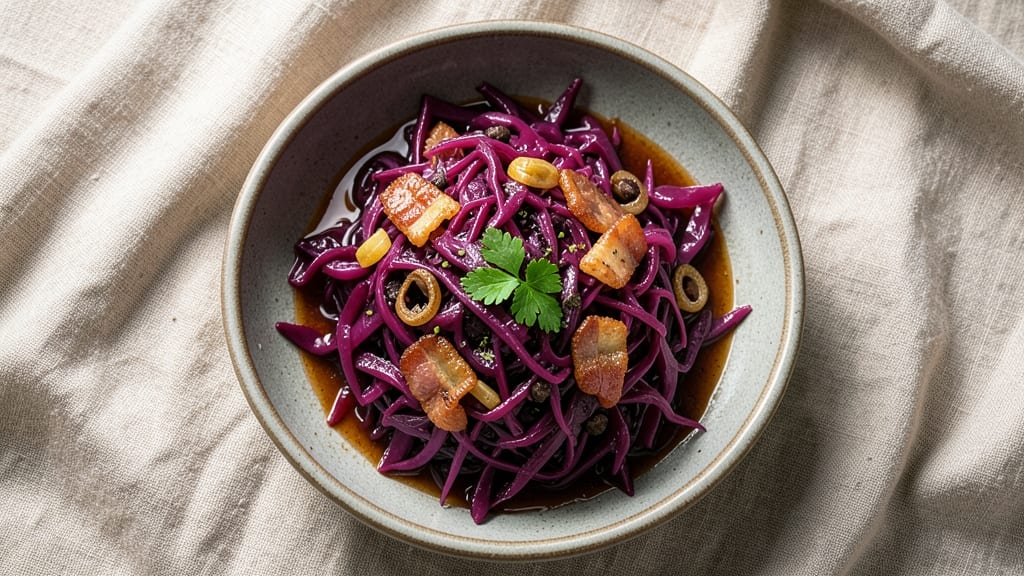
This classic red cabbage recipe transforms humble ingredients into a sweet-tart side dish that elevates holiday tables and weeknight dinners alike. The slow braising process caramelizes natural sugars while preserving the cabbage's vibrant color and satisfying crunch.
I first discovered this technique while cooking for a Thanksgiving crowd—every bite disappeared before dessert was served.
The secret lies in balancing acidity and sweetness through precise timing and ingredient ratios. Red wine vinegar tenderizes the cabbage while brown sugar deepens its natural sweetness, creating a perfect harmony of flavors.
This method yields perfectly braised cabbage with glossy leaves and a texture that's both tender and satisfyingly crisp at the edges.
What makes this recipe truly versatile is its ability to complement both rich and delicate dishes. Serve alongside roasted meats, stuffing, or even as a topping for hearty sandwiches. The caramelized edges and sweet-tart profile make it a crowd-pleaser that transforms simple meals into special occasions.
Ready in about 45 minutes, this dish delivers restaurant-quality results with minimal effort. The slow cooking process allows flavors to develop fully, creating a side dish that's as impressive as it is delicious. Let's get braising!
Ingredients for classic red cabbage
Twelve ingredients transform simple cabbage into restaurant-quality sweet-tart perfection with minimal effort.
| Ingredient | Amount | Notes |
|---|---|---|
| Red Cabbage 🥬 | 1 ½ lb | Fresh head, thinly sliced |
| Yellow Onion 🧅 | 1 whole | Medium size, thinly sliced |
| Red Wine Vinegar 🍷 | ½ cup | Dry variety preferred |
| Light Brown Sugar 🍯 | ½ cup | Packed measurement |
| Water 💧 | 1 ½ cups | Tap or filtered preferred |
| Unsalted Butter 🧈 | 2 tbsp | Cold, cubed for caramel |
| Fresh Bay Leaves 🌿 | 2 whole | Dried as substitute |
| Black Peppercorns 🌶️ | 10 whole | Crushed for depth |
| Diamond Crystal Kosher Salt 🧂 | 1 ½ tsp | Adjust to taste |
| Fresh Thyme Leaves 🌿 | 1 tbsp | Or 1 tsp dried thyme |
| Apple Cider Vinegar 🍏 | 1 tbsp | For brightness |
| Fresh Ginger 🌿 | 1 tsp | Finely grated |
The cabbage is the star—opt for a firm, vibrant head with tightly packed leaves for optimal texture. Whole Foods or local farmers markets carry the freshest varieties, but any grocery store's produce section will work. Thinly slice the cabbage evenly (about 1/8-inch thick) for consistent cooking. Costco sells pre-sliced cabbage in the frozen section if you're short on time, though fresh yields superior results. The onions should be yellow, not red, to prevent color bleeding during braising. Trader Joe's consistently carries high-quality yellow onions at an affordable price.
No red wine vinegar? Apple cider vinegar or balsamic vinegar work as substitutes, though the flavor profile shifts slightly. The brown sugar can be swapped for white sugar or maple syrup, but brown sugar's molasses notes are ideal for caramelization. Fresh thyme is preferred, but dried thyme at one-third the amount suffices in a pinch. For a deeper flavor, toast the black peppercorns in a dry pan for 30 seconds before crushing. Penzeysncy spices offer exceptional quality, but standard grocery store brands perform adequately for this dish. The apple cider vinegar adds brightness—substitute with lemon juice if unavailable, though the cabbage may darken slightly.
Store any leftovers in an airtight container in the refrigerator for up to 5 days. The cabbage continues to develop flavor, making it even more delicious reheated. For longer storage, freeze portions in a single layer before transferring to a sealed bag for up to 3 months. Reheat gently in a skillet with a splash of water to restore moisture. This dish reheats beautifully, making it perfect for meal prep—portion into individual containers for quick weeknight servings.
Why You'll Love This Recipe
- Here’s what sold me: I can make a huge batch, let it cool, and it tastes just as good three days later. Plus, cabbage is dirt cheap—this feeds four for under $5. Stash it in the fridge, reheat, and boom, you’ve got a stress-free meal ready to go.
- Five-Ingredient Magic: I swear by this recipe because it’s the kind of dish where you just simmer and forget—no chopping marathons, no fancy techniques. Shred that cabbage once, dice the onion in two minutes, and toss it all in one pot. The sugar and vinegar do the rest while you’re scrolling through your phone or watching a show.
- Sweet-Tart Balance: Between us, this is the only red cabbage I’ll make—it’s ridiculously good. The brown sugar caramelizes into the cabbage, while the vinegar keeps it bright and tangy. That crisp-tender texture? It’s the kind of bite that makes you want to eat it straight from the pot.
- Holiday Table Star: I pull this out for Thanksgiving, Christmas, and even lazy Sunday dinners. It’s fancy enough for a feast but simple enough for a weeknight. Serve it with roast chicken, sausages, or even just good bread—it’s the perfect side that doesn’t steal the spotlight.
Step-by-step instructions for braised red cabbage
Follow this classic method to achieve tender, sweet-tart cabbage with perfect balance every time.
Prepare the Cabbage and Aromatics
Begin by removing the outer leaves from the 1.5 lb red cabbage and discard any wilted or damaged sections. Quarter the cabbage lengthwise, then slice each quarter into thin wedges—about ¼-inch thick. You should end up with roughly 6 cups of sliced cabbage. Place the slices in a large mixing bowl.
Next, peel and thinly slice the 1 whole yellow onion into half-moons. Add the onion to the cabbage along with the 1 tbsp fresh thyme leaves and the 1 tsp finely grated fresh ginger. Toss everything gently to distribute the thyme and ginger evenly throughout the cabbage. This step ensures the flavors meld perfectly during braising.
Caramelize the Butter and Build the Base
In a large, heavy-bottomed pot with a lid, melt the 2 tbsp unsalted butter over medium heat. Once the butter has fully melted and begins to foam, add the sliced cabbage mixture and stir to coat in the butter. Cook for 5-6 minutes, stirring occasionally, until the cabbage begins to soften slightly and the butter takes on a golden hue.
Add the 10 whole black peppercorns and 2 whole fresh bay leaves to the pot. Stir once more to combine, then pour in the 0.5 cup red wine vinegar. The vinegar will sizzle slightly as it hits the hot pot. This creates a bright, acidic foundation that balances the sweetness later in the process.
Braise Until Tender with Sweet-Tart Balance
Increase the heat to medium-high and add the 0.5 cup light brown sugar and 1.5 cups water. Stir well to dissolve the sugar completely. Bring the mixture to a gentle boil, then immediately reduce the heat to low. Cover the pot with a tight-fitting lid and let it simmer for 45-50 minutes, stirring occasionally to prevent sticking.
After 30 minutes, check the cabbage for tenderness by piercing a slice with a fork. It should slide in easily but still offer slight resistance. If it's not quite tender enough, continue simmering for another 10-15 minutes. The cabbage should be fork-tender with a vibrant color—deep red with hints of green—indicating it's ready.
Finish with Acidic Brightness and Seasoning
Once the cabbage is tender, remove the pot from heat and discard the bay leaves and whole peppercorns. Stir in the 1 tbsp apple cider vinegar and the 1.5 tsp diamond crystal kosher salt. Taste and adjust the seasoning—you may need a touch more salt or vinegar to achieve the perfect sweet-tart balance.
Let the braised cabbage sit covered for 10 minutes off the heat. This resting period allows the flavors to meld completely and the cabbage to absorb all the delicious braising liquid. Serve warm as a side dish or cold as part of a charcuterie board. The texture should be tender yet still hold its shape, with a glossy sheen from the reduced braising liquid.
Pro Tips For Making Classic Red Cabbage
- CUT CABBAGE SMALLER THAN YOU THINK: I learned this the hard way—thin, matchstick slices cook faster and soak up the vinegar and sugar better than big chunks. Aim for 1/4-inch strips; they’ll soften in 20-25 minutes instead of dragging into mush territory.
- SOFTEN ONIONS FIRST: Don’t just toss raw onions into the pot—they’ll sit there like stubborn rocks while the cabbage turns to porridge. Sauté them in a dry pan until translucent (about 5 minutes) before adding to the cabbage. The flavor integrates smoother, and you’ll taste them in every bite.
- STIR THE POT EVERY 5 MINUTES: Skipping this is how you end up with browned bits at the bottom and uneven texture. The sugar caramelizes fast, so give it a quick stir—especially in the first 15 minutes—so nothing sticks or burns. (Yes, even if you’re impatient like me.)
- USE LESS VINEGAR THAN THE RECIPE SAYS: I was skeptical until I tried it: cut the red wine vinegar by 1-2 tablespoons unless you’re aiming for a tangy punch. The cabbage releases its own moisture, and too much acid can make the dish taste sharp instead of balanced. Taste as you go—you can always add more.
Make-ahead tips for this recipe
Prep Ahead Strategy
Slice the 1.5 lb red cabbage and 1 yellow onion up to 3 days in advance and store them separately in airtight containers in the fridge. This saves 15 minutes of prep time when you're ready to cook.
I like to keep the cabbage submerged in cold water until ready to use—it maintains crispness and vibrant color. 🥬
Partial Cooking Method
For ultimate convenience, braise the cabbage halfway—after 25 minutes of simmering—and refrigerate the mixture. When ready to serve, return it to the pot, add ¼ cup water, and simmer uncovered for 15-20 minutes to restore tenderness.
This method works perfectly for holiday prep when you want to serve restaurant-quality cabbage without last-minute stress.
Freezer-Friendly Adaptation
After fully braising, let the cabbage cool completely, then transfer it to freezer-safe containers with 1 inch of headspace. Freeze for up to 3 months.
When reheating, thaw overnight in the fridge, then warm gently in a skillet with 1 tbsp butter and 1 tbsp apple cider vinegar to restore moisture and brightness. The texture remains satisfyingly tender after freezing. ❄️
Make-Ahead Serving Ideas
Use this technique to create meal-prep-friendly sides. Portion the braised cabbage into individual containers with ½ cup portions each. Pair with grilled chicken or roasted potatoes for balanced weeknight meals.
The cabbage reheats beautifully—simply warm in the microwave for 2-3 minutes or on the stovetop with a splash of water to restore its glossy texture.
Flavor Development Timeline
The cabbage continues to improve in flavor for 24 hours after cooking. Store leftovers in the fridge and taste again the next day—you'll notice deeper sweetness and more complex acidity.
For optimal results, make this dish 1 day ahead of serving, especially for holiday meals where flavors need time to meld. The resting period enhances the caramelization process naturally. 💫
Portioning for Crowds
When preparing for gatherings, double the recipe and divide it into quart-sized containers. Label each container with the date and reheating instructions. For a 10-person spread, you'll need about 4 quarts of braised cabbage.
This approach ensures you can focus on other dishes while keeping this crowd-pleaser ready to serve at a moment's notice. 💡
Nutrition facts
Frequently asked questions
Why does this recipe use both red wine vinegar AND apple cider vinegar?
The red wine vinegar provides a deep, complex acidity that enhances the cabbage's natural sweetness during braising. The apple cider vinegar added at the end delivers a bright, tangy finish that cuts through the richness. Together, they create the perfect sweet-tart balance that makes this dish so addictive. Think of it as the dynamic duo of flavor development!
Can I make this recipe without sugar?
Yes, but the flavor profile will change dramatically. The brown sugar is essential for caramelizing the cabbage's natural sugars, creating that signature glossy texture and rich depth. For a sugar-free version, try using 1 extra tablespoon of apple cider vinegar and ½ teaspoon of liquid smoke to compensate for the lost sweetness and complexity. The cabbage will still be tender but with a more pronounced tang.
How do I know when the cabbage is perfectly tender?
Pierce a slice with a fork after 30 minutes of simmering. It should slide in easily with just slight resistance—like a perfectly cooked potato. Overcooking will turn it mushy, while undercooked pieces will still feel firm. The cabbage should maintain its vibrant color with just a hint of green at the edges, indicating perfect tenderness.
What's the best way to reheat leftovers to keep them tender?
Never microwave this dish straight from the fridge—it'll turn rubbery. Instead, transfer to a skillet with 1 tablespoon butter and 1 tablespoon water, cover, and warm on low heat for 5-7 minutes. The steam helps restore moisture and tenderness. For extra flavor, add a splash of apple cider vinegar while reheating. This method preserves the cabbage's satisfying texture perfectly.
Can I substitute white cabbage for red?
Technically yes, but you'll miss the stunning visual impact and slightly sweeter flavor of red cabbage. White cabbage will yield a paler dish with a milder taste. If you must use it, add an extra ½ teaspoon of sugar and 1 extra tablespoon of vinegar to compensate for the flavor difference. The texture will be identical, but the presentation won't be as vibrant.