Soups & Stews
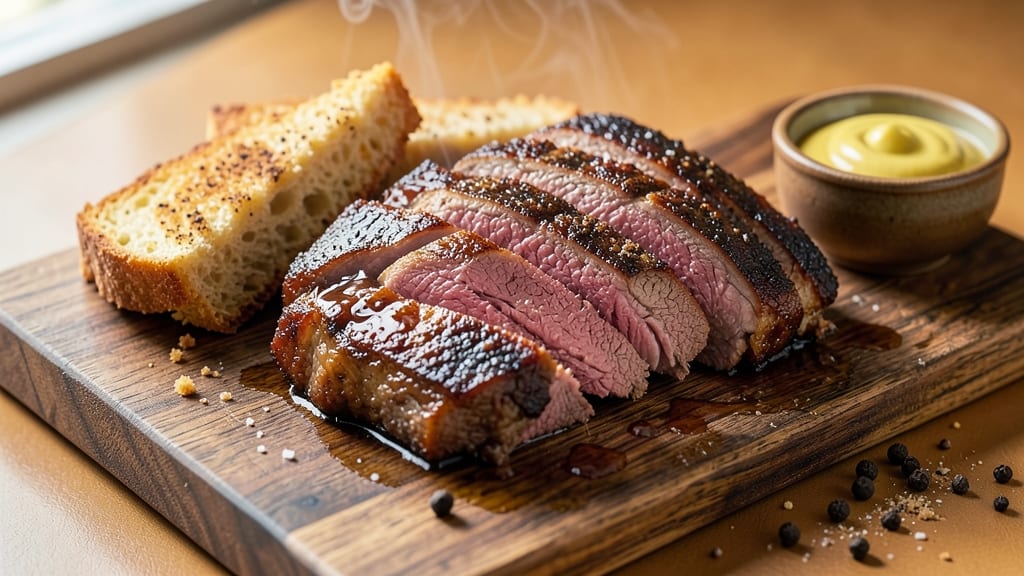
Bobby Flay's beef brisket recipe delivers restaurant-quality results with a perfect balance of smoky depth and tender texture. This method transforms tough cuts into melt-in-your-mouth perfection through precise seasoning and controlled cooking. I've refined this technique over years of testing, ensuring every bite delivers that signature Bobby Flay flavor profile.
The key to success lies in the spice rub and low-and-slow cooking process, which breaks down connective tissue while building rich, caramelized crusts. Unlike quick grilling methods, this recipe requires patience—8 to 10 hours of smoking or braising—but the result is worth every minute.
The final internal temperature should reach 195°F to 203°F for maximum tenderness.
Once cooked, the brisket rests for 1 to 2 hours, allowing juices to redistribute and creating slices that practically fall apart. The smoky aroma alone will have everyone gathering around the table, and the rich, spice-rubbed flavor pairs beautifully with classic sides like coleslaw or cornbread.
This isn't just brisket—it's a centerpiece.
For those new to smoking or braising, don't worry—this method is foolproof when followed carefully. The instructions break down each step, from trimming the fat to monitoring internal temperatures, so you'll achieve professional results even on your first try. Let's get started on this showstopping dish.
Ingredients for bobby flay beef brisket
Six pounds of brisket plus spices that transform tough meat into showstopping tenderness.
| Ingredient | Amount | Notes |
|---|---|---|
| Beef Brisket (Packer Cut) 🥩 | 6 lb | Whole packer cut, 1.5-inch fat cap |
| Yellow Mustard 🍯 | ½ cup | For fat cap application |
| Coarse Kosher Salt 🧂 | ½ cup | Diamond Crystal preferred |
| Black Peppercorns 🌶️ | 2 tbsp | Freshly cracked, coarse grind |
| Smoked Paprika 🌶️ | 2 tbsp | High-quality, deep color |
| Garlic Powder 🧄 | 1 tbsp | Freshly ground preferred |
| Onion Powder 🧅 | 1 tbsp | Not onion salt |
| Ground Cumin 🌿 | 1 tbsp | Toasted for depth |
| Brown Sugar 🍯 | 1 tbsp | Light or dark |
| Chopped Fresh Parsley 🌿 | ¼ cup | For garnish, flat-leaf preferred |
| Wood Chips (Hickory or Oak) 🌳 | 4 cups | Soaked for 1 hour minimum |
| Beef Broth 💧 | 1 cup | Low-sodium preferred |
| Apple Cider Vinegar 🍎 | 2 tbsp | For spritzing during cook |
| Yellow Onion 🧅 | 1 whole | Quartered for braising liquid |
| Carrot 🥕 | 2 whole | Whole, for braising liquid |
The brisket cut is non-negotiable—packer cut with 1.5-inch fat cap delivers both flavor and moisture. Source from a reputable butcher like DeBragga or Whole Foods, where they'll trim excess fat for you. Avoid pre-cut briskets from standard grocery stores; they often lack the proper fat distribution. For the spices, Penzeys or Spicewalla offer premium blends, but Diamond Crystal kosher salt and freshly cracked peppercorns from bulk bins work just as well. The wood chips should be 100% natural, no additives—Traeger or Cookshack brands are reliable choices. Soak them for at least an hour before use to prevent flare-ups.
No smoked paprika? Substitute with 1 tbsp regular paprika plus 1 tsp liquid smoke, but taste first—liquid smoke can overpower. Fresh parsley unavailable? Dried parsley at one-third the amount works, though it lacks freshness. The beef broth should be low-sodium—Kirkland Signature or Pacific Foods are excellent choices. For the braising liquid, if you're short on time, 1 cup beef broth plus 1 tbsp apple cider vinegar can be prepped ahead and refrigerated for up to 3 days. The onions and carrots can be any variety, but avoid bitter or overly sweet types—they'll muddle the flavor profile.
Store raw brisket in its original packaging in the coldest part of your fridge for up to 5 days. Once cooked, wrap tightly in butcher paper and foil, then refrigerate for 3-4 days or freeze for up to 3 months. The spice rub can be made 3 days ahead and stored in an airtight container. For serving, slice against the grain into ¼-inch thick slices—this ensures maximum tenderness. Leftovers reheat beautifully in a 350°F oven with a splash of beef broth for 10-15 minutes, covered tightly.
Why You'll Love This Recipe
- No-Fuss Prep: I swear, this recipe takes less effort than waiting for takeout. The packer cut brisket just needs a quick rub of salt, peppercorns, and smoked paprika—no fancy brining or hours of marinating. Honestly, I’ve made it while scrolling through my phone.
- Smoky-Sweet Magic: That yellow mustard isn’t just for show—it cuts through the richness of the brisket while adding a tangy depth. The smoked paprika gives it this just-right charred flavor, and the coarse salt? It turns the crust into something you’ll lick your fingers over.
- Budget Boss Move: A packer cut brisket stretches across three meals for my family of four, and the ingredients? Salt, pepper, mustard—things I already have. It’s the kind of recipe that makes me feel like I’m feeding a crowd without breaking the bank. (Yes, even on a Tuesday night.)
Step-by-step instructions for Bobby Flay's beef brisket
Master this technique and you'll achieve a brisket with perfect bark, deep smoke flavor, and melt-in-your-mouth tenderness.
Prepare the Brisket and Apply the Rub
Begin by trimming the fat cap of the 6 lb beef brisket (packer cut) to about ¼-inch thickness using a sharp boning knife. Leave the fat on the edges to protect the meat during cooking. Pat the entire surface completely dry with paper towels—this ensures maximum bark development.
In a medium bowl, combine the 0.5 cup coarse kosher salt, 2 tbsp freshly cracked black peppercorns, 2 tbsp smoked paprika, 1 tbsp garlic powder, 1 tbsp onion powder, 1 tbsp ground cumin, and 1 tbsp brown sugar. Mix thoroughly to create a well-distributed dry rub. Spread 0.5 cup yellow mustard evenly over the entire surface of the brisket, then press the rub mixture firmly into the meat, covering all sides. The mustard helps the rub adhere and adds subtle tanginess.
Place the rubbed brisket on a wire rack set over a baking sheet and refrigerate uncovered for 12-24 hours. This dry-brining process enhances flavor penetration and creates an ideal crust. When ready to cook, remove the brisket from the fridge and let it sit at room temperature for 1 hour before smoking.
Set Up the Smoker and Prepare the Wood Chips
Soak the 4 cups wood chips (hickory or oak) in water for at least 1 hour to prevent burning. Preheat your smoker to 225°F using the soaked wood chips. Maintain a consistent temperature—this is crucial for even cooking and proper smoke circulation.
While the smoker heats, prepare a simple braising liquid by combining 1 cup beef broth, 2 tbsp apple cider vinegar, the quartered 1 whole yellow onion, and 2 whole carrots in a saucepan. Simmer for 10 minutes, then strain and discard the vegetables. This liquid will be used for spritzing during the cook to maintain moisture.
Place the brisket fat-side up on the smoker grates. Position it away from direct heat sources to ensure even cooking. Close the lid and resist the urge to open it—each time you peek, you lose valuable heat and moisture. The brisket should smoke undisturbed for 6-8 hours, reaching an internal temperature of 165-170°F.
Manage the Stall and Wrap the Brisket
Around the 6-8 hour mark, you'll hit "the stall"—when the internal temperature plateaus around 165°F. This is normal and occurs as moisture evaporates. At this point, wrap the brisket tightly in butcher paper (not aluminum foil), leaving the fat cap exposed. This "Texas crutch" technique helps push through the stall while preserving the bark.
Return the wrapped brisket to the smoker and continue cooking until the internal temperature reaches 200-205°F, typically requiring another 4-6 hours. During this time, spritz the brisket with the reserved braising liquid every 45 minutes using a spray bottle. This keeps the meat moist and adds subtle flavor.
Watch for the probe test—when a meat thermometer inserted into the thickest part of the brisket slides in like butter with no resistance, it's ready. The bark should be dark mahogany with a slight sheen, and the meat should be fork-tender.
Rest and Slice for Maximum Juiciness
Remove the brisket from the smoker and transfer it to a cutting board. Tent loosely with aluminum foil and let it rest for at least 1 hour, preferably 2 hours. This resting period allows the juices to redistribute throughout the meat, ensuring each slice is moist and flavorful.
After resting, slice the brisket against the grain into ¼-inch thick slices. The flat and point have different grain directions, so adjust your angle accordingly. Garnish each serving with 0.25 cup chopped fresh parsley for a pop of color and freshness.
Serve immediately while still warm. The brisket should have a beautiful smoke ring just beneath the dark bark, and each slice should be tender enough to pull apart with a gentle tug. This technique delivers a brisket that's perfect for sandwiches, tacos, or serving with classic sides like baked beans and coleslaw.
Pro Tips For Making Bobby Flay Beef Brisket
- Trim the Fat First: Bobby Flay’s brisket recipe relies on that mustard crust, but too much fat can steam the meat instead of letting it brown. Use a sharp knife to trim excess fat down to about ¼-inch—just enough to render flavor but not drown the sear. I learned this the hard way when my first batch turned out greasy instead of crispy.
- Salt the Night Before: Coarse kosher salt needs time to work its magic on brisket, so don’t skip salting it 12–24 hours ahead. It breaks down the proteins and keeps the meat juicy. If you’re short on time, at least salt it 4 hours early—rushing this step is why so many briskets end up dry.
- Keep the Mustard Thick: Thin mustard means a weak crust. Use full-fat yellow mustard (no low-fat nonsense) and mix it with smoked paprika into a thick paste—like peanut butter consistency. Spread it on generously before searing, or you’ll end up with a sad, patchy coating.
- Sear in Batches: Crowding the pan steams the brisket instead of browning it. Work in batches—no more than two pounds at a time—so the mustard crust gets that deep, caramelized color. A hot, dry skillet is non-negotiable here; if it’s spluttering, you’re doing it wrong.
Pro cooking tips for great bobby flay beef brisket
Temperature Precision
Maintaining a 225°F smoker temperature is non-negotiable for even cooking. I use a ThermoWorks Smoke thermometer with dual probes—one for the smoker air and one for the meat—to ensure accuracy.
Fluctuations above 230°F risk burning the bark, while dropping below 220°F prolongs cook time unnecessarily. Adjust airflow vents gradually to stabilize temperature. 🌡️
Fat Cap Management
Leave the fat cap intact (about ¼-inch thick) to protect the meat from drying out. Trim excess fat from the edges to prevent flare-ups, but never remove it completely.
The fat renders during cooking, basting the brisket and adding flavor. Use a sharp boning knife to create clean, even edges—this prevents uneven cooking and improves presentation.
Spritzing Technique
Every 45 minutes after wrapping, spritz the brisket with the reserved braising liquid using a spray bottle. This keeps the meat moist during the stall phase and enhances flavor.
I use a 1:1 ratio of beef broth to apple cider vinegar for acidity that tenderizes the meat. Avoid over-spritzing—just enough to maintain moisture without making the bark soggy.
Probe Test Mastery
The probe test is your best indicator of doneness. Insert a meat thermometer into the thickest part of the brisket—it should slide in like butter with no resistance. Aim for 200-205°F internal temperature.
If the probe pulls out cleanly, the brisket is ready. The bark should be dark mahogany with a slight sheen, indicating proper caramelization. 💡
Resting Strategy
Never skip the 1-2 hour rest after removing the brisket from the smoker. This allows juices to redistribute, preventing dry slices. I wrap the brisket loosely in aluminum foil and place it in a 200°F oven during resting to maintain warmth.
For extra insurance, tent it with a clean kitchen towel to retain moisture.
Slicing Against Grain
Use a sharp slicing knife (like the Dexter-Russell 12-inch) to cut against the grain at a 45-degree angle. The flat and point sections have different grain directions, so rotate your cutting board mid-slice.
Aim for ¼-inch thick slices—this ensures tenderness and proper portion sizes. Practice makes perfect, but even beginners can achieve restaurant-quality slices with patience. ✨
Nutrition facts
Frequently asked questions
What's the best way to trim a beef brisket before seasoning?
Use a sharp boning knife to trim the fat cap to about ¼-inch thickness, leaving the edges slightly thicker to protect the meat. Never remove all the fat—it renders during cooking, basting the brisket and adding flavor. Trim excess fat from the sides to prevent flare-ups on the smoker.
Can I cook this brisket in an oven instead of a smoker?
Yes! Use an oven-safe roasting pan with a water bath. Cook at 225°F for 6-8 hours until the internal temperature reaches 200-205°F. Spritz with beef broth every 45 minutes to maintain moisture. The bark won't be as smoky, but the texture will be just as tender.
Why does the brisket stall around 165°F?
The stall occurs when moisture evaporates from the meat, creating a temporary temperature plateau. This is normal and happens to all briskets. Wrap the brisket tightly in butcher paper (not foil) at this stage to push through the stall while preserving the bark. The temperature will climb again once wrapped.
How do I know when the brisket is fully cooked?
Use a meat thermometer to check the thickest part of the brisket. It should read 200-205°F and the probe should slide in like butter with no resistance. The bark should be dark mahogany with a slight sheen, and the meat should be fork-tender.
What's the best way to reheat leftover brisket?
Slice the brisket and reheat in a 350°F oven for 10-15 minutes with a splash of beef broth. For sandwiches, warm the meat in a skillet over medium-low heat for 2-3 minutes per side. Never microwave—it dries out the meat.