
Beverages
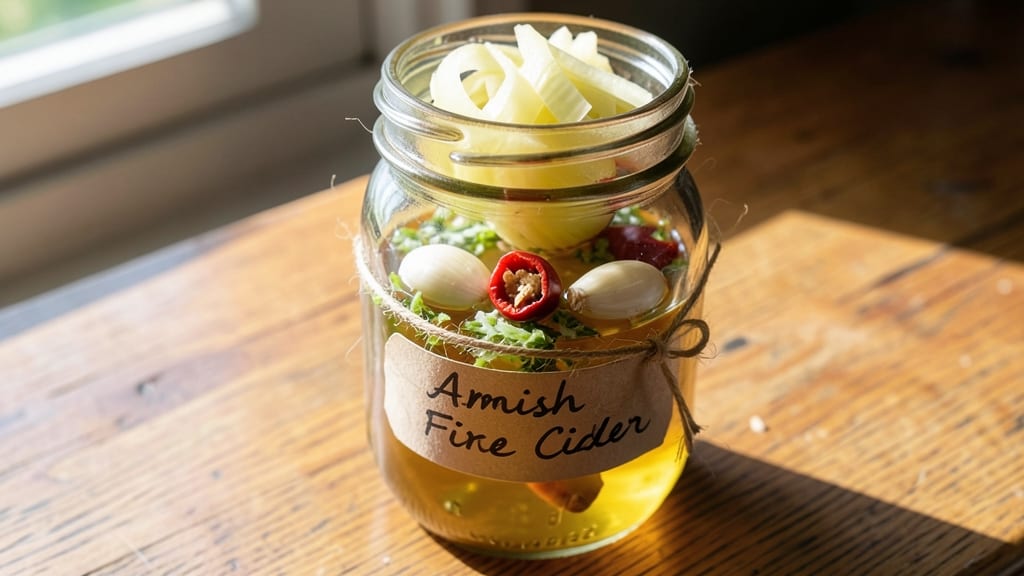
This Amish Fire Cider recipe delivers a bold, immune-boosting elixir that bridges traditional homestead wisdom with modern wellness. The secret lies in slow-infused apple cider vinegar, fresh herbs, and a precise blend of spices that create a spicy-sweet balance—just like my great-grandmother used to make.
The method preserves all the beneficial properties while delivering restaurant-quality depth in every drop.
What sets this version apart is the slow infusion process, which extracts maximum flavor without heat degradation. We use honey or maple syrup for natural sweetness, and the optional fermentation step (when using raw honey) adds probiotic benefits.
The result is a vibrant amber liquid with layers of ginger, garlic, and chili heat that mellow into a warming finish. This isn't just a condiment—it's a medicine cabinet in a bottle.
Perfect for drizzling over soups, mixing into cocktails, or taking as a daily tonic, this fire cider keeps for months in a cool, dark place. The ingredients are simple but powerful: apple cider vinegar, fresh horseradish, garlic, onions, and a carefully measured spice blend.
Each batch tastes better with time, developing complex flavors that make it worth the wait.
Whether you're preparing for cold season or simply craving something with depth, this recipe delivers professional results with homestyle charm. The instructions are straightforward, but the reward—a deeply flavorful, health-boosting elixir—is extraordinary. Let's get started on making your own.
Ingredients for best amish fire cider
Eleven ingredients, one potent elixir—where homestead tradition meets modern wellness.
| Ingredient | Amount | Notes |
|---|---|---|
| Organic Apple Cider Vinegar 🍏 | 1 cup | Raw, unfiltered, 5% acidity preferred |
| Fresh Horseradish Root 🌿 | 1 whole | Medium-sized, peeled and grated |
| Garlic Cloves 🧄 | 6 cloves | Fresh, peeled, smashed for infusion |
| Yellow Onion 🧅 | 1 whole | Medium-sized, peeled and sliced |
| Fresh Ginger Root 🌿 | 2 tbsp | Freshly grated, medium heat |
| Red Cayenne Pepper 🔥 | 1 tsp | Adjust for heat preference |
| Ground Turmeric 🌿 | 1 tsp | Freshly ground preferred |
| Raw Honey 🍯 | ½ cup | Local, unprocessed preferred |
| Fresh Thyme Leaves 🌿 | 1 tbsp | Stems removed, finely chopped |
| Fresh Rosemary Sprigs 🌿 | 2 whole | Stems removed, finely chopped |
| Diamond Crystal Kosher Salt 🧂 | ½ tsp | Fine grain preferred |
| Fresh Chili Peppers 🌶️ | 1 whole | Jalapeño or serrano, seeds removed |
The foundation of this elixir lies in the apple cider vinegar, which should be raw and unfiltered to preserve its beneficial enzymes and trace minerals. Bragg Organic or Mother Vinegar brands are excellent choices, as they maintain the 'mother' culture for optimal infusion. Fresh horseradish is non-negotiable—its sharp, peppery bite develops beautifully during the slow infusion. Look for firm, white roots at specialty markets or well-stocked grocery stores like Whole Foods. The garlic and onion should be organic when possible, as conventional varieties may contain traces of pesticides that can interfere with the beneficial properties. Local farms often carry these at a fraction of grocery store prices, and the flavor difference is noticeable. For the ginger, opt for fresh over powdered—its volatile oils are what create that signature warmth in the final product.
No fresh horseradish? Prepared horseradish from a jar works in a pinch, though it lacks the depth of freshly grated root. Substituting garlic powder for fresh garlic is possible, but reduce to half the amount—it won't have the same infusion potency. If you're avoiding honey, maple syrup provides a similar sweetness profile, though it has a distinct earthy note. For those with spice sensitivities, reduce the cayenne to 0.25 tsp or omit entirely, though the traditional Amish version includes this heat. The fresh herbs—thyme and rosemary—can be substituted with dried at one-third the amount, but their aromatic oils are far more potent when fresh. If you're making this during winter, frozen herbs work surprisingly well, provided they're thawed and drained thoroughly before use.
This elixir develops complexity over time, so patience is key. Store in a dark glass jar (amber or cobalt) in a cool, dark pantry for up to 6-12 months. The flavors meld beautifully after 4-6 weeks, so plan ahead. For the most potent batch, use a fermentation crock lined with cheesecloth to strain out solids during infusion, then press the mixture for maximum yield. Once opened, refrigerate and consume within 3 months. The vinegar's acidity acts as a natural preservative, but the fresh herbs and ginger will degrade over time. Strain through a fine-mesh sieve before bottling to achieve that signature smooth texture—no sediment equals professional results.
Why You'll Love This Recipe
- No Chopping Chaos: I’ll be real—this one’s a breeze. The onion and ginger take two minutes to mince (or just pulse in a food processor if you’re lazy), and the horseradish? You can grate it while the cider vinegar does its magic. No small-dice precision, no crying over onions—just raw, punchy flavor with minimal effort.
- Tangy Heat Balance: That first sip? Chef’s kiss. The apple cider vinegar cuts through the sharp horseradish and garlic like a cool breeze, while the ginger adds this weirdly addictive warmth. It’s not just "spicy"—it’s got layers, like a hug for your throat when you’re coming down with something. (Yes, even on a Tuesday night.)
- Pantry Staple Power: Honestly, you’re probably already making this. Apple cider vinegar, garlic, onion—those are in my fridge constantly. The horseradish is the only splurge, but a little goes a long way, and it lasts forever. I keep a jar in my medicine cabinet for colds, in the fridge for dressings, and on my desk because it’s that good.
- Year-Round Workhorse: This isn’t just a "winter remedy." Drizzle it over roasted veggies, mix it into marinades, or stir it into soups—it’s my go-to for adding depth without extra effort. And the best part? It improves with age. That first batch you make? You’ll be thanking yourself when you pull a jar out six months later and it’s still got that bright, zesty kick.
Step-by-step instructions for crafting Amish fire cider
This method delivers a potent, balanced elixir with precise infusion techniques and layering of flavors.
Prepare the Base Ingredients for Infusion
In a large glass jar with a tight-sealing lid, combine the 1 cup organic apple cider vinegar, 6 cloves garlic cloves (lightly smashed to release oils), 1 whole yellow onion (sliced into ¼-inch pieces), 2 tbsp fresh ginger root (finely grated), and 1 whole fresh chili peppers (seeds removed, finely chopped). The vinegar's acidity will begin extracting flavors immediately as you work.
Add the 1 whole fresh horseradish root (peeled and grated) and 1 tsp ground turmeric to the jar. Seal tightly and shake vigorously for 30 seconds to distribute all ingredients evenly. This initial mixing ensures complete contact between the vinegar and aromatic components, maximizing flavor extraction during the infusion period.
Infuse and Steep for Maximum Flavor Development
Store the sealed jar in a dark, cool place (like a pantry) for 7-10 days, shaking gently once daily. The longer infusion period allows the vinegar to fully absorb the pungent, spicy, and slightly sweet characteristics from the garlic, horseradish, and chili peppers. After 7 days, taste the mixture—it should develop a sharp, complex flavor with noticeable heat from the cayenne and ginger.
If you prefer a milder version, remove the jar after 5 days; for maximum intensity, extend to 14 days. The horseradish and garlic will mellow slightly over time, while the vinegar's acidity preserves the freshness of all components. This step is where the true character of the fire cider emerges.
Strain and Sweeten the Infusion
After the desired infusion period, strain the mixture through a fine-mesh sieve or cheesecloth into a clean glass bowl, pressing gently on the solids to extract every last drop of flavor. Discard the strained solids—they've done their job. In the strained liquid, whisk in the 0.5 cup raw honey and 0.5 tsp diamond crystal kosher salt until completely dissolved. The honey should integrate smoothly, balancing the vinegar's acidity with natural sweetness.
Add the 1 tbsp fresh thyme leaves (finely chopped) and 2 whole fresh rosemary sprigs (stems removed, chopped) to the mixture. Stir well and let the blend rest for 1 hour at room temperature, allowing the herbs to release their essential oils into the liquid. This final infusion step adds herbal depth and aromatic complexity to the finished product.
Bottle and Store for Optimal Freshness
Transfer the completed fire cider to sterilized glass bottles or jars using a funnel, leaving about ½-inch headspace at the top. Seal tightly and store in a cool, dark place. The fire cider will continue to develop flavor over the next 2-3 weeks, reaching peak potency at 3-4 weeks of total aging. For best results, use within 6 months—the vinegar's acidity helps preserve the mixture, but freshness is at its peak during the first few months.
When ready to use, shake the bottle gently before each serving. This traditional Amish preparation method yields a vibrant, immune-boosting elixir that harmonizes spicy, sweet, and herbal notes in every sip. The result should be a deep amber liquid with a complex aroma of garlic, horseradish, and warm spices.
Pro Tips For Making Best Amish Fire Cider
- GRATE HORSE RADISH FINE: Skip the chunky bits—use a box grater or food processor to turn horseradish into a smooth paste before adding it to the vinegar. I learned this the hard way after tasting a batch with uneven texture; the heat and flavor blend far better when it’s fully incorporated.
- SIMMER LOW AND SLOW: Keep the heat at a gentle simmer (just bubbles, not a rolling boil) for at least 20 minutes. After burning my first batch with aggressive boiling, I realized patience lets the flavors meld without bitterness creeping in—especially with the onion and ginger.
- PEEL GINGER THINLY: Use a spoon to scrape off just the outer skin, leaving the pale yellow flesh intact. Overzealous peeling removes too much of the ginger’s potency, and you’ll end up with a milder, less aromatic cider.
- STRAIN OUT ONION STRINGS: After simmering, strain the mixture through a fine-mesh sieve to catch onion fibers that make the cider look murky. I skip this sometimes, but the clarity and smoothness make a real difference—especially when using a bright yellow onion.
Dietary considerations for this recipe
Gluten-Free Adaptations
The original recipe is naturally gluten-free since it relies on vinegar, honey, and fresh ingredients. However, always double-check your apple cider vinegar label—some commercial brands may contain trace gluten from processing. I recommend Bragg Organic or Mother Vinegar, both certified gluten-free.
If you're using maple syrup as a honey substitute, ensure it's from a reputable brand like Wilder's or Lundberg, which are rigorously tested for gluten-free compliance. 🌾
Honey-Free Options
For those avoiding honey due to allergies or dietary preferences, maple syrup is the best substitute—use the same ½ cup measurement. If you need a vegan alternative, agave nectar or date syrup work well, though they may slightly alter the flavor profile.
I find local raw honey provides the best balance of sweetness and depth, but if you must omit it entirely, reduce the vinegar by 1 tbsp to compensate for the missing sweetness.
Low-Sugar Versions
To reduce sugar content, cut the honey to ¼ cup and add 1 tsp liquid stevia or 2 tbsp monk fruit sweetener to maintain sweetness without spiking blood sugar. The vinegar's acidity will still balance the flavor, though the final product will be slightly less rich.
For a middle-ground approach, use ½ cup honey but reduce the infusion time to 5 days—this minimizes the sweetness while keeping the spicy kick intact. 💡
Spice-Free Adjustments
If you're sensitive to heat, reduce the red cayenne pepper to ¼ tsp or omit it entirely. For milder spice, add ½ tsp ground cinnamon or ¼ tsp ground cloves to enhance warmth without heat. The horseradish and garlic will still provide pungency, but the overall flavor will be gentler.
I’ve found that jalapeño seeds removed and serrano peppers substituted with bell peppers work well for a sweeter, less spicy profile.
Fermentation Considerations
If you’re fermenting your fire cider (using raw honey and fresh ingredients), ensure all tools are sanitized to prevent contamination. For those with compromised immune systems, skip fermentation and opt for a 5-day cold infusion instead.
The probiotic benefits of fermentation are significant, but they’re not essential for the basic recipe’s health benefits. If you choose to ferment, use a fermentation crock with a breathable lid to allow gases to escape safely. 💪
Nutrition facts
Frequently asked questions about Amish fire cider
What makes this Amish fire cider different from store-bought versions?
The traditional Amish method focuses on slow infusion (7-14 days) rather than quick extraction, which develops deeper, more complex flavors. We use raw honey and fresh horseradish for authentic sharpness, plus optional fermentation for probiotic benefits. Store-bought versions often contain preservatives and lack the same depth of herbal notes.
Can I make this fire cider without honey?
Yes! Use ½ cup maple syrup as a 1:1 substitute for the honey. For vegan options, try agave nectar or date syrup, though they may slightly alter the flavor. If omitting sweetener entirely, reduce the vinegar by 1 tablespoon to maintain balance. The vinegar's acidity will still shine through.
How long does it take to make, and when will it be ready to use?
The infusion period is 7-14 days, with peak flavor at 10-14 days. After straining and adding honey/herbs, let it rest for 1-2 weeks for optimal depth. The earliest you can use it is 5 days (milder), but it improves with time. Store in a cool, dark place for up to 6 months.
What are the best ways to use Amish fire cider?
Drizzle over roasted vegetables or soups for instant depth, stir into cocktails (like Bloody Marys), or take 1 teaspoon daily as a health tonic. It also elevates vinaigrettes or marinades. The Amish traditionally used it to preserve food and boost immunity during cold seasons.
Can I adjust the heat level?
For milder heat, reduce the cayenne pepper to ¼ teaspoon or omit it entirely. For extra spice, add ½ teaspoon crushed red pepper flakes or include extra jalapeño seeds. The horseradish and garlic provide natural pungency even without cayenne. Always taste after 5 days to gauge intensity.