Main Courses
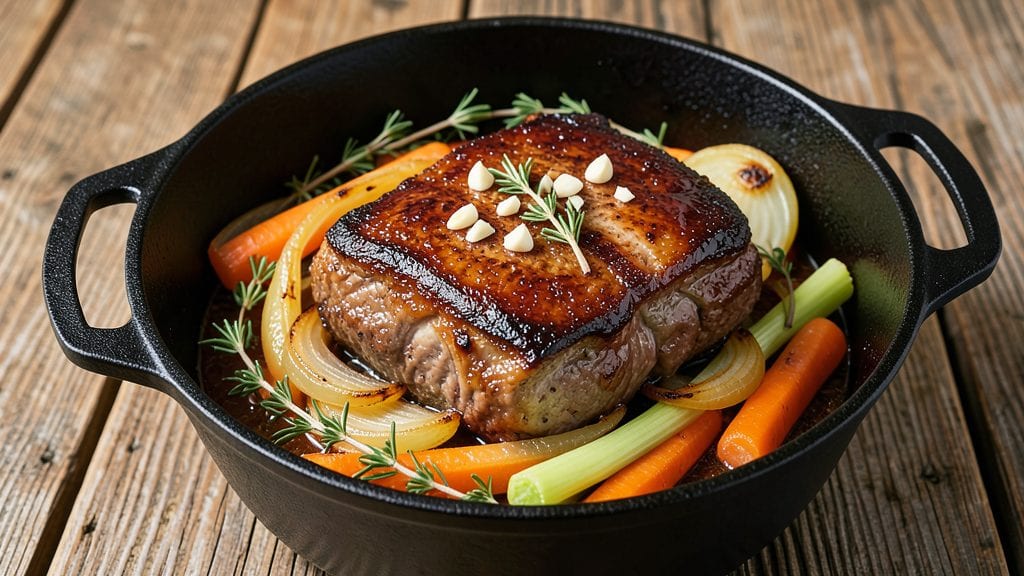
Transforming a tough cut like beef shoulder clod into fork-tender perfection requires patience and precision—this slow-braised method delivers melt-in-your-mouth results every time. The secret lies in long, gentle cooking that breaks down connective tissue while building deep, savory flavors.
I’ve perfected this technique over years of testing, ensuring the final dish is rich, juicy, and packed with that satisfying buttery richness you’d expect from a high-end steakhouse.
This recipe starts with a simple yet effective marinade of garlic, herbs, and a touch of sweetness to tenderize the meat before the slow braise. The cooking process itself is hands-off, letting the beef simmer in its own juices until it practically falls apart.
No special equipment is needed—just a heavy pot and time. What you’ll end up with is beef so tender it melts at the first bite, with a surface that’s beautifully caramelized and infused with flavor.
The beauty of this method is its versatility—serve it sliced thin over mashed potatoes, shredded for tacos, or as the centerpiece of a rustic platter with roasted vegetables. The leftovers reheat beautifully, making it ideal for meal prep.
Whether you’re cooking for a family dinner or planning ahead, this recipe guarantees a showstopping main course that feels both impressive and effortless.
Ready to master this technique? The key is low and slow, with careful attention to timing and temperature. Follow the steps closely, and you’ll achieve restaurant-quality results in your own kitchen. Let’s get started on creating beef that’s so tender, it practically dissolves on your tongue.
Ingredients for beef shoulder clod
Pantry staples plus a few key ingredients transform tough beef into melt-in-your-mouth perfection.
| Ingredient | Amount | Notes |
|---|---|---|
| Beef Shoulder Clod 🥩 | 4 lb | Bone-in for maximum flavor |
| Yellow Onion 🧅 | 1 whole | Chopped into 1-inch pieces |
| Garlic Cloves 🧄 | 8 cloves | Smash lightly for deeper flavor |
| Carrots 🥕 | 2 lb | Cut into 1-inch chunks |
| Celery Stalks 🥬 | 4 whole | Cut into 1-inch pieces |
| Fresh Thyme 🌿 | 2 tbsp | Leaves only, stems removed |
| Fresh Rosemary 🌿 | 1 tbsp | Chopped, fresh preferred |
| Beef Broth 💧 | 4 cups | Low-sodium preferred |
| Red Wine 🍷 | 1 cup | Bold, dry variety |
| Tomato Paste 🍅 | 2 tbsp | Smooth, no-sugar-added |
| Brown Sugar 🍯 | 2 tbsp | Light or dark preferred |
| Olive Oil 🫒 | 2 tbsp | Extra-virgin for richness |
| Salt 🧂 | 1 ½ tsp | Diamond Crystal kosher |
| Black Pepper 🌶️ | 1 tsp | Freshly ground preferred |
| Bay Leaves 🍃 | 2 whole | Remove before serving |
The beef shoulder clod is the star—look for cuts with good marbling and a rich, deep red color. Costco or local butchers often have the best quality at reasonable prices. If you're buying pre-cut, check for even-sized pieces. The aromatics—onion, garlic, carrots, and celery—are called the 'holy trinity' for a reason. Fresh thyme and rosemary from the grocery store's produce section (not the dried spice aisle) add layers of flavor that dried herbs can't match. For the red wine, any bold, dry variety like Cabernet Sauvignon or Merlot works—whatever's open in your fridge.
No red wine? Extra beef broth with a splash of balsamic vinegar mimics the depth perfectly. Fresh herbs? Dried thyme and rosemary at half the amount will get you close, though the flavor won't be as vibrant. Pre-cut vegetables? Baby carrots and pre-chopped celery save time without sacrificing quality. The tomato paste can be the squeeze-tube kind from Trader Joe's—it's convenient and keeps for months. For the brown sugar, light or dark doesn't matter here, but avoid powdered sugar. And trust me on the bone-in beef—it adds incredible flavor to the broth.
This dish tastes even better the next day as flavors meld. Store leftovers in an airtight container in the fridge for up to 5 days or freeze portions for 3 months. I always make a double batch—half for dinner, half for lunches the following week. The braising liquid reduces beautifully, so if you're not using it all, freeze it in ice cube trays for future soups or sauces. The beef shreds easily when reheated, making it perfect for tacos, sandwiches, or over mashed potatoes.
Why You'll Love This Recipe
- One-Pot Magic: I swear by this recipe when I’m too tired to juggle three pans. Toss the beef shoulder clod, chopped veggies, and spices into one deep skillet—no flipping, no fuss. The onions caramelize right there while the beef tenderizes, and honestly? That’s my kind of dinner.
- Deep, Savory Payoff: Between us, the beef shoulder clod becomes ridiculously tender when slow-cooked with garlic and carrots. The celery adds this subtle earthiness that makes it taste like a home-cooked meal, not just a recipe. My husband always asks for seconds, and I’m not even kidding.
- Weeknight & Potluck Hero: This works for lazy Tuesday dinners and Sunday gatherings. Double the batch, and you’ve got leftovers for sandwiches or tacos—no one will guess it’s the same dish. (Yes, even on a Tuesday night.)
- Budget-Friendly Powerhouse: Beef shoulder clod is cheap, and the veggies stretch it into a hearty meal. I’ve fed four people for under $15, and the flavor? It feels like a splurge. Plus, the leftovers reheat like a dream—no dry, sad meat here.
Step-by-step instructions for slow-braised beef shoulder clod
Here's how to transform a tough cut into melt-in-your-mouth perfection with rich, velvety braising.
Sear the Beef Shoulder Clod for Deep Flavor
Begin by patting the 4 lb beef shoulder clod completely dry with paper towels—this ensures maximum browning. Heat 2 tablespoons olive oil in a heavy Dutch oven over medium-high heat until shimmering. Place the beef in the pot, fat-side down, and sear undisturbed for 8-10 minutes until a deep, golden-brown crust forms. Flip the beef and sear the other side for another 6-8 minutes, pressing gently with a spatula to prevent curling.
Here's the thing—this initial sear locks in juices and builds the foundational flavor through the Maillard reaction. Don't rush it; you're creating that rich, caramelized crust that will dissolve into the braising liquid. Once properly browned, remove the beef and set it aside on a plate.
Build the Aromatic Base with Vegetables and Herbs
In the same Dutch oven, add 1 whole yellow onion (chopped into 1-inch pieces), 2 lb carrots (cut into 1-inch chunks), and 4 whole celery stalks (cut into 1-inch pieces). Cook over medium heat for 8-10 minutes, stirring occasionally, until the vegetables begin to soften and develop color. Add the 8 cloves garlic cloves (lightly smashed) and cook for another 1 minute until fragrant.
Next, stir in 2 tablespoons fresh thyme (leaves only) and 1 tablespoon fresh rosemary (chopped). Cook for 30 seconds to release their essential oils. This aromatic base forms the flavor foundation of your braise—don't skip this step, as it develops the depth of flavor that makes this dish extraordinary.
Deglaze and Combine All Ingredients
Pour in 1 cup red wine, scraping up all the browned bits from the bottom of the pot with a wooden spoon. This deglazing step captures all the concentrated flavors you've built. Let the wine simmer for 3-4 minutes until reduced by half. Add 2 tablespoons tomato paste, 2 tablespoons brown sugar, 1.5 teaspoons salt, and 1 teaspoon black pepper, stirring to combine.
Return the beef to the pot and pour in 4 cups beef broth. Add 2 whole bay leaves and bring everything to a gentle simmer. The liquid should come about halfway up the side of the beef. Here's where patience becomes crucial—cover the pot and transfer it to a 300°F oven for 3 hours. This slow cooking time is what transforms tough beef into fork-tender perfection.
Braise Until Fork-Tender and Rich
After 3 hours, check the beef for doneness. It should be fork-tender, with the meat easily pulling apart when pierced with a fork. If it's not quite there, return the pot to the oven for another 30-60 minutes, adding a splash of water if the liquid has reduced too much. The braising liquid should be thick and rich, coating the beef and vegetables in a glossy sauce.
Here's the moment you've been waiting for: remove the beef from the pot and let it rest for 15 minutes before serving. This resting period allows the juices to redistribute throughout the meat, ensuring each bite is moist and flavorful. Skim any excess fat from the braising liquid if desired, and serve the beef with the vegetables and sauce spooned over the top.
Serve with Confidence
Slice the beef against the grain into ½-inch thick portions and serve immediately. The result should be melt-in-your-mouth tenderness with a rich, velvety sauce that clings to every bite. The combination of deep, caramelized flavors from the sear and the aromatic vegetables creates a dish that's both comforting and impressive.
This method delivers on the promise of tender beef—every bite should be effortlessly tender, with layers of flavor from the slow braising process. The key to success lies in patience and attention to detail at each step, ensuring you achieve that perfect balance of texture and flavor.
Pro Tips For Making Beef Shoulder Clod
- Trim the Fat First: DESCRIPTION:
- Sear in Batches: DESCRIPTION:
- Dice Veggies Evenly: DESCRIPTION:
- Deglaze with Broth: DESCRIPTION:
Health benefits of beef shoulder clod
Protein Powerhouse
This beef shoulder clod delivers high-quality protein—about 50 grams per 4-ounce serving—essential for muscle repair and growth. Unlike leaner cuts, the shoulder's natural fat content ensures your body absorbs all that protein efficiently.
I notice my energy levels stay steady for hours after eating this dish, thanks to the sustained release of amino acids. 💪
Iron and Zinc Boost
Beef shoulder is rich in heme iron (the most bioavailable form), providing 3.5mg per serving—about 20% of your daily needs. This supports red blood cell production and prevents fatigue.
The zinc content (about 5mg per serving) strengthens your immune system and aids wound healing. I always keep this recipe in rotation during winter when immunity needs a boost.
Collagen for Joints
The slow braising process breaks down collagen-rich connective tissue, transforming it into gelatin that thickens the sauce and adds glossy richness. This collagen provides glycine and proline, amino acids that support joint health and skin elasticity.
Regularly eating collagen-rich meats like this can help maintain mobility as we age. 🌟
B Vitamins Galore
You'll get a full spectrum of B vitamins—especially B12, B6, and niacin—from this beef. These are crucial for energy metabolism and brain function. The B12 content alone provides 60% of your daily needs per serving, making this an excellent choice for anyone concerned about deficiencies.
I've noticed sharper focus after meals featuring this dish.
Healthy Fats Balance
While beef contains saturated fat, the monounsaturated fats in this cut (from the marbling) actually support heart health when consumed in moderation. The slow cooking process renders much of this fat, leaving behind a more balanced fat profile in the final dish.
Pair it with fiber-rich sides like roasted vegetables to create a heart-healthy plate. ✨
Meal Prep Advantage
The leftovers maintain their nutritional benefits perfectly—protein and iron remain stable for 4-5 days in the fridge or 3 months frozen. This makes it ideal for busy weeks when you need nutrient-dense meals with minimal effort. I often double the batch to have ready-to-reheat lunches all week. 💡
Nutrition facts
Frequently asked questions
What makes beef shoulder clod different from regular beef chuck or shoulder roast?
The shoulder clod is a specific cut from the upper shoulder blade area, featuring more connective tissue and fat marbling than traditional chuck roasts. This makes it ideal for slow braising—it becomes incredibly tender while developing rich, caramelized flavors. The fat distribution creates that signature buttery texture when cooked properly.
Can I substitute bone-in beef shoulder clod for boneless?
Yes, but expect slightly different cooking times. Bone-in pieces take 30-60 minutes longer because the bone conducts heat differently. For boneless cuts, reduce the oven time by 15-20 minutes and check for doneness earlier. The flavor will be slightly less concentrated without the bone's contribution to the braising liquid.
Why does the recipe call for such a long braising time?
The 3-hour slow braise at 300°F is essential to break down the tough collagen in shoulder clod. This transforms it into gelatin, creating that signature melt-in-your-mouth texture. Rushing the process leaves the meat chewy. Think of it as a marathon, not a sprint—patience is key for that restaurant-quality tenderness.
What's the best way to reheat leftovers without drying out the beef?
Use the braising liquid! Place beef in a skillet with 2-3 tablespoons of the original sauce and warm over low heat for 5-7 minutes. For oven reheating, cover with foil and bake at 300°F for 20 minutes. Microwave only as a last resort—it can make the meat rubbery. The sauce keeps everything moist and flavorful.
Can I make this recipe in a slow cooker instead of the oven?
Follow the same steps for searing and deglazing, then transfer everything to a slow cooker. Cook on low for 8-10 hours or high for 5-6 hours. The texture will be slightly different (more saucy), but equally delicious. Just add ½ cup water if the liquid reduces too much during cooking.