
Main Courses
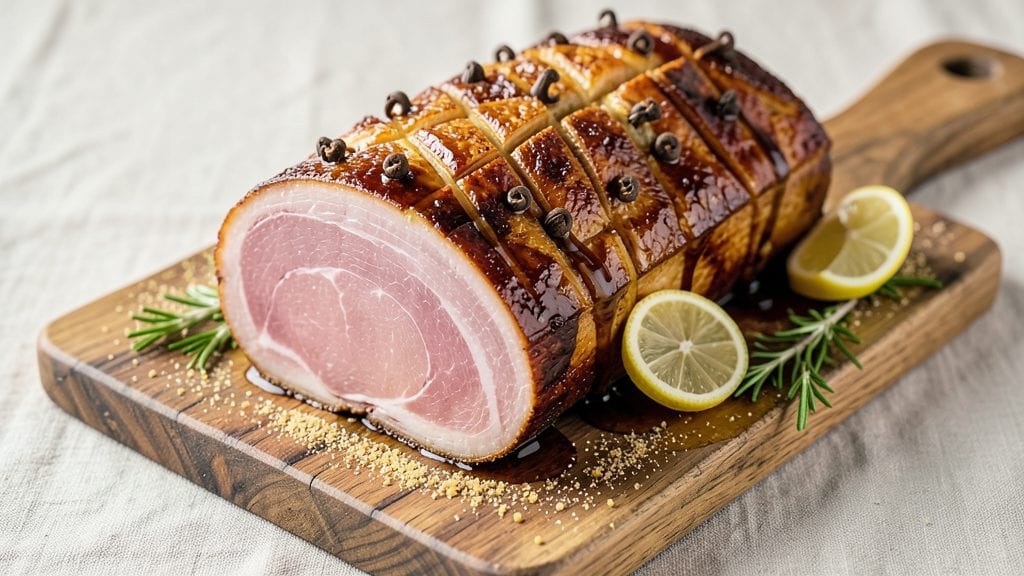
This baked Smithfield ham recipe turns a whole ham into a showstopping centerpiece by balancing tender meat with a perfectly crispy cornmeal crust. This recipe delivers restaurant-quality results with a sweet glaze that caramelizes beautifully while keeping the ham juicy inside—a technique I've perfected after years of holiday hosting mishaps.
The secret lies in precise timing and basting, which we'll cover step by step to ensure your ham emerges golden, glistening, and ready to impress.
What sets this method apart is the cornmeal crust, which creates a textural contrast that elevates every slice. While traditional recipes often rely on sugar-heavy glazes, this version uses a 50-50 blend of brown sugar and honey for depth without overwhelming sweetness.
The ham cooks at a steady 325°F for even heat distribution, with basting every 30 minutes to lock in moisture and build that caramelized crust.
By the time you're done, you'll have a ham with a crispy exterior that shatters slightly when cut, revealing tender meat underneath. The glaze clings beautifully, offering bursts of sweetness with every bite while the cornmeal adds a subtle crunch.
This is the kind of ham that makes guests ask for seconds—and leaves your kitchen smelling like a holiday feast.
The best part? This method works equally well for holiday gatherings or weeknight dinners when you crave something special without the fuss. Serve with classic sides like scalloped potatoes or green bean casserole for a complete meal. Let's get started on creating your showstopper ham.
Ingredients for baked smithfield ham
Eight pounds of ham plus a few pantry staples—your holiday centerpiece starts here.
| Ingredient | Amount | Notes |
|---|---|---|
| Whole Smithfield Ham 🐖 | 8 lb | Bone-in, skin-on preferred |
| Brown Sugar 🍯 | 1 cup | Packed, light or dark |
| Honey 🍯 | 1 cup | Wildflower or clover preferred |
| Cornmeal 🌾 | ½ cup | Fine grind for even coating |
| Mustard 🍯 | ¼ cup | Dijon or whole-grain preferred |
| Cloves 🌿 | 8 whole | For studding ham |
| Orange Juice 🍊 | ½ cup | Freshly squeezed |
| Orange Zest 🍊 | 1 tbsp | From 1 large orange |
| Ground Black Pepper 🌶️ | 1 tsp | Freshly cracked |
| Salt 🧂 | 1 tbsp | Kosher or sea salt |
| Unsalted Butter 🧈 | ½ cup | Cold, cubed |
| Water 💧 | 1 cup | For basting pan |
The ham is the star, so Smithfield brand is ideal—it's pre-cured just right for baking. Look for one with the bone-in, skin-on cut if possible; it holds up better during cooking. Most grocery stores carry these around the holidays, but Costco or Sam's Club often have them year-round at better prices. If you're buying early, freeze it until ready to cook—it thaws beautifully in the fridge overnight. The cloves? Whole, not ground, for that classic studded flavor. I grab mine in bulk at Penzeys or the spice aisle at Whole Foods.
No Dijon mustard? Yellow mustard works in a pinch, though it's less refined. Substitute honey with maple syrup if needed—just reduce the orange juice slightly since maple's sweeter. For the cornmeal crust, semolina works too if that's what you've got. The butter matters here—cold cubes create steam when they melt, keeping the ham moist. If you're short on time, skip the zest and use 1 tbsp bottled orange zest instead. The brown sugar can be swapped for white sugar + 1 tsp molasses for depth.
This ham reheats beautifully—just cover with foil and warm at 300°F for 10-15 minutes. For leftovers, slice and store in airtight containers for up to 5 days. The glaze keeps well too, so make extra for sandwiches or drizzling over pancakes. I always portion the ham into individual slices before serving—guests love grabbing their own. The cornmeal crust stays crispy if you reheat it uncovered for the last 5 minutes.
Why You'll Love This Recipe
- Let’s be real: ham leftovers are usually sad. Not this one. The glaze keeps it moist, and the cornmeal crust stays crispy when reheated. I freeze slices for quick breakfasts or toss them into soups—no one misses the dry, rubbery stuff.
- One-Pan Magic: I swear by this—just slather that ham with brown sugar, honey, and mustard, sprinkle cornmeal for crunch, and pop it in the oven. No chopping, no fuss, no extra dishes. The ham does all the work while I sip my coffee.
- Sweet-Savory Balance: That sticky honey-brown sugar glaze? It’s the star. The mustard cuts through the sweetness, and the cornmeal crust adds a buttery crunch that makes every bite feel like a hug. Honestly, my kids fight over the last slice.
- Holiday or Weeknight: Between us, this ham works for Thanksgiving and lazy Sundays. Slice it thin for sandwiches or serve thick for breakfast—it’s equally at home on a charcuterie board or my kid’s lunchbox. (Yes, even on a Tuesday night.)
Step-by-step instructions for glazed Smithfield ham
Here's how to transform your ham into a showstopper with a crispy crust and sweet glaze.
Prep the Ham for Perfect Cooking
Remove the 8 lb Whole Smithfield Ham from its packaging and place it fat-side up on a cutting board. Score the fat in a diamond pattern using a sharp knife, cutting about ½-inch deep—this helps the glaze penetrate and creates beautiful crackling. Be careful not to cut into the meat itself.
Next, place the ham on a rack inside a roasting pan. This allows hot air to circulate underneath, preventing soggy bottoms. Pour the 1 cup water into the pan—this creates steam that keeps the ham moist during cooking. Let the ham sit at room temperature for 30 minutes before baking to ensure even cooking.
Create the Glaze and Seasoning
In a medium bowl, whisk together the 1 cup brown sugar, 1 cup honey, 0.25 cup mustard, 0.5 cup orange juice, and 1 tbsp orange zest until smooth. This mixture should be thick but pourable—if it's too stiff, add 1-2 tablespoons water to loosen it. The orange zest adds bright citrus notes that cut through the sweetness.
In a small bowl, combine the 0.5 cup cornmeal, 1 tbsp salt, and 1 tsp ground black pepper. This dry rub will create that coveted crispy crust. Gently press the 8 whole cloves into the ham through the scored fat, spacing them evenly. Then, rub the cornmeal mixture all over the ham, pressing it into the scored areas so it sticks well.
Bake Until Internal Temperature Reaches 140°F
Preheat your oven to 325°F. Place the ham in the oven and bake for 2 hours, basting with the glaze every 30 minutes. To baste, spoon the glaze over the ham, letting it drip down the sides. This ensures even coverage and helps build that glossy finish. The ham is done when its internal temperature reaches 140°F—use a meat thermometer inserted into the thickest part of the ham.
During the last 15 minutes of baking, increase the oven temperature to 375°F. This final boost helps the crust crisp up beautifully. Watch closely—you want the glaze to bubble and darken to a rich amber color, not burn. If it starts to darken too quickly, tent the ham loosely with foil.
Add Butter and Finish with Glaze
Once the ham reaches 140°F, remove it from the oven. Stir the 0.5 cup unsalted butter into the remaining glaze in the bowl until melted and smooth. Spoon this buttery glaze generously over the ham, letting it drip down the sides. Return the ham to the oven for 10-15 minutes to let the butter caramelize and create a glossy, golden finish.
For the final crisp, place the ham under a broiler for 2-3 minutes, watching closely to avoid burning. You'll see the crust turn a deep golden brown and develop those beautiful crackles. The ham is now ready to be sliced and served—juicy, flavorful, and with that perfect crispy crust you've been aiming for.
Pro Tips For Making Baked Smithfield Ham
- CRANK THE OVEN HIGH FIRST: Start your ham at 375°F for the first 45 minutes—this caramelizes the honey and brown sugar faster, giving you that deep, glossy crust instead of a sad, sticky glaze. After that, drop it to 325°F to finish cooking evenly (yes, even if you’re impatient like me).
- SALT THE HAM BEFORE GLAZING: Pat the ham dry and sprinkle a thin layer of kosher salt over every inch—even the bone sides—before adding the cornmeal crust. I learned this the hard way: unsalted ham tastes bland no matter how sweet the glaze gets.
- DON’T SKIP THE CORNMEAL CRUST: Mix the cornmeal with a little mustard and water into a paste, then slather it on thick before baking. This isn’t just for looks—it creates a textured, crispy barrier that keeps the ham from getting soggy under the glaze.
- REST IT UNDER FOIL: After glazing, tent the ham loosely with foil for the first 30 minutes of baking. The foil traps steam, helping the glaze set without burning, while still letting the ham cook through. (Your future self will thank you for not rushing this.)
Common mistakes when making your baked smithfield ham
Skipping the Score
I’ve seen too many hams end up with uneven cooking or a sad, unappetizing appearance because someone skipped scoring the fat. Those diamond cuts let the glaze penetrate deeply and create those gorgeous crackles.
Use a sharp knife and cut about ½-inch deep—just enough to break the fat without touching the meat. If you’re nervous about cutting too deep, practice on a small section first. 🔪
Overlooking Room Temp
One of the biggest mistakes is baking a cold ham straight from the fridge. The temperature difference causes uneven cooking, leading to dry spots or undercooked centers. Always let your 8 lb ham sit at room temperature for 30 minutes before baking.
This small step ensures even heat distribution and a juicy result every time. I’ve ruined more hams than I’d like to admit by skipping this step!
Basting Too Early
Basting is key, but timing matters. If you baste too early, the glaze will burn before the ham is fully cooked. Wait until the ham has been in the oven for at least 1 hour before starting. Then, baste every 30 minutes with the glaze.
This builds layers of flavor and ensures a glossy finish without burning. I once tried basting after just 20 minutes—the glaze turned into syrup, and the ham was sticky but not golden. 🍯
Ignoring Internal Temp
Guessing when a ham is done is a recipe for disaster. Use a meat thermometer and aim for an internal temperature of 140°F in the thickest part. I’ve had hams that felt "done" but were still undercooked, or others that turned dry because they overcooked.
Don’t rely on time alone—always check the temp. A ThermoWorks Smoke thermometer is my go-to for accuracy.
Rushing the Crust
The final crisp is what makes this ham special, but rushing it leads to uneven browning or burnt spots. After the ham reaches 140°F, increase the oven to 375°F for the last 15 minutes to set the crust.
Then, broil for just 2-3 minutes—watch it like a hawk! I’ve seen hams go from perfect to charred in seconds. Keep a close eye and be ready to pull it out as soon as it’s golden.
Using Low-Quality Glaze Ingredients
Your glaze is only as good as its ingredients. Cheap honey or sugar can make the glaze grainy or overly sweet. Use wildflower honey for depth and light or dark brown sugar for caramelization. The mustard should be Dijon or whole-grain—yellow mustard lacks the complexity.
I once used store-brand honey, and the glaze separated. Since then, I’ve stuck to high-quality ingredients, and the difference is night and day. 🍯
Nutrition facts
Frequently asked questions
How long should I let the ham rest before slicing?
Always let your baked ham rest for 15-20 minutes after removing it from the oven. This allows the juices to redistribute, ensuring each slice stays moist and flavorful. Skipping this step can lead to dry, stringy meat—trust me, your guests will notice the difference!
Can I make this recipe with a pre-cooked ham?
Yes, but adjust the cooking time! A fully cooked ham needs only 10-15 minutes at 325°F to warm through and crisp the crust. Just skip the internal temperature check—focus on the crust color and glaze caramelization. For extra flavor, baste it with the glaze during the last 5 minutes of cooking.
What’s the best way to reheat leftover ham?
Wrap slices in foil and reheat at 300°F for 10-15 minutes to keep them juicy. For the whole ham, cover with foil and warm at 300°F for 20-30 minutes—this prevents drying. The cornmeal crust stays crispy if you reheat it uncovered for the last 5 minutes. Store leftovers in airtight containers for up to 5 days.
Can I substitute maple syrup for honey in the glaze?
Use ¾ cup maple syrup instead of 1 cup honey and reduce the orange juice to ¼ cup—maple syrup is sweeter. The glaze will still caramelize beautifully, though the flavor profile will be slightly earthier. For balance, add ½ teaspoon vanilla extract to the glaze.
How do I prevent the ham from drying out?
Keep the ham moist by pouring 1 cup water into the roasting pan and basting every 30 minutes. The steam from the water and the butter glaze work together to lock in juices. Also, avoid overcooking—pull the ham at 140°F internal temp, not by time alone. A meat thermometer is your best friend here!